



Iran, US Trade Strikes As Cease-Fire Wobbles
Iran and the United States launched fresh strikes on targets in the Persian Gulf region highlighting a precarious cease-fire amid a diplomatic push to reach a compromise deal to end their three-month old war.
Iran's Islamic Revolutionary Guard Corps (IRGC) said it struck a US airbase in Kuwait early on May 28 after American forces hit a site near Bandar Abbas airport in southern Iran.
The IRGC said in a statement that its retaliatory strike came at 4:50 a.m. local time, targeting the base it identified as the origin of a US aerial assault on a point near Bandar Abbas airport using "aerial projectiles." It described the operation as “a serious warning,” adding that if further attacks were carried out against Iran, “our response will be more decisive.”
Earlier in the evening, US Central Command (CENTCOM) said that American forces had shot down four Iranian drones that "posed a threat" near the Strait of Hormuz and struck a launch unit near Bandar Abbas in Hormozgan Province before it launched a fifth drone.
It said its actions were "measured, purely defensive, and intended to maintain the cease-fire."
Read more here
Iran Internet Access Restored But Still Heavily Filtered, Says Monitor
The NetBlocks Internet monitoring group said on May 28 that connectivity in Iran had "largely returned" three months after Tehran “shut off access to the global internet.”
However, the group said network data showed users still faced “heavy filtering,” similar to restrictions imposed during a deadly crackdown on protests that erupted in January before the start of the war on February 28.
Read more here
US Sanctions Iranian Authority Claiming To Regulate Strait Of Hormuz
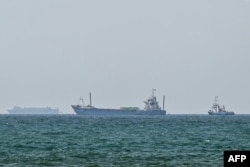
The United States has imposed sanctions on Iran’s so-called Persian Gulf Strait Authority, the body Tehran created to regulate passage through the Strait of Hormuz, escalating pressure over Iran’s tightening control of one of the world’s most critical energy routes.
The authority was established after Iran closed the strait following the outbreak of war with the United States and Israel on February 28. Roughly one-fifth of the world’s oil and natural gas supplies usually pass through the narrow waterway, and Iran’s restrictions on shipping have disrupted global energy markets.
The US Treasury warned on May 28 that anyone cooperating with the authority or paying transit fees “may be providing support to and receiving services from” Iran’s Islamic Revolutionary Guards Corps and could face sanctions.
Treasury Secretary Scott Bessent said “the Iranian military’s latest attempt to extort global maritime trade is proof that Economic Fury” -- the US administration’s sanctions campaign targeting Iran’s economy and oil revenues -- “has left the regime desperate for cash.”
Iran claims it is charging ships for “navigational services,” not imposing tolls.
On May 20, the authority published a map asserting Tehran’s “regulatory jurisdiction” over broad sections of the strategic waterway.
Iran, US Trade Strikes As Cease-Fire Wobbles
Iran and the United States launched fresh strikes on targets in the Persian Gulf region highlighting a precarious cease-fire amid a diplomatic push to reach a compromise deal to end their three-month old war.
Iran's Islamic Revolutionary Guard Corps (IRGC) said it struck a US airbase in Kuwait early on May 28 after American forces hit a site near Bandar Abbas airport in southern Iran.
The IRGC said in a statement that its retaliatory strike came at 4:50 a.m. local time, targeting the base it identified as the origin of a US aerial assault on a point near Bandar Abbas airport using "aerial projectiles." It described the operation as “a serious warning,” adding that if further attacks were carried out against Iran, “our response will be more decisive.”
Earlier in the evening, US Central Command (CENTCOM) said that American forces had shot down four Iranian drones that "posed a threat" near the Strait of Hormuz and struck a launch unit near Bandar Abbas in Hormozgan Province before it launched a fifth drone.
It said its actions were "measured, purely defensive, and intended to maintain the cease-fire."
Read more here
Iran's IRGC Say It Targeted US Air Base After US Strike
Islamic Revolutionary Guards Corps (IRGC) said on May 28 that it had targeted a US air base after what it described as an early morning US attack near Bandar Abbas airport in southern Iran, according to the IRGC-linked Tasnim news agency.
In a statement released by Tasnim, the IRGC said it targeted the US air base with "aerial projectiles" at 04:50 a.m. (01:20 GMT).
The Revolutionary Guards did not specify the location of the base, although Kuwait's military said its air defenses were responding to "hostile" missile and drone attacks on May 28.
Kuwait, which hosts a US air base, did not specify whether the threats were Iranian.
The IRGC warned that any further US attacks would draw a "more decisive" response, adding that Washington bears responsibility for the consequences.
US Confirms It Launched New Strikes In Iran, Downs Drones Near Strait of Hormuz
WASHINGTON -- The US military carried out new strikes on an Iranian military site and intercepted multiple drones near the Strait of Hormuz, US officials said on May 27, in the latest exchange of military action despite signs of progress in diplomatic efforts to reach a deal to end their conflict.
Senior US officials, speaking on condition of anonymity, told reporters that the targeted site was assessed to pose a potential threat to US forces and commercial shipping operating near the strategic waterway, a route for about one-fifth of the world's oil transit before the war broke out at the end of February.
One official said US forces also shot down four Iranian one-way attack drones and struck a ground control facility in the southern port city of Bandar Abbas that was preparing to launch a fifth drone.
Bandar Abbas lies on Iran’s southern coast along the Persian Gulf near the Strait of Hormuz -- one of the world’s most critical shipping chokepoints.
“The Iranian drones posed a threat around the Strait of Hormuz,” the official said, adding that the waterway had faced repeated disruption due to Iranian activity. “These actions were measured, purely defensive, and intended to maintain the ceasefire.”
The US Central Command (CENTCOM) later confirmed the strikes in a statement saying that the Iranian one-way attack drones that "posed a threat" around the Strait of Hormuz and that "actions were measured, purely defensive, and intended to maintain the ceasefire."
The latest military activity comes as Washington and Tehran continue discussions aimed at stabilizing the situation following months of heightened regional tensions.
Earlier this week, the US said it had conducted what it described as “self-defense strikes” targeting vessels allegedly involved in laying naval mines.
Iran condemned those operations, calling them a violation of what it described as a fragile ceasefire arrangement.
The latest exchanges underscore continued volatility in the Gulf region in addition to remarks by US President Donald Trump that hinted at progress in diplomatic efforts to reach a deal. The United States and Iran have been trading proposals via Pakistani mediators.
Iranian Media Report 2 Incidents In Asaluyeh And Tehran Airport
Iranian media has reported that two separate incidents occurred in Asaluyeh and at Tehran’s Imam Khomeini International Airport.
According to domestic media reports on May 27, one person was killed and two others injured in an incident at the air separation unit of Damavand Energy in Asaluyeh, the center of Iran’s massive South Pars gas and petrochemical complex. Damavand Energy supplies industrial utilities such as oxygen, electricity, and water to petrochemical facilities in the region.
According to a statement from Damavand Energy, rescue and safety teams were dispatched to the site after the incident occurred, and the injured were transferred to medical centers after receiving initial treatment. The cause of the incident has not yet been announced.
At the same time, the semiofficial Mehr news agency reported that an administrative customs building in the Imam Khomeini Airport City complex had caught fire.
Firefighters and emergency teams brought the blaze under control, but no details have yet been released regarding the cause of the fire, the extent of the damage, or possible casualties.
Based on reporting by RFE/RL's Radio Farda
Iran Intelligence Ministry Warns Of New Unrest Amid Economic Strain
Iran’s Intelligence Ministry has warned that following the recent war “some shortages and rising prices” caused by US economic pressure could lead to fresh unrest in the country.
In a statement issued on May 27, the ministry claimed that the United States and Israel were seeking to exploit “some shortages and price increases” caused by mounting economic strain by encouraging social unrest through “enemy agents” and foreign Persian-language media outlets.
The warning comes amid soaring inflation, sharp increases in consumer prices, and reports of steep declines in Iranian government revenues following weeks of a US naval blockade and a major drop in the country’s oil exports.
The remarks also come as memories remain fresh of the protests in January this year, which erupted after a sustained rise in the exchange rate in Iranian markets and commercial centers. As the demonstrations spread over several days, security forces responded with severe violence, reportedly killing thousands.
The ministry also warned of possible “terrorist operations and border aggressions,” particularly in northwestern and southeastern Iran, as well as acts of “assassination and sabotage.”
It alleged that the United States and Israel were attempting to smuggle “weapons, ammunition, and illegal communications equipment, especially Starlink,” into Iran.
The statement came after authorities began partially restoring Internet access following an 88-day nationwide shutdown.
With reporting by RFE/RL's Radio Farda
Back Online, Iranians Face The Same Internet Restrictions

After 88 days of near-total digital isolation during war with the United States and Israel, Iran has partially restored Internet access. But many Iranians say the heavily censored network remains slow, unreliable, and tightly controlled, with restricted apps, malfunctioning VPNs, and deep public mistrust lingering after one of the world’s longest-ever nationwide Internet blackouts.
Read the report by Kian Sharifi and RFE/RL's Radio Farda here
Trump Says Iran's Internet Reopening Is A Sign It Wants A Deal

US President Donald Trump has indicated that Iran's decision to end its unprecedented Internet blackout is a sign that the country wants to reach an agreement with the United States.
Speaking at the opening of a cabinet meeting in Washington on April 27, Trump said Iran was "intent" on a deal.
"I think it looks like they want to just make a deal. I don't think they have a choice. They're just going back to the Internet because they're getting clobbered. Their economy is in freefall," he said.
Iran switched off access to the Internet after the beginning of US and Israeli military strikes on February 28.
It has previously taken similar steps during times of internal unrest, such as during mass nationwide protests in January. But this latest Internet shutdown was the longest it has ever imposed.
The economic toll of Iran’s blackout has been significant. Afshin Kolahi, an official from Iran’s Chamber of Commerce, said during an April 12 session that the shutdown was costing the country up to $40 million per day. Indirect losses, he said, were up to $80 million each day.
Read more here
US Denies Iranian TV Report On Draft Framework Deal
The White House has said reporting by Iranian state TV on a draft framework agreement is "not true" and is a "complete fabrication."
"Nobody should believe what Iranian state media is putting out. FACTS MATTER," said a statement on X by the White House's Rapid Response 47 account.
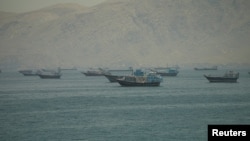
Earlier, Iranian state television reported that the draft deal with the United States included commitments to lift the US naval blockade on Iran, restore commercial traffic through the Strait of Hormuz, and reduce the American military presence in the Persian Gulf region.
According to the report, which cited a draft memorandum of understanding that was “still not finalized,” Washington had allegedly committed to “cease harassing ships passing to or from the Islamic republic of Iran.”
In return, Iran would allow the resumption of commercial shipping through the Strait of Hormuz within one month, while continuing to manage shipping lanes, inspect vessels, and impose service fees introduced during the war that erupted on February 28.
The draft also said Washington had given “a commitment to the Islamic republic of Iran” regarding the withdrawal of US troops from the region, although it remained unclear whether this applied only to forces deployed during the conflict or also to longstanding US bases in the Persian Gulf.
The report said the two sides would enter a 60-day negotiation period after agreeing on the framework.