


Azerbaijani, Nagorno-Karabakh Sides To Meet Again After Inconclusive 'Integration' Talks
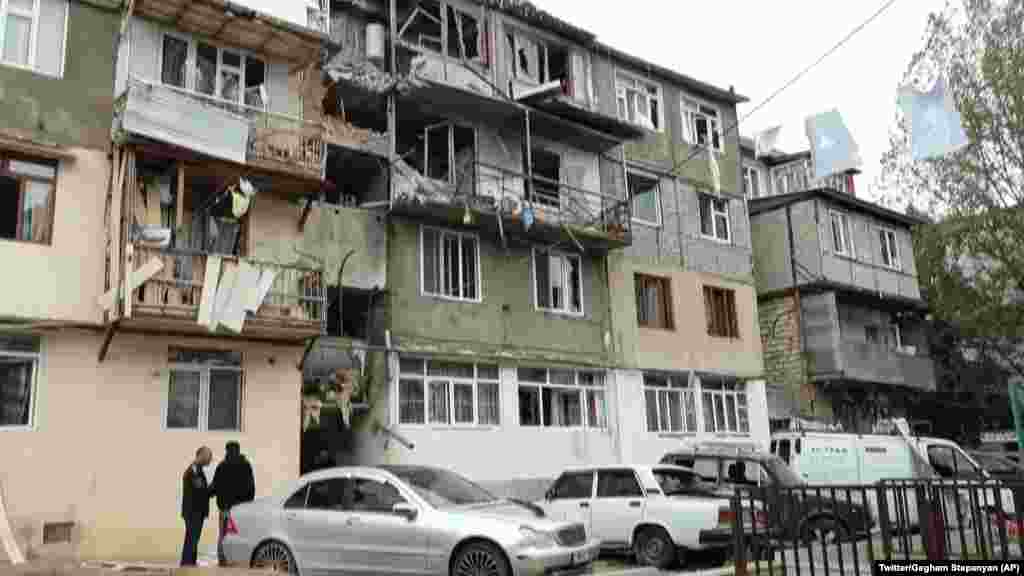
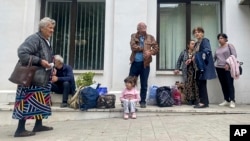
Local residents gather near a municipal government building after reports of shooting in Stepanakert, Nagorno-Karabakh, on September 21.
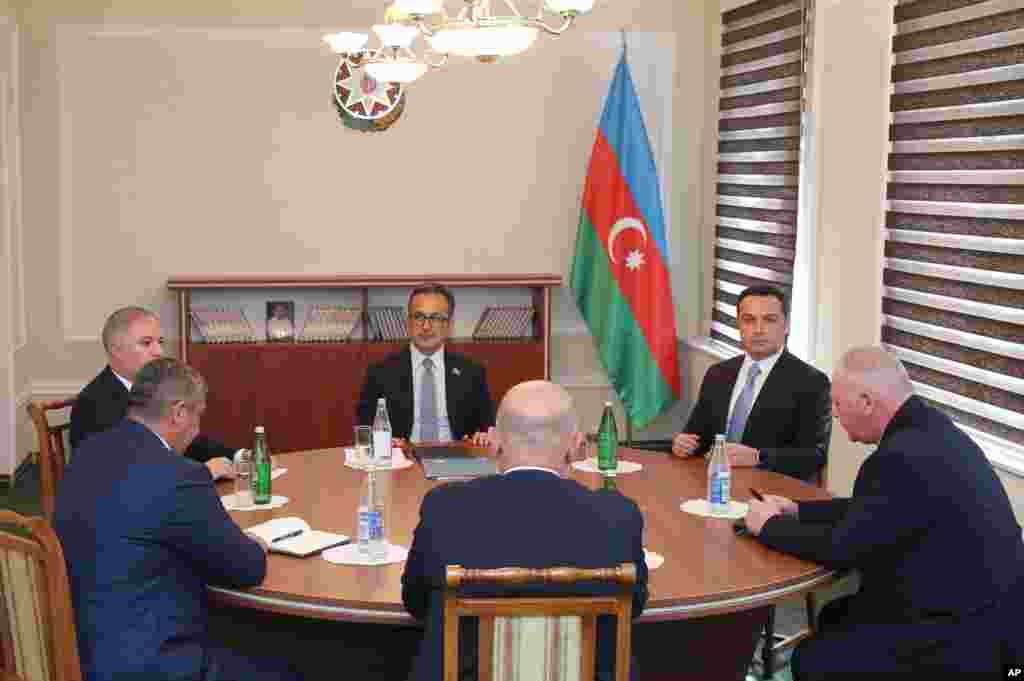
The first session of the closely watched "reintegration" talks in the western Azerbaijani city of Yevlax between representatives of Azerbaijan and the ethnic Armenian leadership of the breakaway region of Nagorno-Karabakh ended without any sign of a breakthrough, as the two sides exchanged accusations and denials over reports of gunfire and apparent cease-fire violations in Nagorno-Karabakh's de facto capital, but with word of further meetings to come.
Azerbaijani President Ilham Aliyev's office said on September 21 that the two-hour session was "held in a constructive and peaceful atmosphere," with Russian peacekeepers present.
The office added that both sides had agreed to further talks.
Separatist leaders also said in a statement following the meeting that they were ready to continue talks with Azerbaijani authorities.
"The parties especially stressed the need to discuss all existing issues in a peaceful environment, noting the readiness to continue meetings," the statement said.
But with Baku hoping to consolidate gains from a 24-hour military offensive on September 19-20 that dramatically shifted political calculations in the Caucasus, ethnic Armenians' leadership in the region was said to be demanding guarantees before their forces surrender all their weapons.
Reports of gunfire 100 kilometers away in the de facto capital of Nagorno-Karabakh, Stepanakert, and residents citing a "state of panic" there, highlighted lingering tensions as the potentially historic negotiations got under way.
'Reintegration' Talks Held For Nagorno-Karabakh Amid Tense Protests In Yerevan
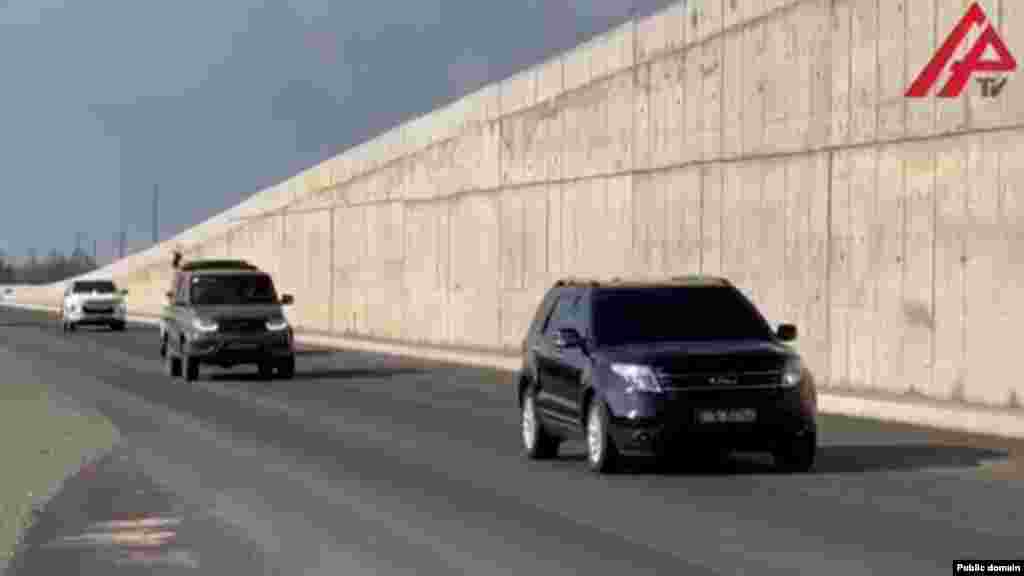
1/11A delegation of representatives from Nagorno Karabakh arrive in the western Azerbaijani city of Yevlax for talks on September 21.
Reports of gunfire 100 kilometers away in the de facto capital of Nagorno-Karabakh, Stepanakert, highlighted lingering tensions as the negotiations got under way.
Representatives of Azerbaijan and the ethnic Armenian leadership of the breakaway region of Nagorno-Karabakh held "reintegration" talks on September 21 as Baku seeks to consolidate gains from a military offensive that dramatically shifted political calculations in the Caucasus.
2/11Representatives of Nagorno-Karabakh, Azerbaijan's government, and the Russian peacekeeping contingent are seen at "reintegration" talks in Yevlax on September 21. The talks ended with no public statements nor any sign of a breakthrough. The talks followed Azerbaijani President Ilham Aliyev's boast to his oil- and gas-rich nation of 10 million after a Russian-brokered cease-fire halted intense fighting on September 20 that he said had "restored its sovereignty."
The meeting came as part of the truce for what the Azerbaijani side calls talks on "reintegration" of the territory into the rest of the country after decades of occupation.
Representatives of Azerbaijan and the ethnic Armenian leadership of the breakaway region of Nagorno-Karabakh held "reintegration" talks on September 21 as Baku seeks to consolidate gains from a military offensive that dramatically shifted political calculations in the Caucasus.
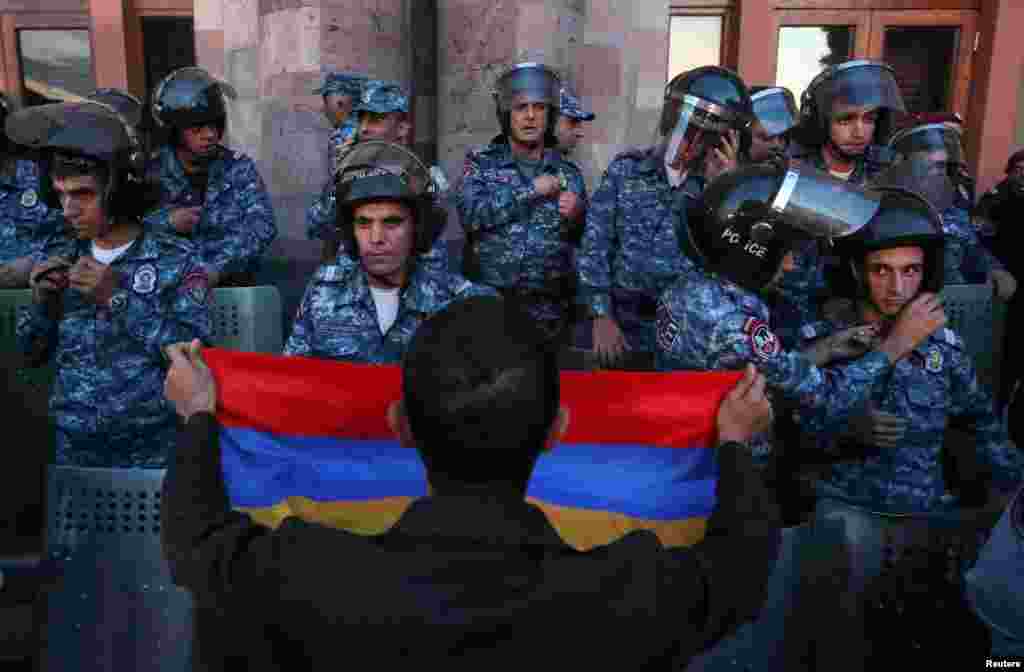
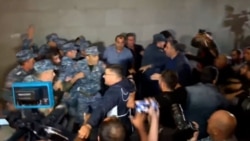
3/11A protester confronts law enforcement officers near the government building in Yerevan during a rally to support ethnic Armenians in Nagorno-Karabakh on September 20.
Representatives of Azerbaijan and the ethnic Armenian leadership of the breakaway region of Nagorno-Karabakh held "reintegration" talks on September 21 as Baku seeks to consolidate gains from a military offensive that dramatically shifted political calculations in the Caucasus.
4/11Nagorno-Karabakh is a breakaway territory internationally recognized as part of Azerbaijan and which is called Artsakh by Armenians.
Representatives of Azerbaijan and the ethnic Armenian leadership of the breakaway region of Nagorno-Karabakh held "reintegration" talks on September 21 as Baku seeks to consolidate gains from a military offensive that dramatically shifted political calculations in the Caucasus.
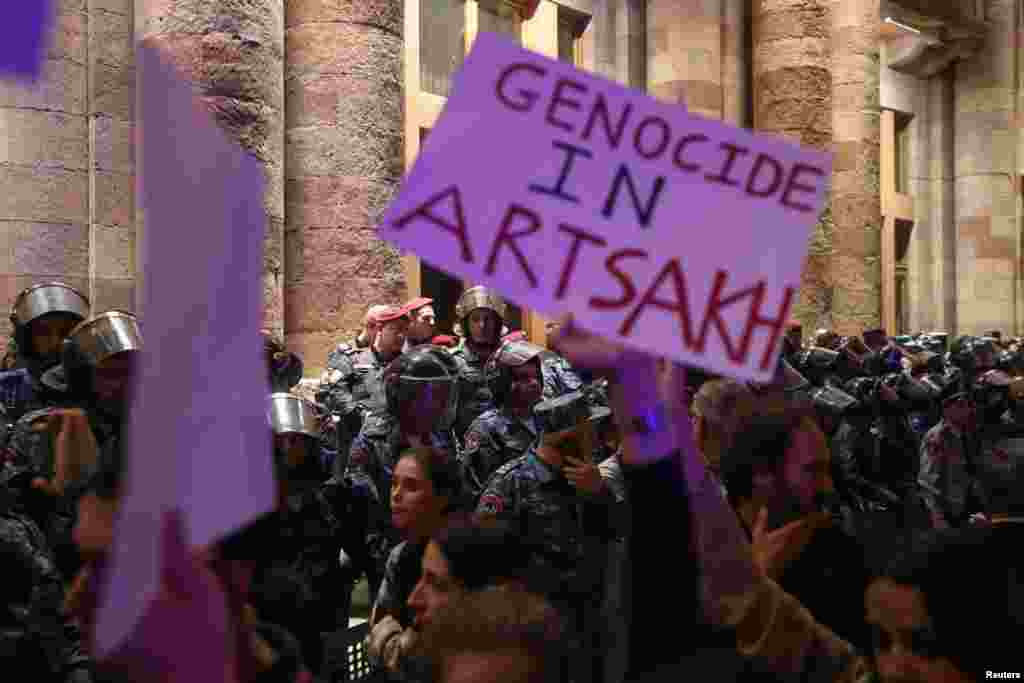
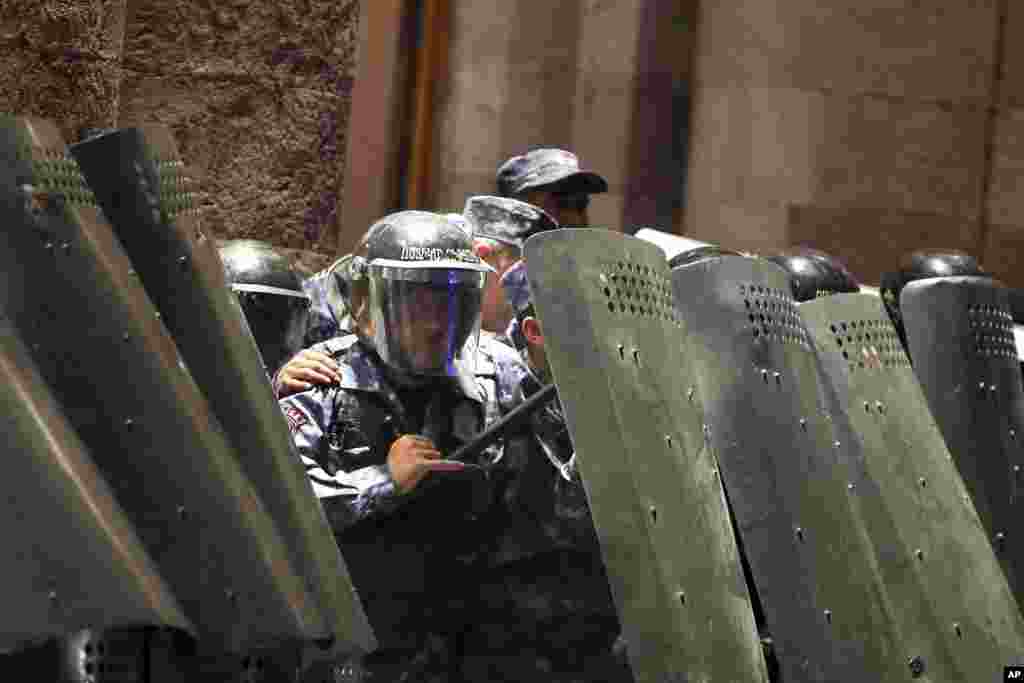
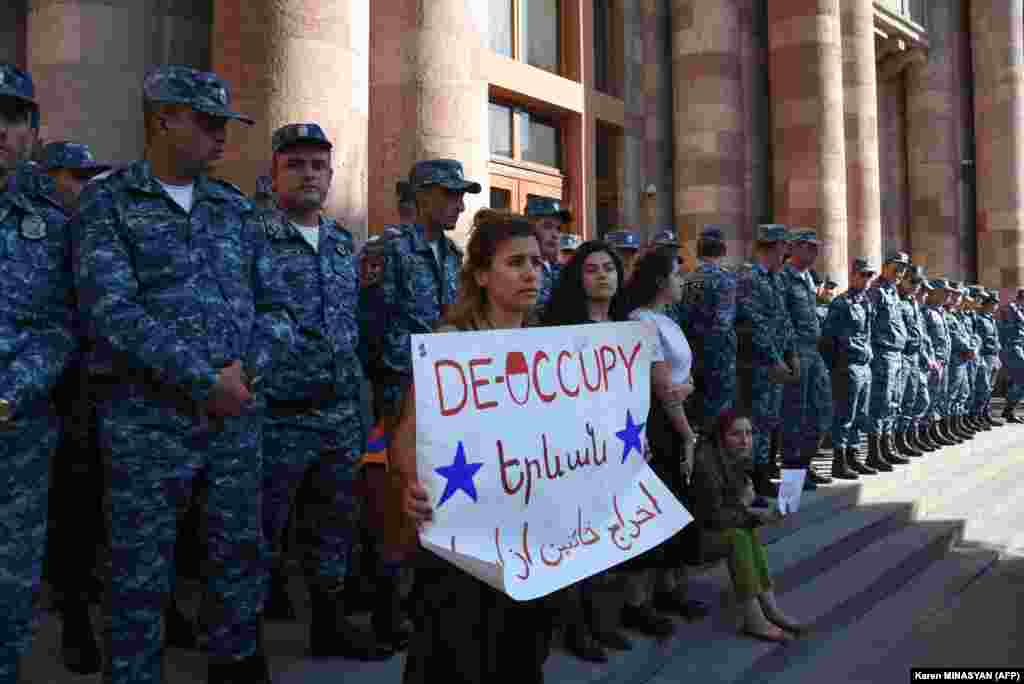
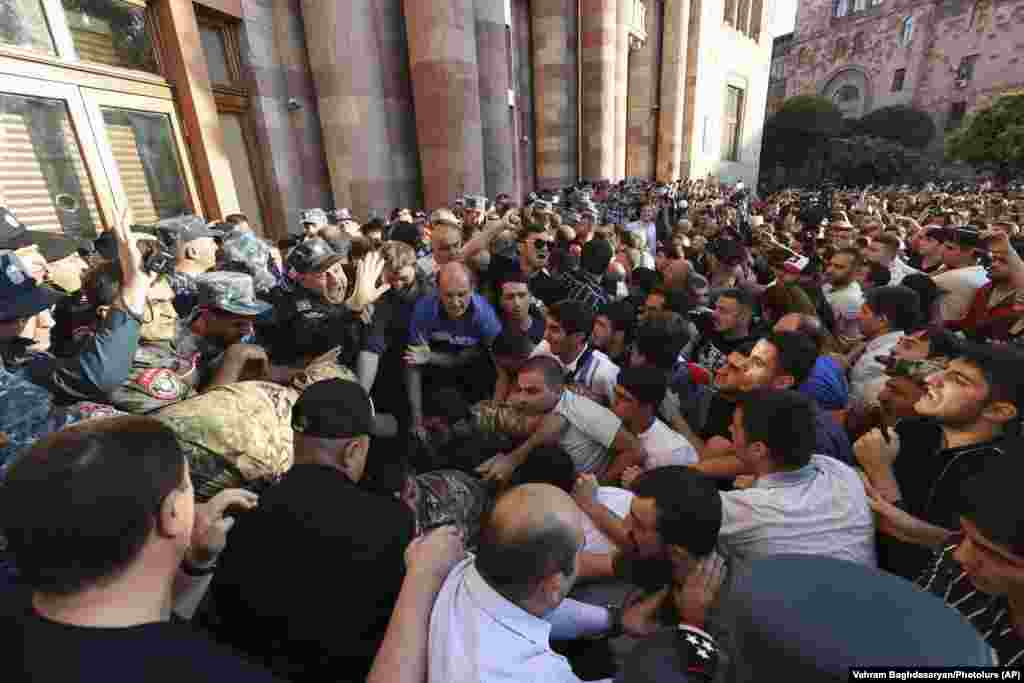
6/11Police officers block an entrance to the government building in Yerevan during a protest against Prime Minister Nikol Pashinian in Yerevan on September 20.
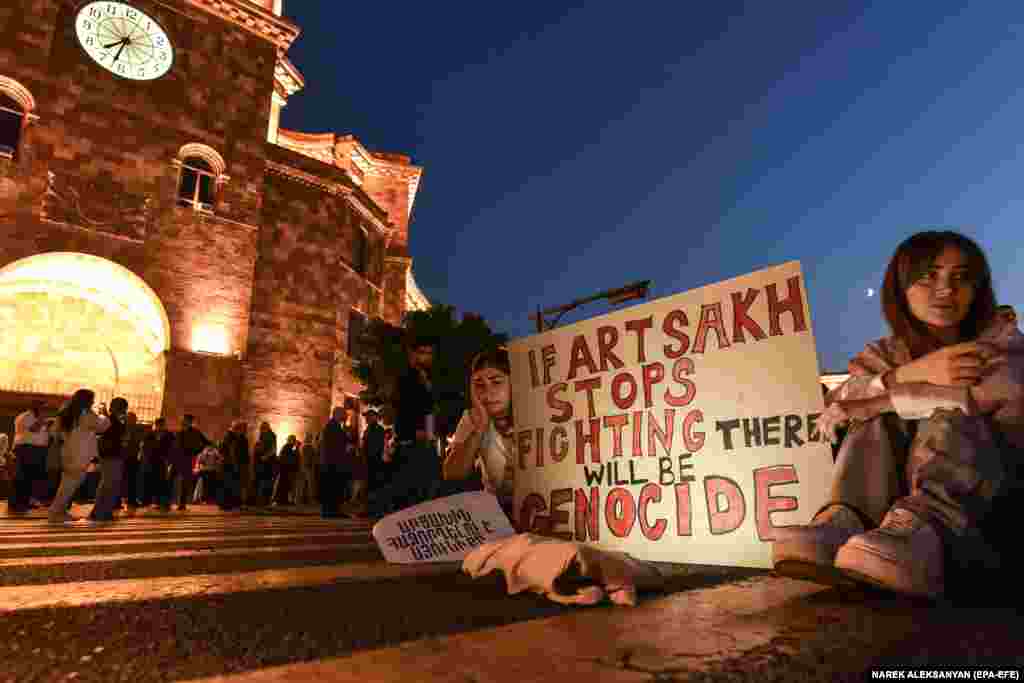
Protesters gathered in central Yerevan, blocking streets and demanding that authorities defend Armenians in Nagorno-Karabakh.
Representatives of Azerbaijan and the ethnic Armenian leadership of the breakaway region of Nagorno-Karabakh held "reintegration" talks on September 21 as Baku seeks to consolidate gains from a military offensive that dramatically shifted political calculations in the Caucasus.
7/11Nagorno-Karabakh's ethnic Armenian leaders were forced to acquiesce to Baku's terms for the cease-fire as more numerous and better-supplied Azerbaijani forces armed with artillery and drones quickly tallied victories after the surprise offensive began on September 19, with Russian peacekeepers seemingly unprepared or unwilling to act.
Representatives of Azerbaijan and the ethnic Armenian leadership of the breakaway region of Nagorno-Karabakh held "reintegration" talks on September 21 as Baku seeks to consolidate gains from a military offensive that dramatically shifted political calculations in the Caucasus.
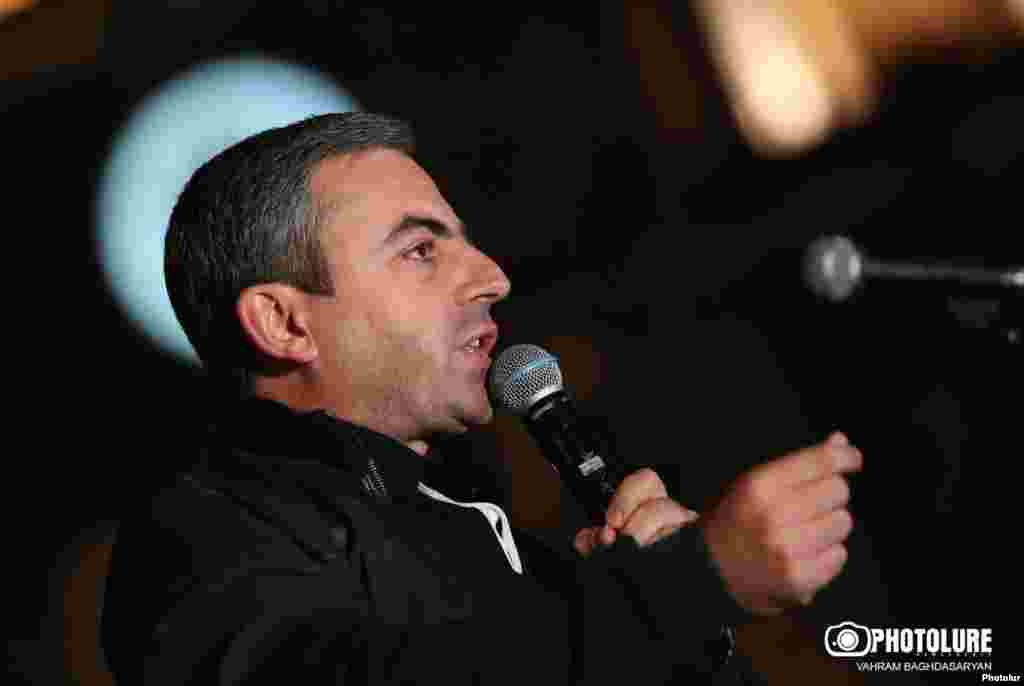
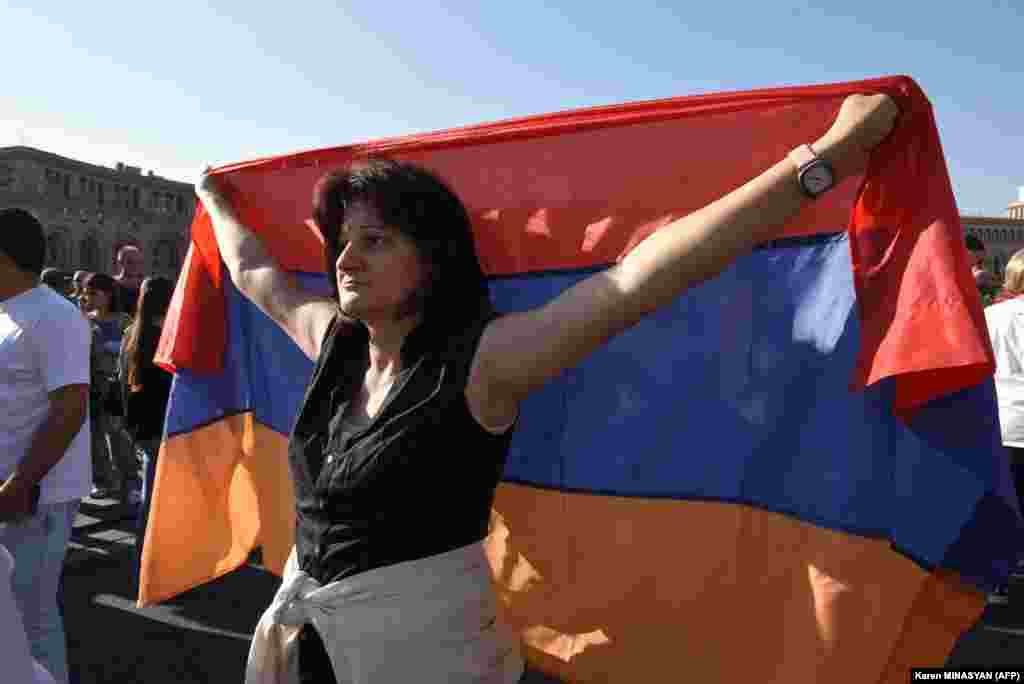
8/11Protesters demanded Pashinian's resignation during a rally on Republic Square in Yerevan on September 20.
A rights ombudsman for Nagorno-Karabakh, Gegham Stepanian, has said that at least 200 people were killed and about twice as many wounded during the fighting, including children.
Representatives of Azerbaijan and the ethnic Armenian leadership of the breakaway region of Nagorno-Karabakh held "reintegration" talks on September 21 as Baku seeks to consolidate gains from a military offensive that dramatically shifted political calculations in the Caucasus.
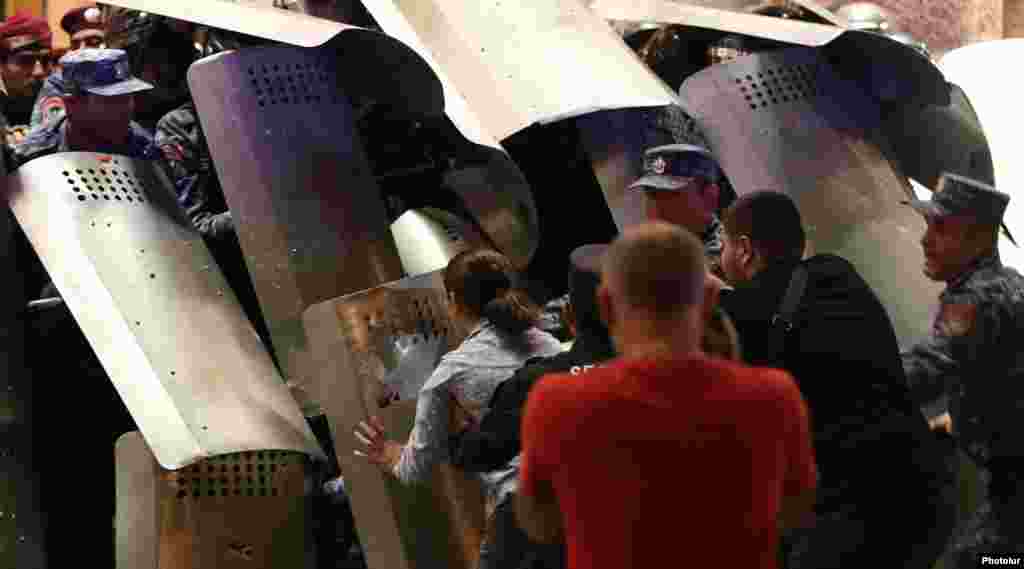
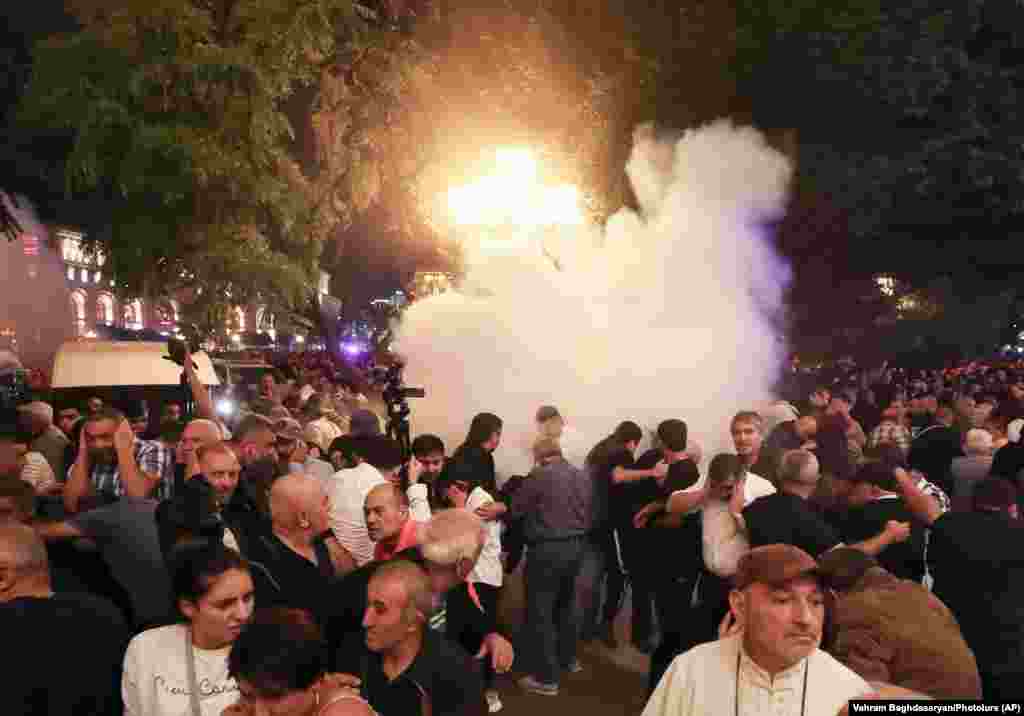
9/11Police and protesters clashed on Yerevan's Republic Square on September 20.
Representatives of Azerbaijan and the ethnic Armenian leadership of the breakaway region of Nagorno-Karabakh held "reintegration" talks on September 21 as Baku seeks to consolidate gains from a military offensive that dramatically shifted political calculations in the Caucasus.
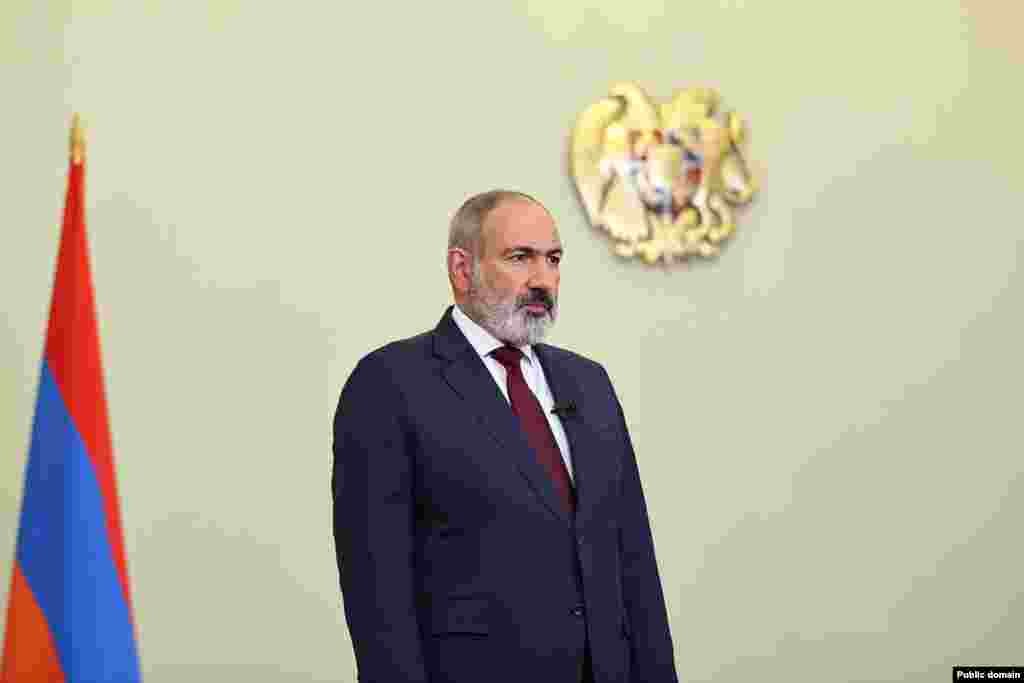
11/11Pashinian delivers an Independence Day message in Yerevan on September 21.
The Armenian prime minister appeared to have been caught off guard by the Azerbaijani offensive, and he has since emphasized that his government was not involved in shaping the terms of the cease-fire. But he welcomed the end of intense fighting.
Representatives of Azerbaijan and the ethnic Armenian leadership of the breakaway region of Nagorno-Karabakh held "reintegration" talks on September 21 as Baku seeks to consolidate gains from a military offensive that dramatically shifted political calculations in the Caucasus.
Previous slide
Next slide
Russian President Vladimir Putin, whose nearly 3-year-old peacekeeping mission was crucial to brokering the cease-fire a day earlier, reportedly spoke by phone with Aliyev on September 21. The Kremlin quoted Putin as stressing "the importance of ensuring the rights and security of the Armenian population of Karabakh."
Turkish President Recep Tayyip Erdogan, whose administration has backed Baku diplomatically and with drones and other military equipment, also spoke to Aliyev and expressed his "wholehearted support" for Azerbaijan.
Meanwhile, neighbor Armenia's envoy to the United Nations, Andranik Hovhannisian, warned the UN Human Rights Council in Geneva on September 21 that Azerbaijan was perpetrating "ethnic cleansing" and a "crime against humanity" as it tried to retake the territory following nine months of a de facto blockade of Nagorno-Karabakh.
Davit Babayan, an adviser for foreign policy to the separatist government’s de facto leader Samvel Shahramanian, told Reuters that "there has not been a final agreement yet."
He said "a whole host of questions still need to be resolved" and security guarantees would have to precede full disarmament.
"We have an agreement on the cessation of military action but we await a final agreement -- talks are going on," Babayan said.
The UN Security Council is due to hold an emergency meeting to discuss the Nagorno-Karabakh crisis later on September 21.
The talks in Yevlax follow Azerbaijani President Ilham Aliyev's boast to his oil- and gas-rich nation of 10 million after a Russian-brokered cease-fire halted intense fighting on September 20 that he said had "restored its sovereignty."
Aliyev praised the lightning operation to dislodge the territory's de facto leadership nearly three years after another offensive retook many areas controlled for decades by ethnic Armenians with Yerevan's support, saying, "In just one day, Azerbaijan fulfilled all the tasks set as part of local anti-terrorist measures."
The Yevlax talks on the Azerbaijani side were being led by lawmaker Ramin Mammadov, whom Aliyev appointed in March to be in charge of relations with ethnic Armenians living in Nagorno-Karabakh.
The delegation for the breakaway leadership of Nagorno-Karabakh, a territory internationally recognized as Azerbaijani that Armenians call Artsakh, included a member of the territory's de facto parliament in Stepanakert, Davit Melkumian, and Artsakh Security Council member Sergey Martirosian. But it has not issued an official list of participants.
Russian peacekeepers, whom the Kremlin says are mediating the talks, were accompanying the ethnic Armenian delegation on its arrival at the venue.
Multiple reports of gunfire, meanwhile, trickled in from Stepanakert, Nagorno-Karabakh's biggest city.
One resident told RFE/RL's Armenian Service that they heard gunfire in the city and were considering options to leave after moving out of a shelter to spend the night at home. They said many other residents were back in shelters.
"Let's see what we do," the woman said. "Now we are in Stepanakert."
“The situation is very bad,” she said. “[Azerbaijani troops] have already entered through the neighborhood’s cemetery armed with submachine guns.
“Everyone is in their basements now. It was a little calm last night. We stayed at home. But now we have to go outside again, as [shooting] started all over again. It is very difficult.”
Another woman told RFE/RL that the expectation is that Russian peacekeepers “will let people leave [Nagorno-Karabakh] rather than be killed. But the peacekeepers for now say they have no order to let people go.”
Reuters also quoted two sources as saying they heard gunfire.
The ethnic Armenian authorities in Nagorno-Karabakh accused Azerbaijani forces of rifle fire from areas near Stepanakert and urged residents to stay in shelters. They said they had informed the command of the area's Russian peacekeepers and demanded the Russians take immediate measures to protect them.
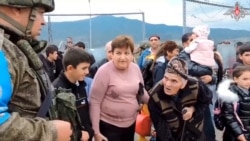
Another Nagorno-Karabakh resident who is originally from the town of Martakert but traveled to Stepanakert told RFE/RL that they'd gone to the airport, where Russian peacekeepers are stationed. The person said many people in the city were in "a state of panic."
The person said there were many other ethnic Armenians at the airport on September 21, demanding that they be allowed to leave Nagorno-Karabakh.
Azerbaijan's Defense Ministry "categorically denied" accusations that it was violating the day-old cease-fire.
Using the ancient name of Nagorno-Karabakh's capital, it said on Facebook that "information spread in some Armenian social media accounts that the Azerbaijan Armed Forces allegedly launched an attack in the Xankendi direction is completely false and disinformation."
The European Union monitoring mission in Armenia (EUMA) that was established earlier this year to help avoid escalations said it had "reinforced patrols at the Armenian-Azerbaijani border areas & line of confrontation" and in the nearby Armenian village of Sotk to report on military and security developments there. It reiterated the EU mission's commitment to "contributing to stabilizing the situation."
Nagorno-Karabakh's ethnic Armenian leaders were forced to accept Baku's terms for the cease-fire as more numerous and better-supplied Azerbaijani forces armed with artillery and drones quickly tallied victories after the surprise offensive began on September 19, with Russian peacekeepers seemingly unprepared or unwilling to act.
A rights ombudsman for Nagorno-Karabakh, Gegham Stepanian, has said that at least 200 people were killed and about twice as many wounded during the fighting, including children.
Protests In Yerevan Follow Azerbaijani Attacks As Karabakh Residents Seek Shelter
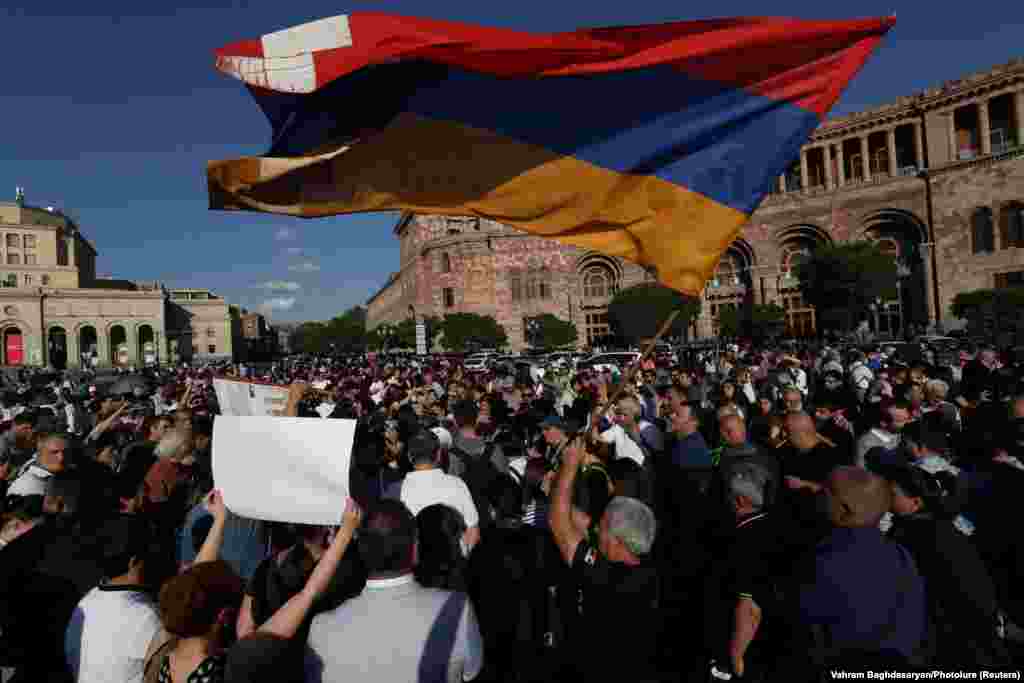
1/17Protesters gather near the government building in Yerevan on September 19.
The Azerbaijani and ethnic Armenian sides agreed on September 20 to an immediate cease-fireon the second day of a major flare-up in fighting over the territory of Nagorno-Karabakh, after the de facto leadership of the mostly ethnic Armenian enclave accepted a proposal by the Russian peacekeeping mission there and agreed to talks on the territory's "reintegration" into Azerbaijan.
Armenians took to the streets to demand Prime Minister Nikol Pashinian resign after Azerbaijan launched what it called an "anti-terrorist operation" targeting ethnic Armenian military positions in Nagorno-Karabakh that left at least 32 people dead and more than 200 wounded.
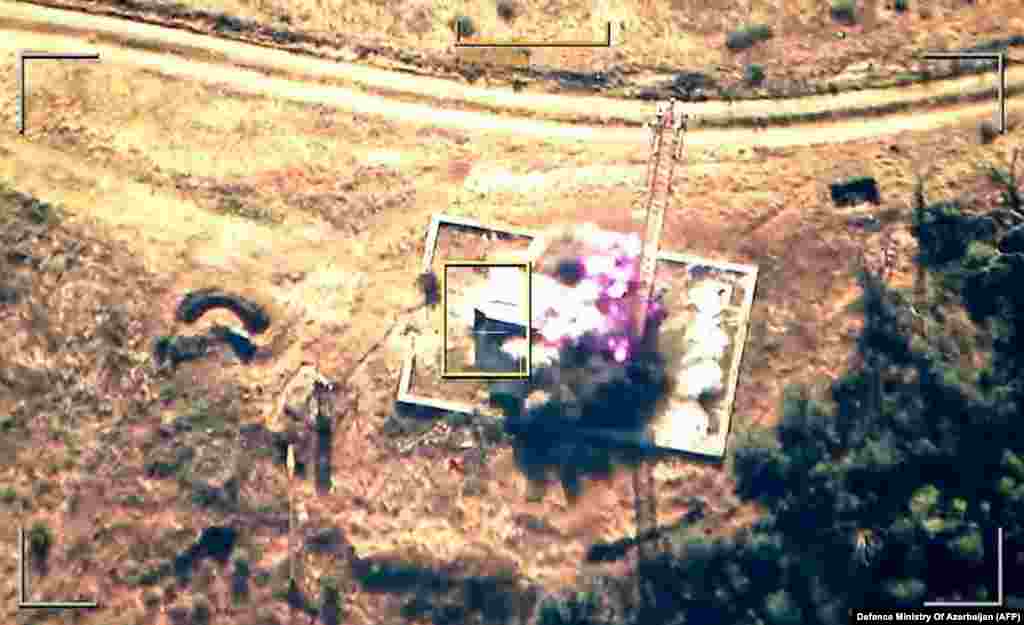
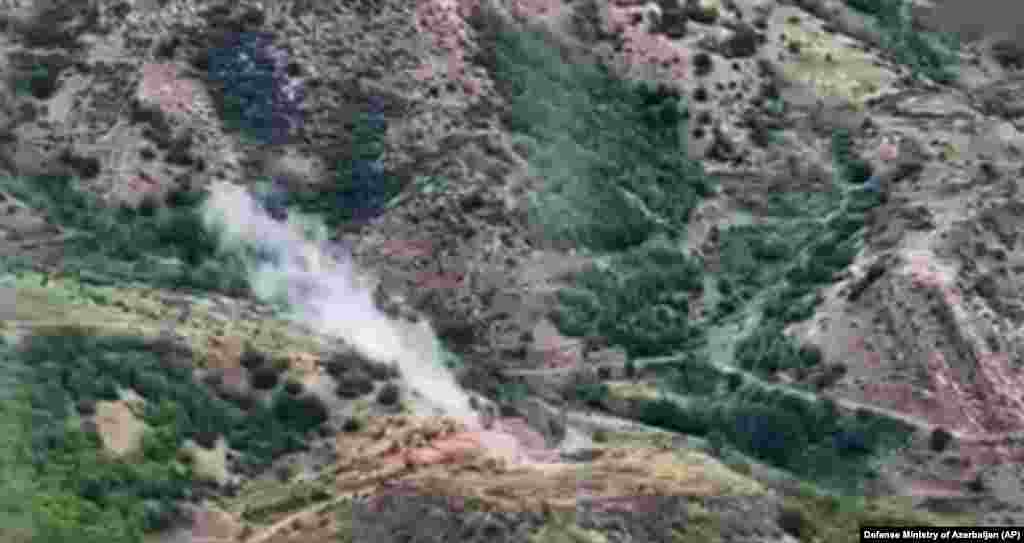
2/17Handout footage released by the Azerbaijani Defense Ministry on September 19 shows an explosion in mountainous terrain that Baku claims to be Azerbaijani forces "destroying positions" used by Armenians in the Nagorno-Karabakh region.
Armenians took to the streets to demand Prime Minister Nikol Pashinian resign after Azerbaijan launched what it called an "anti-terrorist operation" targeting ethnic Armenian military positions in Nagorno-Karabakh that left at least 32 people dead and more than 200 wounded.
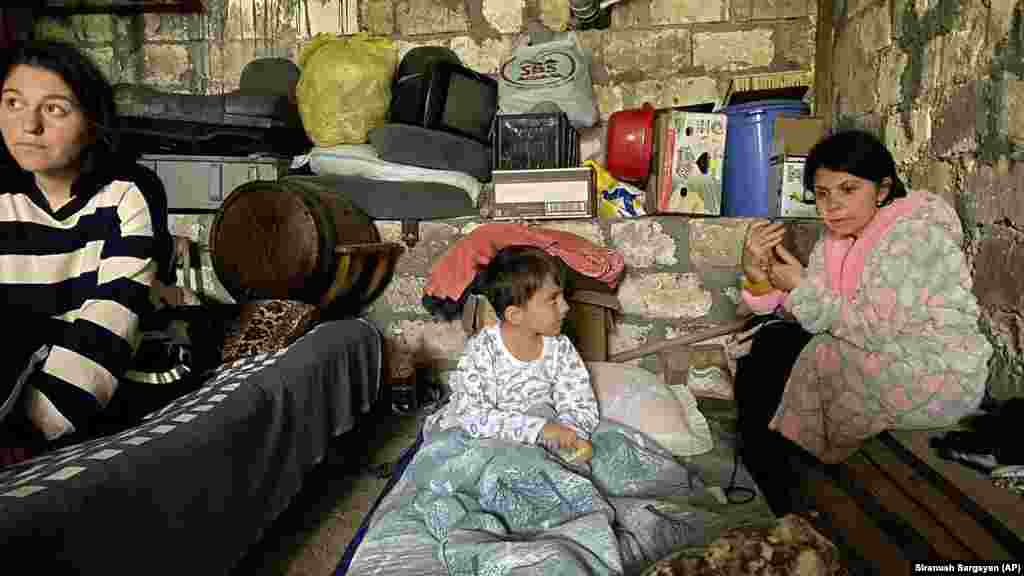
3/17Children sit in a shelter during shelling in Stepanakert, the provincial capital of Azerbaijan's breakaway region of Nagorno-Karabakh, on September 20.
Azerbaijan declared that it had started what it called an "anti-terrorist operation" targeting Armenian military positions in Nagorno-Karabakh, where local ethnic Armenian officials reported heavy shelling.
Armenian Prime Minister Nikol Pashinian said, in a shot at Baku's justification for its offensive, that Yerevan "does not have an army" in Nagorno-Karabakh.
Armenians took to the streets to demand Prime Minister Nikol Pashinian resign after Azerbaijan launched what it called an "anti-terrorist operation" targeting ethnic Armenian military positions in Nagorno-Karabakh that left at least 32 people dead and more than 200 wounded.
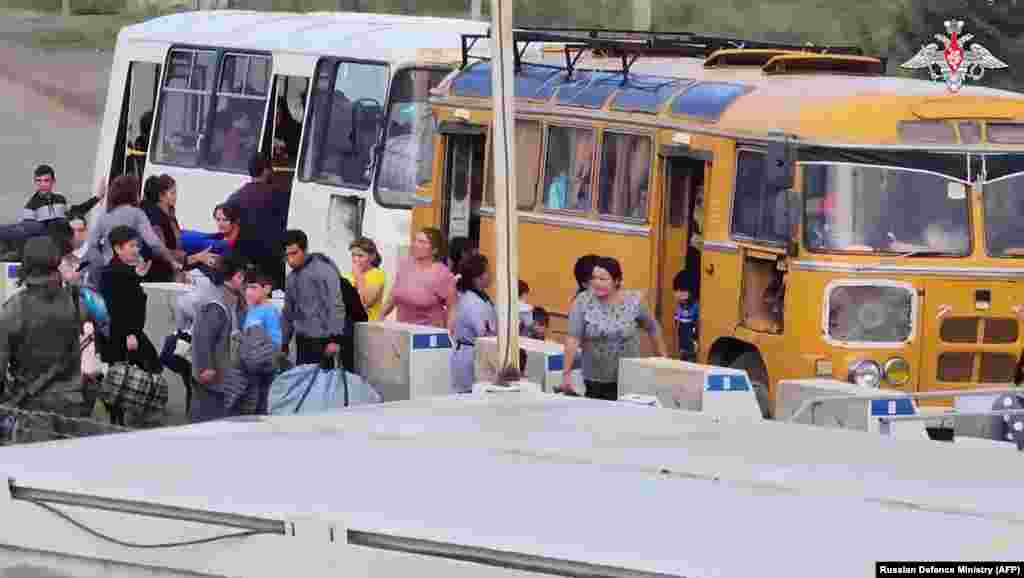
4/17In an image released by the Russian Defense Ministry on September 20, Russian peacekeepers help evacuate refugees from Stepanakert.
TASS quoted the ministry as saying its peacekeepers had evacuated more than 2,000 civilians from Nagorno-Karabakh.
In a rare show of agreement with the West, Moscow called on both sides to stop the violence.
Armenians took to the streets to demand Prime Minister Nikol Pashinian resign after Azerbaijan launched what it called an "anti-terrorist operation" targeting ethnic Armenian military positions in Nagorno-Karabakh that left at least 32 people dead and more than 200 wounded.
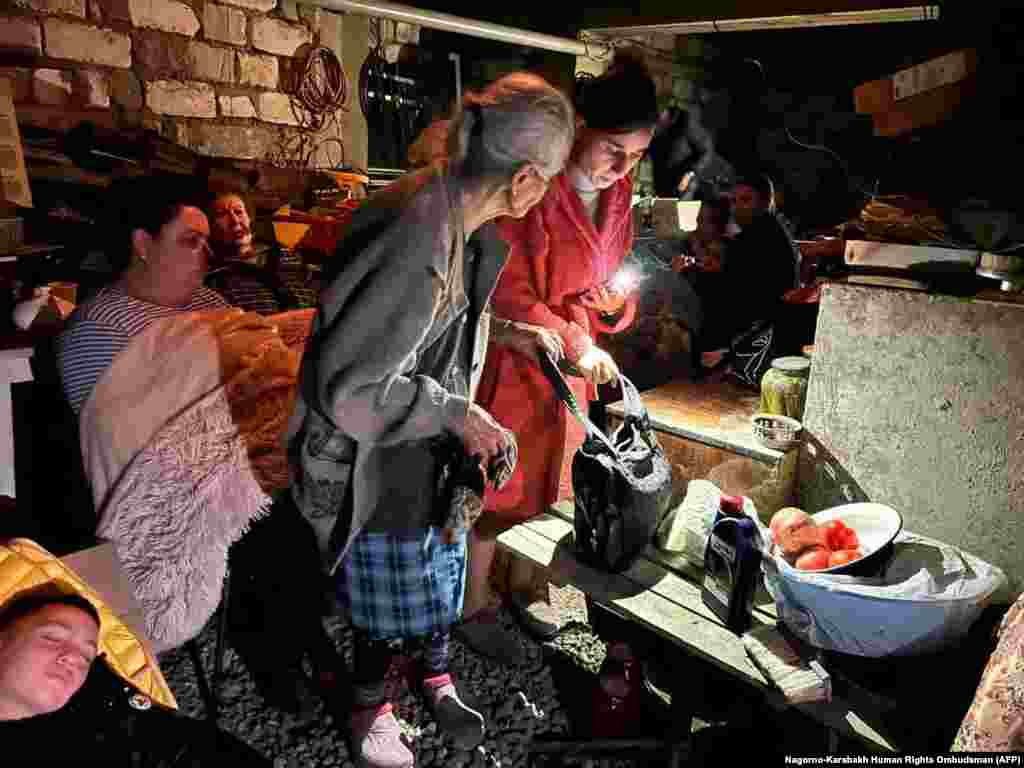
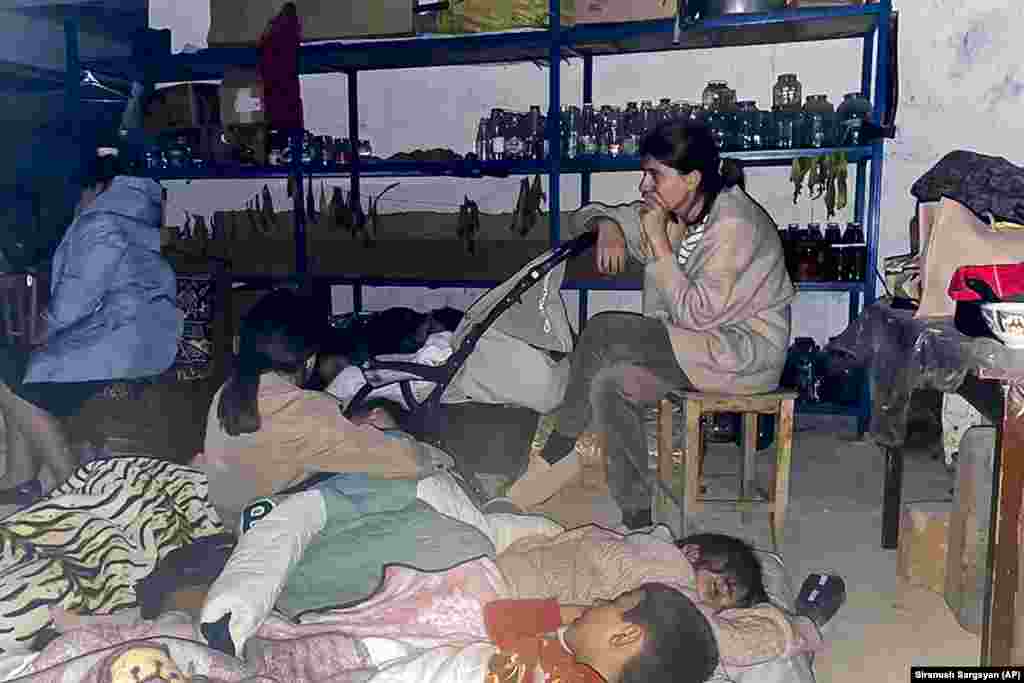
5/17People huddle in a basement in Stepanakert on September 20.
Armenians took to the streets to demand Prime Minister Nikol Pashinian resign after Azerbaijan launched what it called an "anti-terrorist operation" targeting ethnic Armenian military positions in Nagorno-Karabakh that left at least 32 people dead and more than 200 wounded.
6/17Smoke rises over an area that Azerbaijan claims hosts ethnic Armenian forces' positions in the breakaway territory of Nagorno-Karabakh on September 19.
The expected halt in intense fighting in the decades-old Caucasus hot spot comes as international fears of a widening conflict mounted and as the death toll increased in the deadliest military escalation there in nearly three years.
Armenians took to the streets to demand Prime Minister Nikol Pashinian resign after Azerbaijan launched what it called an "anti-terrorist operation" targeting ethnic Armenian military positions in Nagorno-Karabakh that left at least 32 people dead and more than 200 wounded.
7/17Children sleep in a shelter during shelling in Stepanakert.
Azerbaijan’s Defense Ministry said on September 19 that "only legitimate military targets are being destroyed," and the Foreign Ministry said the only path to peace in the region was the complete withdrawal of Armenian forces from the territory.
Armenians took to the streets to demand Prime Minister Nikol Pashinian resign after Azerbaijan launched what it called an "anti-terrorist operation" targeting ethnic Armenian military positions in Nagorno-Karabakh that left at least 32 people dead and more than 200 wounded.
8/17Armenians protest in central Yerevan on September 19 to urge the government to respond to the Azerbaijani military operation.
After a brief but bloody six-week war between the regional archrivals in 2020, Azerbaijan recaptured much of Nagorno-Karabakh and seven surrounding districts controlled since the 1990s by ethnic Armenians with Yerevan's support.
Armenians took to the streets to demand Prime Minister Nikol Pashinian resign after Azerbaijan launched what it called an "anti-terrorist operation" targeting ethnic Armenian military positions in Nagorno-Karabakh that left at least 32 people dead and more than 200 wounded.
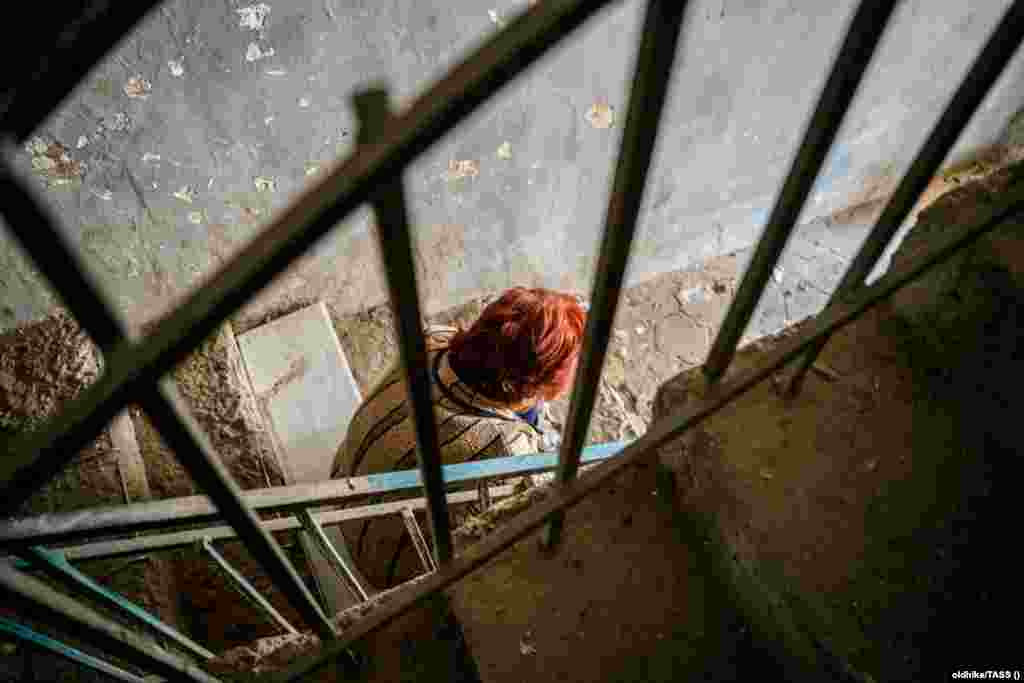
9/17A woman sits on a staircase in a residential building destroyed in a military strike on Stepanakert.
Armenians took to the streets to demand Prime Minister Nikol Pashinian resign after Azerbaijan launched what it called an "anti-terrorist operation" targeting ethnic Armenian military positions in Nagorno-Karabakh that left at least 32 people dead and more than 200 wounded.
10/17A residential apartment building was damaged by shelling in Stepanakert.
The Azerbaijani and the ethnic Armenian sides agreed to talks on September 21 in the Azerbaijani city of Yevlax, about 265 kilometers west of Baku.
Armenians took to the streets to demand Prime Minister Nikol Pashinian resign after Azerbaijan launched what it called an "anti-terrorist operation" targeting ethnic Armenian military positions in Nagorno-Karabakh that left at least 32 people dead and more than 200 wounded.
11/17People rally outside the Armenian government building to protest against Pashinian in Yerevan on September 19.
Pashinian, who was blamed by nationalists and other critics for losses in the 2020 fighting, noted the cease-fire but immediately distanced his government from its terms.
Armenians took to the streets to demand Prime Minister Nikol Pashinian resign after Azerbaijan launched what it called an "anti-terrorist operation" targeting ethnic Armenian military positions in Nagorno-Karabakh that left at least 32 people dead and more than 200 wounded.
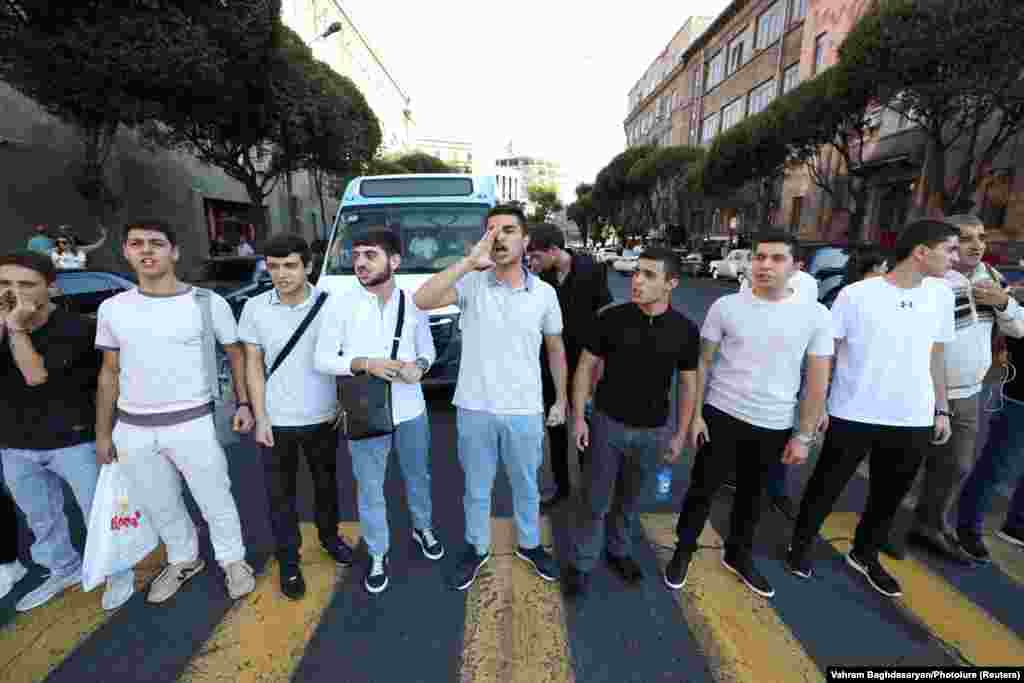
12/17Protesters block a road near the government building in Yerevan on September 19.
Angered by what they saw as Moscow's failure to stop Azerbaijan, demonstrators also gathered outside the Russian Embassy in Yerevan, chanting anti-Russian slogans, TASS reported.
Armenians took to the streets to demand Prime Minister Nikol Pashinian resign after Azerbaijan launched what it called an "anti-terrorist operation" targeting ethnic Armenian military positions in Nagorno-Karabakh that left at least 32 people dead and more than 200 wounded.
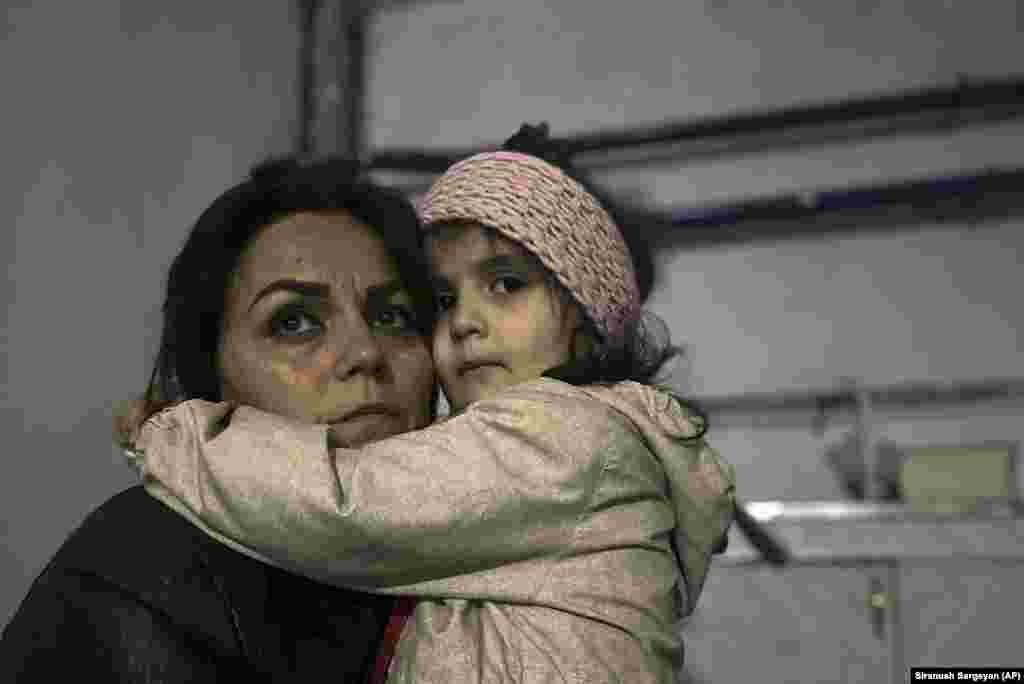
13/17A woman embraces a child in a shelter during shelling in Stepanakert.
U.S. and European leaders had long called for Azerbaijan to ease the transit of humanitarian aid to the beleaguered region, which is experiencing shortages of food, energy, and medicine.
Armenians took to the streets to demand Prime Minister Nikol Pashinian resign after Azerbaijan launched what it called an "anti-terrorist operation" targeting ethnic Armenian military positions in Nagorno-Karabakh that left at least 32 people dead and more than 200 wounded.
14/17Angry crowds gathered outside government buildings in Yerevan late on September 19, calling for Pashinian to resign.
Armenians took to the streets to demand Prime Minister Nikol Pashinian resign after Azerbaijan launched what it called an "anti-terrorist operation" targeting ethnic Armenian military positions in Nagorno-Karabakh that left at least 32 people dead and more than 200 wounded.
15/17Armenians in Yerevan protest to urge the government to respond to the Azerbaijani military operation.
After weeks of bloody skirmishes and one day after an aid shipment was finally allowed into the area, Azerbaijan launched the major escalation on September 19 with the breakaway region already teetering on the brink of a humanitarian crisis after being essentially blockaded for more than eight months despite international calls for Baku to allow food and other shipments.
Armenians took to the streets to demand Prime Minister Nikol Pashinian resign after Azerbaijan launched what it called an "anti-terrorist operation" targeting ethnic Armenian military positions in Nagorno-Karabakh that left at least 32 people dead and more than 200 wounded.
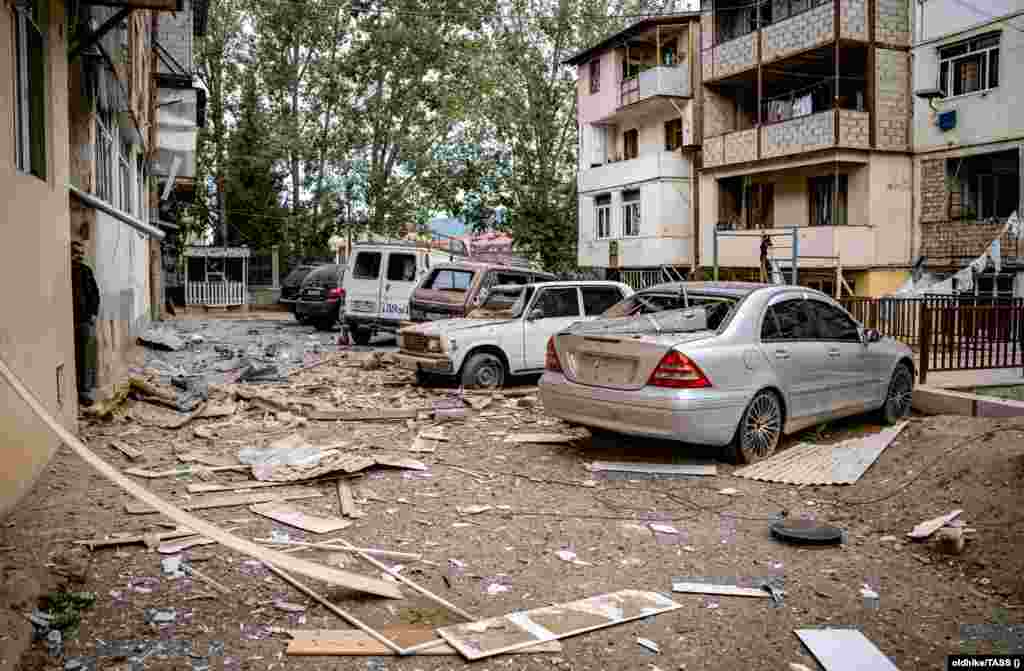
16/17Damage is seen in a residential area after a military strike on Stepanakert.
The de facto human rights ombudsman in the ethnic Armenian-controlled Azerbaijani region said early on September 20 that 32 people had been killed, including seven civilians, two of them children, and more than 200 wounded as a result of shelling, although some death estimates put the death toll considerably higher.
Armenians took to the streets to demand Prime Minister Nikol Pashinian resign after Azerbaijan launched what it called an "anti-terrorist operation" targeting ethnic Armenian military positions in Nagorno-Karabakh that left at least 32 people dead and more than 200 wounded.
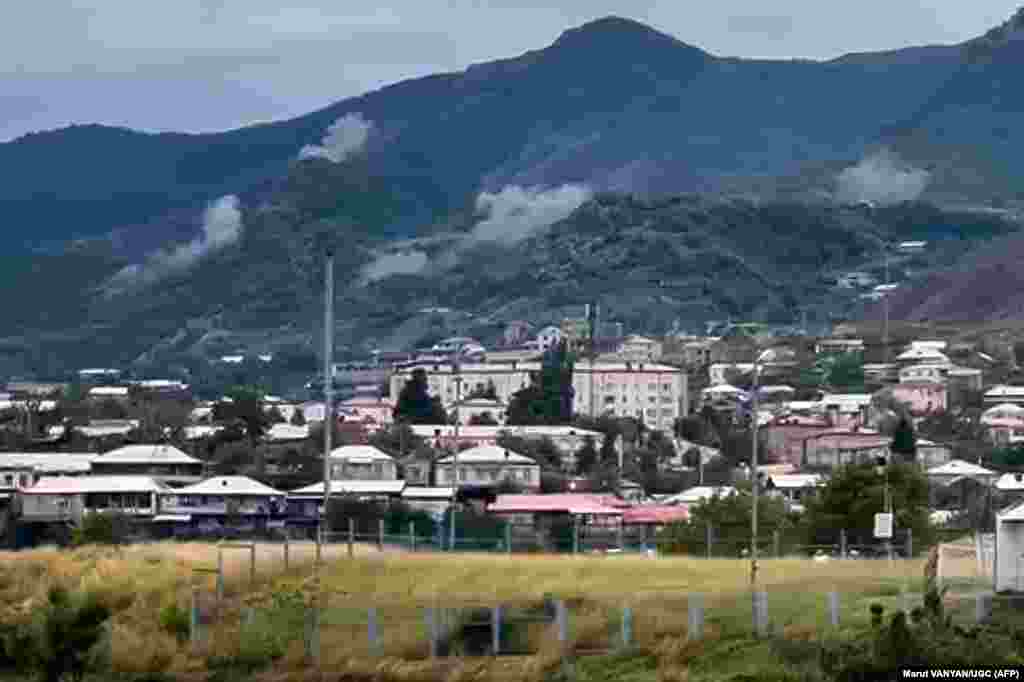
17/17Smoke rises from artillery strikes on a hilltop outside Stepanakert.
The UN Security Council scheduled an emergency meeting for September 21 as the international community sought ways to avoid an intensification of a long-running conflict that has already sparked two intense wars between the post-Soviet Caucasus neighbors.
Armenians took to the streets to demand Prime Minister Nikol Pashinian resign after Azerbaijan launched what it called an "anti-terrorist operation" targeting ethnic Armenian military positions in Nagorno-Karabakh that left at least 32 people dead and more than 200 wounded.
Previous slide
Next slide
Armenian Prime Minister Nikol Pashinian appeared to have been caught off guard by the Azerbaijani offensive, and he has since emphasized that his government was not involved in shaping the terms of the cease-fire. But he welcomed the end of intense fighting.
In his address to the nation, Azerbaijani President Aliyev said, "The day is not far off when Azerbaijan and Armenia will settle the issues between them, sign a peace treaty, and the countries of the South Caucasus will start working on future cooperation in a trilateral format."
He said of Armenia that Azerbaijan "recognize[s] their territorial integrity."
"The integration plan of Karabakh Armenians is ready," Hikmet Hajiyev, assistant to the president of Azerbaijan, told reporters at a briefing organized for accredited foreign diplomats in Baku.
Hajiyev added that "the presence of around 10,000 members of illegal Armenian armed organizations was unacceptable" in the territory.
Thousands of ethnic Armenians converged on Stepanakert's airport on September 20 seeking protection and possible transport to Armenia amid uncertainty over the fighting and the cease-fire that was proffered by Russian peacekeepers on distinctly Azerbaijani terms.
Russia has said that its peacekeepers have "taken in" about 5,000 Karabakh residents.
The Kremlin said that in his phone conversation with Putin, Aliyev had apologized for an incident late on September 20 in which five Russian peacekeepers had been killed when the vehicle they were in was accidentally fired upon when they were “mistaken” for separatists.
The Kremlin said that in his phone conversation with Putin, Aliyev had apologized for an incident late on September 20 in which an unknown number of Russian peacekeepers had been killed when the vehicle they were in was fired upon in the region.
The White House has expressed concern about a possible humanitarian and refugee crisis in Nagorno-Karabakh and placed the blame on Baku for the situation.
"We're obviously still watching very, very closely the worsening humanitarian situation inside Nagorno-Karabakh," White House national security spokesman John Kirby told reporters.
Azerbaijani leaders vowed to allow “safe passage" to Armenia for the separatist forces of the region as part of the agreement to halt fighting, putting a halt to the long struggle for ethnic Armenians seeking independence or attachment to Armenia for the territory.
"Safe passage to appropriate assembly points will also be provided by the Azerbaijani side," Aliyev adviser Hajiyev told reporters. "All the actions on the ground are coordinated with Russian peacekeepers."
The European Union called on Aliyev to protect the rights of ethnic-Armenians in region and “to ensure full cease-fire and safe, dignified treatment by Azerbaijan of Karabakh Armenians.”
The fresh offensive was a blow to Armenians who have made control of Nagorno-Karabakh a nationalist priority since the breakup of the Soviet Union, and Yerevan saw a second successive night of antigovernment protests after the cease-fire.
In a somber address to the nation to mark the 32nd anniversary of Armenia's withdrawal from the crumbling Soviet Union on September 21 on the heels of the day-old cease-fire, Pashinian said that declaration "as it turned out...was the easiest part of the road to independence."
"Today we are living in difficult times, suffering untold physical and psychological suffering," Pashinian said, adding that independence and difficult tests are "actually a means to a higher goal...[of] the happiness of our future generations."
Pashinian later said in a televised statement that the situation Nagorno-Karabakh as of the evening of September 21 was "generally stable," adding that "reports of mass casualties among civilians are not in line with reality."
In addition to a suspension of fighting and some sort of integration effort, the cease-fire proposal reportedly includes a commitment for a pullout of any "remaining units of the armed forces of Armenia," the withdrawal and destruction of any heavy military equipment from the territory, and the disbandment of the so-called Artsakh Defense Army established by ethnic Armenians in the early 1990s at an early phase of the conflict.
The Russian peacekeepers are in place since a cease-fire that ended six weeks of fighting in 2020 in which Azerbaijan recaptured much of the territory and seven surrounding districts controlled since the 1990s by ethnic Armenians with Yerevan's support.

RFE/RL’s Armenian Service, operating out of a bureau in Yerevan, is a leading source of trusted reporting and technical innovation, reaching outsized audiences when developments demand authoritative, up-to-the-minute news most.
Despite near-total government control over the media, RFE/RL's Azerbaijani Service has built a high-impact social-media presence in Azerbaijan and a reputation as a leading source of independent news.