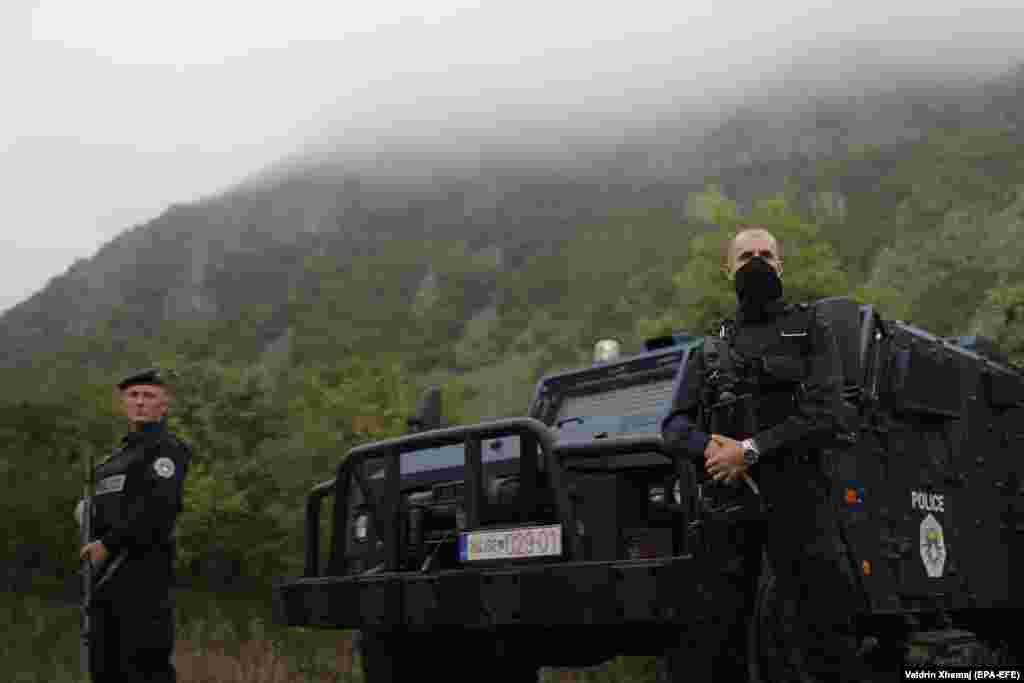
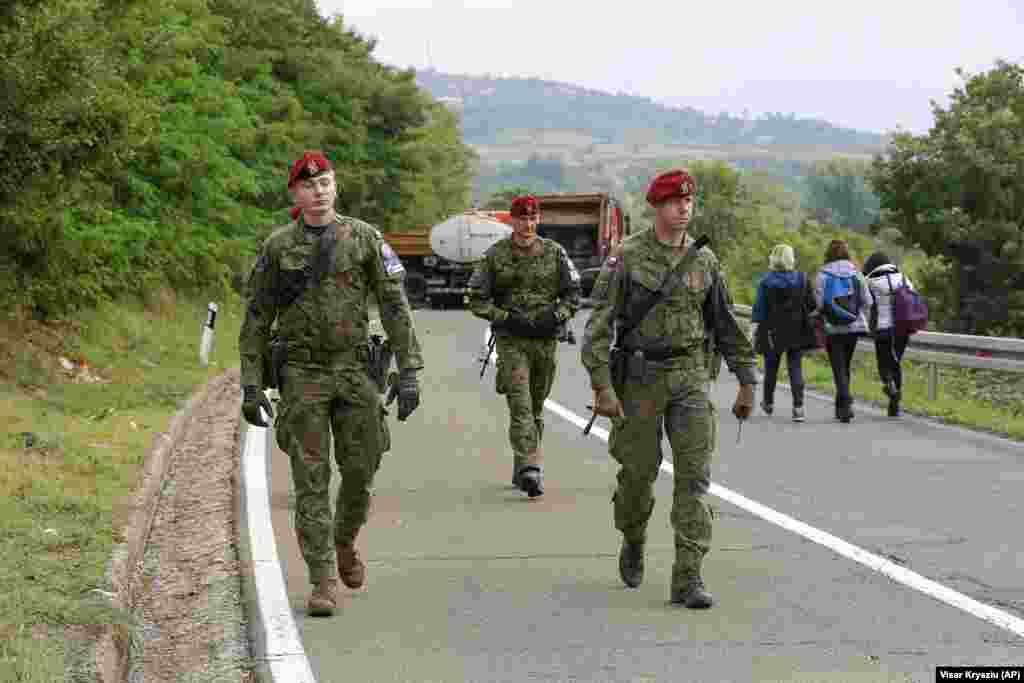
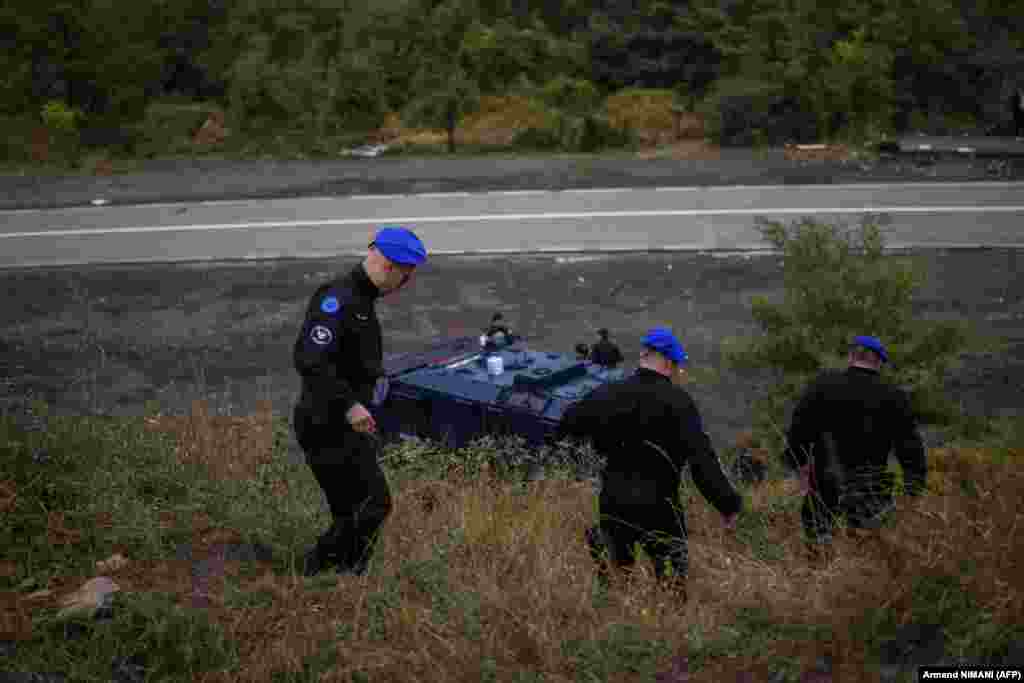
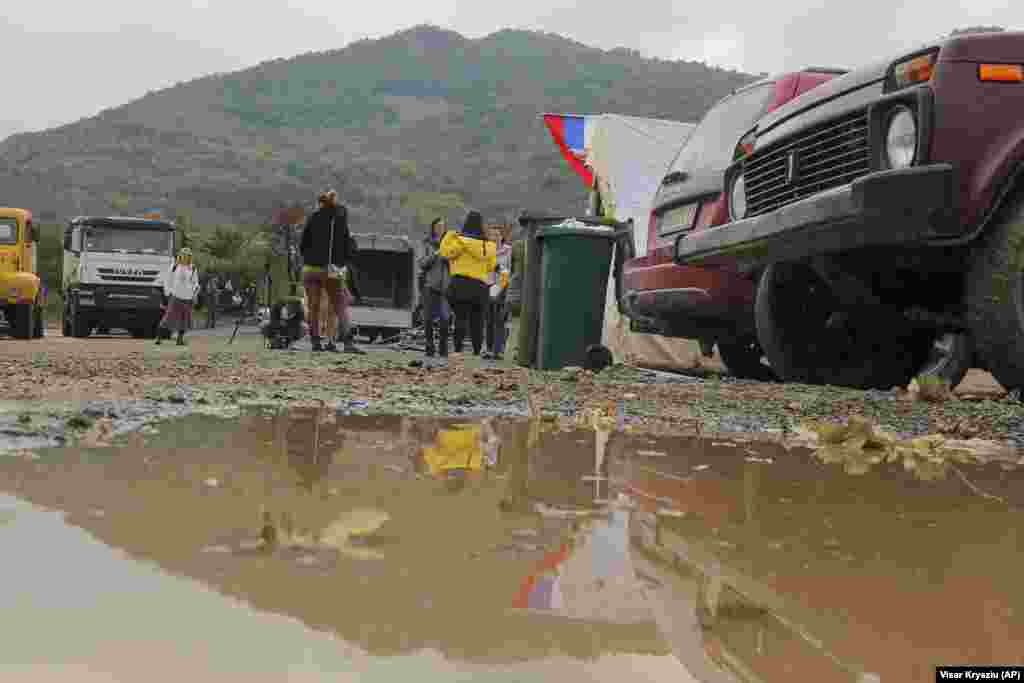
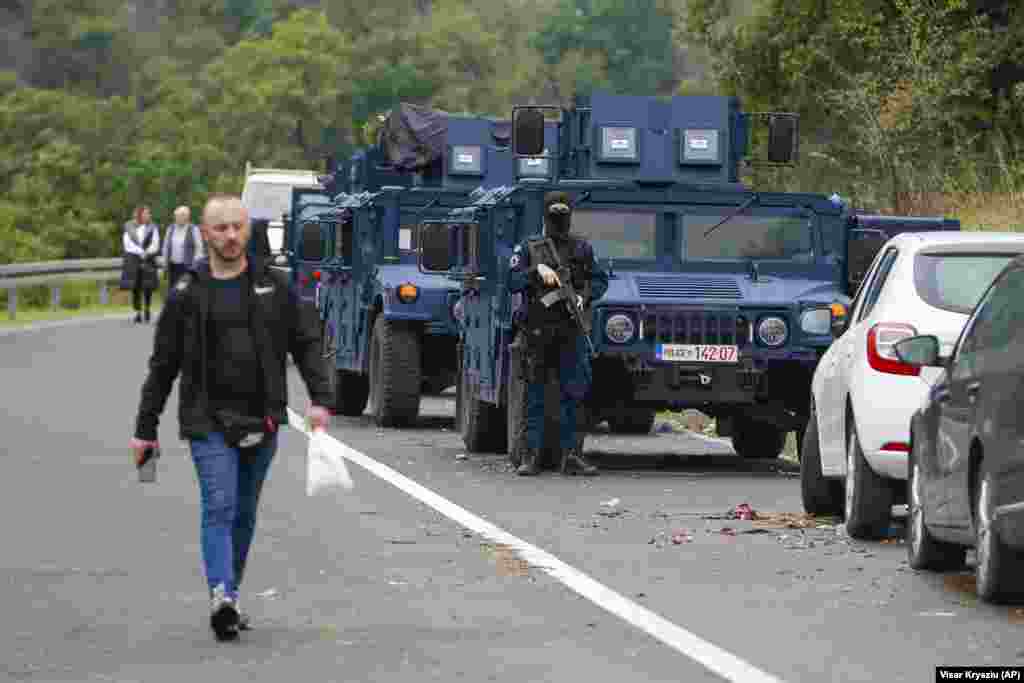
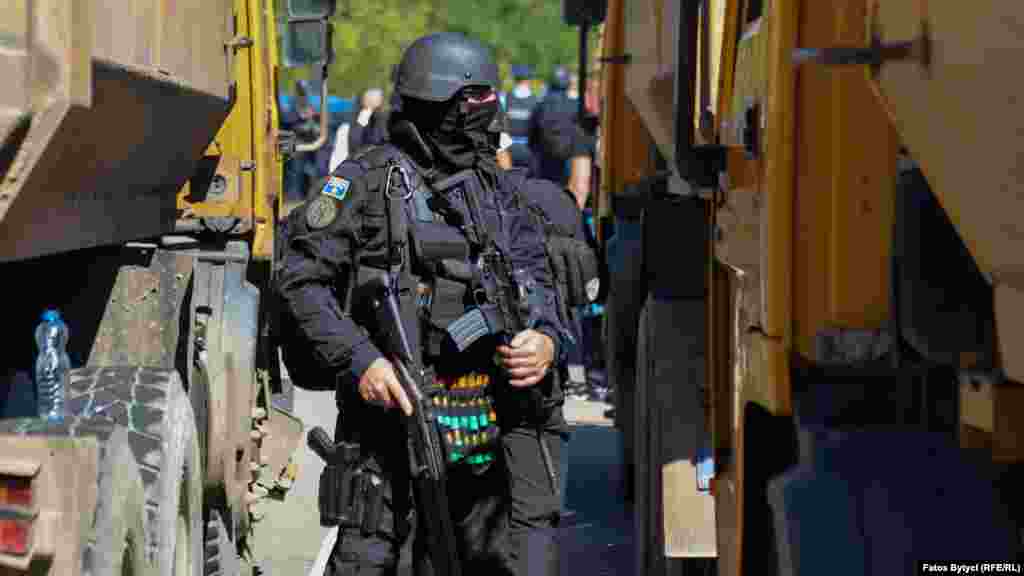
JARINJE/BRNJAK, Kosovo -- Two crossings along the Kosovo-Serbia border were reopened to traffic on October 2 as ethnic Serbian protesters removed vehicles, Kosovar special police units withdrew, and NATO troops moved in as part of an EU-mediated deal to defuse a tense standoff sparked by a dispute over vehicle license plates.
The pullout of Kosovo special police units, cars, and trucks at the Jarinje and Brnjak crossings was completed at around 3 p.m. local time with no incidents reported, putting an end a potentially explosive situation pitting Kosovar Albanian and Serbian communities against one another.
The crossings were blocked by local ethnic Serbs after Kosovar authorities on September 20 ordered all drivers entering Kosovo from Serbia to use temporary, 60-day, printed license plates.
The government said the move was in retaliation for measures in Serbia against drivers from Kosovo that have been in place since 2008, when the country declared independence from Belgrade.
Serbia does not recognize Kosovo's independence and therefore its right to impose rules and regulations such as registering cars and trucks.
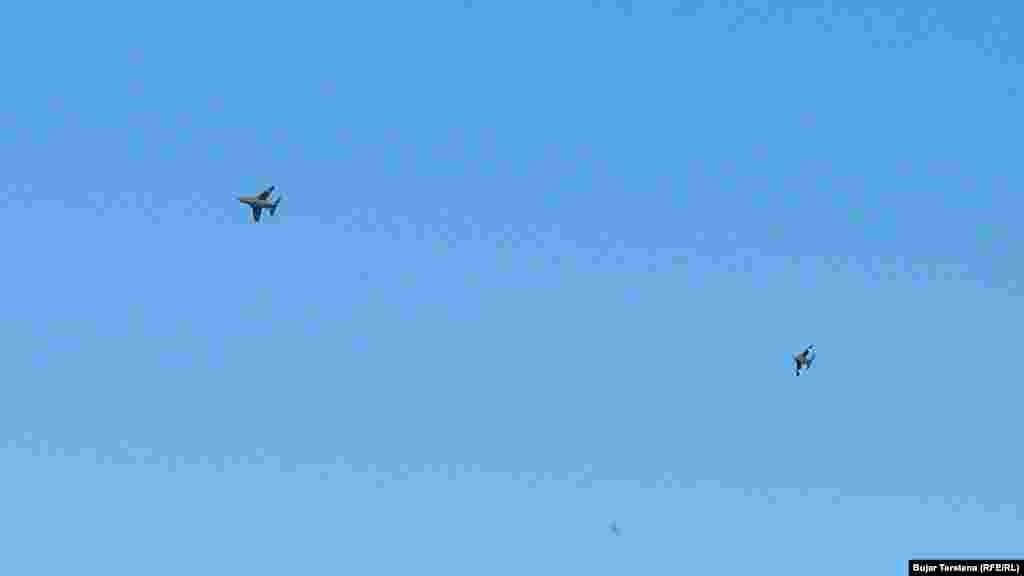
Makeshift barricades erected by local Serbs at the border crossings prompted Kosovo's government to send in police units. Serbian military jets and helicopters, meanwhile, also buzzed the border in a show of force.
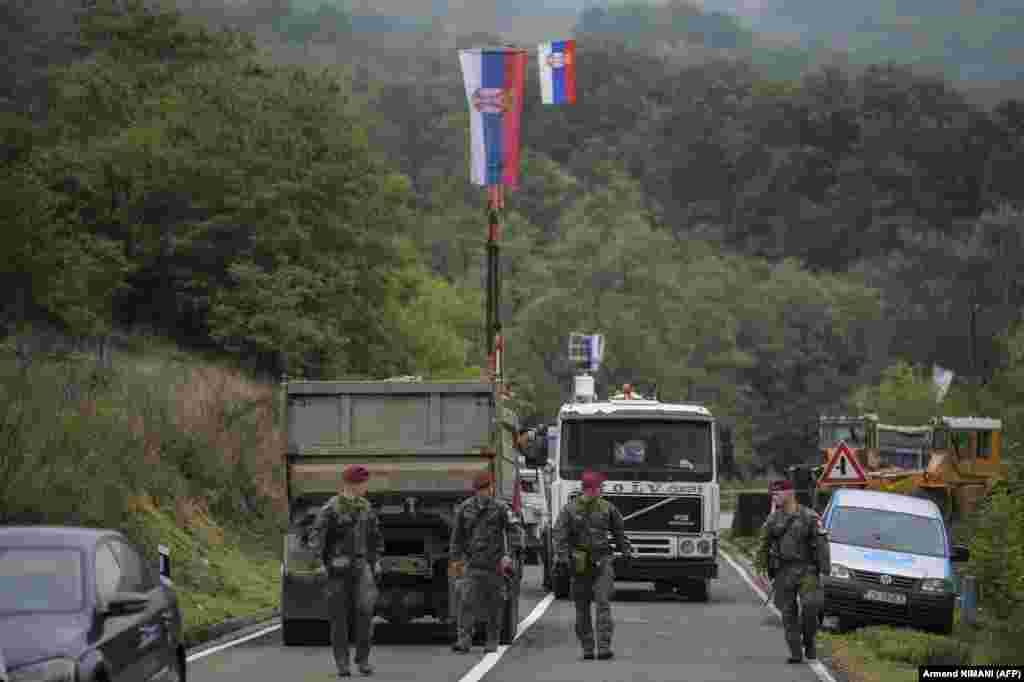
The barricades included dump trucks with Serbian flags on their side, and piles of trees.
Tensions High As Kosovo, Serbia Continue Border Standoff
1/18Kosovar special police units patrol near the border crossing between Kosovo and Serbia in Jarinje on September 28.
Two crossings on Kosovo's border with Serbia have been blocked by local Serbs since Kosovar authorities on September 20 required all drivers from Serbia entering Kosovo to use temporary printed registration details that are valid for 60 days.
Show moreShow less
2/18Ethnic Serbs walk through barricades near the Jarinje crossing on September 28.
On September 27, Kosovar Prime Minister Albin Kurti repeated an offer for both countries to lift the rule of temporary license plates. He also said he was open to talks in Brussels, but Belgrade was refusing to hold them.
Two crossings on Kosovo's border with Serbia have been blocked by local Serbs since Kosovar authorities on September 20 required all drivers from Serbia entering Kosovo to use temporary printed registration details that are valid for 60 days.
Show moreShow less
3/18NATO soldiers patrol near Jarinje on September 28, as the international community, led by the European Union, called for talks to ease tensions between Serbia and Kosovo.
NATO has led the KFOR peacekeeping force since 1999, with around 4,000 troops from 28 countries, after a 78-day bombing campaign by the military alliance ended a war that left more than 10,000 dead.
Two crossings on Kosovo's border with Serbia have been blocked by local Serbs since Kosovar authorities on September 20 required all drivers from Serbia entering Kosovo to use temporary printed registration details that are valid for 60 days.
Show moreShow less
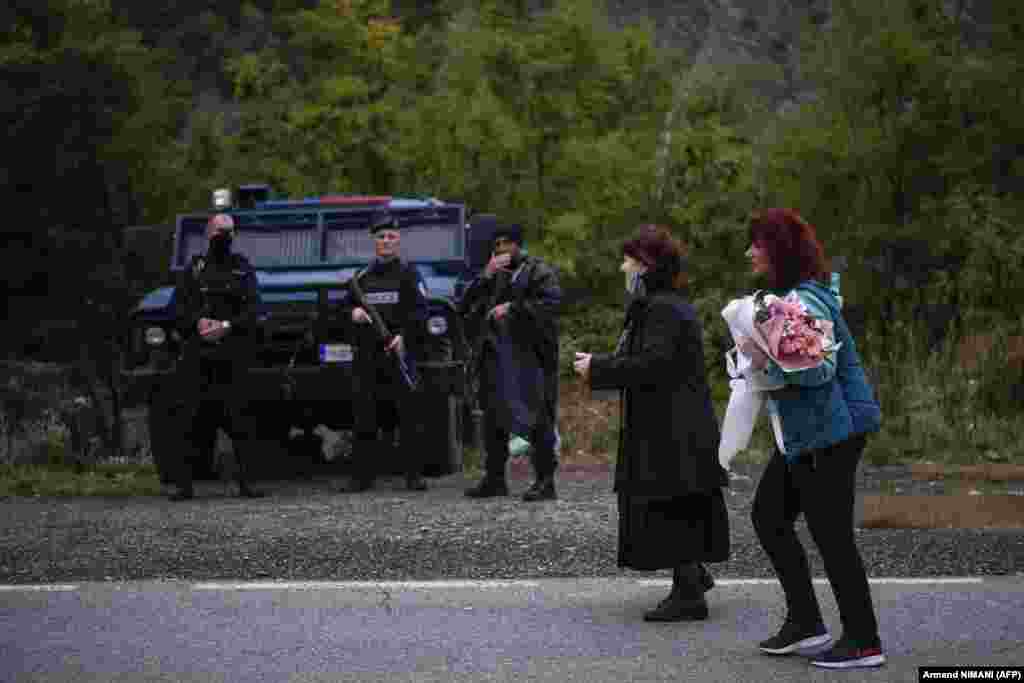
4/18Serbian women walk past Kosovar police after crossing the border on foot in Jarinje on September 28.
Serbian President Aleksandar Vucic has warned NATO that Serbia will intervene in Kosovo if Serbs there come under serious threat from the ethnic Albanian majority.
Two crossings on Kosovo's border with Serbia have been blocked by local Serbs since Kosovar authorities on September 20 required all drivers from Serbia entering Kosovo to use temporary printed registration details that are valid for 60 days.
Show moreShow less
5/18Polish soldiers from KFOR pass through barricades as they patrol near Jarinje on September 28.
KFOR is supported by the United Nations, the European Union, and other international actors. Its aim is to stave off lingering ethnic tensions between ethnic Albanians and Serbs.
Two crossings on Kosovo's border with Serbia have been blocked by local Serbs since Kosovar authorities on September 20 required all drivers from Serbia entering Kosovo to use temporary printed registration details that are valid for 60 days.
Show moreShow less
6/18Kosovar police secure the area as ethnic Serbs gathered on barricades near Jarinje on September 28.
Vucic has described Kosovo's recent license-plate move as a "criminal action," and he made the withdrawal of all Kosovar special police a condition of EU-mediated negotiations to resolve the dispute.
Two crossings on Kosovo's border with Serbia have been blocked by local Serbs since Kosovar authorities on September 20 required all drivers from Serbia entering Kosovo to use temporary printed registration details that are valid for 60 days.
Show moreShow less
7/18EU police officers patrol near the border at Jarinje on September 28.
European Commission spokeswoman Diana Spinant on September 27 urged both sides to "sit down together and to put an end to the verbal escalation in the region."
Two crossings on Kosovo's border with Serbia have been blocked by local Serbs since Kosovar authorities on September 20 required all drivers from Serbia entering Kosovo to use temporary printed registration details that are valid for 60 days.
Show moreShow less
8/18Ethnic Serbs man the barricades near Jarinje on September 28.
Kosovo's declaration of independence is backed by the United States, Britain, and most EU member states, but its membership of the United Nations is blocked by Russia, Serbia's traditional ally.
Two crossings on Kosovo's border with Serbia have been blocked by local Serbs since Kosovar authorities on September 20 required all drivers from Serbia entering Kosovo to use temporary printed registration details that are valid for 60 days.
Show moreShow less
9/18Kosovar Serbs sit by a bonfire near the border crossing at Jarinje on September 28.
Two crossings on Kosovo's border with Serbia have been blocked by local Serbs since Kosovar authorities on September 20 required all drivers from Serbia entering Kosovo to use temporary printed registration details that are valid for 60 days.
Show moreShow less
10/18An ethnic Serb walks past Kosovar police securing the area near Jarinje on September 28.
The EU, NATO, and the United States have all urged Kosovo and Serbia to immediately exercise restraint and refrain from unilateral actions.
Two crossings on Kosovo's border with Serbia have been blocked by local Serbs since Kosovar authorities on September 20 required all drivers from Serbia entering Kosovo to use temporary printed registration details that are valid for 60 days.
Two crossings on Kosovo's border with Serbia have been blocked by local Serbs since Kosovar authorities on September 20 required all drivers from Serbia entering Kosovo to use temporary printed registration details that are valid for 60 days.
Show moreShow less
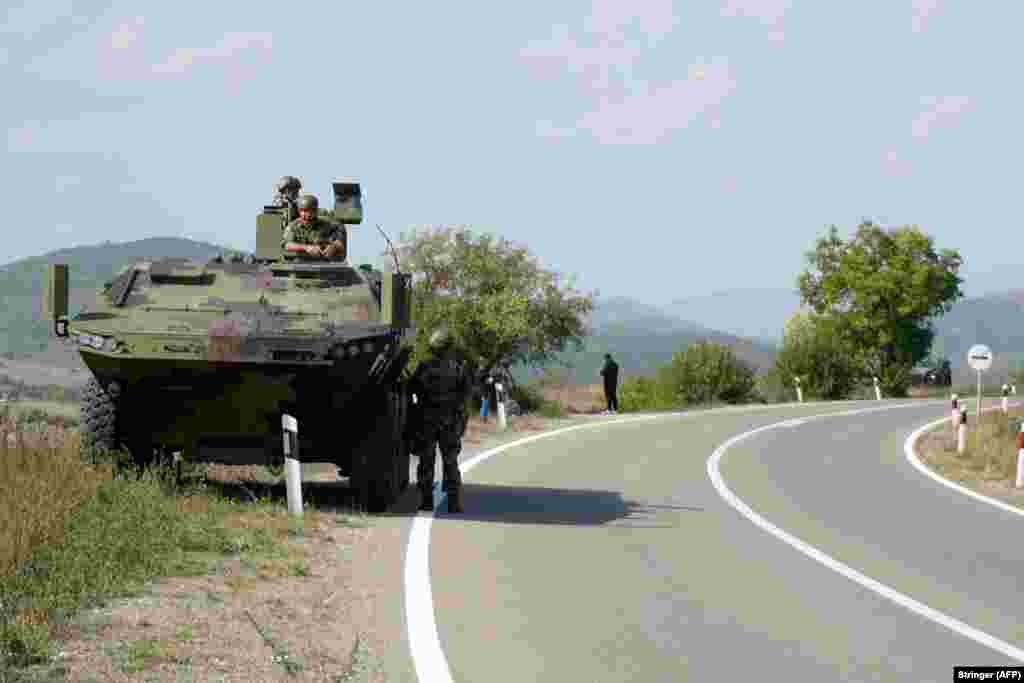
12/18Serbian Army soldiers stand guard by their armored vehicle in the village of Rudnica, near the southern Serbian town of Raska, on September 27.
On September 26, Serbian Defense Minister Nebojsa Stefanovic visited troops at two military bases near the Kosovo border, accompanied by Russia's ambassador to Serbia.
Two crossings on Kosovo's border with Serbia have been blocked by local Serbs since Kosovar authorities on September 20 required all drivers from Serbia entering Kosovo to use temporary printed registration details that are valid for 60 days.
Two crossings on Kosovo's border with Serbia have been blocked by local Serbs since Kosovar authorities on September 20 required all drivers from Serbia entering Kosovo to use temporary printed registration details that are valid for 60 days.
Show moreShow less
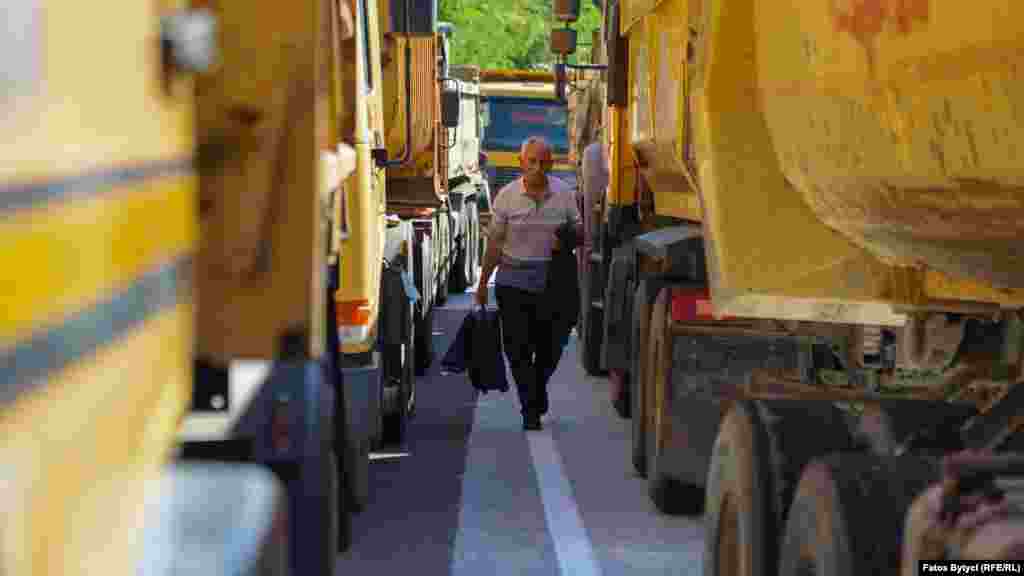
14/18A man passes through trucks placed by local Serbs to block the road in Jarinje on September 26.
Two crossings on Kosovo's border with Serbia have been blocked by local Serbs since Kosovar authorities on September 20 required all drivers from Serbia entering Kosovo to use temporary printed registration details that are valid for 60 days.
Show moreShow less
15/18A picture of Serbian President Aleksandar Vucic is seen close to a border crossing at Jarinje.
The confrontation has already boiled over into violence, with a vehicle-registration office and another Interior Ministry building in northern Kosovo being attacked on September 25, according to police.
Two crossings on Kosovo's border with Serbia have been blocked by local Serbs since Kosovar authorities on September 20 required all drivers from Serbia entering Kosovo to use temporary printed registration details that are valid for 60 days.
Show moreShow less
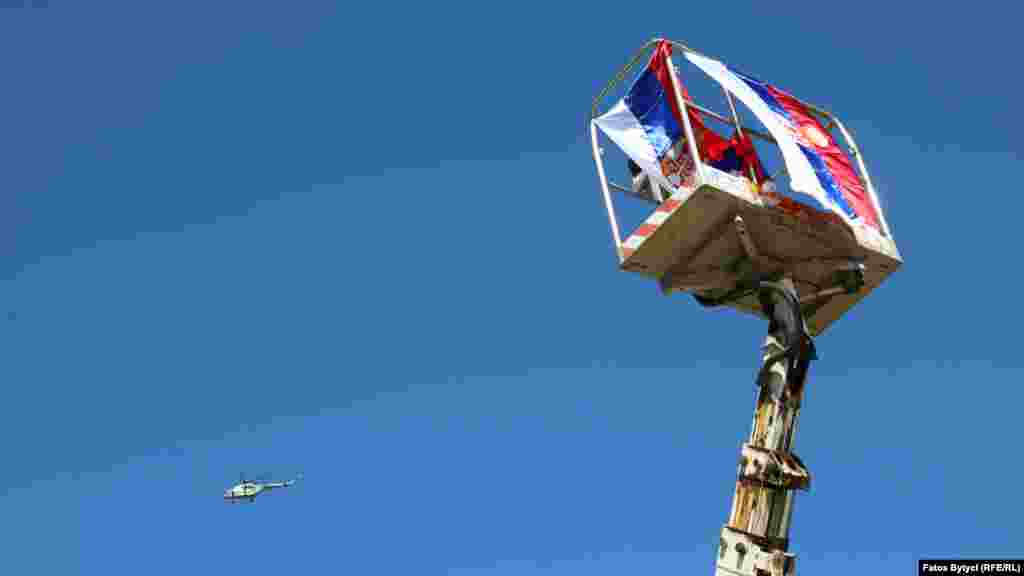
16/18A NATO helicopter flies over a Serbian flag in Jarinje.
Two crossings on Kosovo's border with Serbia have been blocked by local Serbs since Kosovar authorities on September 20 required all drivers from Serbia entering Kosovo to use temporary printed registration details that are valid for 60 days.
Show moreShow less
17/18A Kosovar police officer stands next to trucks blocking the road in Jarinje.
Two crossings on Kosovo's border with Serbia have been blocked by local Serbs since Kosovar authorities on September 20 required all drivers from Serbia entering Kosovo to use temporary printed registration details that are valid for 60 days.
Show moreShow less
18/18Serbian warplanes are seen flying over the border with Kosovo at Jarinje on September 26.
Two crossings on Kosovo's border with Serbia have been blocked by local Serbs since Kosovar authorities on September 20 required all drivers from Serbia entering Kosovo to use temporary printed registration details that are valid for 60 days.
Show moreShow less
Previous slide
Next slide
Under the deal, workers removed the barricades and Kosovar authorities ordered the withdrawal of its special police units.
Troops from the NATO-led peacekeeping force in Kosovo, KFOR, will deploy at the crossings for the next two weeks in an effort to help ensure cross-border traffic resumes without problem.
"As from this weekend and for the next two weeks, KFOR will maintain a temporary robust and agile presence in the area...to ensure a safe and secure environment and freedom of movement for all communities living in Kosovo," the force said in a statement.
The European Union brokered talks between Serbian and Kosovar government officials in Brussels this week to break the impasse.
EU and U.S. officials also called for dialogue between Pristina and Belgrade to continue to normalize their relations, which remain strained despite substantial cross-border commerce.
RFE/RL's Balkan Service correspondents Arton Konushevci reported from Jarinje and Sandra Cvetkovic from Gracanica