




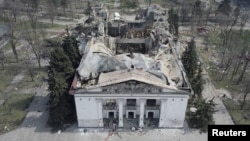
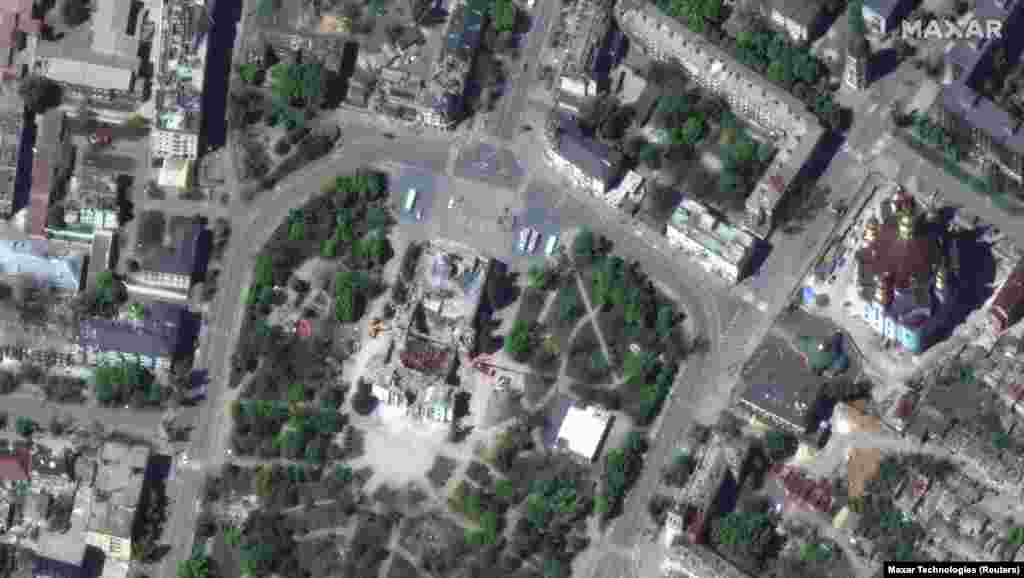
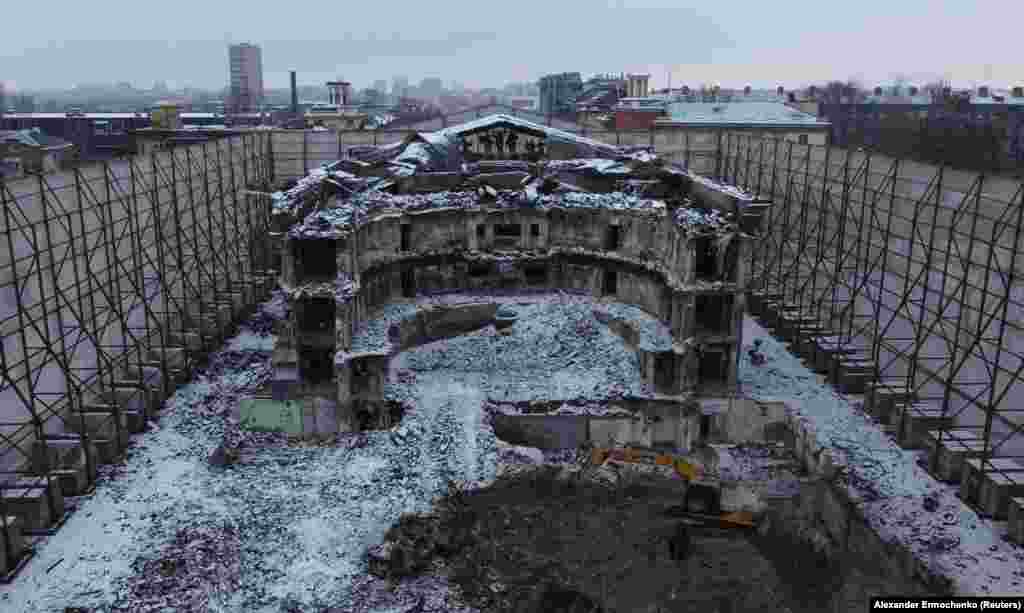
The attack on the Mariupol Drama Theater was one of the most notorious Russian atrocities in its near four-year full-scale invasion of Ukraine, reportedly killing hundreds of civilians -- including children -- who were sheltering in the basement and destroying one of the city’s cultural icons.
Now, Russian occupation authorities in Mariupol have held a glitzy ceremony to celebrate the theater’s reopening, but there’s a snag: There are no shows scheduled there for the foreseeable future.
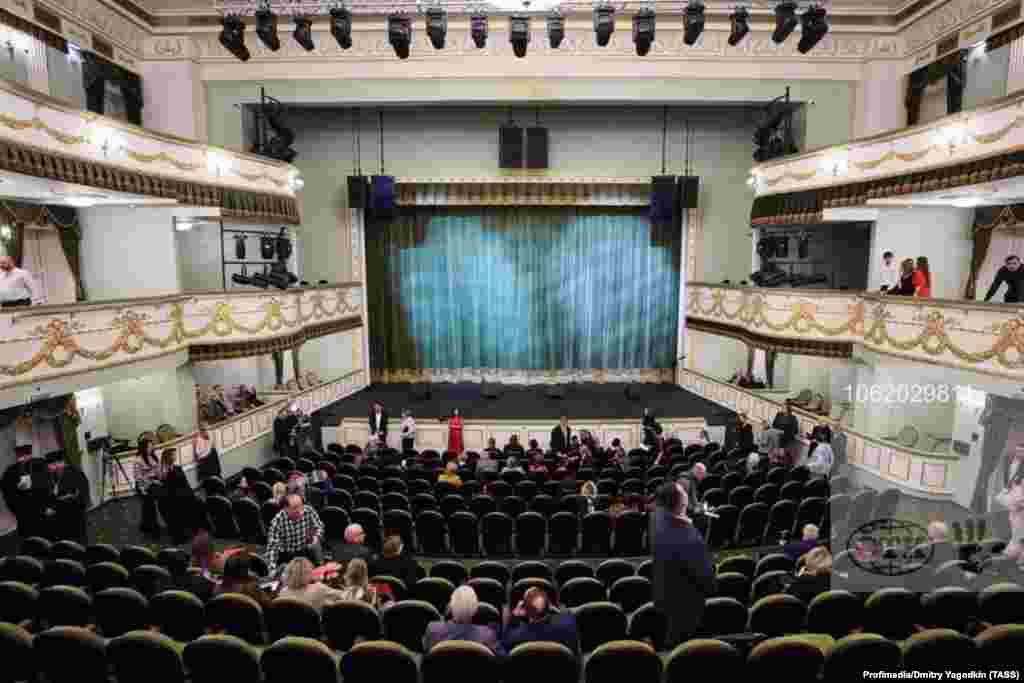
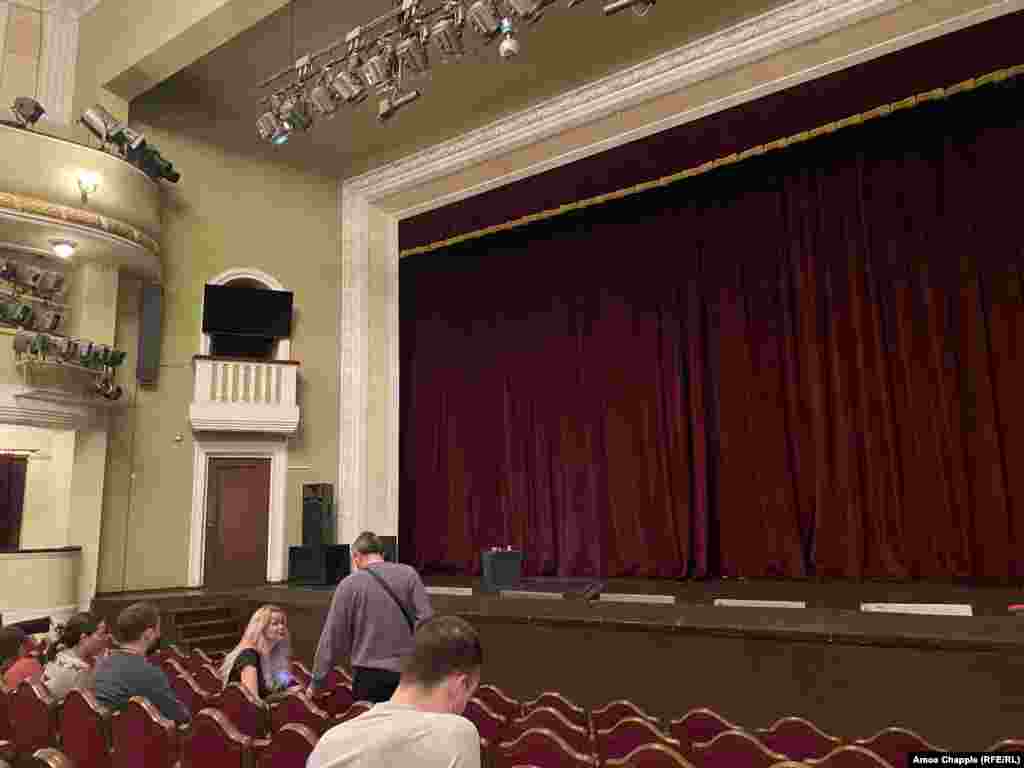
The reconstruction of the building is, according to a former adviser to the city’s mayor, incomplete. Petro Andryuschenko told RFE/RL’s Ukrainian Service that only the public parts of the building have been completed: the entrance, the auditorium, and the stage.
Gilded Grave: Photographers Capture Interior Of Rebuilt Mariupol Theater
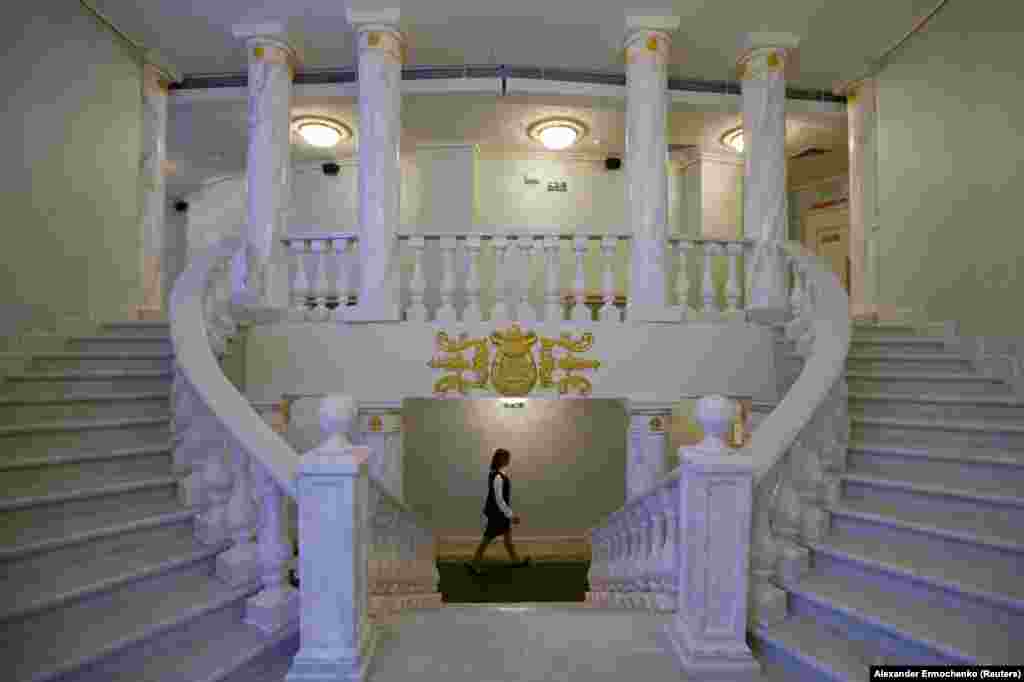
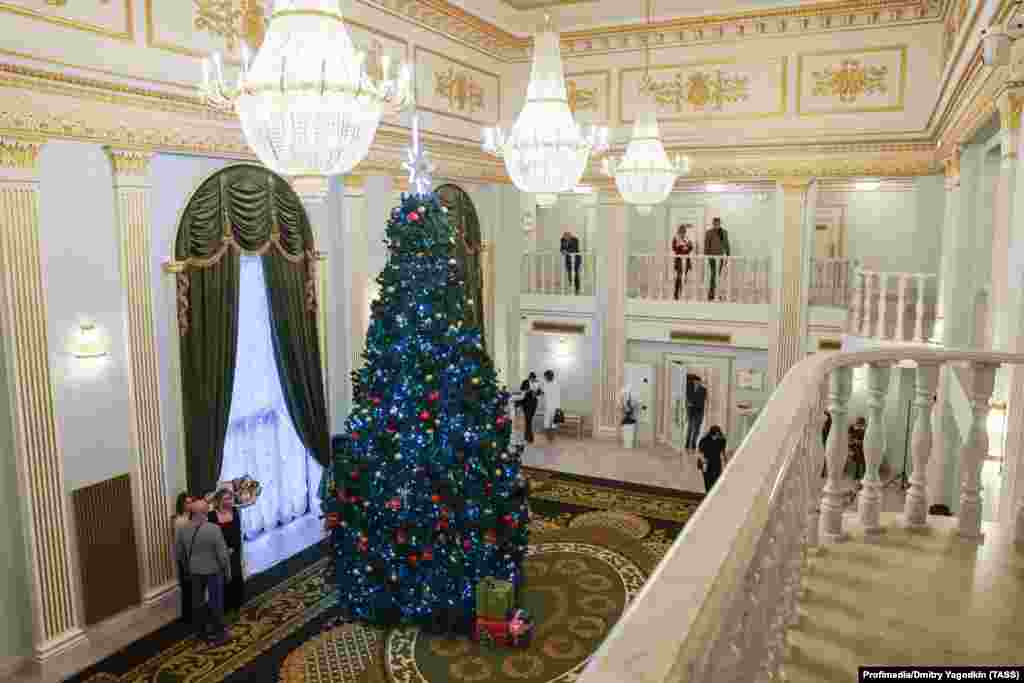
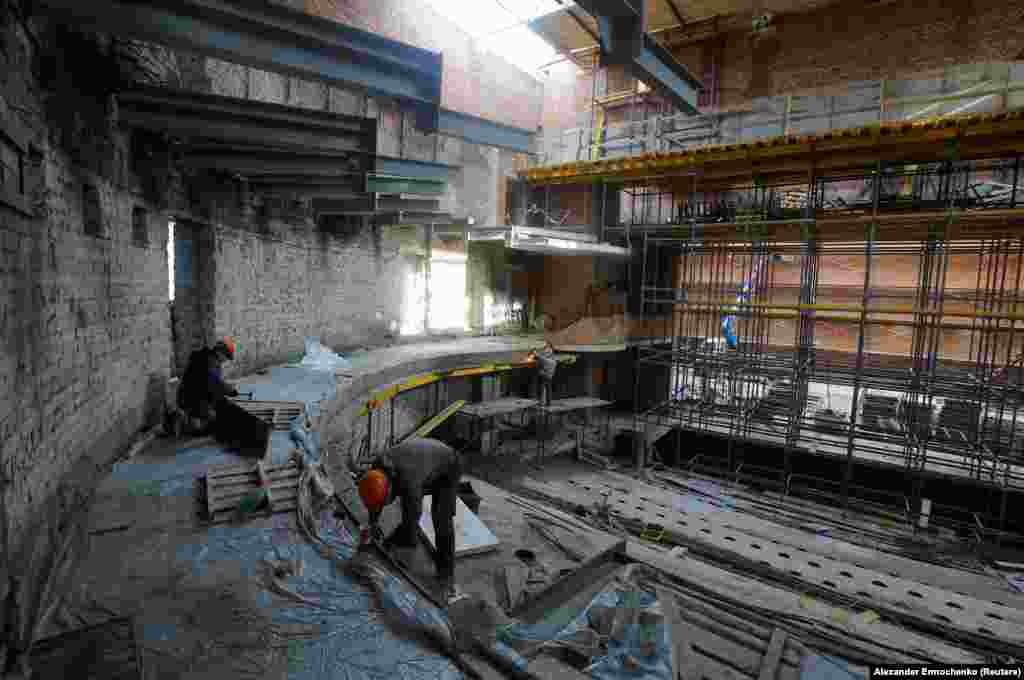
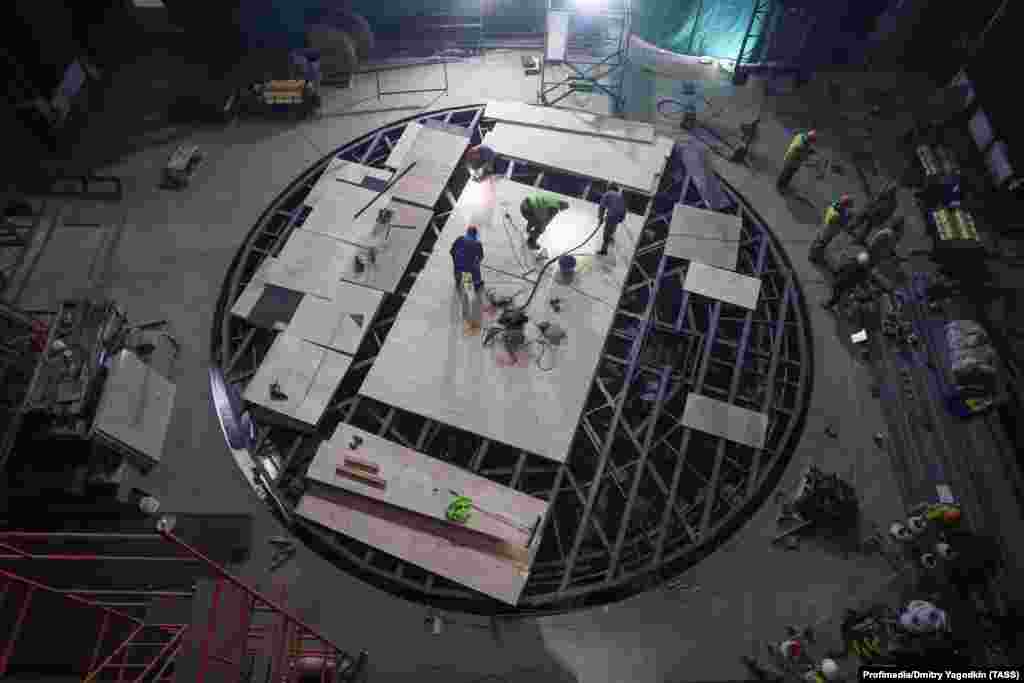
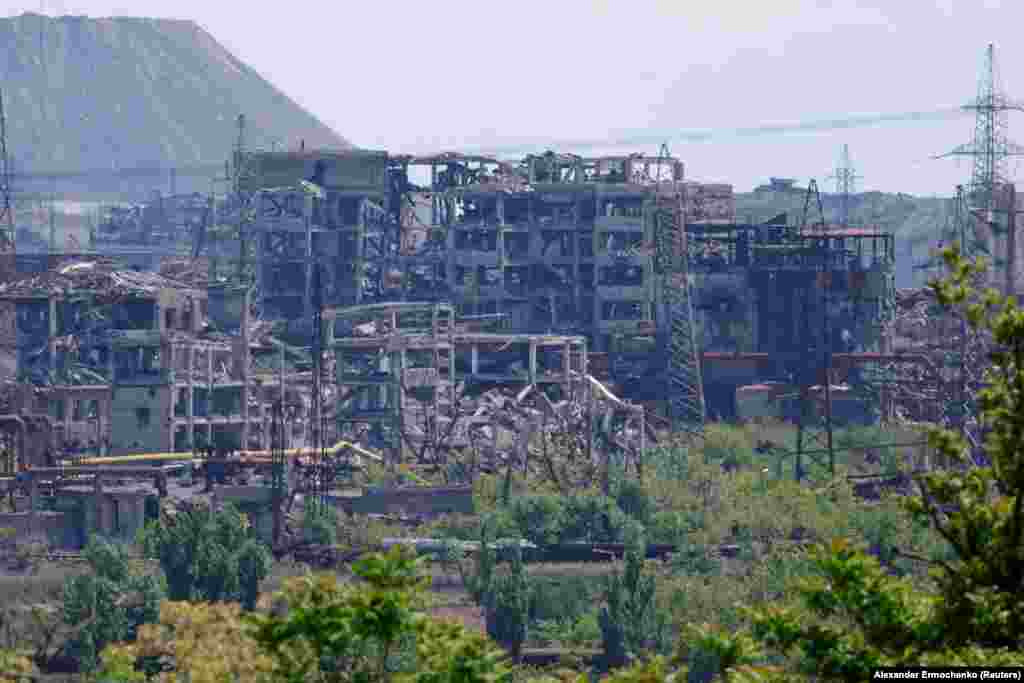
“Two-thirds of the theater -- dressing rooms, technical rooms, all sorts of stuff -- is not even close to ready,” said Andryuschenko, who now heads the Center for the Study of the Occupation, a nongovernmental organization.
The theater’s website does have tickets for sale. But it says performances are being held at a completely different address -- the philharmonic concert hall.
What Happened To The Theater?
The attack on the theater took place as Russian forces were advancing into Mariupol at the beginning of the full-scale invasion, in March 2022.
Civilians were using it as a bomb shelter and a large sign had been placed outside saying "Children."
At least 12 deaths were documented, but city authorities said some 300 people were killed and a later investigation by the Associated Press recorded 600 fatalities.
The attack was widely condemned as a war crime. Russia has denied carrying out the attack.
But on December 28, all of this was forgotten as Russian occupation authorities staged a show with music and fancy-dress costumes on the newly reconstructed stage. Actors from St. Petersburg were dressed as pirates, harlequins, and 18th-century ladies, while a singer crooned in a tuxedo.
Builders from St. Petersburg came to reconstruct the building, and its mayor, Aleksandr Beglov, told the audience that “this theater is the symbol and soul of Mariupol.”
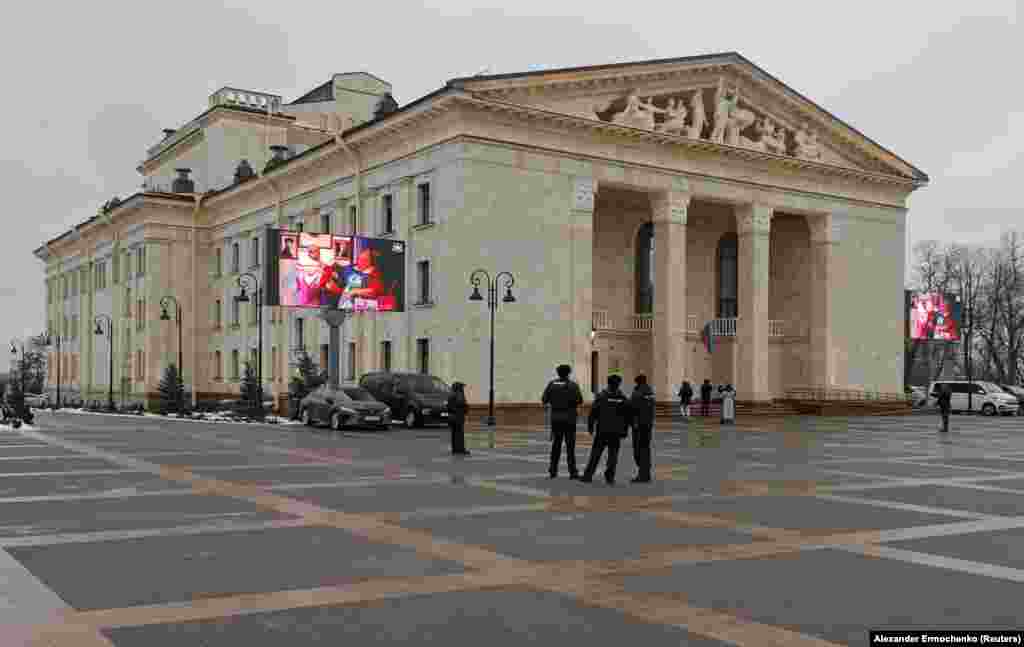
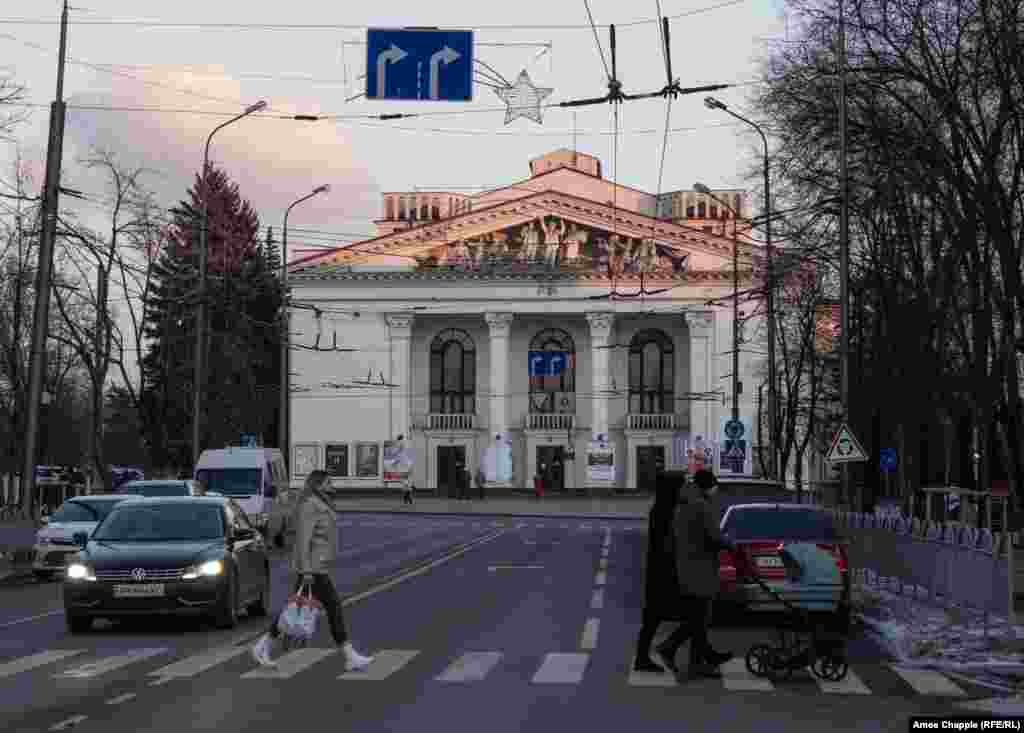
The new building may look similar to the old one, but there are many differences.
Photos posted online during the reconstruction revealed that it is made of bricks covered with plaster. The original was made of white stone hewed in Crimea, another part of Ukraine that Russian has taken control of.
All but one of the pediment sculptures were destroyed after the Russian attack. Nine new ones, made in the Russian city of Rostov-on-Don, appear to be different.
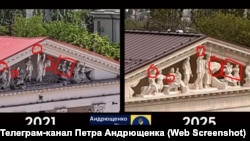
“The theater has a slightly different color, the glazing has been changed, some structural elements have been changed. They have not even managed to make the statues on the pediment even close to the originals,” Denis Kochubei, who was deputy mayor of Mariupol when Russia attacked, told RFE/RL.
'It Is Easier To Forget'
The area in front of the theater, once a pedestrian plaza, is now a parking lot.
Pro-Kremlin social media channels have praised the interior, saying it is “more modern” with features such as ramps for wheelchair users, elevators, a more spacious box office.
"They are building their own memories of this war,” Andryushenko said. “In these memories…there will be no tragedy, there will be nothing. It is easier to forget.”
Konstantin Batozsky, a political scientist and head of the Azov Region Development Agency, a nonprofit group, agrees.
"There is no bombed theater -- it means there was no tragedy,” he said.
“The point of this is to make sure that in people's memory this tragedy, in which civilians died, simply never existed. You don't see a bombed theater -- it means it never happened."
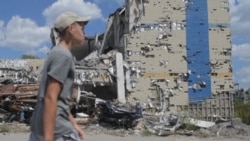

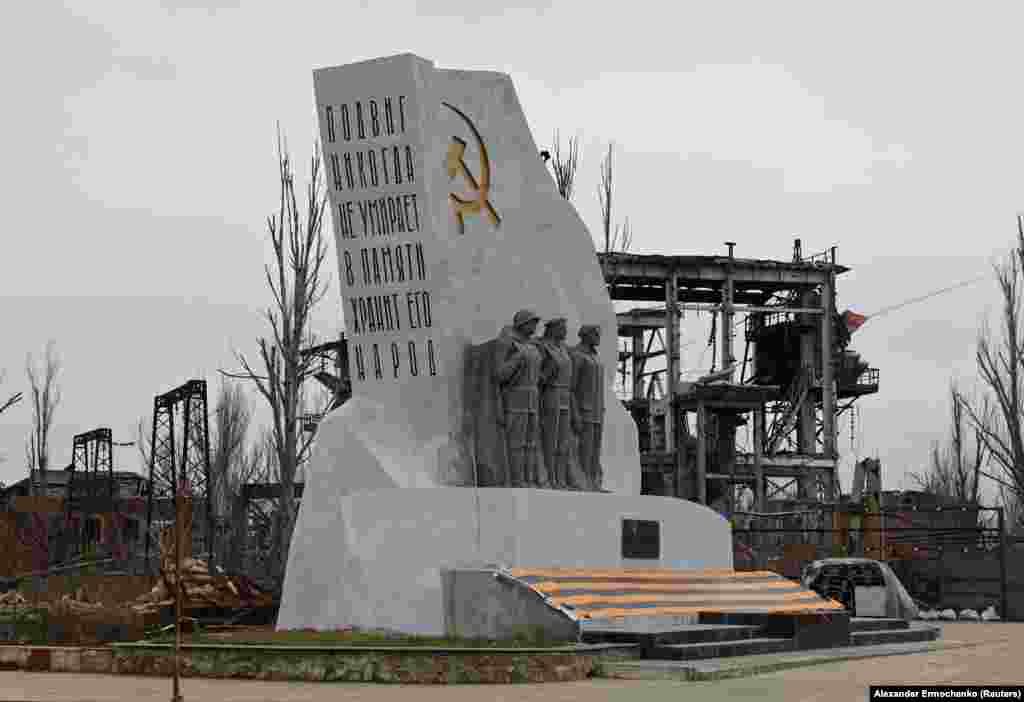
The theater was just one of many buildings that was devastated when Russian forces laid siege to Mariupol in the early months of 2022, before fully overrunning it in May.
Since then, Russian media have showcased redevelopment projects in the city.
Batozsky said the reconstruction of the theater should be seen in this context -- as propaganda.
“Most of the townspeople still haven’t received housing and are living in ruins,” he said. “Behind the facade of the [city] center, which they are ‘rebuilding’ in an accelerated mode, are just decorations of ruins, in which people somehow survive. So, they absolutely don’t care about this theater.”