




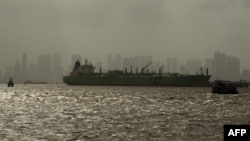
WASHINGTON -- The Trump administration has allowed a controversial waiver on sanctions targeting Russian seaborne oil to expire, reimposing restrictions that had temporarily enabled countries such as India to continue purchasing Russian crude despite Western efforts to curb Moscow's wartime revenues.
The move, which took effect on May 16 after the Treasury Department declined to renew General License 134B, highlights the increasingly difficult balance Washington faces between tightening pressure on the Kremlin and preventing further disruption to global energy markets already rattled by the Iran conflict and instability around the Strait of Hormuz.
The waiver, first introduced in March and extended in April, permitted transactions involving certain Russian oil cargoes that had already been loaded onto tankers before sanctions deadlines took effect.
Administration officials defended the measure as a temporary safeguard aimed at preventing a deeper global energy shock as fighting in the Middle East pushed oil prices higher and threatened key shipping routes.

Critics in Washington and Kyiv, however, argued the policy effectively handed Moscow a financial reprieve at a moment when the United States and its European allies were seeking to tighten economic pressure on Russia over its war against Ukraine.
Lawmakers Criticize Waiver
Two senior Democratic senators, Jeanne Shaheen and Elizabeth Warren, on May 15 urged the administration not to renew the waiver, saying there was no indication it had reduced fuel costs for American consumers while allowing Russia to continue generating billions in oil revenue.
"Treasury must finally end its ill-conceived policy of helping Russia make even more money from President [Donald] Trump's reckless war in Iran," the senators said in a joint statement.
Republican lawmakers also signaled support for maintaining sanctions pressure on Moscow, though some warned against policies that could further strain allied economies dependent on Russian energy supplies.
Brian Mast, the Republican chairman of the House Foreign Affairs Committee, said on May 15 that sanctions should continue but cautioned they must avoid inflicting greater damage on allies than on Russia itself.
"Sanctions on Russia are a great thing. I'm all for continuing them," Mast said.
But he added that sanctions policy must ensure "more harm to our enemies and more good to us as allies, not more harm to our allies," arguing that many European countries had become too dependent on Russian oil and gas to sever ties immediately without risking serious economic consequences.
The administration's decision comes as US gasoline prices remain elevated and inflation continues to weigh on consumers ahead of November's midterm elections.
The waiver had become one of the most disputed sanctions exemptions introduced since Russia launched its full-scale invasion of Ukraine in 2022. Some European officials privately complained that relaxing restrictions undermined broader efforts to deprive Moscow of critical wartime income, particularly as higher global crude prices increased Russia’s earnings potential.
Analysts Doubt Tougher Stance Will Hold
Despite the waiver's expiration, sanctions analysts expressed skepticism that the administration's tougher posture will remain in place for long.
Several energy-dependent Asian countries -- including India, Indonesia, and other major importers -- are believed to have lobbied heavily for an extension as instability in the Middle East tightened global energy supplies.

Brett Erickson, a sanctions expert at Obsidian Risk Advisors, told RFE/RL on May 16 that Washington increasingly faces a conflict between geopolitical objectives and energy-market realities.
"Washington has now jiujitsu-ed itself into facing a collision between ethics and crisis," Erickson said. "Either it turns its back on Ukraine by allowing Russian revenues to keep flowing, or it turns its back on Asia by choking off one of the last major energy pressure valves during one of the worst energy disruptions in history."
Erickson said Treasury officials have repeatedly adopted a hard public line on Russia only to soften restrictions once energy-market pressures intensify.
"There is a very real likelihood we see some form of additional sanctions relief in the coming days," he said. "Treasury has spent much of this conflict trapped in a cycle of strategic whiplash, publicly projecting toughness only to rapidly U-turn once market realities and energy pressures collide with public posturing."
Analysts monitoring the sanctions regime say attention is already shifting toward the possibility of another temporary extension or a narrower carve-out benefiting major Asian refiners, including India's Reliance Industries, particularly as global strategic petroleum reserves continue to decline.
Kyiv Calls For Stronger Measures
For Ukraine, the temporary easing of sanctions never appeared strategically justified.
Vladyslav Vlasiuk, a senior adviser to Ukrainian President Volodymyr Zelenskyy, has repeatedly argued that sanctions on Russia are producing results and should be strengthened rather than diluted.
"The more sanctions are applied against Russia, the quicker we will see success in peace negotiations," Vlasiuk told RFE/RL last month, warning that even temporary waivers could generate billions of dollars in additional revenue for Moscow's war effort.
He also questioned whether Russian exports were significant enough to offset supply disruptions stemming from instability around the Strait of Hormuz, one of the world's most strategically important oil transit routes.
The geopolitical stakes could increase further next week when US Secretary of State Marco Rubio is expected to visit India amid mounting diplomatic pressure surrounding energy security, sanctions enforcement, and global crude supply arrangements.

