Ukrainian President Volodymyr Zelenskiy delivers a speech from the exclusion zone.
Ukrainian President Volodymyr Zelenskiy called on the international community to work together to prevent a repeat of the Chernobyl disaster on the 35th anniversary of what is considered the worst nuclear disaster in history.
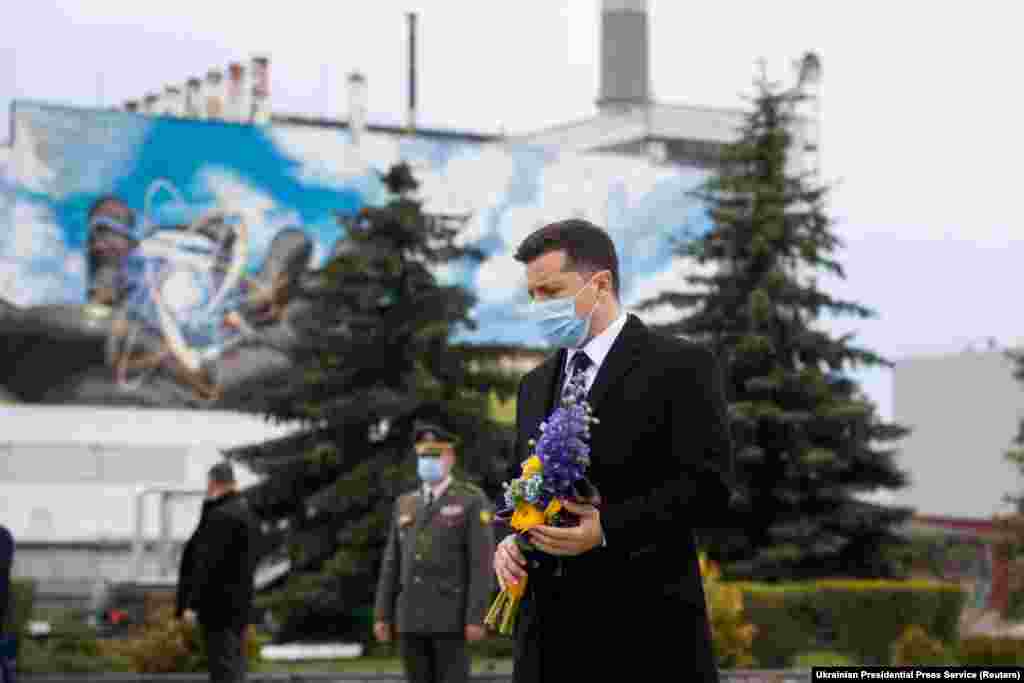
"Our task is to do everything possible to bolster security and strengthen safety to avoid and never repeat a similar disaster in the future," Zelenskiy said in a televised address on April 26 during a visit to the Chernobyl exclusion zone to mark International Chernobyl Disaster Remembrance Day.
In the capital, Kyiv, dozens of people joined a ceremony and placed flowers at a Chernobyl memorial.
Ukraine Marks 35th Anniversary Of Chernobyl Nuclear Disaster
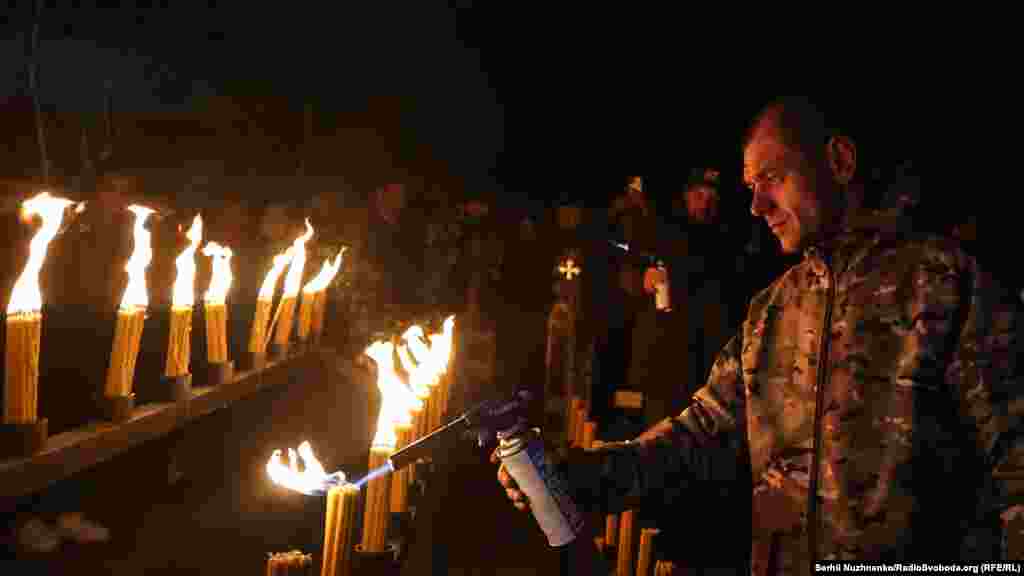
1/16A Chernobyl power plant employee holds a candle near a memorial in the shape of a radioactivity sign in the Ukrainian city of Slavutych on April 25. Many of power station's personnel lived in Slavutych, located some 50 kilometers from Chernobyl.
People across Ukraine, including President Volodymyr Zelenskiy, have marked the 35th anniversary of the 1986 Chernobyl disaster, the world's worst civilian nuclear accident.
Show moreShow less
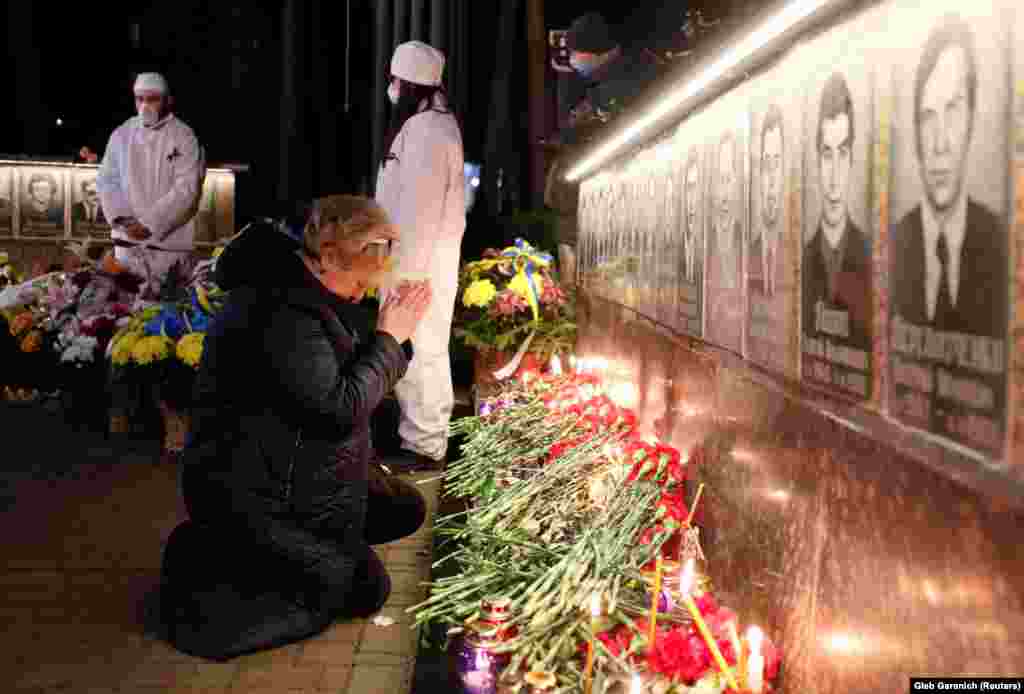
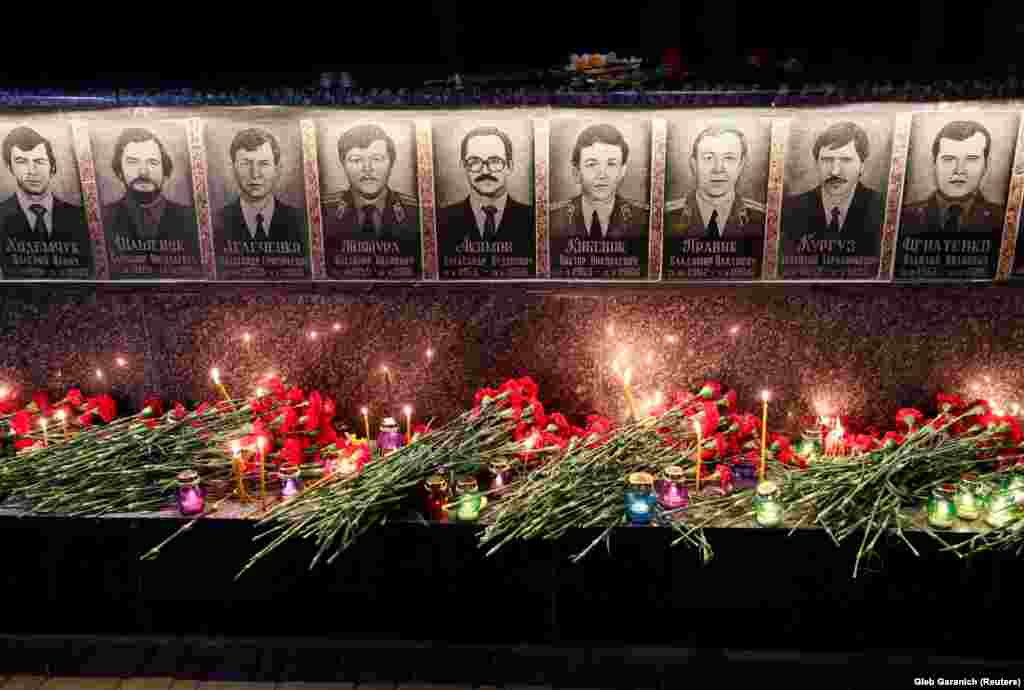
2/16A woman prays at a memorial in Slavutych dedicated to firefighters and workers who died in the Chernobyl nuclear disaster.
People across Ukraine, including President Volodymyr Zelenskiy, have marked the 35th anniversary of the 1986 Chernobyl disaster, the world's worst civilian nuclear accident.
Show moreShow less
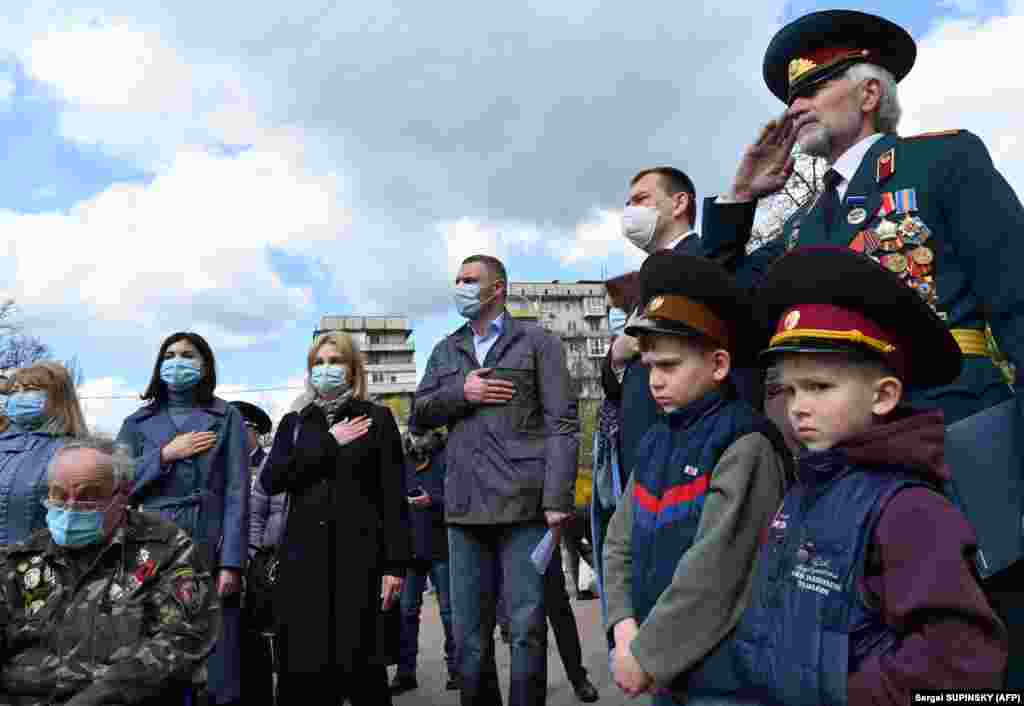
3/16People in the Ukrainian capital, Kyiv, attend an April 26 memorial to firefighters and workers who died in the 1986 catastrophe.
People across Ukraine, including President Volodymyr Zelenskiy, have marked the 35th anniversary of the 1986 Chernobyl disaster, the world's worst civilian nuclear accident.
Show moreShow less
4/16A woman attends a commemoration ceremony in Kyiv on April 26 marking the 35th anniversary of the Chernobyl disaster.
People across Ukraine, including President Volodymyr Zelenskiy, have marked the 35th anniversary of the 1986 Chernobyl disaster, the world's worst civilian nuclear accident.
Show moreShow less
5/16An Orthodox priest leads a memorial service in the abandoned city of Prypyat marking the 35th anniversary of the Chernobyl accident. Located near the doomed power plant, the city was evacuated after the disaster and remains a ghost town in the exclusion zone.
People across Ukraine, including President Volodymyr Zelenskiy, have marked the 35th anniversary of the 1986 Chernobyl disaster, the world's worst civilian nuclear accident.
Show moreShow less
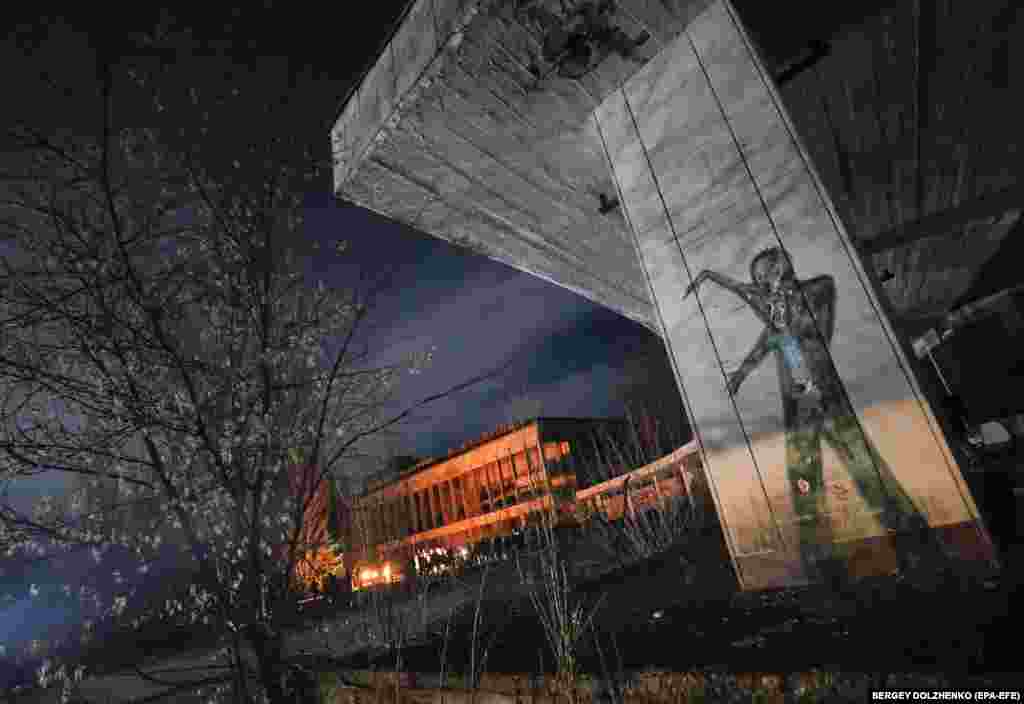
6/16Candlelight from an overnight vigil illuminates a building in the abandoned city of Prypyat, near Chernobyl.
People across Ukraine, including President Volodymyr Zelenskiy, have marked the 35th anniversary of the 1986 Chernobyl disaster, the world's worst civilian nuclear accident.
Show moreShow less
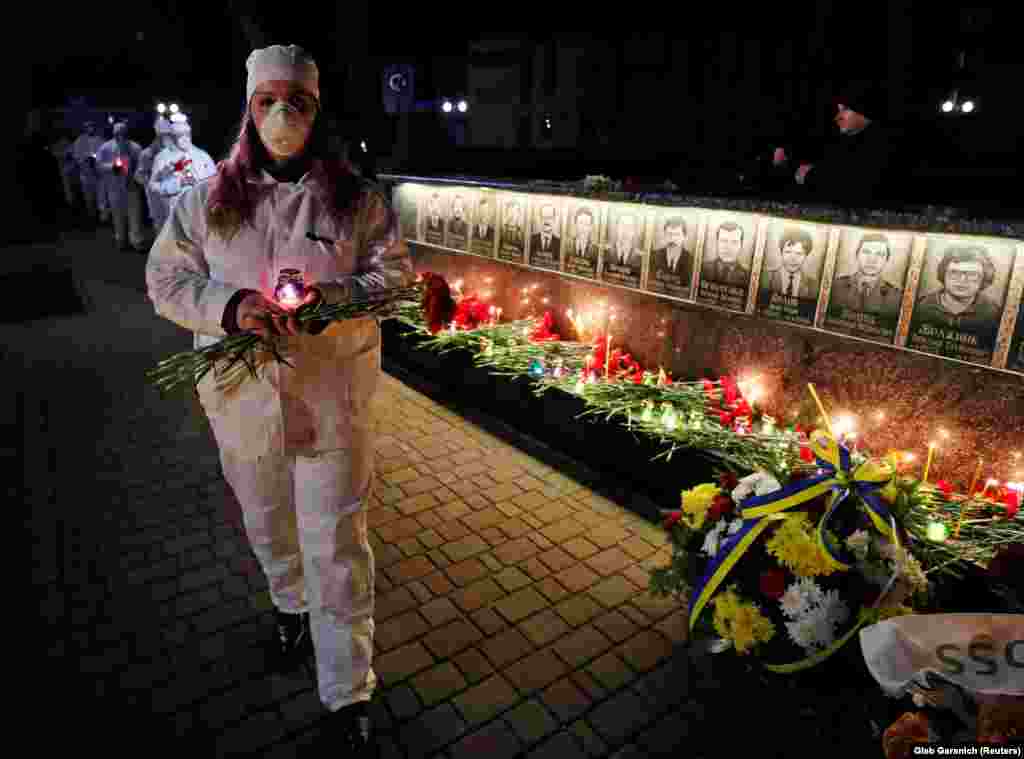
7/16Staff from the Chernobyl nuclear plant hold candles as they visit a memorial dedicated to firefighters and workers who died after the disaster, during an overnight service in Slavutych.
People across Ukraine, including President Volodymyr Zelenskiy, have marked the 35th anniversary of the 1986 Chernobyl disaster, the world's worst civilian nuclear accident.
Show moreShow less
8/16Ukrainian President Volodymyr Zelenskiy visits the exclusion zone to attend a ceremony marking the 35th anniversary of the Chernobyl accident. "Our task is to do everything possible to bolster security and strengthen safety to avoid and never repeat a similar disaster in the future," Zelenskiy said in a televised address on April 26.
People across Ukraine, including President Volodymyr Zelenskiy, have marked the 35th anniversary of the 1986 Chernobyl disaster, the world's worst civilian nuclear accident.
Show moreShow less
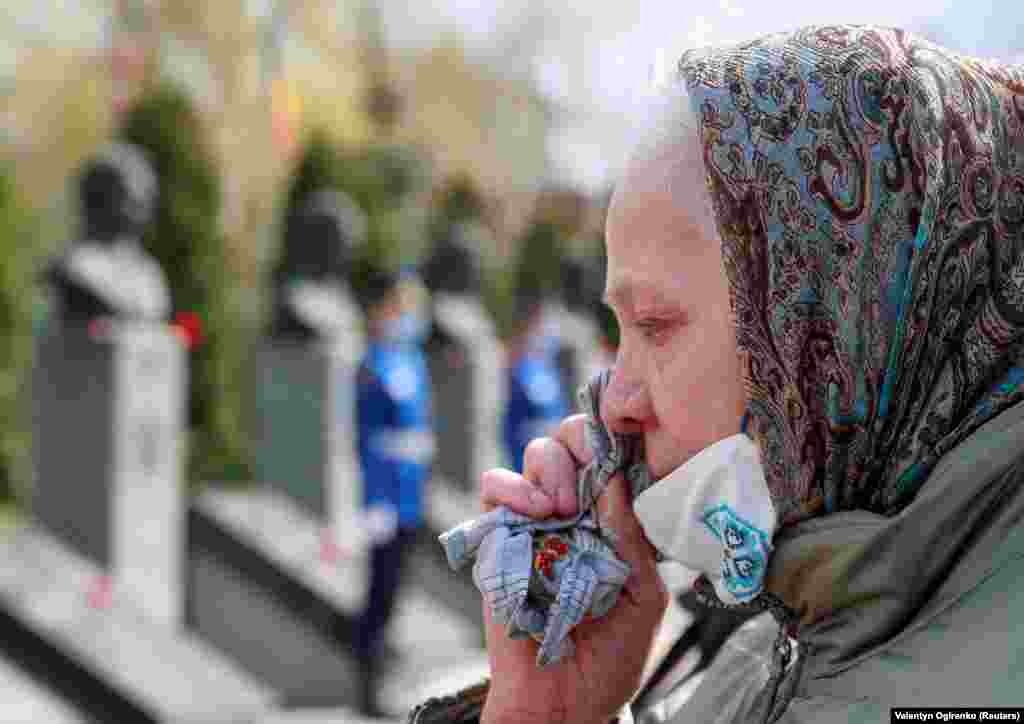
9/16A woman in Kyiv wipes away tears during a Chernobyl memorial ceremony.
People across Ukraine, including President Volodymyr Zelenskiy, have marked the 35th anniversary of the 1986 Chernobyl disaster, the world's worst civilian nuclear accident.
Show moreShow less
10/16Amid the COVID-19 pandemic, people wear protective face masks as they stand at the Chernobyl memorial in Kyiv on April 26.
People across Ukraine, including President Volodymyr Zelenskiy, have marked the 35th anniversary of the 1986 Chernobyl disaster, the world's worst civilian nuclear accident.
Show moreShow less
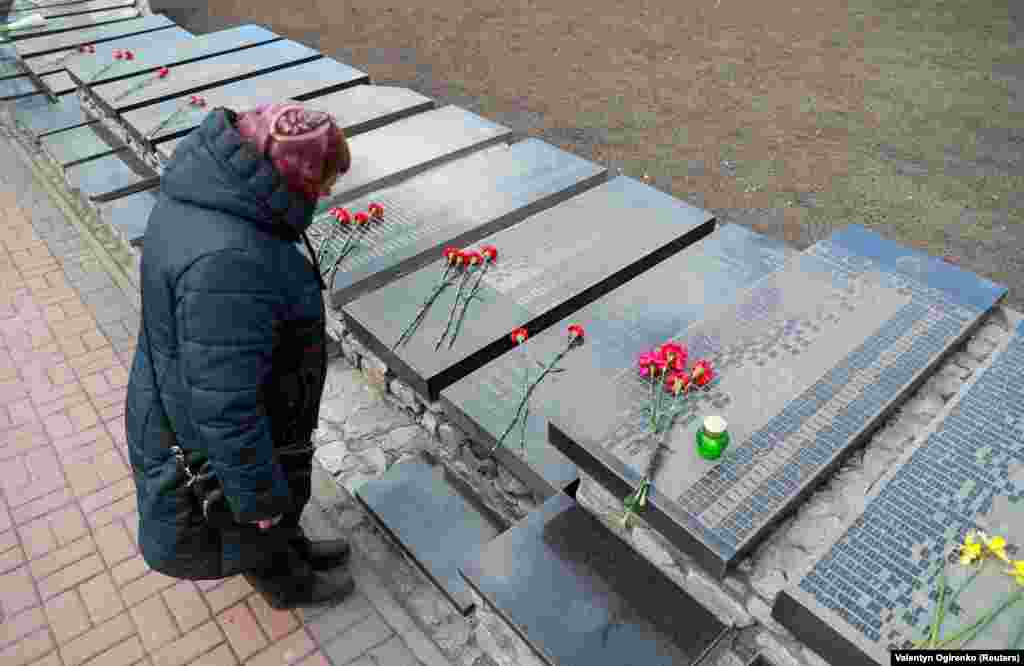
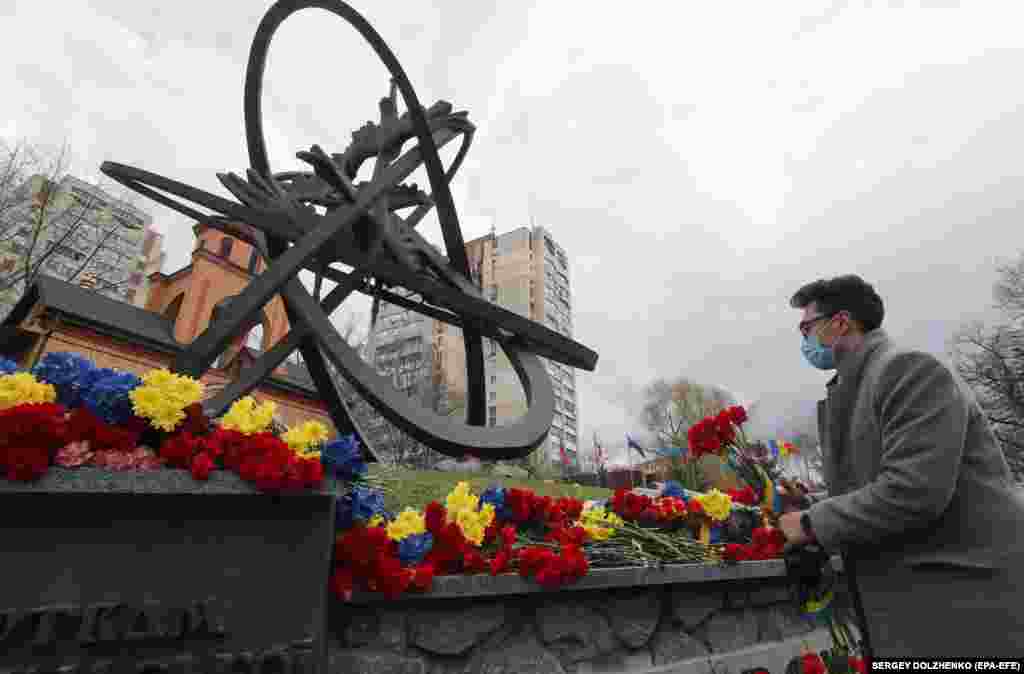
11/16Ukrainians lay flowers near a monument in Kyiv honoring those who died in cleanup efforts after the Chernobyl nuclear disaster.
People across Ukraine, including President Volodymyr Zelenskiy, have marked the 35th anniversary of the 1986 Chernobyl disaster, the world's worst civilian nuclear accident.
Show moreShow less
12/16A man lights candles in the central square of the ghost town of Pripyat near the Chernobyl power plant on April 26.
People across Ukraine, including President Volodymyr Zelenskiy, have marked the 35th anniversary of the 1986 Chernobyl disaster, the world's worst civilian nuclear accident.
Show moreShow less
13/16Flowers are placed in front of a memorial in the Ukrainian city of Slavutych dedicated to firefighters and workers who died in the Chernobyl nuclear disaster.
People across Ukraine, including President Volodymyr Zelenskiy, have marked the 35th anniversary of the 1986 Chernobyl disaster, the world's worst civilian nuclear accident.
Show moreShow less
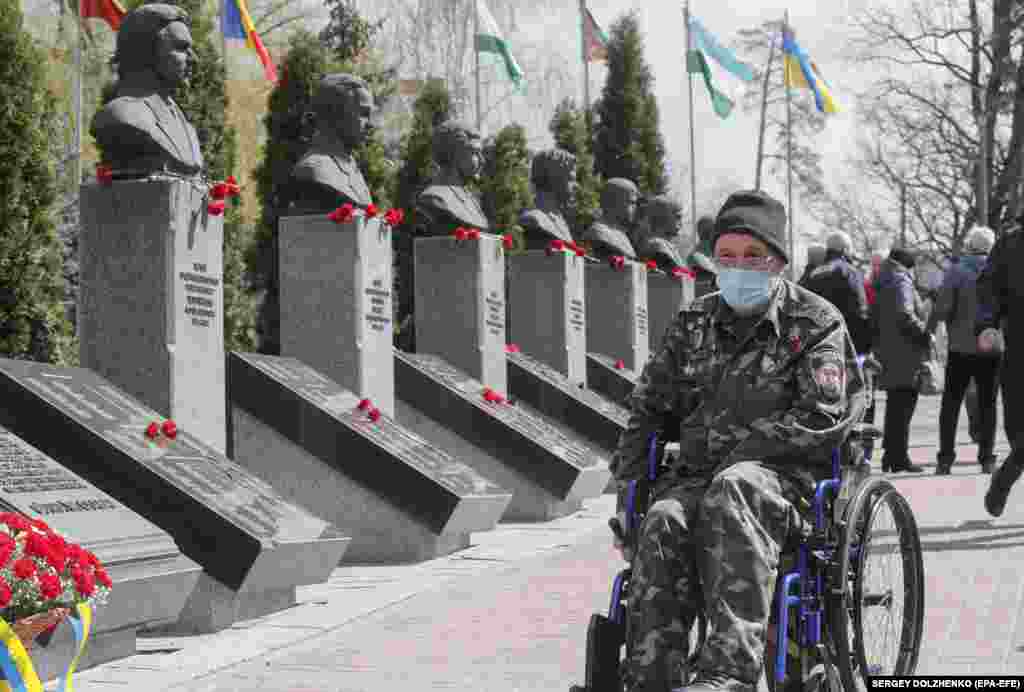
14/16A disabled Ukrainian and veteran of the cleanup effort passes a monument honoring his fallen colleagues.
People across Ukraine, including President Volodymyr Zelenskiy, have marked the 35th anniversary of the 1986 Chernobyl disaster, the world's worst civilian nuclear accident.
Show moreShow less
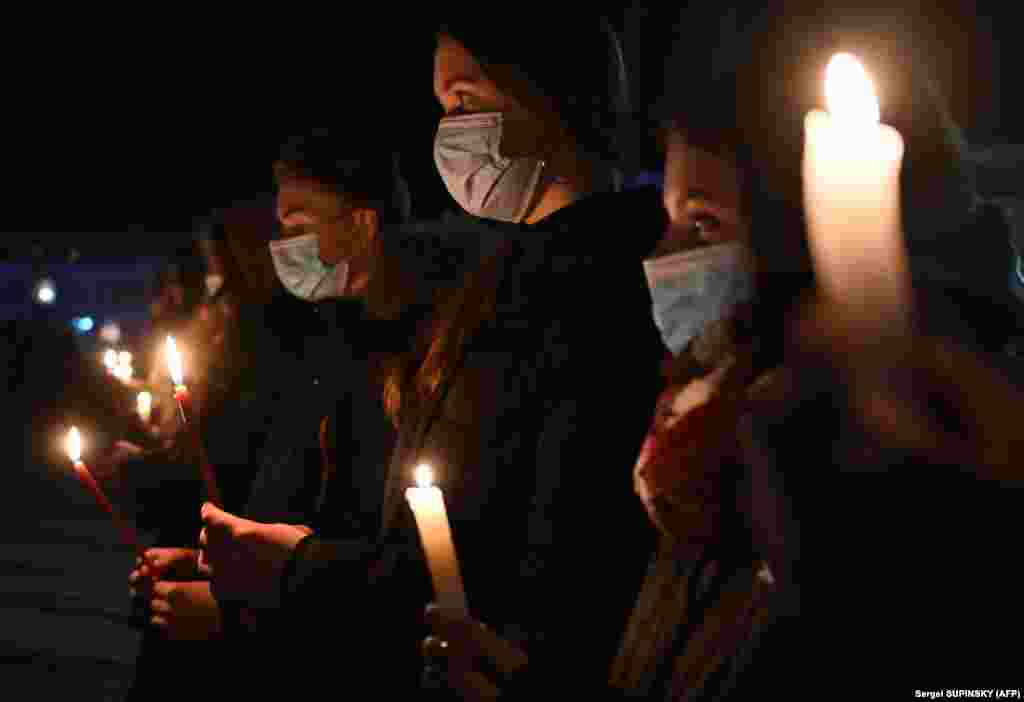
15/16People hold candles at a monument to Chernobyl victims in the city of Slavutych.
People across Ukraine, including President Volodymyr Zelenskiy, have marked the 35th anniversary of the 1986 Chernobyl disaster, the world's worst civilian nuclear accident.
Show moreShow less
16/16At a monument in Slavutych, a man remembers firefighters who died after the Chernobyl nuclear disaster.
People across Ukraine, including President Volodymyr Zelenskiy, have marked the 35th anniversary of the 1986 Chernobyl disaster, the world's worst civilian nuclear accident.
An explosion and fire caused by a reactor meltdown at the Chernobyl power plant, located 110 kilometers north of Kyiv on April 26, 1986, sent clouds of lethal nuclear material across much of Europe.
Under The Shield: Inside Chernobyl's New Safe Confinement
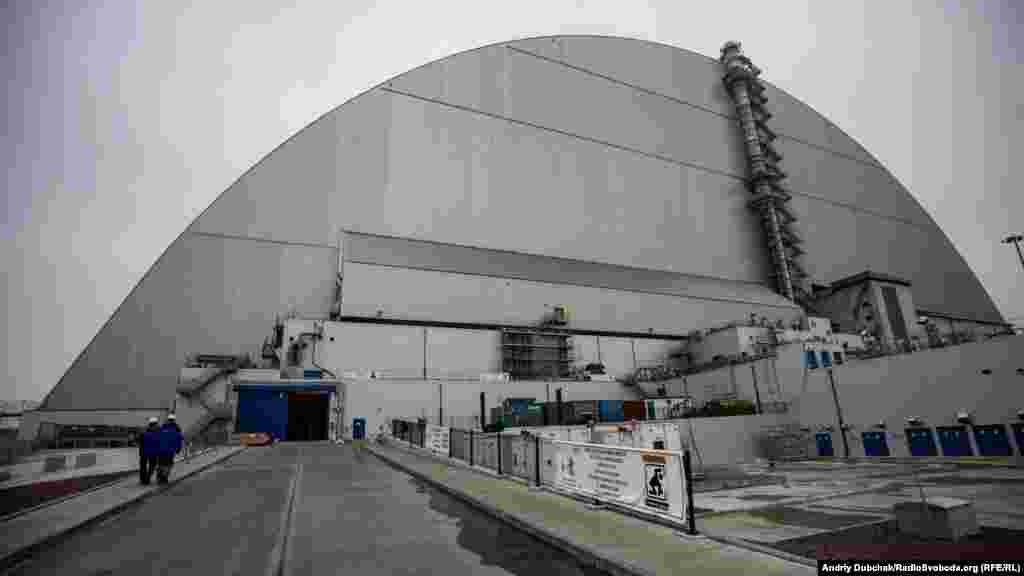
1/14The New Safe Confinement (NSC) was designed to prevent further radiation leaks from Ukraine's stricken Chernobyl nuclear power plant. It took two weeks in November 2016 to slide the massive steel structure into position. At a height of 109 meters and a length of 257 meters, the shield is the world’s largest movable metal structure. It covers the crumbling concrete sarcophagus that encased Chernobyl's reactor number four where an explosion in April 1986 spewed tons of radiation across Europe.
It has been two years since a giant steel shelter was slid into position over Chernobyl's crumbling radioactive ruins. RFE/RL's Ukrainian Service takes a rare look at operations inside of the containment.
Show moreShow less
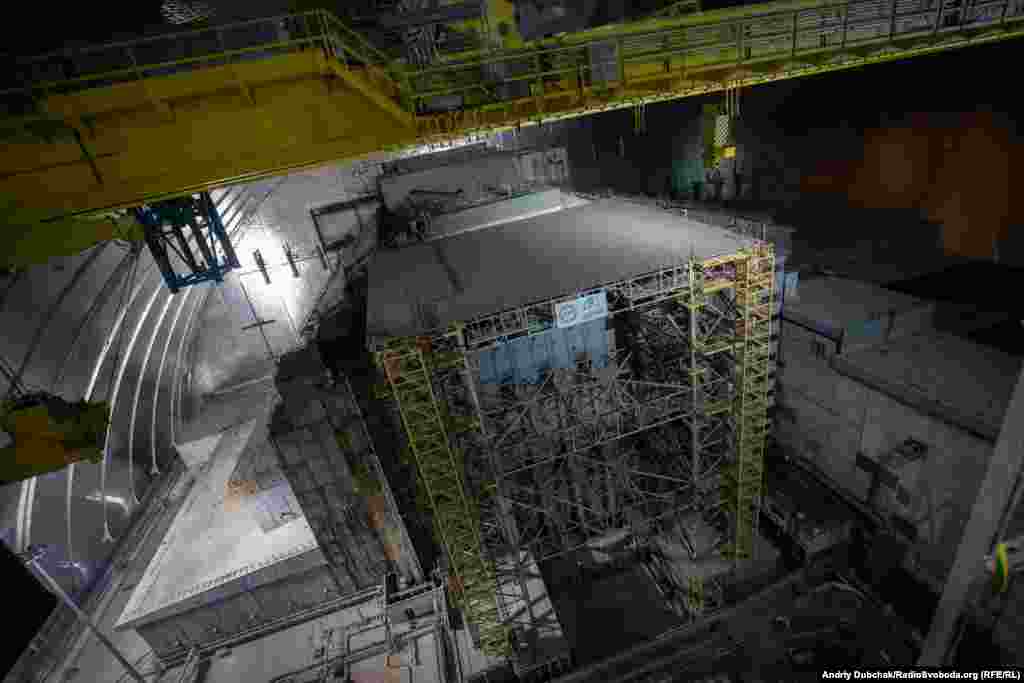
2/14A new steel structure was built under the containment shield to support the decaying concrete sarcophagus in Chernobyl's reactor number four. Eventually, officials plan to dismantle the sarcophagus and remove the remaining nuclear fuel from the plant.
It has been two years since a giant steel shelter was slid into position over Chernobyl's crumbling radioactive ruins. RFE/RL's Ukrainian Service takes a rare look at operations inside of the containment.
Show moreShow less
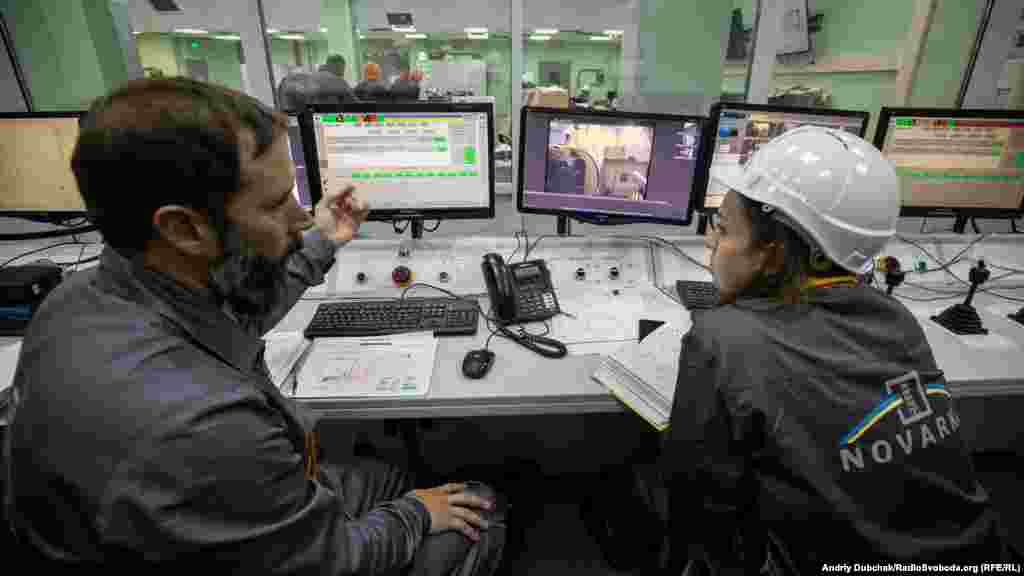
3/14Two nuclear containment specialists inside the main control center at the New Safe Confinement (NSC). Some 3,000 people work at the site, including several foreign specialists.
It has been two years since a giant steel shelter was slid into position over Chernobyl's crumbling radioactive ruins. RFE/RL's Ukrainian Service takes a rare look at operations inside of the containment.
Show moreShow less
4/14Workers at Chernobyl's New Safe Confinement (NSC) inspect new equipment. Two years after the structure was put into position, containment systems are still being installed and tested. The cost of the shield was almost $1.6 billion, with funding coming from the European Bank for Reconstruction and Development.
It has been two years since a giant steel shelter was slid into position over Chernobyl's crumbling radioactive ruins. RFE/RL's Ukrainian Service takes a rare look at operations inside of the containment.
Show moreShow less
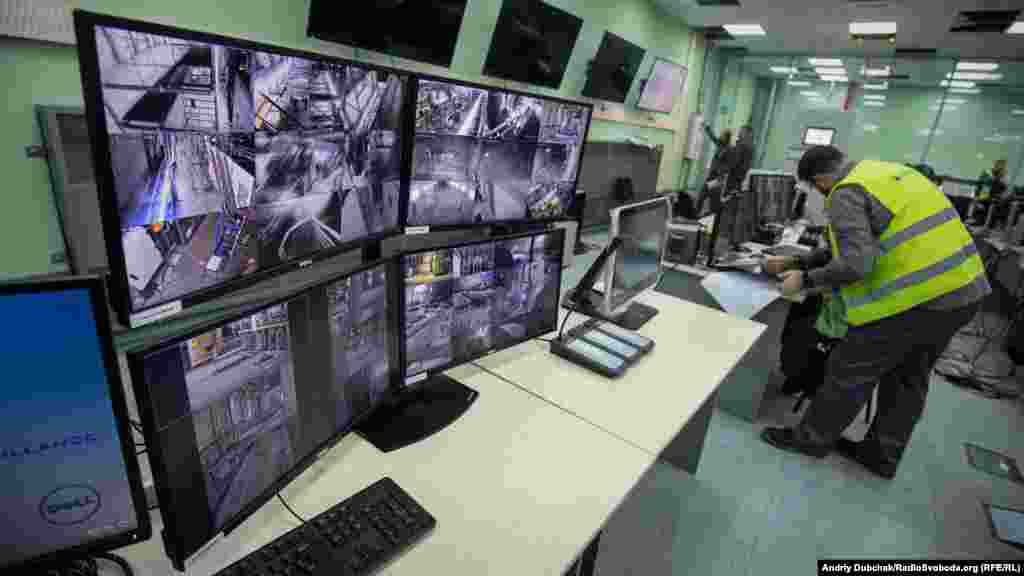
5/14Dozens of robotic cameras are located throughout Chernobyl's New Safe Confinement (NSC). Streaming video is monitored from the structure's main control room known as the Confinement Management Center (CMC). The containment structure is also equipped with automated fire-suppression systems.
It has been two years since a giant steel shelter was slid into position over Chernobyl's crumbling radioactive ruins. RFE/RL's Ukrainian Service takes a rare look at operations inside of the containment.
Show moreShow less
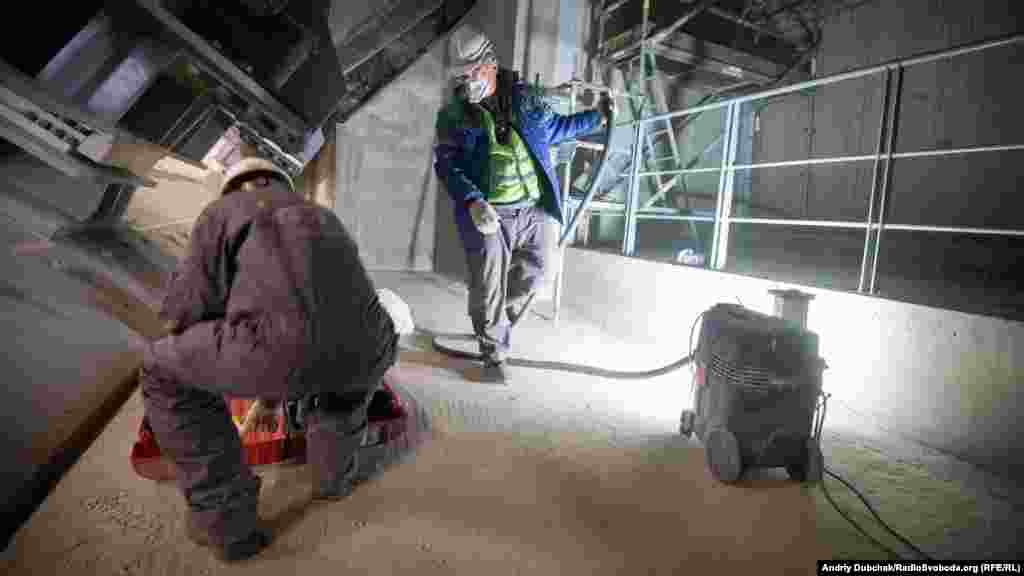
6/14Workers inside the New Safe Confinement (NSC) grind joints of the concrete pillars. Although there can be a lot of dust inside the shield, the level of the radioactivity is relatively low. Officials say there is little risk to the health of the workers.
It has been two years since a giant steel shelter was slid into position over Chernobyl's crumbling radioactive ruins. RFE/RL's Ukrainian Service takes a rare look at operations inside of the containment.
Show moreShow less
7/14The old concrete sarcophagus under the New Safe Confinement (NSC). There remains an estimated 200 tons of radioactive fuel inside the crippled reactor.
It has been two years since a giant steel shelter was slid into position over Chernobyl's crumbling radioactive ruins. RFE/RL's Ukrainian Service takes a rare look at operations inside of the containment.
Show moreShow less
8/14In order to move around Chernobyl's containment structure, workers must routinely check if they have been exposed to radiation. This worker tests radiation levels with monitoring equipment known as a dosimetric control system.
It has been two years since a giant steel shelter was slid into position over Chernobyl's crumbling radioactive ruins. RFE/RL's Ukrainian Service takes a rare look at operations inside of the containment.
Show moreShow less
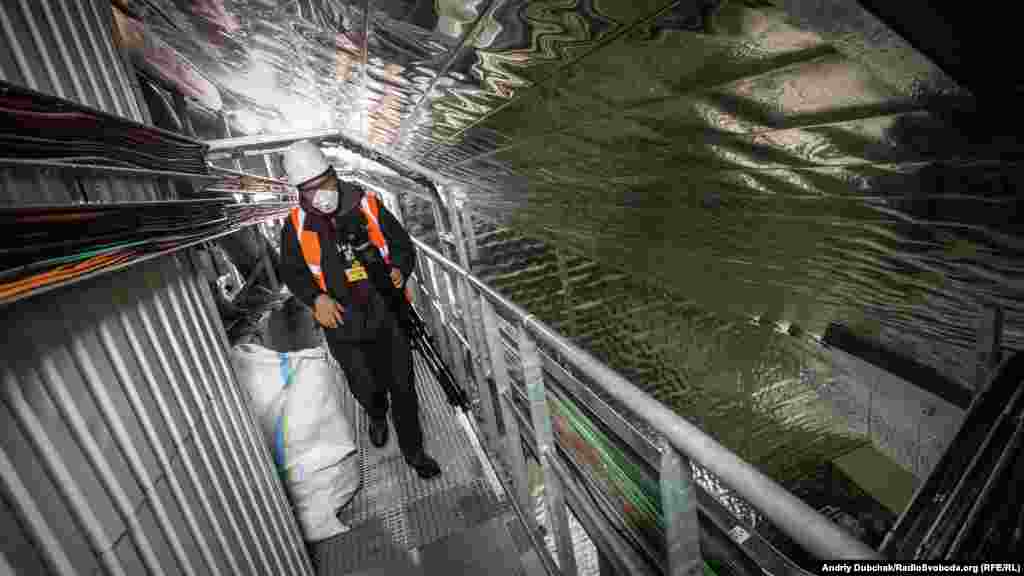
9/14Chernobyl's New Safe Confinement (NSC) contains a labyrinth of passages, suspended walkways, and stairs. Elevators will be used in the future, but are still being installed and tested.
It has been two years since a giant steel shelter was slid into position over Chernobyl's crumbling radioactive ruins. RFE/RL's Ukrainian Service takes a rare look at operations inside of the containment.
Show moreShow less
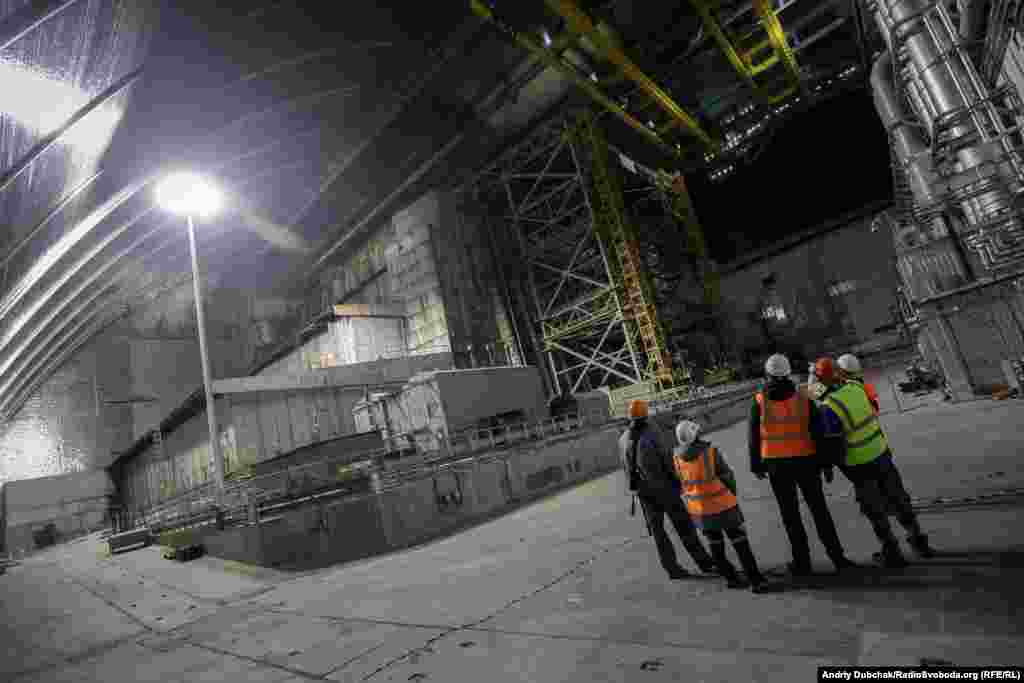
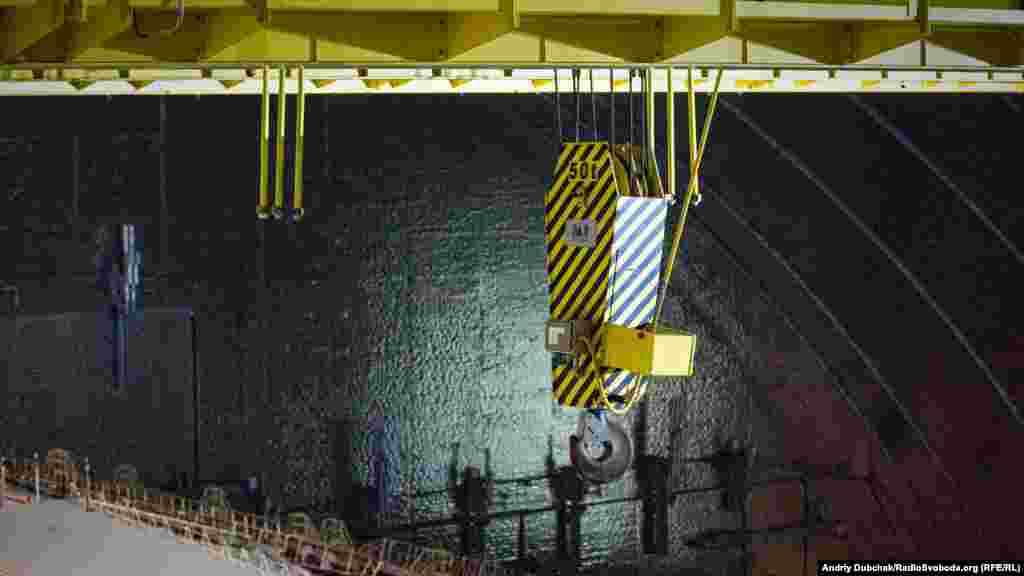
10/14One of the two powerful cranes that have been installed inside the New Safe Confinement (NSC). They were designed to dismantle the old concrete sarcophagus that covers reactor number four. The cranes have so far removed the roof of the reactor's engine room.
It has been two years since a giant steel shelter was slid into position over Chernobyl's crumbling radioactive ruins. RFE/RL's Ukrainian Service takes a rare look at operations inside of the containment.
Show moreShow less
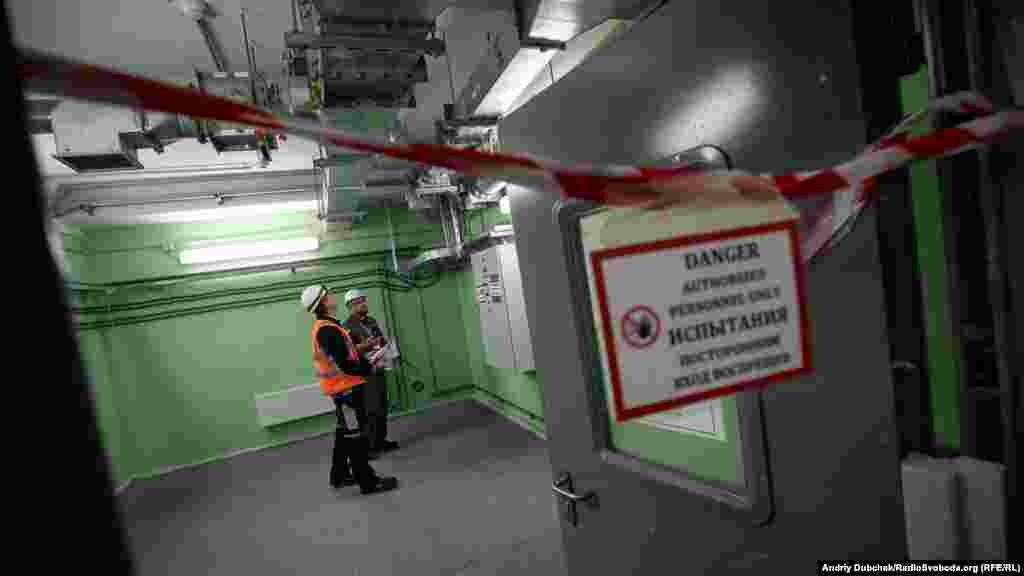
11/14Visitors are not permitted past this point due to high levels of radiation. In April 1986, the toxicity of the radioactive cloud produced by the Chernobyl accident was the equivalent to 400 Hiroshima atomic explosions.
It has been two years since a giant steel shelter was slid into position over Chernobyl's crumbling radioactive ruins. RFE/RL's Ukrainian Service takes a rare look at operations inside of the containment.
Show moreShow less
12/14Workers and visitors must test their radiation levels before being allowed to leave Chernobyl's New Safe Confinement (NSC).
It has been two years since a giant steel shelter was slid into position over Chernobyl's crumbling radioactive ruins. RFE/RL's Ukrainian Service takes a rare look at operations inside of the containment.
Show moreShow less
13/14Workers leaving the Chernobyl's confinement structure.
It has been two years since a giant steel shelter was slid into position over Chernobyl's crumbling radioactive ruins. RFE/RL's Ukrainian Service takes a rare look at operations inside of the containment.
Show moreShow less
14/14Chernobyl's New Safe Confinement (NSC) was designed to contain radiation for the next century.
It has been two years since a giant steel shelter was slid into position over Chernobyl's crumbling radioactive ruins. RFE/RL's Ukrainian Service takes a rare look at operations inside of the containment.
Show moreShow less
Previous slide
Next slide
Prypyat, home to some 50,000 people, was evacuated along with other communities in a 30-kilometer exclusion zone around the radioactive wreckage.
Dozens of people, particularly firefighters and other first responders, died as a direct result of the disaster, but radiation poisoning is believed to have killed thousands more across Ukraine, Belarus, Russia, and other countries in the years that followed.
In 2016, a crumbling "sarcophagus" used to contain radiation from the smoldering reactor was replaced with a $2.3 billion metal dome in a bid to stop future leaks. More than 200 tons of uranium remain buried inside.
RFE/RL's Ukrainian Service has seen its audience grow significantly since Russia's full-scale invasion in February 2022 and is among the most cited media outlets in the country. Its bold, in-depth reporting from the front lines has won many accolades and awards. Its comprehensive coverage also includes award-winning reporting by the Donbas.Realities and Crimea.Realities projects and the Schemes investigative unit.