Accessibility links

Breaking News

Wave Of Russian Air Strikes Kills At Least 11 In Ukraine, Causes Power Cuts

Updated
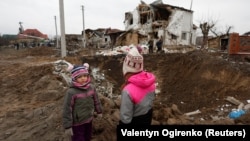
Children stand next to a crater left by a Russian military strike in the town of Hlevakha, outside Kyiv, on January 26.

Ukrainian officials said a wave of Russian air strikes on the capital and other cities on January 26 has killed at least 11 people although most of the cruise missiles were intercepted, as heavy fighting continued in eastern Ukraine.

A spokesman for the State Emergency Service, Oleksandr Khorunzhiy, added that 11 more people were confirmed injured by early afternoon local time in what he described as "terrorist attacks with drones and missiles."

Thirty-five buildings were damaged, Khorunzhiy said in a Telegram post, most of them in the Kyiv region.

He said Ukrainian defense forces successfully intercepted 47 of 55 Russian air- and sea-based missiles fired from the Black Sea region.

RFE/RL cannot independently confirm battlefield claims on either side in most areas.

The new missile attacks came the morning after President Volodymyr Zelenskiy, speaking just hours after Germany and the United States pledged to provide Kyiv with advanced battle tanks, called on Kyiv's Western allies to deliver long-range missiles and military aircraft to beef up Ukraine's air defenses.

Kyiv Mayor Vitali Klitschko said one person was killed and two others were wounded in a strike on the capital and urged residents to stay in shelters.

"As a result of a rocket hitting a nonresidential building in the Holosiyiv district, we have information about one dead and two wounded. The wounded were hospitalized," he said.

Serhiy Popko, the head of Kyiv's military administration, said more than a dozen missiles were destroyed above the capital.

"The enemy launched more than 15 cruise missiles in the direction of Kyiv. Thanks to the excellent work of air defense, all air targets were shot down," said.


The strikes forced authorities to impose emergency power cuts in Kyiv and several other regions to relieve pressure on the electricity grid, an operator said.

"Due to the threat of a missile attack in Kyiv and the regions of Kyiv, Odesa, and Dnipropetrovsk, emergency blackouts have been introduced," said DTEK, Ukraine's largest private power producer.

Two energy facilities were hit by Russian missiles in the southern region of Odesa, local authorities said.

"There is already information about damage done to two critical energy infrastructure facilities in Odesa. There are no injured. Air Defense Forces are working over the Odesa region," the head of the region's military administration, Yuriy Kruk, wrote on social media.

The central region of Vinnytsya was also targeted by Russian missiles, Serhiy Borzov, head of the regional military administration said, adding there were no casualties.

Earlier, the General Staff of the Ukrainian Military said its forces destroyed 24 drones, including 15 over Kyiv, that Russia launched in overnight attacks.

Zelenskiy said in his nightly video address on January 25 that it is now necessary to "go ahead with the supply of aircraft for Ukraine."

On the battlefield, Ukrainian forces continued to sustain incessant pressure from Russian attacks in the east, mainly in Bakhmut and Avdiyivka in Donetsk region and Chervopopyivka in Luhansk, the General Staff said in its daily report on January 26.

"Despite suffering numerous losses, the enemy did not halt its offensive actions," the General Staff said, adding that Ukrainian defenders also repelled attacks in Lyman, Kupyansk, Zaporizhzhya, and Kherson.

Zelenskiy acknowledged in an interview with Sky News on January 26 that Ukrainian troops were under increased pressure in the east, where they had lost control of the town of Soledar in Donetsk, and in the southern region of Zaporizhzhya.
Zelenskiy said the Russians were attacking in waves, with total disregard for their losses, which he said were in the "thousands."

"It's just an extraordinary number. They don't care about it. I mean, they don't count their people.... But from what we have already seen and counted, there are thousands of people dead from their side, and they are just throwing them, and throwing them, and throwing them, and throwing them," Zelenskiy told Sky News.

Berlin and Washington agreed to provide modern tanks following months of intense debate among NATO allies in the hope of helping stem the expected push by Russia.

In his January 25 address, Zelenskiy praised the allies' commitment to delivering advanced tanks and urged them to provide large numbers of tanks quickly.

"The key now is speed and volume: speed in training our forces, speed in supplying tanks to Ukraine. The numbers in tank support," he said. "We have to form such a 'tank fist', like a 'fist of freedom'."

In Photos: The Biden administration has announced it will send 31 M1 Abrams battle tanks to Ukraine in what Kyiv authorities are hailing as a possible game-changer in a war that is now 11 months old. RFE/RL takes a quick look at the Abrams's history and its specs.

The History Of The Abrams Tank
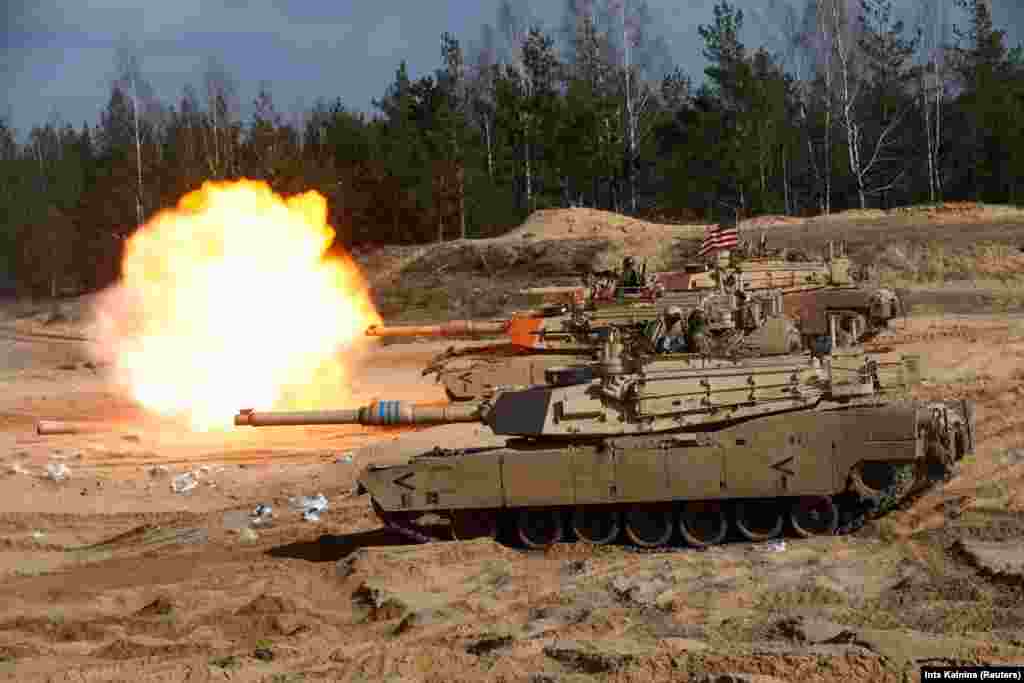
M1A1 Abrams tanks participate in a NATO exercise in Adazi, Latvia, on March 26, 2021. Moscow said providing the tanks to Ukraine would be a "blatant provocation."
1/10 M1A1 Abrams tanks participate in a NATO exercise in Adazi, Latvia, on March 26, 2021. Moscow said providing the tanks to Ukraine would be a "blatant provocation."
The Biden administration has announced it will send 31 M1 Abrams battle tanks to Ukraine in what Kyiv authorities are hailing as a possible game-changer in a war that is now 11 months old. RFE/RL takes a quick look at the Abrams's history and its specs.
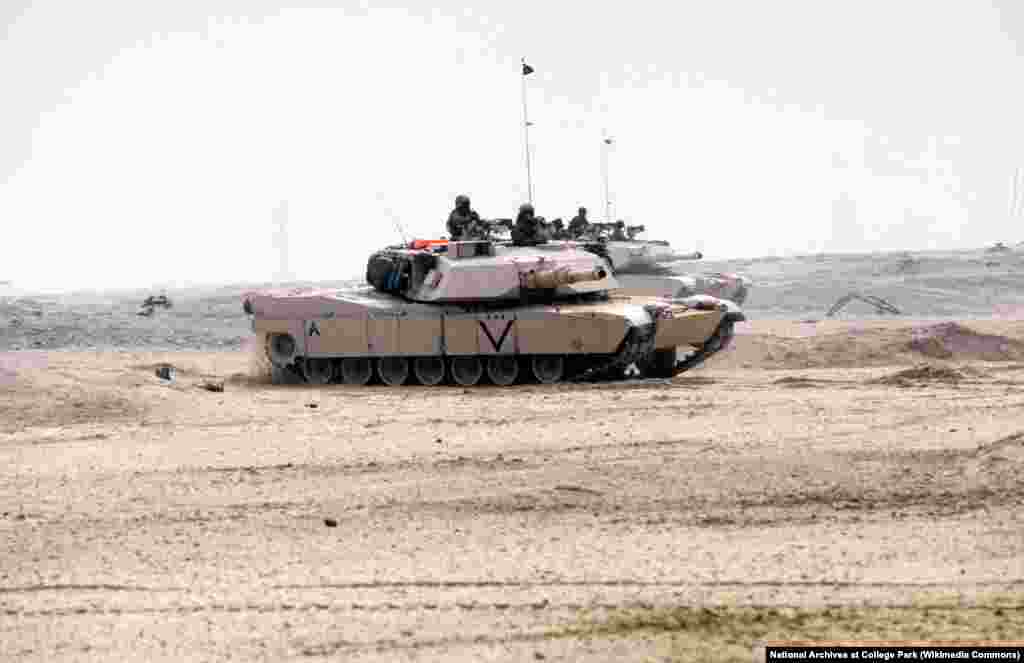
Two Marine Corps M-1A1 Abrams main battle tanks move across the desert during the ground phase of Operation Desert Storm on February 24, 1991.&nbsp;Though the M1 Abrams entered service in 1980, Desert Storm was its first time in combat.<br />
&nbsp;
2/10 Two Marine Corps M-1A1 Abrams main battle tanks move across the desert during the ground phase of Operation Desert Storm on February 24, 1991. Though the M1 Abrams entered service in 1980, Desert Storm was its first time in combat.
 
The Biden administration has announced it will send 31 M1 Abrams battle tanks to Ukraine in what Kyiv authorities are hailing as a possible game-changer in a war that is now 11 months old. RFE/RL takes a quick look at the Abrams's history and its specs.
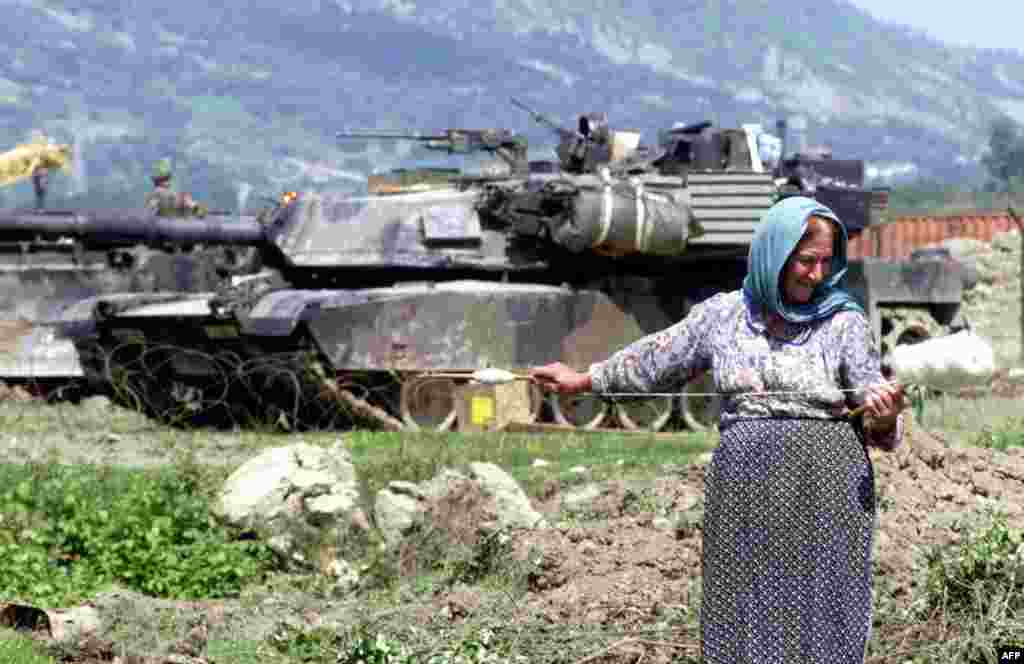
An Albanian woman spins wool in front of a U.S. M1 Abrams tank that was part of NATO&#39;s operation during the Kosovo conflict, outside the Rinas airbase on May 12, 1999.<br />
<br />
With a crew of four (commander, gunner, loader, and driver), the Abrams is one of the heaviest tanks in service at nearly 62 metric tons.<br />
&nbsp;
3/10 An Albanian woman spins wool in front of a U.S. M1 Abrams tank that was part of NATO's operation during the Kosovo conflict, outside the Rinas airbase on May 12, 1999.

With a crew of four (commander, gunner, loader, and driver), the Abrams is one of the heaviest tanks in service at nearly 62 metric tons.
 
The Biden administration has announced it will send 31 M1 Abrams battle tanks to Ukraine in what Kyiv authorities are hailing as a possible game-changer in a war that is now 11 months old. RFE/RL takes a quick look at the Abrams's history and its specs.
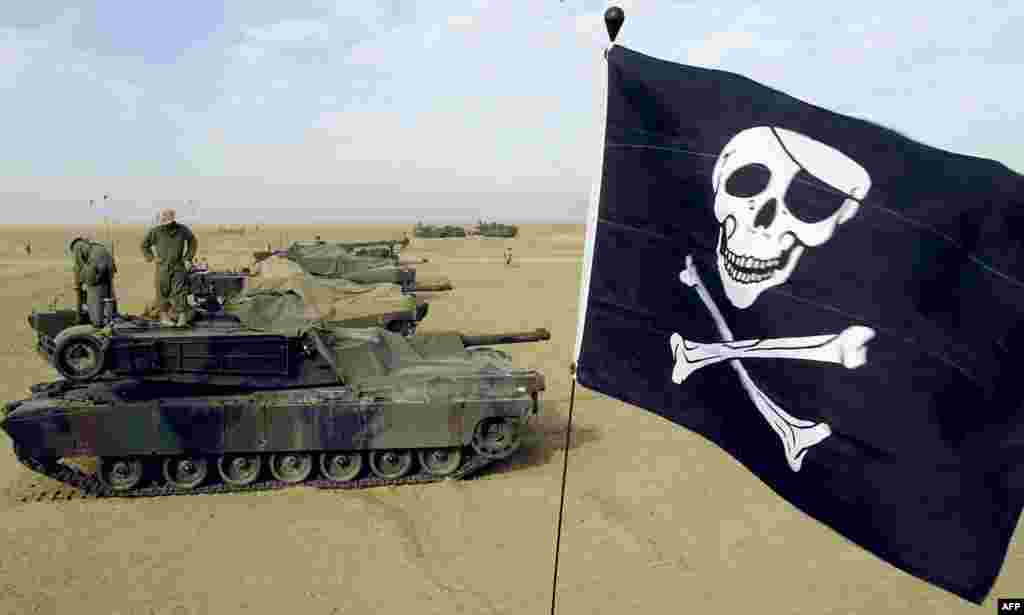
U.S. Marine Corps reservists fly their &quot;Jolly Roger&quot; on an M1A1 Abrams tank at U.S. Marine Corps Camp Grizzly in Kuwait on February 16, 2003.<br />
<br />
The Abrams has gone through various upgrades, resulting in the M1, M1A1, and M1A2 versions, with each having improvements in armament, protection, and electronics.<br />
<br />
&nbsp;
4/10 U.S. Marine Corps reservists fly their "Jolly Roger" on an M1A1 Abrams tank at U.S. Marine Corps Camp Grizzly in Kuwait on February 16, 2003.

The Abrams has gone through various upgrades, resulting in the M1, M1A1, and M1A2 versions, with each having improvements in armament, protection, and electronics.

 
The Biden administration has announced it will send 31 M1 Abrams battle tanks to Ukraine in what Kyiv authorities are hailing as a possible game-changer in a war that is now 11 months old. RFE/RL takes a quick look at the Abrams's history and its specs.
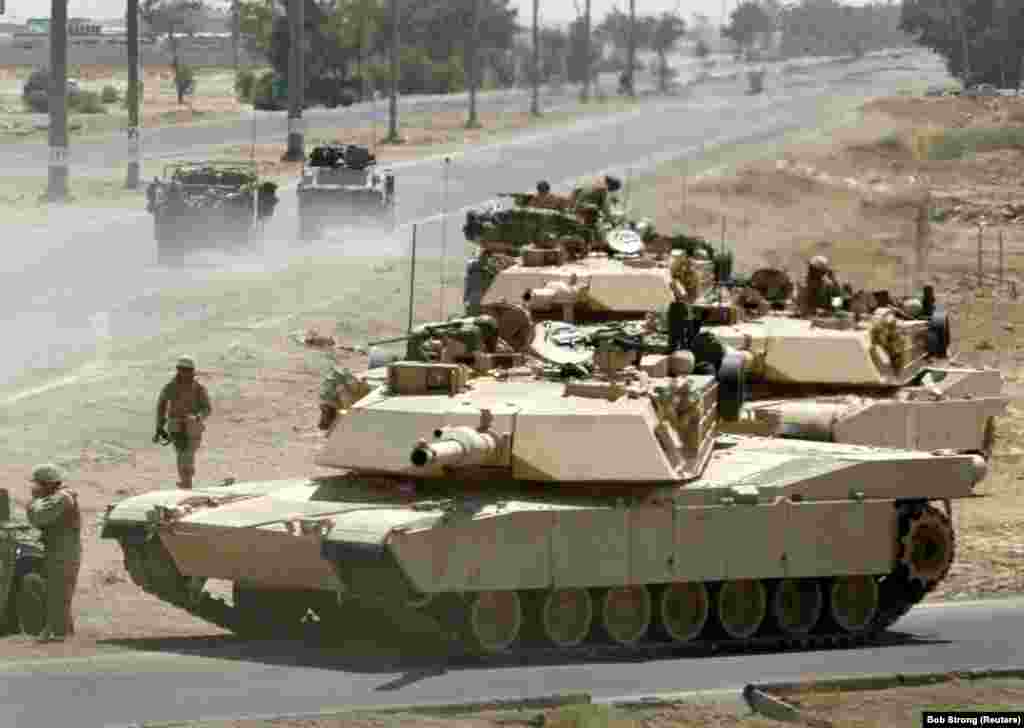
U.S. Marine Corps M1A1 Abrams tanks take up defensive positions during a firefight near the main traffic checkpoint in Fallujah, Iraq, on June 24, 2004.<br />
<br />
The export version of the Abrams is used by the armies of Australia, Egypt, Iraq, Kuwait, Poland, and Saudi Arabia.&nbsp;
5/10 U.S. Marine Corps M1A1 Abrams tanks take up defensive positions during a firefight near the main traffic checkpoint in Fallujah, Iraq, on June 24, 2004.

The export version of the Abrams is used by the armies of Australia, Egypt, Iraq, Kuwait, Poland, and Saudi Arabia. 
The Biden administration has announced it will send 31 M1 Abrams battle tanks to Ukraine in what Kyiv authorities are hailing as a possible game-changer in a war that is now 11 months old. RFE/RL takes a quick look at the Abrams's history and its specs.
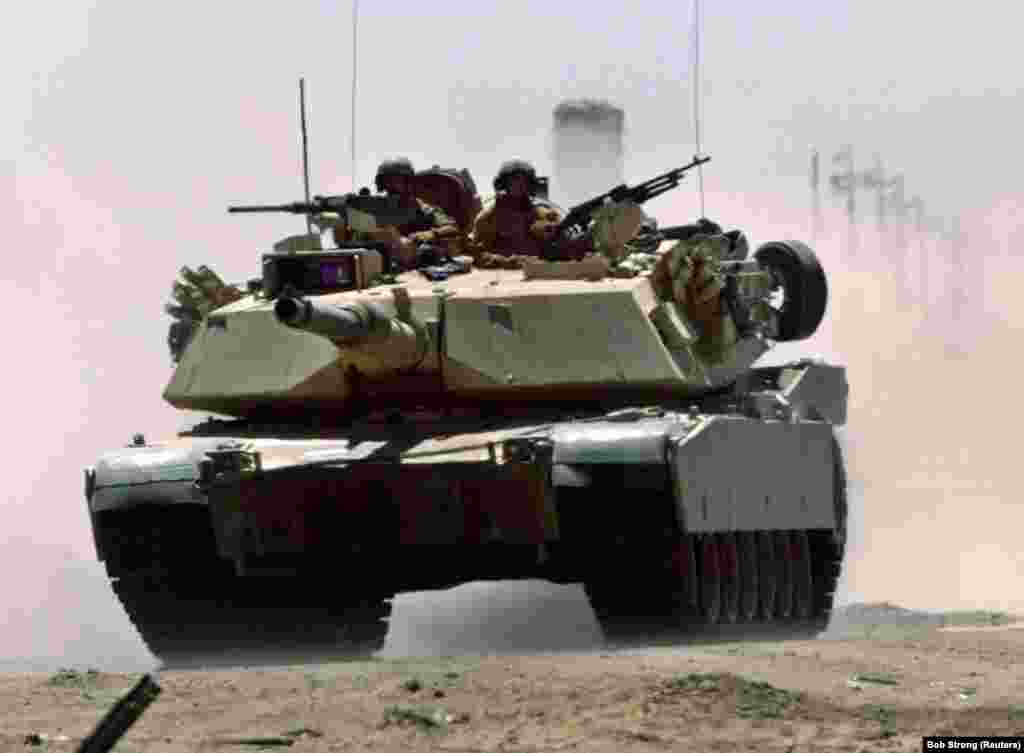
A U.S. Marine Corps M1A1 Abrams tank speeds down an Iraqi highway near a military traffic checkpoint in Fallujah on July 1, 2004.<br />
<br />
The U.S. Army is believed to have 2,509 Abrams in various versions, with an additional 3,700 in storage.
6/10 A U.S. Marine Corps M1A1 Abrams tank speeds down an Iraqi highway near a military traffic checkpoint in Fallujah on July 1, 2004.

The U.S. Army is believed to have 2,509 Abrams in various versions, with an additional 3,700 in storage.
The Biden administration has announced it will send 31 M1 Abrams battle tanks to Ukraine in what Kyiv authorities are hailing as a possible game-changer in a war that is now 11 months old. RFE/RL takes a quick look at the Abrams's history and its specs.
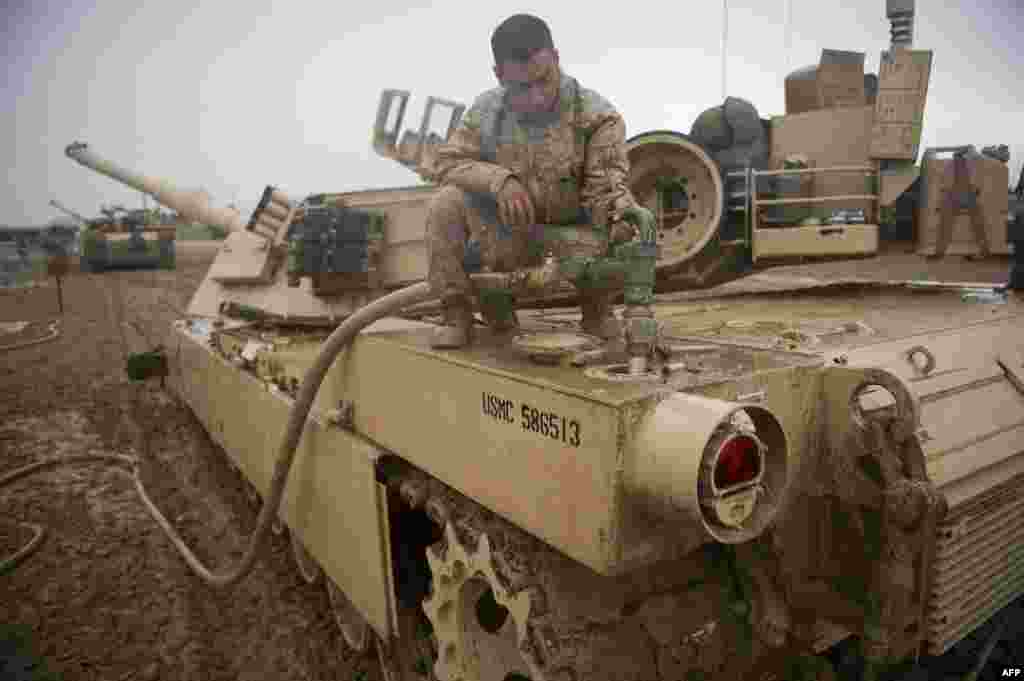
A U.S. Marine refuels his M1 Abrams tank at FOB Edinburgh in Helmand Province, Afghanistan on February 2, 2011.<br />
<br />
The current M1A2 Abrams can reach a top speed of 72 km/h (on paved roads) and 48 km/h&nbsp;off-road. The engine can use a variety of fuels, including jet fuel, gasoline, diesel, and marine diesel.<br />
<br />
<br />
<br />
<br />
<br />
<br />
<br />
&nbsp;
7/10 A U.S. Marine refuels his M1 Abrams tank at FOB Edinburgh in Helmand Province, Afghanistan on February 2, 2011.

The current M1A2 Abrams can reach a top speed of 72 km/h (on paved roads) and 48 km/h off-road. The engine can use a variety of fuels, including jet fuel, gasoline, diesel, and marine diesel.


The Biden administration has announced it will send 31 M1 Abrams battle tanks to Ukraine in what Kyiv authorities are hailing as a possible game-changer in a war that is now 11 months old. RFE/RL takes a quick look at the Abrams's history and its specs.
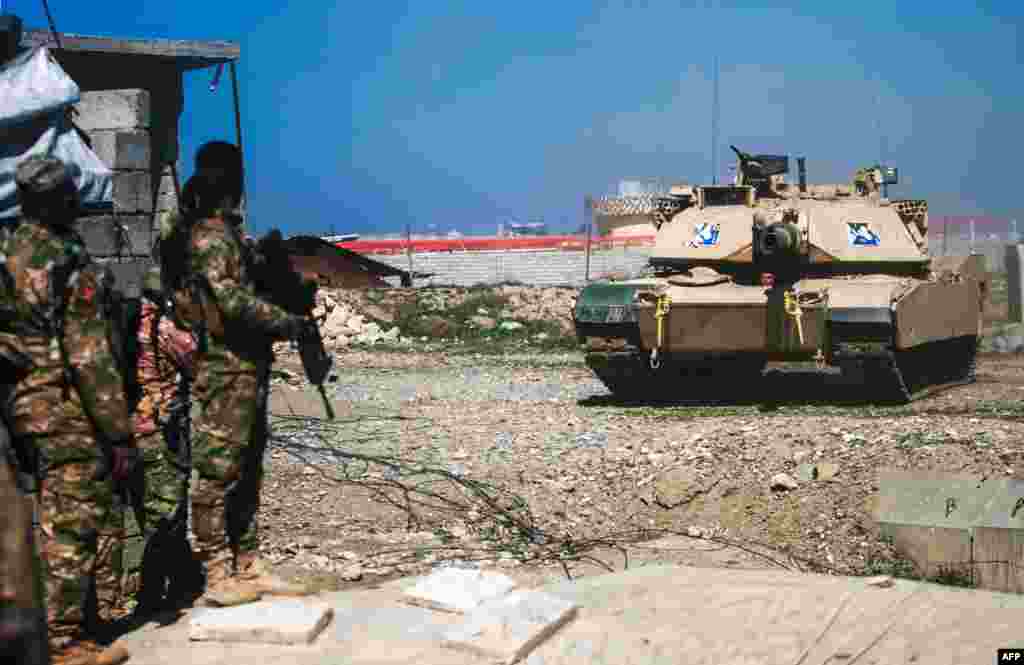
An Iraqi forces&#39; M1 Abrams tank advances toward Mosul, Iraq, during an offensive to retake the area from Islamic State (IS) militants on February 25, 2017.<br />
<br />
&nbsp;
8/10 An Iraqi forces' M1 Abrams tank advances toward Mosul, Iraq, during an offensive to retake the area from Islamic State (IS) militants on February 25, 2017.

 
The Biden administration has announced it will send 31 M1 Abrams battle tanks to Ukraine in what Kyiv authorities are hailing as a possible game-changer in a war that is now 11 months old. RFE/RL takes a quick look at the Abrams's history and its specs.
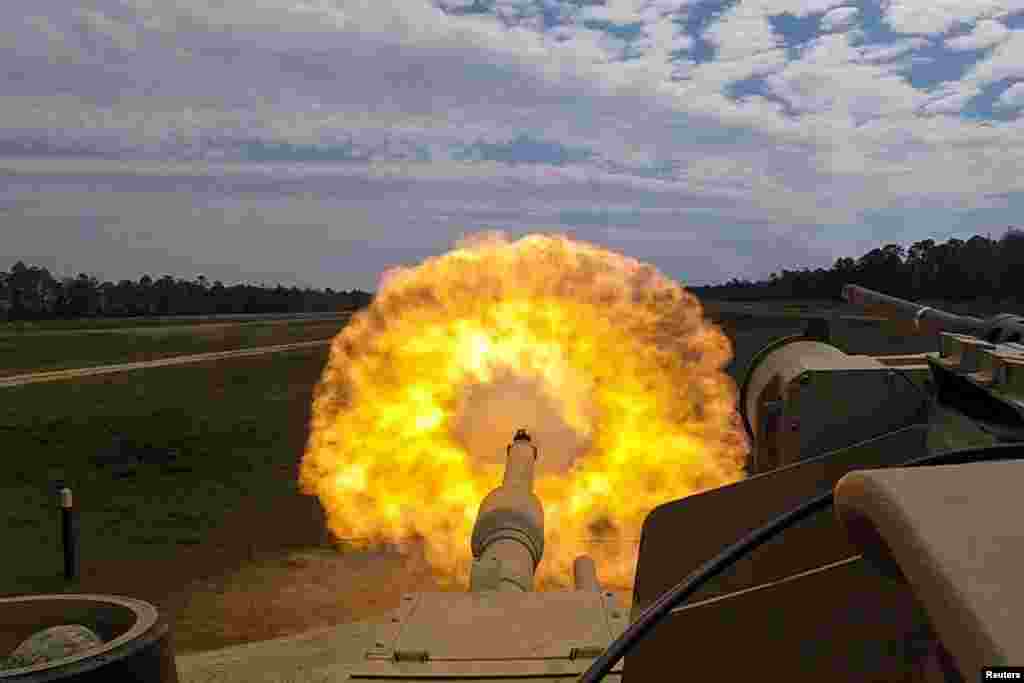
An M1A1 Abrams during target practice at Fort Stewart, Georgia, in the United States, on March 29, 2018.<br />
<br />
The tank commander controls a 120mm Rheinmetall M256A1 smoothbore main gun along with a Browning .50 cal. (12.7mm) M2HB antiaircraft heavy machine gun and two 7.62mm M240 machine guns.
9/10 An M1A1 Abrams during target practice at Fort Stewart, Georgia, in the United States, on March 29, 2018.

The tank commander controls a 120mm Rheinmetall M256A1 smoothbore main gun along with a Browning .50 cal. (12.7mm) M2HB antiaircraft heavy machine gun and two 7.62mm M240 machine guns.
The Biden administration has announced it will send 31 M1 Abrams battle tanks to Ukraine in what Kyiv authorities are hailing as a possible game-changer in a war that is now 11 months old. RFE/RL takes a quick look at the Abrams's history and its specs.
Military personnel unload M1 Abrams tanks at Bremerhaven, Germany, on February 21, 2020.<br />
<br />
Mark Hertling, a former commander of U.S. ground forces in Europe, estimated German-made Leopard 2 tanks could reach Ukraine&#39;s battlefields as soon as March while U.S. tanks, which need more logistical support, could be more than eight months away.<br />
&nbsp;
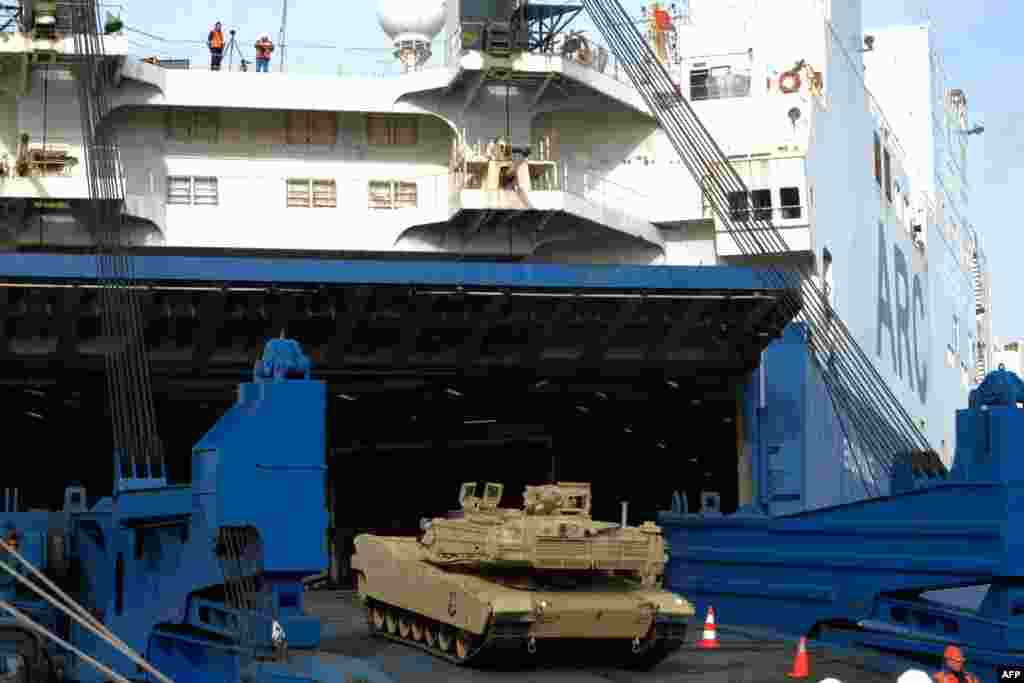
10/10 Military personnel unload M1 Abrams tanks at Bremerhaven, Germany, on February 21, 2020.

Mark Hertling, a former commander of U.S. ground forces in Europe, estimated German-made Leopard 2 tanks could reach Ukraine's battlefields as soon as March while U.S. tanks, which need more logistical support, could be more than eight months away.
 
The Biden administration has announced it will send 31 M1 Abrams battle tanks to Ukraine in what Kyiv authorities are hailing as a possible game-changer in a war that is now 11 months old. RFE/RL takes a quick look at the Abrams's history and its specs.
Previous slide
Next slide

U.S. President Joe Biden on January 25 said the United States will send 31 of its highly advanced Abrams tanks in a move he said was not a threat to Russia.

German Chancellor Olaf Scholz said hours earlier Berlin will supply 14 Leopard 2 tanks to Ukraine and will also allow third countries to re-export their own German-made Leopards.

German Defense Minister Boris Pistorius said on January 26 that Leopard tanks will arrive in "late March, early April," and that training of Ukrainian troops on German Marder infantry fighting vehicles will start in the next few days.

"For the Ukrainian soldiers who will be trained on the Leopard it will be a little later," Pistorius said.

With reporting by Reuters, AP, and dpa
  • 16x9 Image

    RFE/RL's Ukrainian Service

    RFE/RL's Ukrainian Service has seen its audience grow significantly since Russia's full-scale invasion in February 2022 and is among the most cited media outlets in the country. Its bold, in-depth reporting from the front lines has won many accolades and awards. Its comprehensive coverage also includes award-winning reporting by the Donbas.Realities and Crimea.Realities projects and the Schemes investigative unit.

This item is part of
XS
SM
MD
LG