

Accessibility links

Breaking News

U.S., Ukraine Reaffirm Commitment To 'Diplomacy, Deterrence' In Face Of Russian Military Buildup

Updated
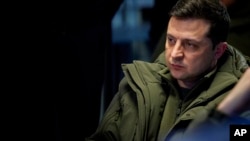
President Volodymyr Zelenskiy attends drills by the Ministry of Internal Affairs during a working trip to the Kherson region of Ukraine on February 12.

Ukrainian President Volodymyr Zelenskiy and U.S. President Joe Biden stressed the importance of pursuing “diplomacy and deterrence in response to Russia’s military buildup on Ukraine’s borders,” according to a White House account of a telephone conversation on February 13.

Biden repeated his commitment to Ukraine’s sovereignty and territorial integrity and pledged to “respond swiftly” in the event of “further Russian aggression against Ukraine.”

Zelenskiy’s office reported that the Ukrainian president invited Biden to come to Kyiv “in the coming days.”

“I am convinced that your visit to Kyiv in the coming days…would be a powerful signal and help stabilize the situation,” the presidential office quoted Zelenskiy as saying.

The phone conversation came as Western powers continued to urge Russian President Vladimir Putin to de-escalate tensions, and several nations urged their citizens to leave Ukraine amid concerns that Moscow may be on the verge of military action against its neighbor.
Washington on February 13 increased its estimate of the number of Russian troops involved in the buildup from 100,000 to 130,000.

Kyiv also called for a meeting of the Organization for Security and Cooperation in Europe (OSCE) within 48 hours for the purpose of discussing Russia’s buildup. Foreign Minister Dmytro Kuleba said Moscow had not responded after Kyiv on February 11 invoked a part of the OSCE Vienna Document to demand Moscow explain its activities.

“Consequently, we take the next step,” Kuleba posted on Twitter. “If Russia is serious when it talks about the indivisibility of security in the OSCE space, it must fulfill its commitment to military transparency in order to deescalate tensions and enhance security for all.”

WATCH: People in Kyiv on February 12 seemed unimpressed by the news that a Russian military attack might be imminent:
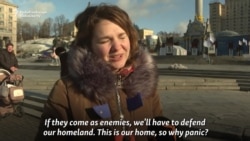
'All Will Be Good. And If Not, We'll Fight.' Kyiv Residents Keep Calm Amid Russian Attack Expectations
please wait

No media source currently available

0:00 0:00:57 0:00

U.S. Secretary of State Antony Blinken said on February 13 that the decision to evacuate most of the staff from the U.S. Embassy in Kyiv was justified by the threat of a Russian invasion, which he called "imminent enough," as several nations told their citizens to leave Ukraine amid Western warnings that Moscow may be on the verge of military action against its neighbor.

"Yesterday, we ordered the departure of most of the Americans still at the U.S. Embassy in Kyiv," Blinken said after talks in Honolulu with his Japanese and South Korean counterparts.

"The risk of Russian military action is high enough, and the threat is imminent enough, that this is the prudent thing to do," Blinken said, adding that a provocation could not be ruled out as an excuse for a Russian attack on Ukraine.

"No one should be surprised if Russia instigates a provocation or incident, which it then uses to justify military action it had planned all along," Blinken said.

U.S. national-security adviser Jake Sullivan said the same day that a Russian invasion of Ukraine could begin “any day now.”

“That includes this coming week before the end of the Olympics,” he added, referring to the Winter Olympics in Beijing, which are scheduled to end on February 20.

Sullivan added that the United States would continue making public its intelligence in an effort to block Moscow from staging a “false flag” operation that could be used as a justification for military action.

The United States, Britain, and Germany are among the countries who told their nationals to leave, while Australia on February 13 announced it was suspending operations at its embassy in Kyiv.

A U.S. State Department spokesperson said on February 13 that its warning extended to U.S. staff at the Organization for Security and Cooperation in Europe (OSCE), who are also asked to leave the country.

Reuters separately reported that U.S. staff at the OSCE on February 13 started to withdraw by car from the Russia-backed rebel-held city of Donetsk in eastern Ukraine.

German President Frank-Walter Steinmeier, who was reelected for a second term on February 13, said Putin should not underestimate the strength of Western resolve over Ukraine.

“I appeal to President Putin to loosen the noose around Ukraine’s neck and join us in seeking a way to preserve peace in Europe,” Steinmeier said.

German Chancellor Olaf Scholz said the same day that NATO members and the European Union have already “carefully prepared” tough sanctions that “we can immediately put into force” in the event of an invasion. Scholz was expected in Kyiv on February 14 and in Moscow on February 15 in a bid to defuse tensions.

Pope Francis lead a silent prayer for Ukraine during a service in Rome on February 13, calling the events in the region “very worrying.”

On February 12, the Pentagon also ordered the temporary repositioning of some 150 National Guard troops out of Ukraine. The National Guard members were in the country “advising and mentoring Ukrainian forces,” Pentagon spokesman John Kirby said on Twitter.

Canadian media also reported that Canada is moving its embassy staff to Lviv, near the border with Poland in Ukraine's far west.

The prospect of fleeing Westerners prompted Ukraine to issue an appeal to its citizens to "remain calm," with President Volodymyr Zelenskiy saying on February 12 that invasion warnings could stoke panic, which he called "the best friend of our enemies."

In Photos: New Images Capture Russia Massing Weaponry Around Ukraine
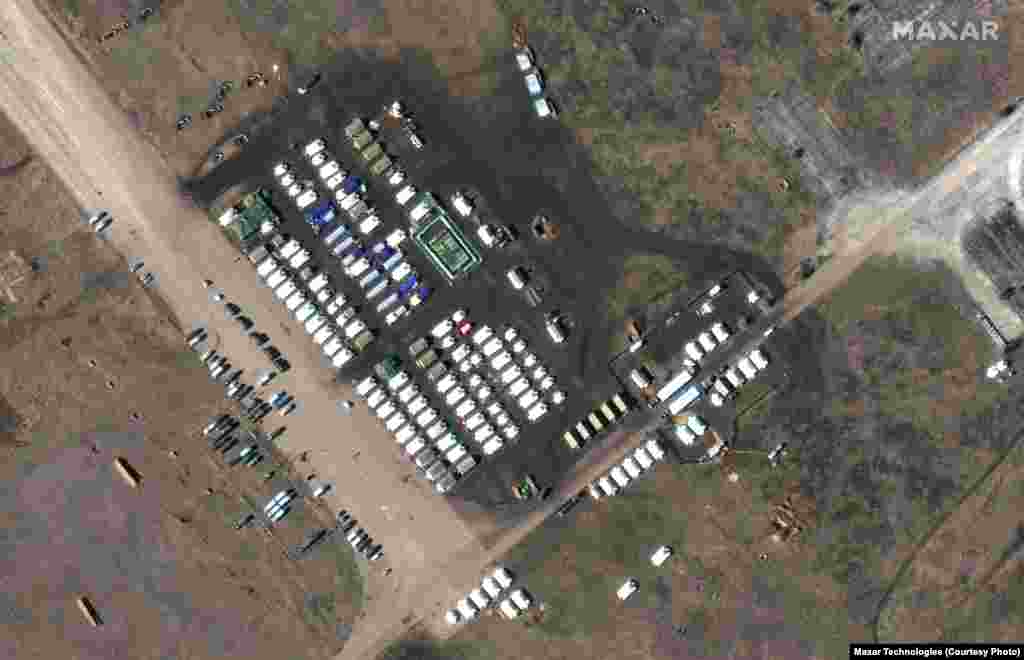
In Crimea, a new deployment of troops and equipment is visible at the Oktyabrskoye airfield north of Simferopol on February 10.
1/24 In Crimea, a new deployment of troops and equipment is visible at the Oktyabrskoye airfield north of Simferopol on February 10.
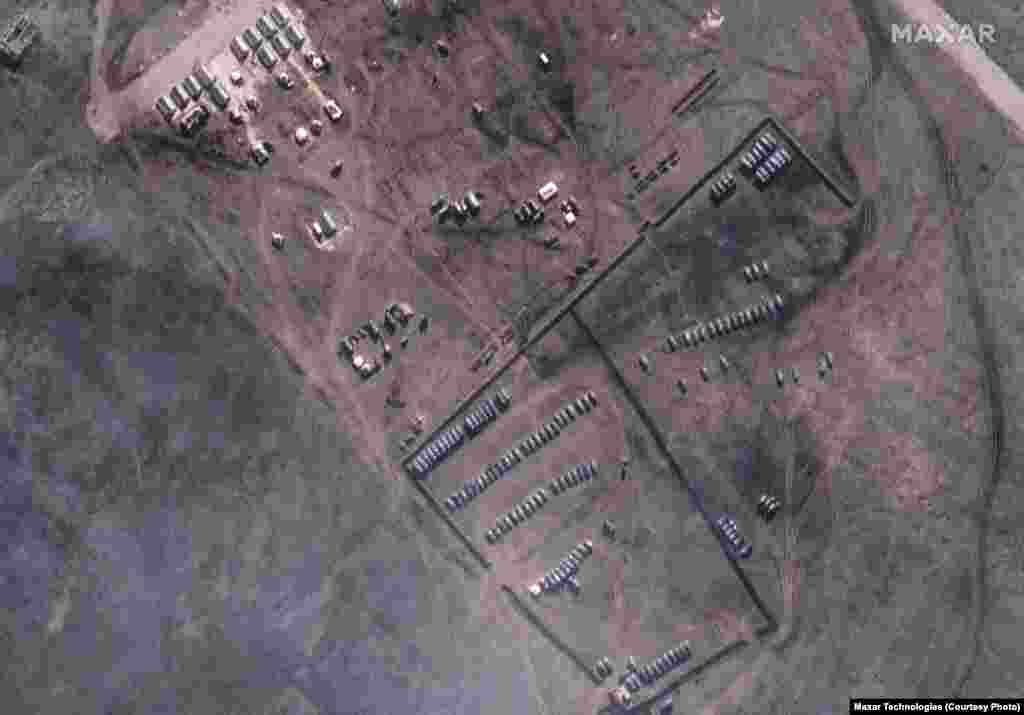
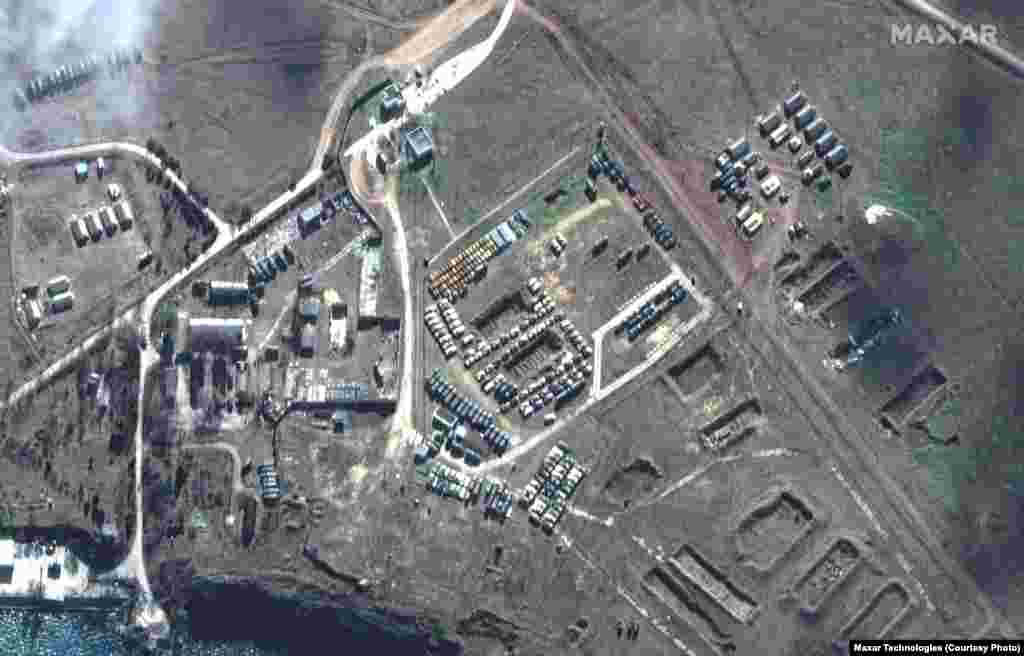
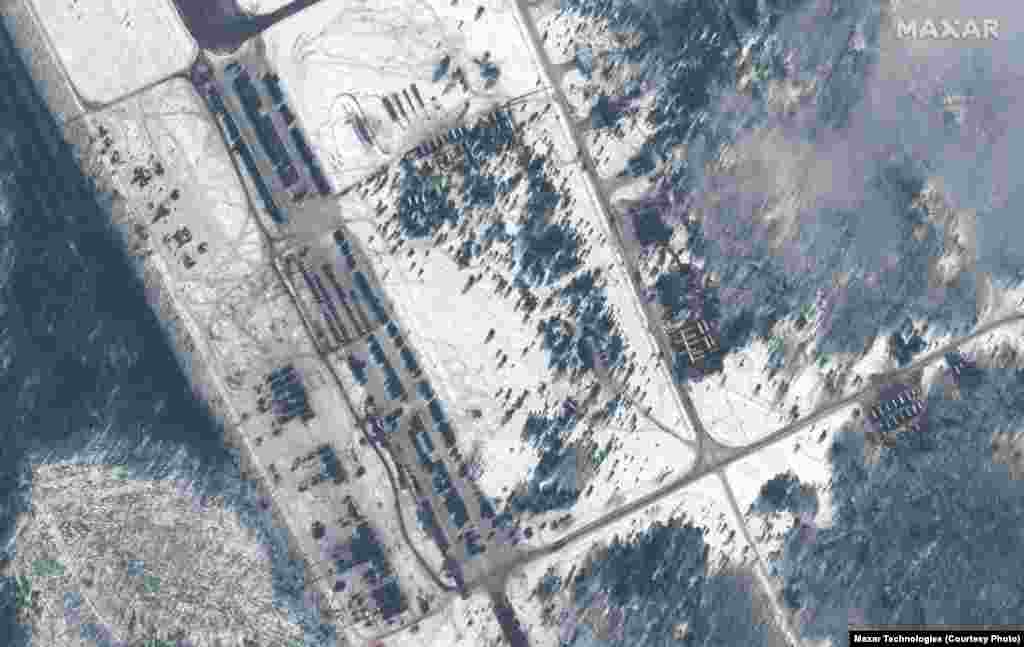
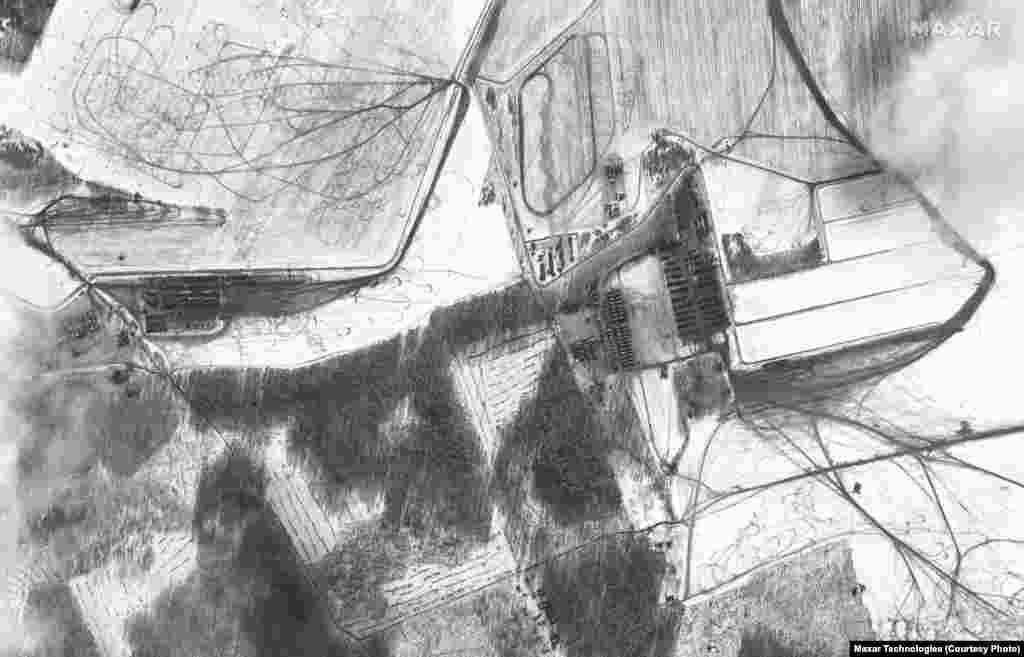
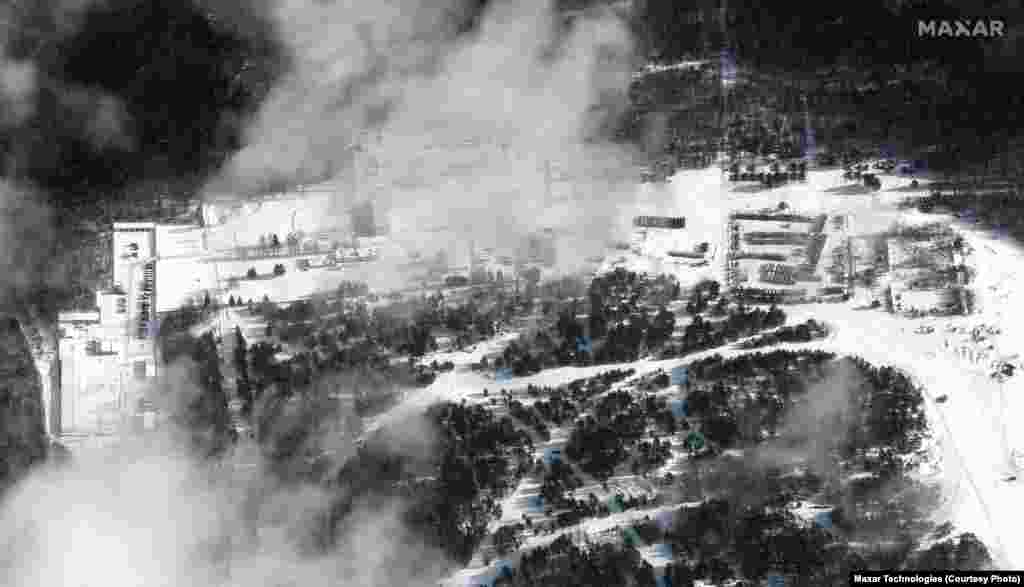
Satellite photos from February 10 and earlier show a massive Russian buildup of military hardware, reportedly including ballistic-missile systems. Some of the buildup is in Belarus, not far from the Ukrainian border.
Armored vehicles of a new deployment are visible in Slavne on Crimea's northwest coast on February 9.
2/24 Armored vehicles of a new deployment are visible in Slavne on Crimea's northwest coast on February 9.
Satellite photos from February 10 and earlier show a massive Russian buildup of military hardware, reportedly including ballistic-missile systems. Some of the buildup is in Belarus, not far from the Ukrainian border.
Equipment and new deployments are visible in Novoozernoye, Crimea, on February 9.
3/24 Equipment and new deployments are visible in Novoozernoye, Crimea, on February 9.
Satellite photos from February 10 and earlier show a massive Russian buildup of military hardware, reportedly including ballistic-missile systems. Some of the buildup is in Belarus, not far from the Ukrainian border.
A new deployment of troops, vehicles, and helicopters was identified on February 10 at the Zyabrovka airfield near Homel, Belarus, less than 25 kilometers from the border with Ukraine.
4/24 A new deployment of troops, vehicles, and helicopters was identified on February 10 at the Zyabrovka airfield near Homel, Belarus, less than 25 kilometers from the border with Ukraine.
Satellite photos from February 10 and earlier show a massive Russian buildup of military hardware, reportedly including ballistic-missile systems. Some of the buildup is in Belarus, not far from the Ukrainian border.
An overview of deployment areas near Rechytsa on February 9. Rechytsa is in Belarus's southeastern Homel region, some 55 kilometers from the Ukrainian border.
5/24 An overview of deployment areas near Rechytsa on February 9. Rechytsa is in Belarus's southeastern Homel region, some 55 kilometers from the Ukrainian border.
Satellite photos from February 10 and earlier show a massive Russian buildup of military hardware, reportedly including ballistic-missile systems. Some of the buildup is in Belarus, not far from the Ukrainian border.
Armored vehicles and transporters arrive at Russia's Kursk training area on February 9, about 100 kilometers east of Ukraine.
6/24 Armored vehicles and transporters arrive at Russia's Kursk training area on February 9, about 100 kilometers east of Ukraine.
Satellite photos from February 10 and earlier show a massive Russian buildup of military hardware, reportedly including ballistic-missile systems. Some of the buildup is in Belarus, not far from the Ukrainian border.
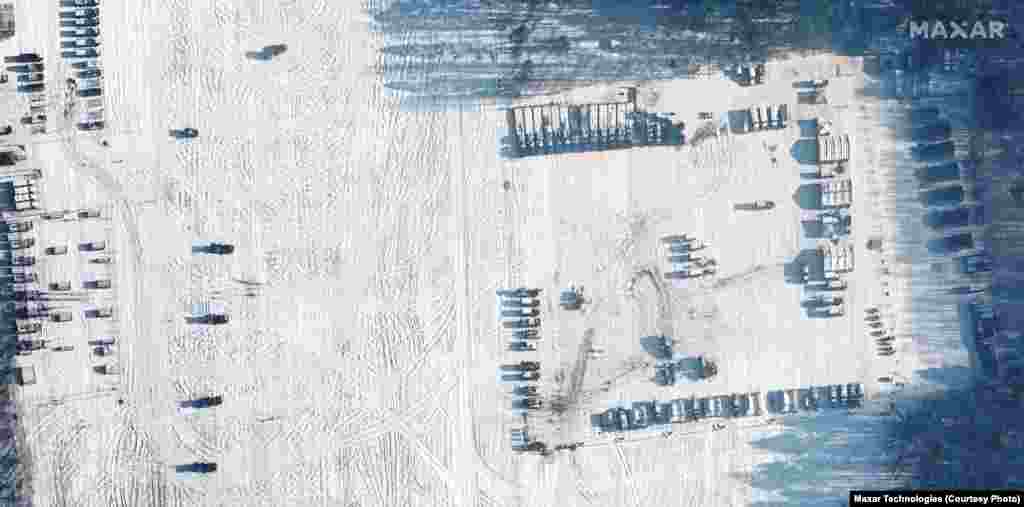
Multiple battle groups and troop housing areas are visible at the Kursk training area on February 9.
7/24 Multiple battle groups and troop housing areas are visible at the Kursk training area on February 9.
Satellite photos from February 10 and earlier show a massive Russian buildup of military hardware, reportedly including ballistic-missile systems. Some of the buildup is in Belarus, not far from the Ukrainian border.
Six SU-25 ground-attack aircraft are shown at Luninets airfield in Belarus. The image was taken on February 4. Luninets is in the southwestern Brest region, about 50 kilometers from the Ukrainian border.
8/24 Six SU-25 ground-attack aircraft are shown at Luninets airfield in Belarus. The image was taken on February 4. Luninets is in the southwestern Brest region, about 50 kilometers from the Ukrainian border.
Satellite photos from February 10 and earlier show a massive Russian buildup of military hardware, reportedly including ballistic-missile systems. Some of the buildup is in Belarus, not far from the Ukrainian border.
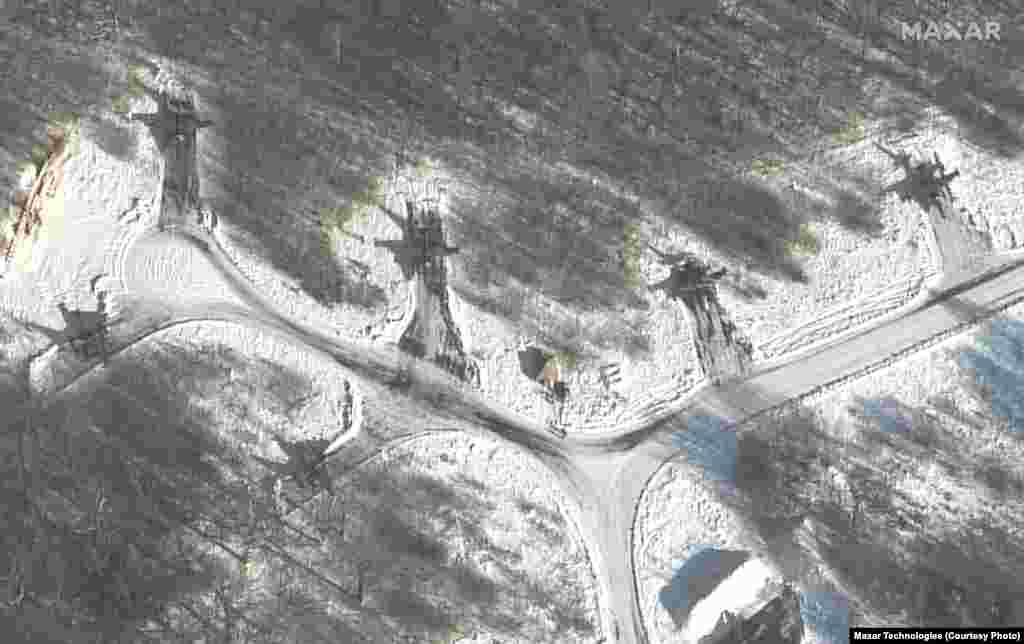
Probable S-400 air-defense deployments at the Luninets airfield on February 4.
9/24 Probable S-400 air-defense deployments at the Luninets airfield on February 4.
Satellite photos from February 10 and earlier show a massive Russian buildup of military hardware, reportedly including ballistic-missile systems. Some of the buildup is in Belarus, not far from the Ukrainian border.
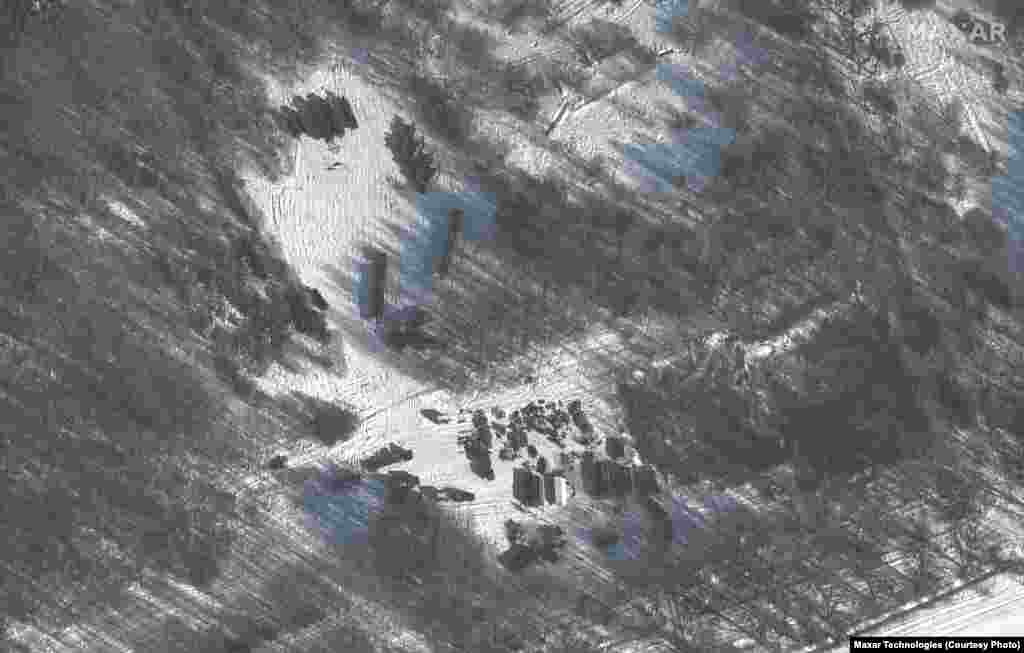
Probable SS-26 Iskander and multiple-rocket launchers deployed northwest of Yelsk on February 4. Yelsk is in Belarus's Homel region, about 20 kilometers from the Ukrainian border.
10/24 Probable SS-26 Iskander and multiple-rocket launchers deployed northwest of Yelsk on February 4. Yelsk is in Belarus's Homel region, about 20 kilometers from the Ukrainian border.
Satellite photos from February 10 and earlier show a massive Russian buildup of military hardware, reportedly including ballistic-missile systems. Some of the buildup is in Belarus, not far from the Ukrainian border.
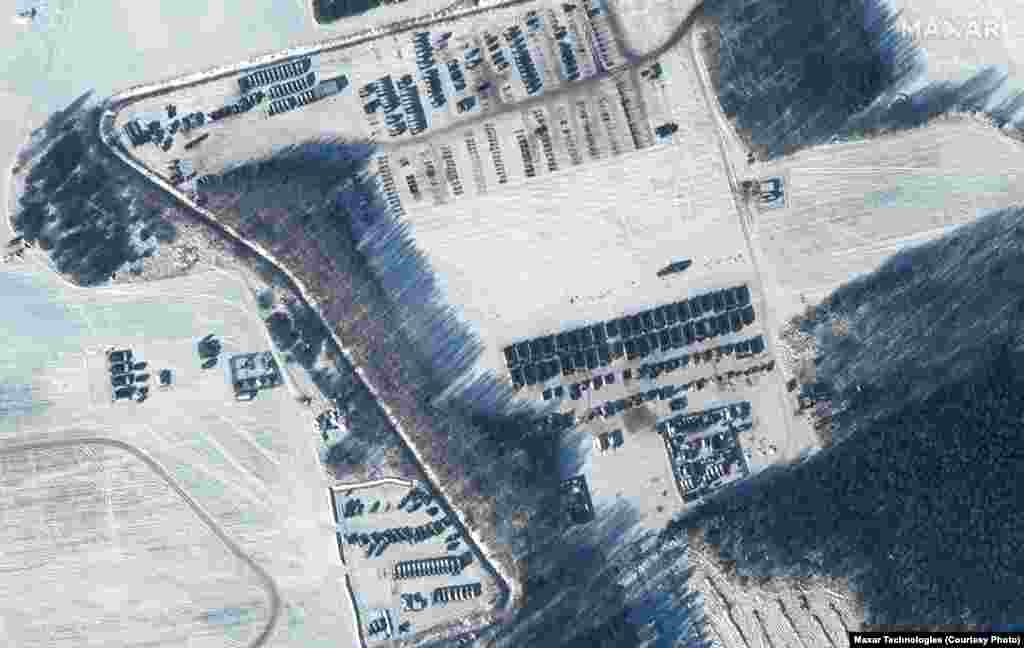
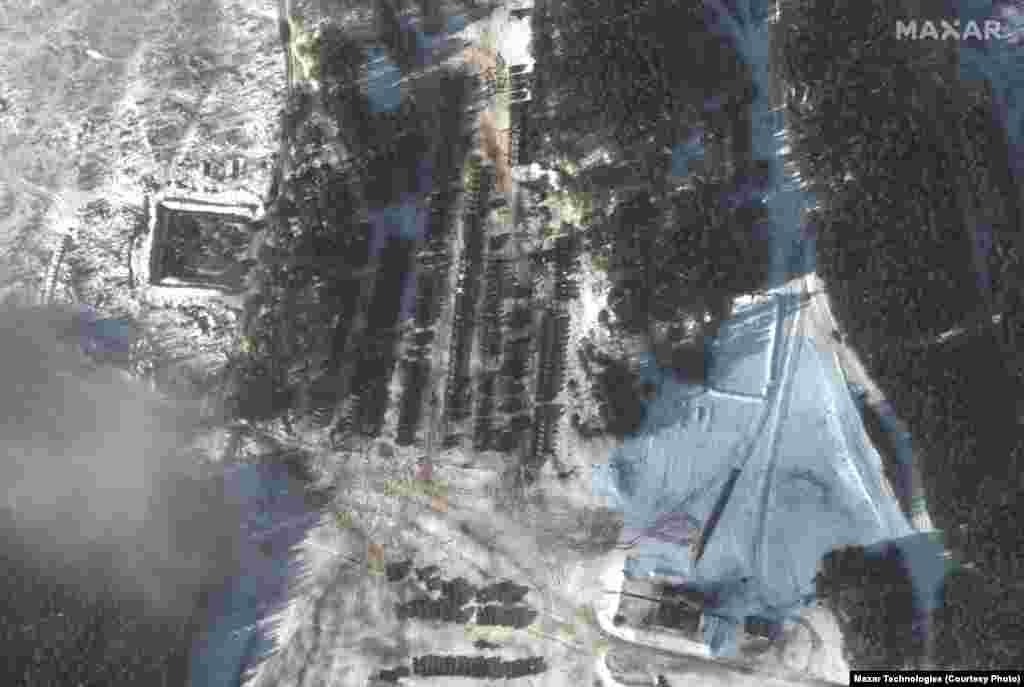
Troops and logistics-material-support units northwest of Yelsk on February 4.
11/24 Troops and logistics-material-support units northwest of Yelsk on February 4.
Satellite photos from February 10 and earlier show a massive Russian buildup of military hardware, reportedly including ballistic-missile systems. Some of the buildup is in Belarus, not far from the Ukrainian border.
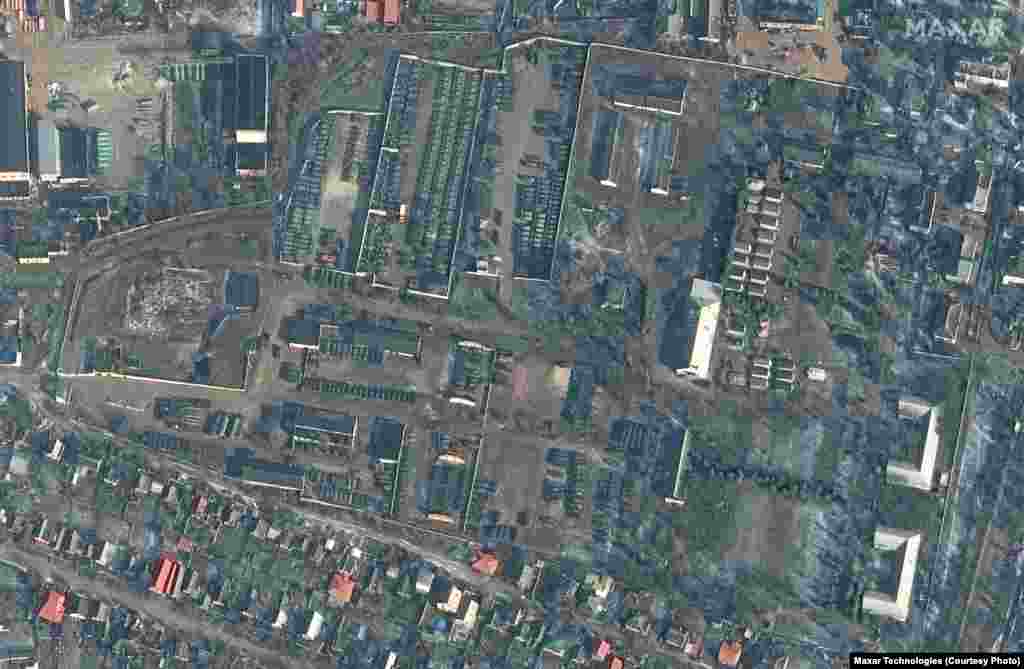
A troop-housing area and vehicle park in Rechytsa on February 4.
12/24 A troop-housing area and vehicle park in Rechytsa on February 4.
Satellite photos from February 10 and earlier show a massive Russian buildup of military hardware, reportedly including ballistic-missile systems. Some of the buildup is in Belarus, not far from the Ukrainian border.
A cluster of vehicles that reportedly includes truck-launched Iskander missile systems at the Osipovichi military training area, just south of Minsk. The image was taken on February 1. 
13/24 A cluster of vehicles that reportedly includes truck-launched Iskander missile systems at the Osipovichi military training area, just south of Minsk. The image was taken on February 1. 
Satellite photos from February 10 and earlier show a massive Russian buildup of military hardware, reportedly including ballistic-missile systems. Some of the buildup is in Belarus, not far from the Ukrainian border.
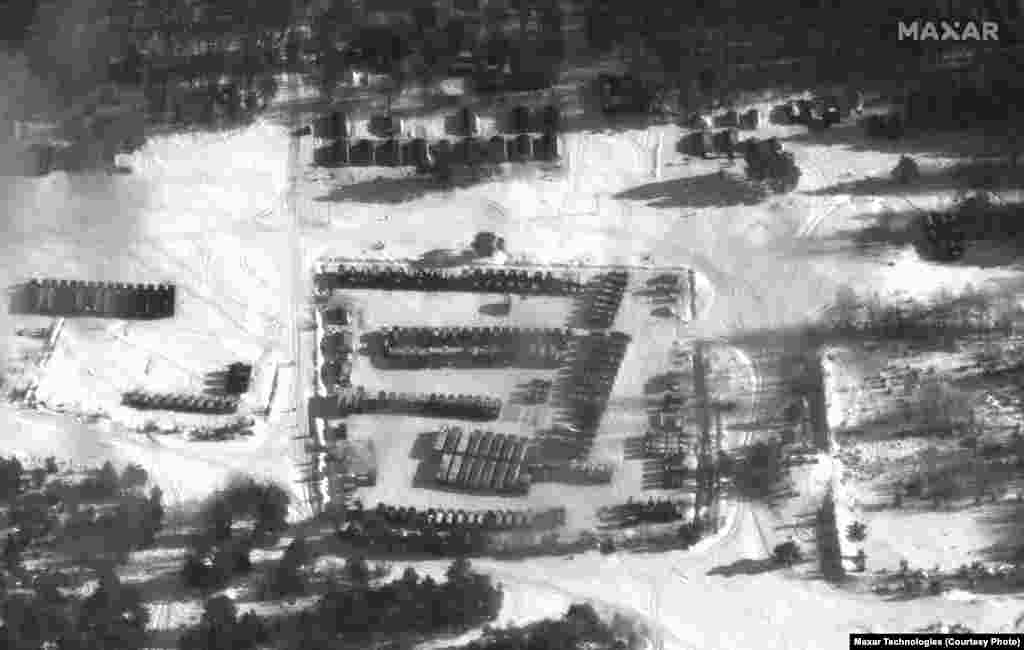
A wider view of the Osipovichi military facility on February 1. Russian-made Iskander missiles are capable of precise strikes on targets up to 500 kilometers away. 
14/24 A wider view of the Osipovichi military facility on February 1. Russian-made Iskander missiles are capable of precise strikes on targets up to 500 kilometers away. 
Satellite photos from February 10 and earlier show a massive Russian buildup of military hardware, reportedly including ballistic-missile systems. Some of the buildup is in Belarus, not far from the Ukrainian border.
An overview of vehicles and housing for troops near Baranovichi, Belarus, on January 29. Russia has placed troops and equipment inside Belarus in recent days as the countries prepare to hold joint military exercises.
15/24 An overview of vehicles and housing for troops near Baranovichi, Belarus, on January 29. Russia has placed troops and equipment inside Belarus in recent days as the countries prepare to hold joint military exercises.
Satellite photos from February 10 and earlier show a massive Russian buildup of military hardware, reportedly including ballistic-missile systems. Some of the buildup is in Belarus, not far from the Ukrainian border.
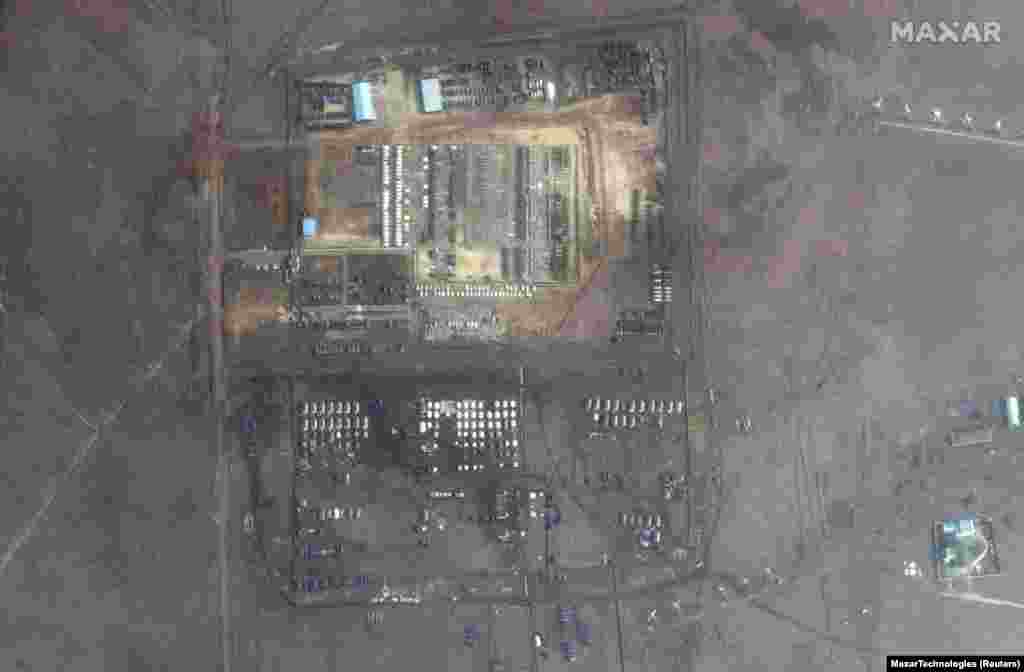
A crowded military base in Bakhchisaray on the Russian-occupied Crimean Peninsula on February 1. 
16/24 A crowded military base in Bakhchisaray on the Russian-occupied Crimean Peninsula on February 1. 
Satellite photos from February 10 and earlier show a massive Russian buildup of military hardware, reportedly including ballistic-missile systems. Some of the buildup is in Belarus, not far from the Ukrainian border.
Massed vehicles at a military base in Novoozernoye, Crimea, as photographed by satellite on February 1. 
17/24 Massed vehicles at a military base in Novoozernoye, Crimea, as photographed by satellite on February 1. 
Satellite photos from February 10 and earlier show a massive Russian buildup of military hardware, reportedly including ballistic-missile systems. Some of the buildup is in Belarus, not far from the Ukrainian border.
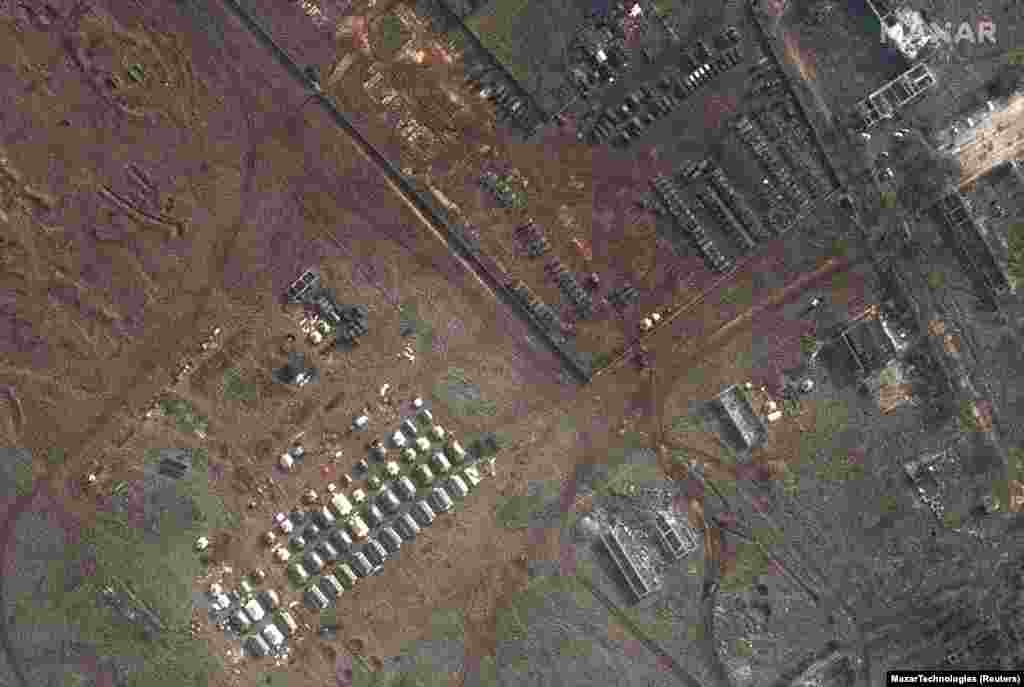
Military tents and armored vehicles in Yevpatoria, Crimea, on February 1.
18/24 Military tents and armored vehicles in Yevpatoria, Crimea, on February 1.
Satellite photos from February 10 and earlier show a massive Russian buildup of military hardware, reportedly including ballistic-missile systems. Some of the buildup is in Belarus, not far from the Ukrainian border.
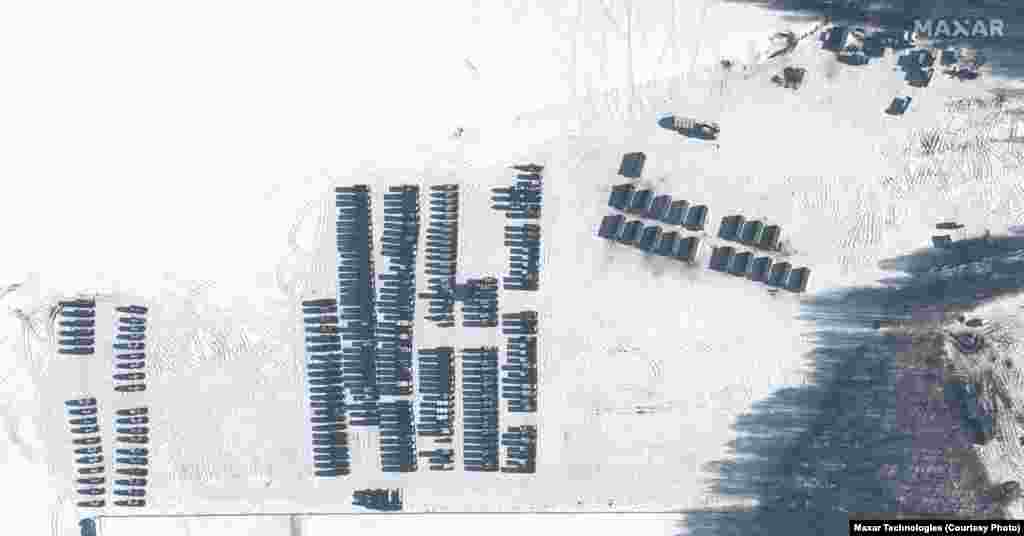
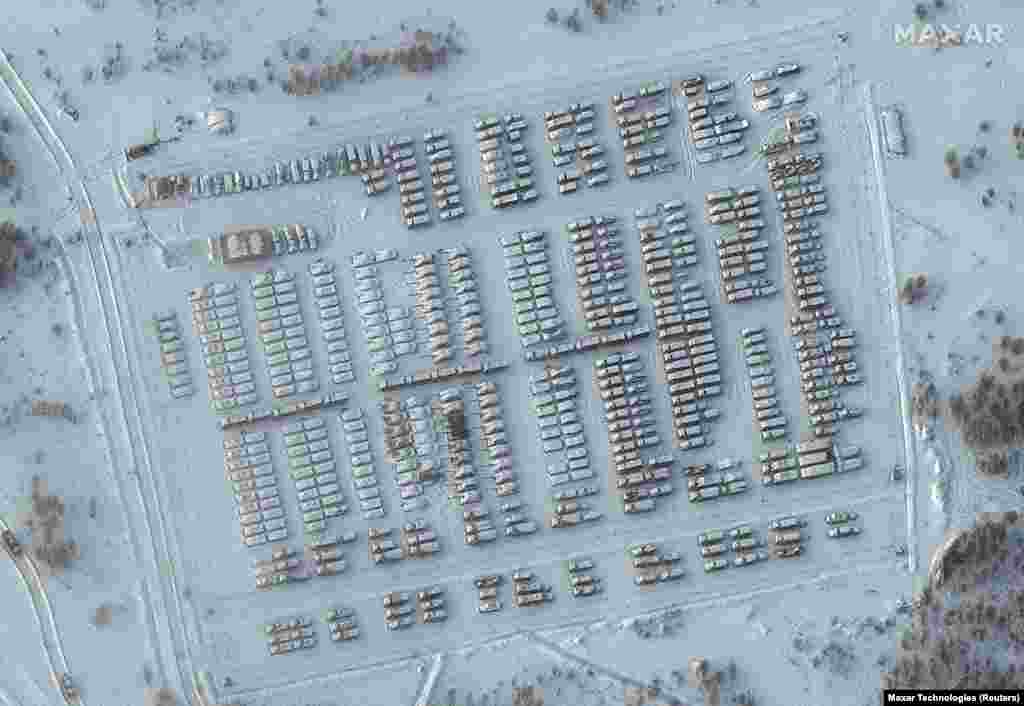
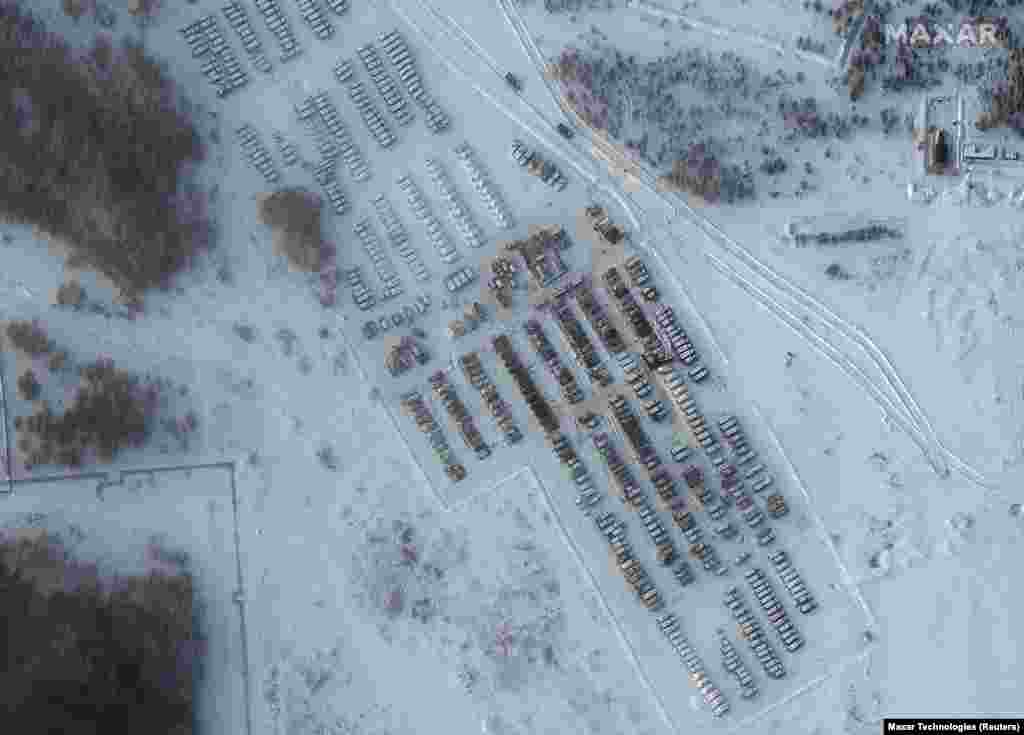
An older satellite image shows snow-dusted Russian military vehicles parked in Yelnya, Russia, on January 19. Yelnya is in Russia's northwestern Smolensk region, around 120 kilometers from the border with Belarus and 260 kilometers from Ukraine. 
19/24 An older satellite image shows snow-dusted Russian military vehicles parked in Yelnya, Russia, on January 19. Yelnya is in Russia's northwestern Smolensk region, around 120 kilometers from the border with Belarus and 260 kilometers from Ukraine. 
Satellite photos from February 10 and earlier show a massive Russian buildup of military hardware, reportedly including ballistic-missile systems. Some of the buildup is in Belarus, not far from the Ukrainian border.
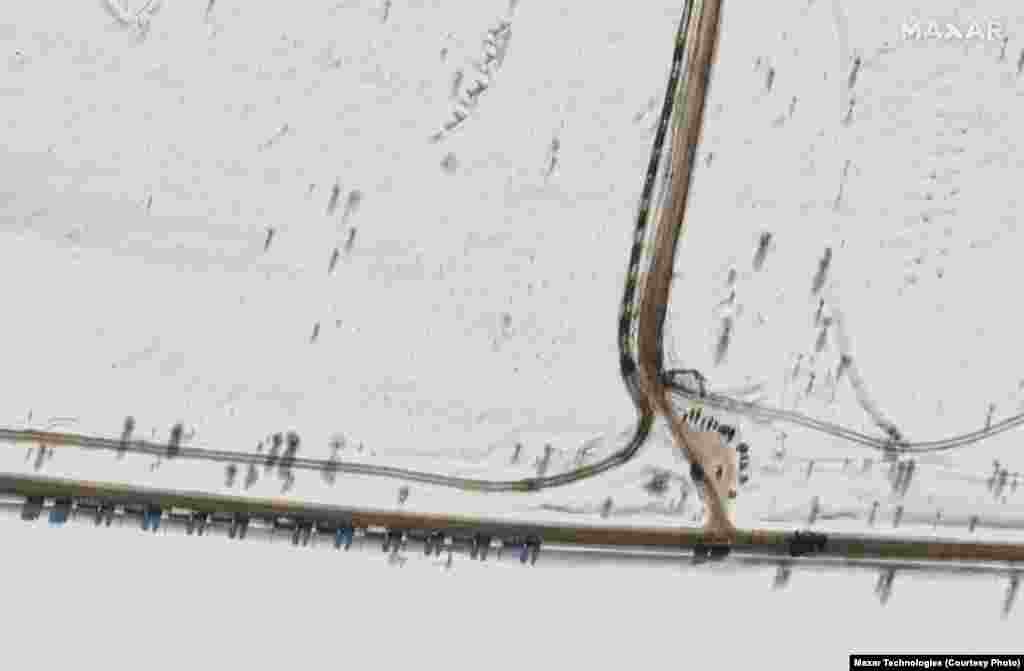
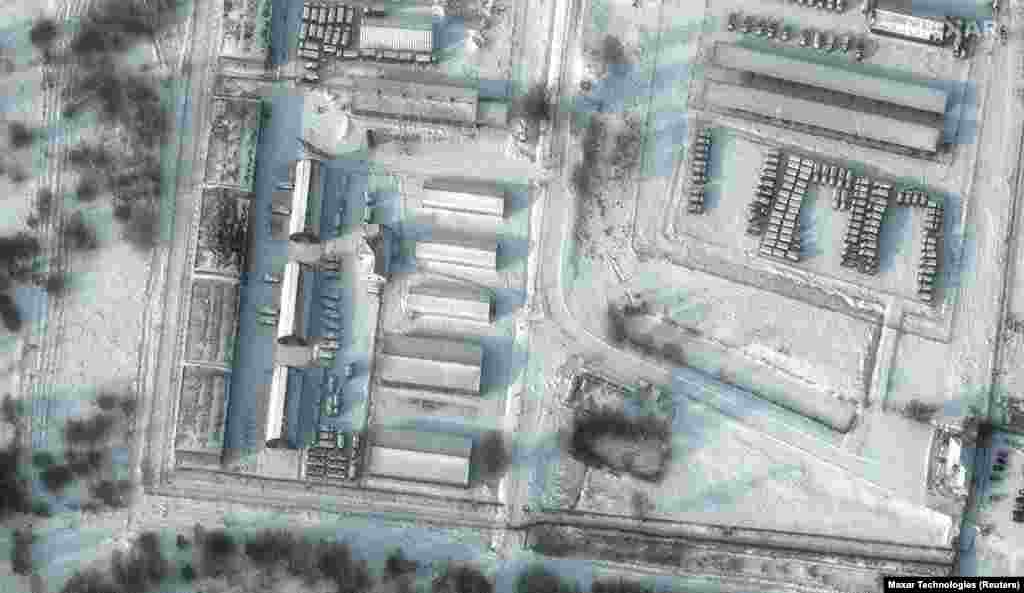
Armored personnel carriers and trucks at Klimovo on January 19. The Klimovo military storage facility is located just 35 kilometers from the Ukrainian border. 
20/24 Armored personnel carriers and trucks at Klimovo on January 19. The Klimovo military storage facility is located just 35 kilometers from the Ukrainian border. 
Satellite photos from February 10 and earlier show a massive Russian buildup of military hardware, reportedly including ballistic-missile systems. Some of the buildup is in Belarus, not far from the Ukrainian border.
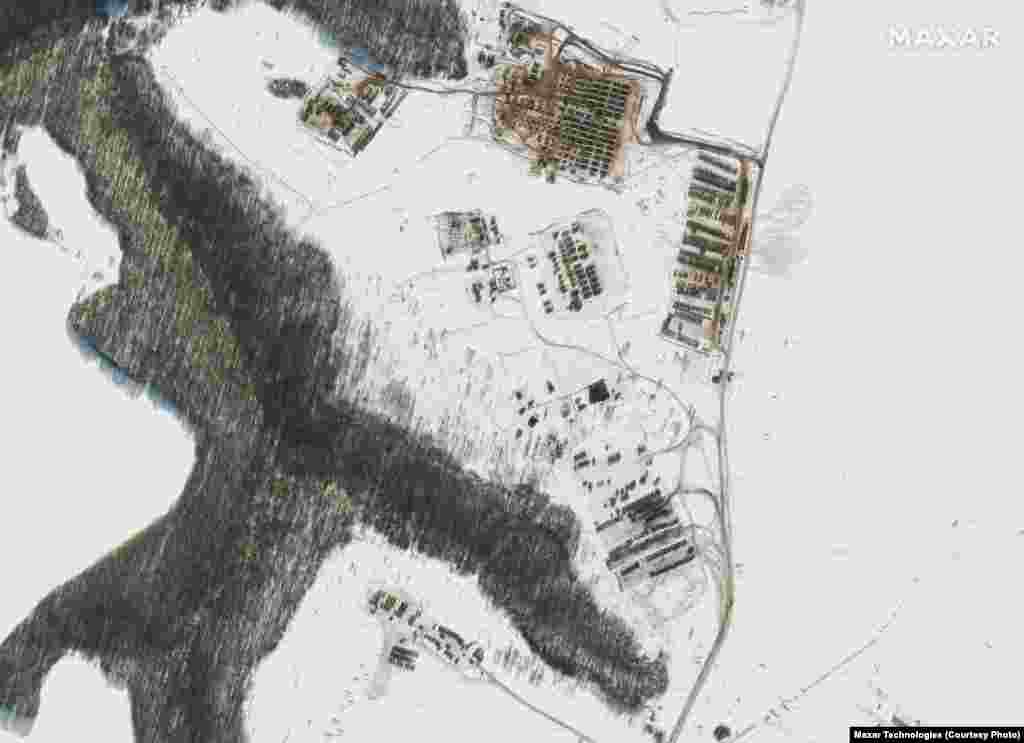
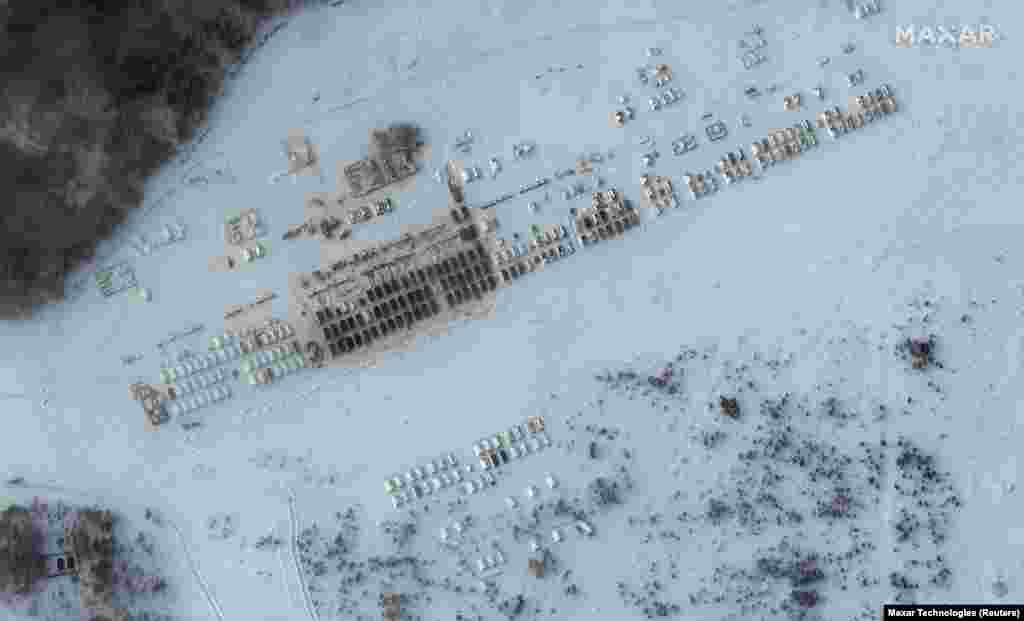
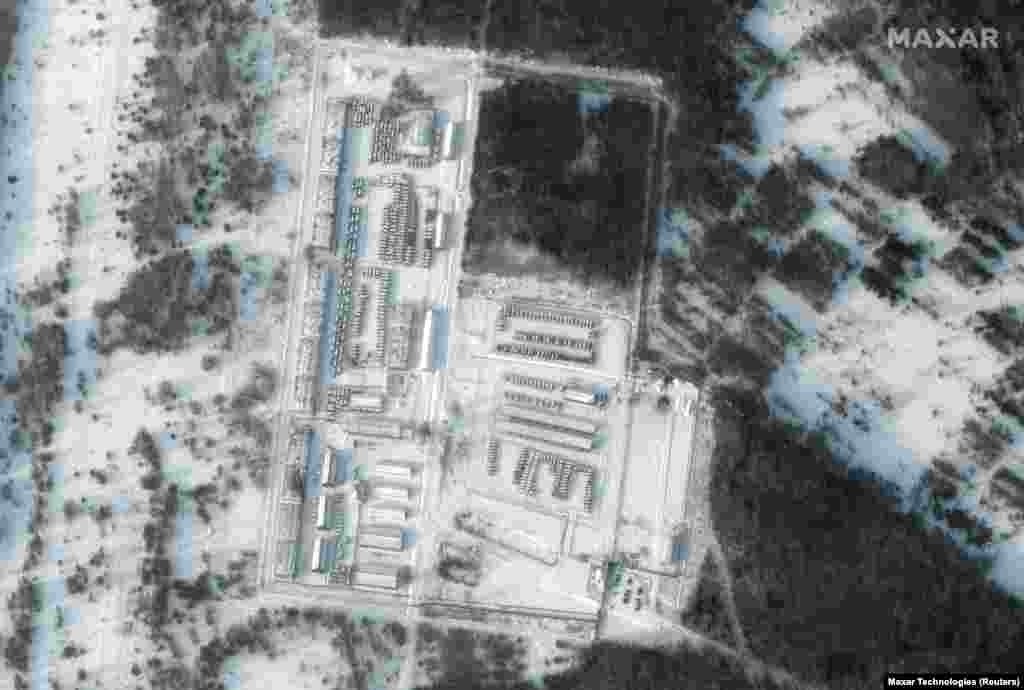
Tents and housing for Russian troops in Yelnya on January 19.
21/24 Tents and housing for Russian troops in Yelnya on January 19.
Satellite photos from February 10 and earlier show a massive Russian buildup of military hardware, reportedly including ballistic-missile systems. Some of the buildup is in Belarus, not far from the Ukrainian border.
Russian tanks and artillery-support equipment, some of which was apparently in use recently, parked in Yelnya on January 19.
22/24 Russian tanks and artillery-support equipment, some of which was apparently in use recently, parked in Yelnya on January 19.
Satellite photos from February 10 and earlier show a massive Russian buildup of military hardware, reportedly including ballistic-missile systems. Some of the buildup is in Belarus, not far from the Ukrainian border.
Military equipment massed at the Klimovo storage facility on January 19. Older imagery <a href="https://www.google.com/maps/place/Klimovo,+Bryansk+Oblast,+Russia/@52.346282,32.1680393,567m/data=!3m1!1e3!4m5!3m4!1s0x46d4a0d137ad6257:0x7ea4add83a2b92ac!8m2!3d52.3763189!4d32.2005574" target="_blank"><strong>from Google Maps of the same location</strong> </a>shows a fraction of the military vehicles present.&nbsp;
23/24 Military equipment massed at the Klimovo storage facility on January 19. Older imagery from Google Maps of the same location shows a fraction of the military vehicles present. 
Satellite photos from February 10 and earlier show a massive Russian buildup of military hardware, reportedly including ballistic-missile systems. Some of the buildup is in Belarus, not far from the Ukrainian border.
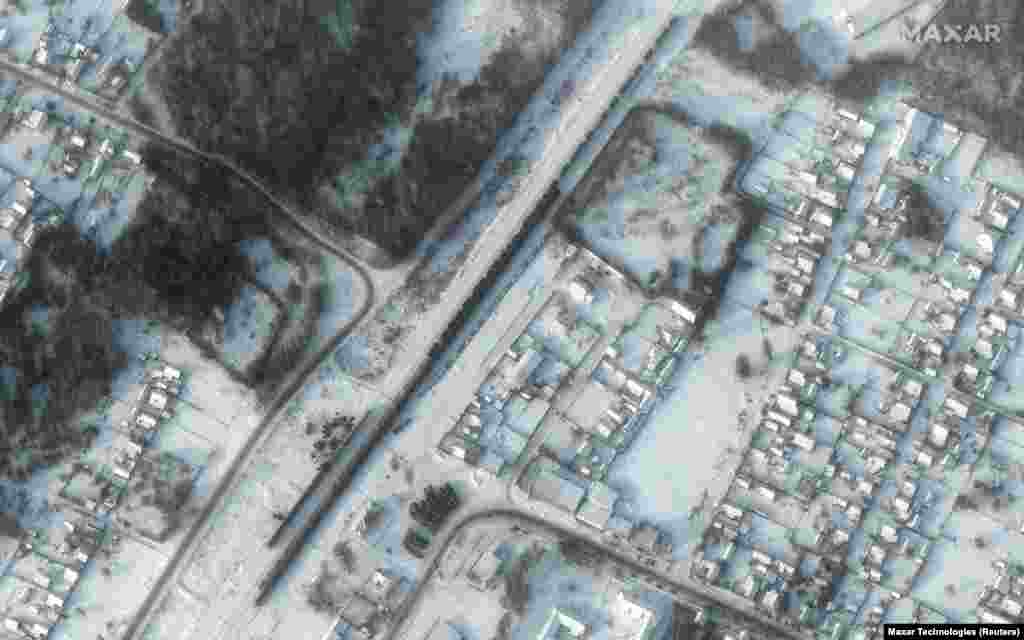
Military hardware at a railway yard in Klimovo on January 19. Recent videos have captured massive amounts of military hardware <strong><a href="https://twitter.com/RALee85/status/1483373599977259009" target="_blank">being transported by rail</a></strong> in western Russia.&nbsp;
24/24 Military hardware at a railway yard in Klimovo on January 19. Recent videos have captured massive amounts of military hardware being transported by rail in western Russia. 
Satellite photos from February 10 and earlier show a massive Russian buildup of military hardware, reportedly including ballistic-missile systems. Some of the buildup is in Belarus, not far from the Ukrainian border.
Previous slide
Next slide

The moves came as attempts by the leaders of the United States and France to convince Russian President Vladimir Putin to step back appeared to bear little fruit.

U.S. President Joe Biden told Putin in a phone call on February 12 that a Russian invasion of Ukraine "would produce widespread human suffering and diminish Russia’s standing" in the world, according to a White House statement issued after the call.

Biden also reiterated that the United States and its allies would "respond decisively" with "swift and severe costs on Russia" if Russia invades.

The call produced no fundamental change in the heightened tension over the military buildup, said a senior U.S. administration official who spoke with reporters.

It remains unclear if Russia is willing to pursue a diplomatic path, the unnamed U.S. official said, adding that Russia may proceed with military action. Russia has consistently denied that it plans to invade its neighbor.

The Kremlin said Putin told Biden that the U.S. response to Russia's main security demands had not taken into account key concerns and that Moscow would respond soon.

Moscow is demanding guarantees from the West that NATO will not accept Ukraine and other former Soviet nations as members and that it will halt weapon deployments to Ukraine and roll back its forces from Eastern Europe.

Before talking to Biden, Putin had a phone call with French President Emmanuel Macron. A Kremlin summary of the call suggested that little progress was made toward cooling down tensions, while the French Presidency said Macron and the Russian leader "both expressed a desire to continue dialogue" during the call.

British Defense Secretary Ben Wallace on February 13 warned against putting too much hope in talks, drawing a parallel between the Western diplomatic efforts and the European powers' policy of appeasement toward Nazi Germany ahead of World War II.

"It may be that [Putin] just switches off his tanks and we all go home, but there is a whiff of Munich in the air from some in the West," Wallace told the Sunday Times, referring to the 1938 agreement that allowed Adolf Hitler to annex part of Czechoslovakia as part of a failed attempt to persuade him to abandon territorial expansion.

"The worrying thing is that, despite the massive amount of increased diplomacy, that military buildup has continued," Wallace cautioned.

With reporting by Reuters, AFP, AP, and BBC
  • 16x9 Image

    RFE/RL

    RFE/RL journalists report the news in 24 languages in 18 countries where a free press is banned by the government or not fully established. We provide what many people cannot get locally: uncensored news, responsible discussion, and open debate.

This item is part of
XS
SM
MD
LG