The chief of the National Police, Ihor Klymenko: "We do realize...who would be interested in destabilizing the situation in Ukraine." (file photo)
KYIV -- Authorities in Ukraine have detained a group of people suspected of planning violent public acts across the country, including in the capital, Kyiv.
Interior Minister Denys Monastyrskiy told reporters in Kyiv on January 31 that the suspects had been apprehended a day earlier. He did not give the exact number of suspects detained.
"Their plan was to organize a protest action of up to 5,000 people and destabilize the situation in Ukraine via violent attacks against law enforcement and people participating in the demonstration," Monastyrskiy said, adding that up to 1,500 people planned to ignite clashes between protesters and police.
Monastyrskiy added that law enforcement uncovered plans that showed a group of medical personnel was prepared to arrive at the planned clashes and make sure wounds suffered by the fake activists were shown on television channels.
Monastyrskiy compared the "planned demonstrations by the group" with demonstrations held in 2014 in Crimea before it was illegally annexed by Russia, and in eastern regions of Donetsk and Luhansk, some parts of which have been under the control of Russia-backed separatists since then.
The minister said Ukrainian investigators are currently looking to see if there was a link between the detained group and Russia's secret services.
The chief of the National Police, Ihor Klymenko, told journalists at the same press conference that the alleged organizer of the event and a person suspected of being his assistant were among those detained. The two suspects are Ukrainian citizens, he added.
Klymenko also said that the group had received more than 1 million hryvnyas ($34,500) as a partial payment from the people who ordered the disturbances, the first of which was supposed to be held in front of the Ukrainian president’s office in Kyiv on January 31.
At The Front Lines, Ukrainian Soldiers And Civilians Endure Cold, Wait For A Possible War With Russia
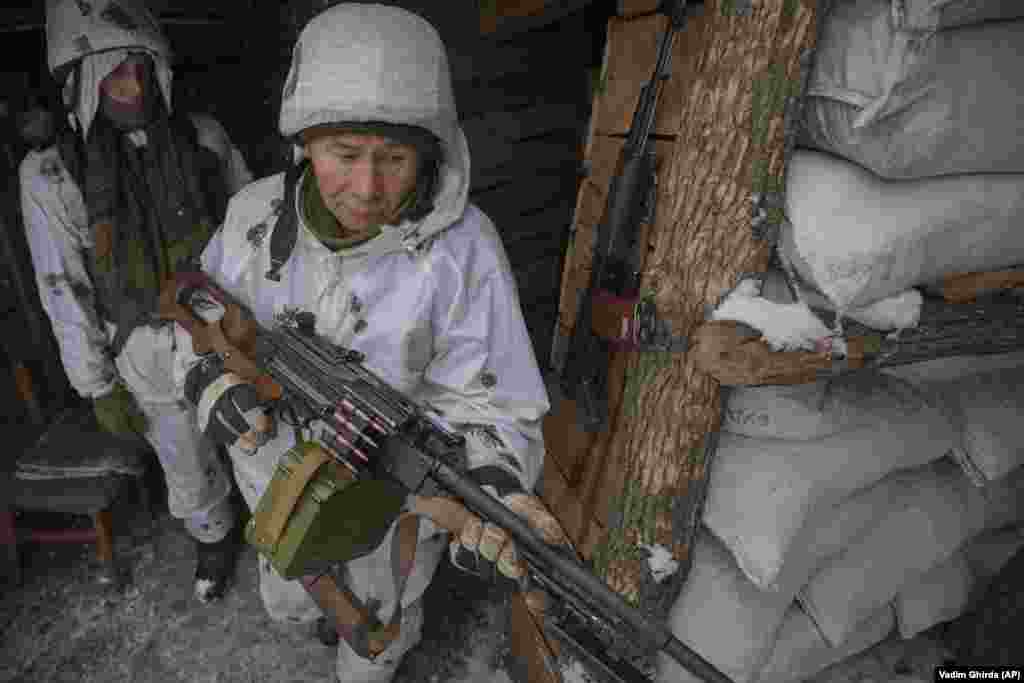
1/12Ukrainian servicemen install a machine gun at an outpost on the front line in the Luhansk region in eastern Ukraine on January 29.
With freezing temperatures hardening the ground and a lack of foliage, midwinter is considered an optimal time for military action -- a fear shared by Ukrainian soldiers and civilians near the front lines in the east as Russia masses more than 100,000 troops around the country's borders.
Show moreShow less
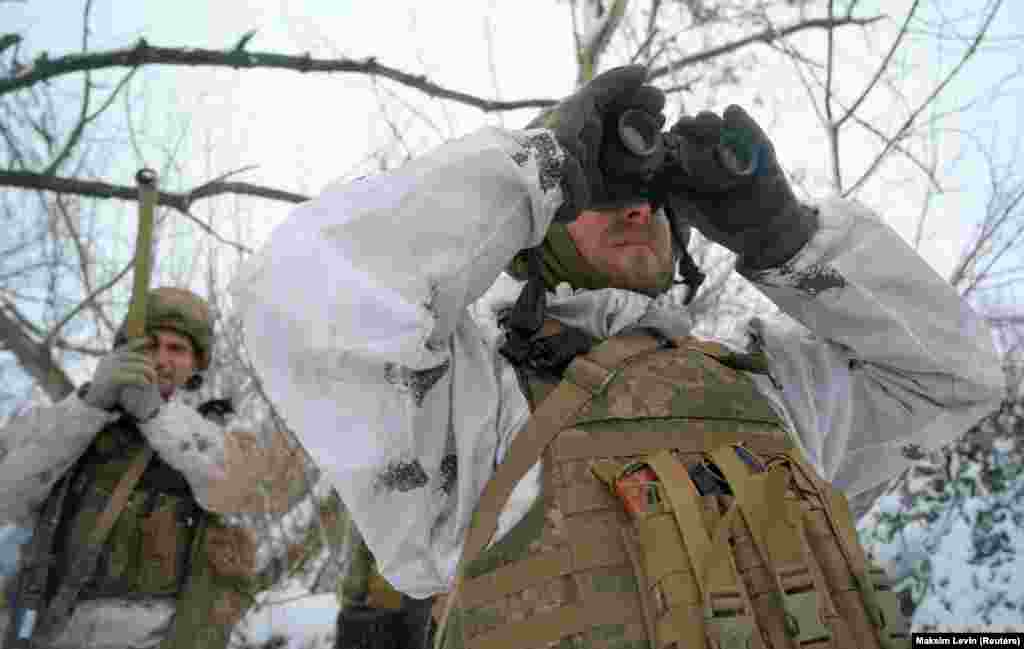
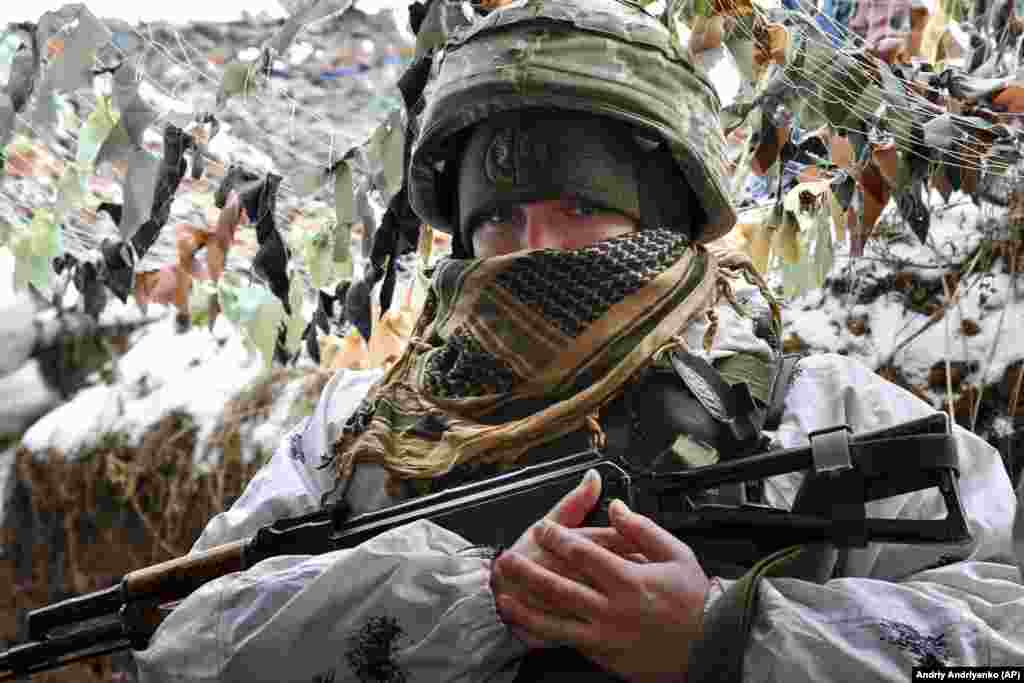
2/12A Ukrainian soldier wearing winter camouflage walks to an outpost in the Luhansk region.
With freezing temperatures hardening the ground and a lack of foliage, midwinter is considered an optimal time for military action -- a fear shared by Ukrainian soldiers and civilians near the front lines in the east as Russia masses more than 100,000 troops around the country's borders.
With freezing temperatures hardening the ground and a lack of foliage, midwinter is considered an optimal time for military action -- a fear shared by Ukrainian soldiers and civilians near the front lines in the east as Russia masses more than 100,000 troops around the country's borders.
With freezing temperatures hardening the ground and a lack of foliage, midwinter is considered an optimal time for military action -- a fear shared by Ukrainian soldiers and civilians near the front lines in the east as Russia masses more than 100,000 troops around the country's borders.
Show moreShow less
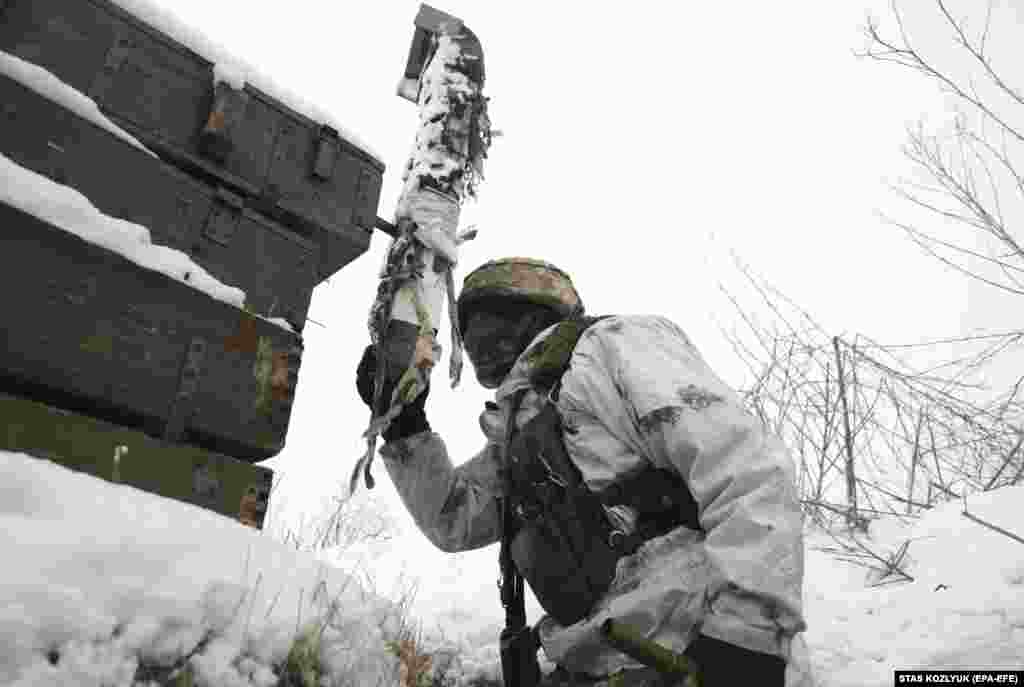
5/12A Ukrainian soldier monitors the situation on January 29 from a trench using a periscope near the city of Donetsk, which is controlled by Kremlin-backed separatists.
With freezing temperatures hardening the ground and a lack of foliage, midwinter is considered an optimal time for military action -- a fear shared by Ukrainian soldiers and civilians near the front lines in the east as Russia masses more than 100,000 troops around the country's borders.
With freezing temperatures hardening the ground and a lack of foliage, midwinter is considered an optimal time for military action -- a fear shared by Ukrainian soldiers and civilians near the front lines in the east as Russia masses more than 100,000 troops around the country's borders.
With freezing temperatures hardening the ground and a lack of foliage, midwinter is considered an optimal time for military action -- a fear shared by Ukrainian soldiers and civilians near the front lines in the east as Russia masses more than 100,000 troops around the country's borders.
Show moreShow less
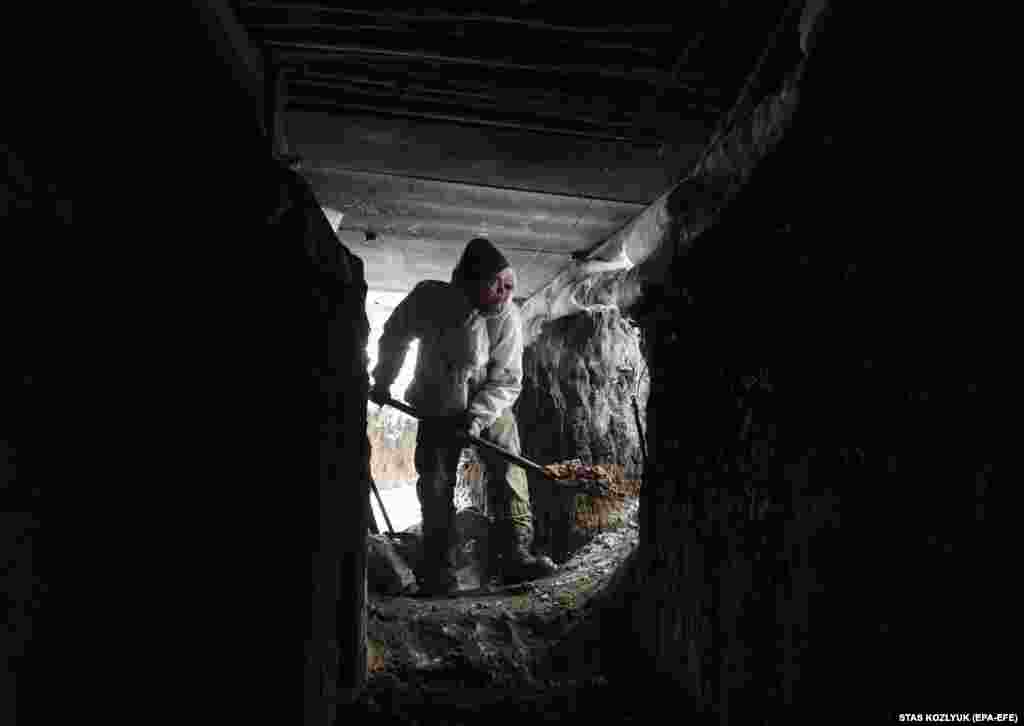
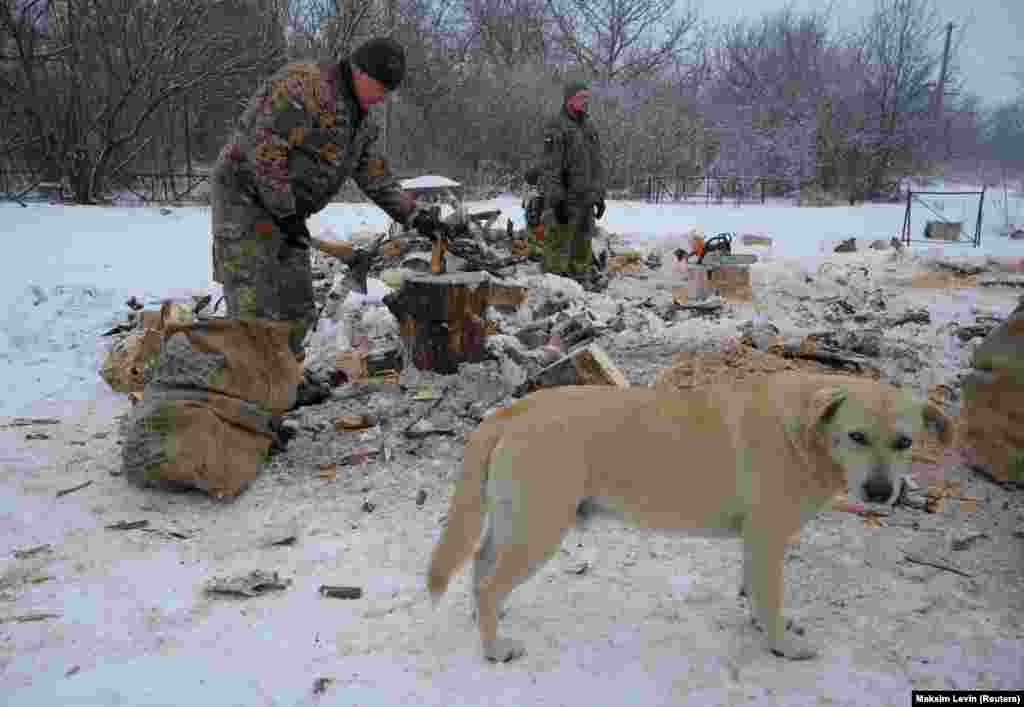
8/12A Ukrainian soldier chops firewood on the front line near the village of Pisky in the Donetsk region on January 29.
With freezing temperatures hardening the ground and a lack of foliage, midwinter is considered an optimal time for military action -- a fear shared by Ukrainian soldiers and civilians near the front lines in the east as Russia masses more than 100,000 troops around the country's borders.
With freezing temperatures hardening the ground and a lack of foliage, midwinter is considered an optimal time for military action -- a fear shared by Ukrainian soldiers and civilians near the front lines in the east as Russia masses more than 100,000 troops around the country's borders.
Show moreShow less
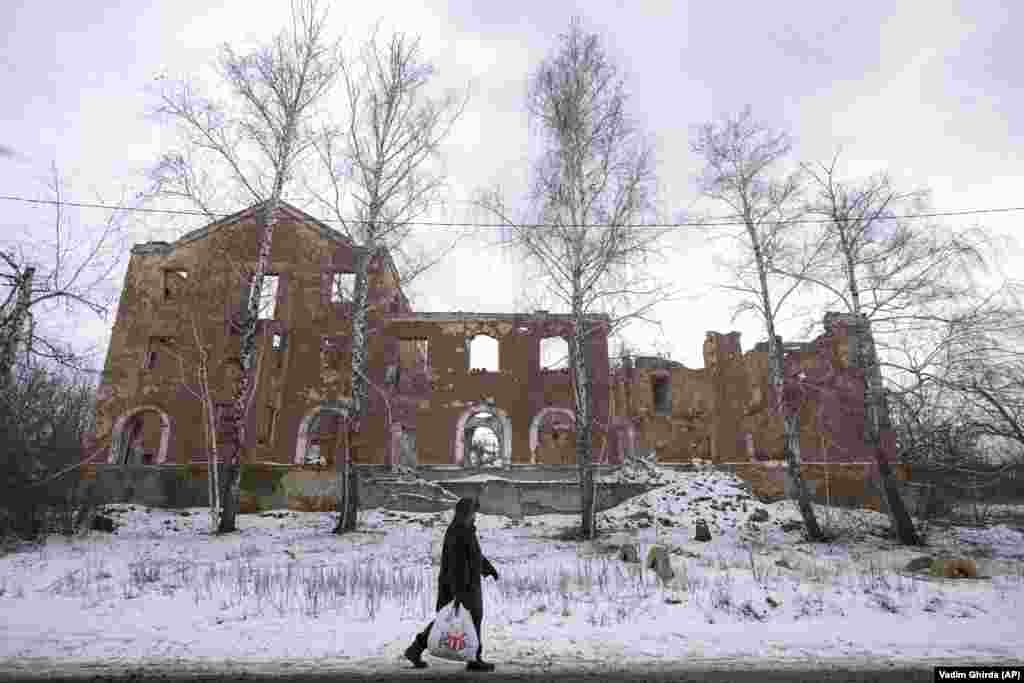
10/12A local woman walks past a building destroyed during fighting between the Ukrainian military and the separatists in 2014. The photo was taken on the outskirts of Slovyansk in the Donetsk region on January 30.
With freezing temperatures hardening the ground and a lack of foliage, midwinter is considered an optimal time for military action -- a fear shared by Ukrainian soldiers and civilians near the front lines in the east as Russia masses more than 100,000 troops around the country's borders.
Show moreShow less
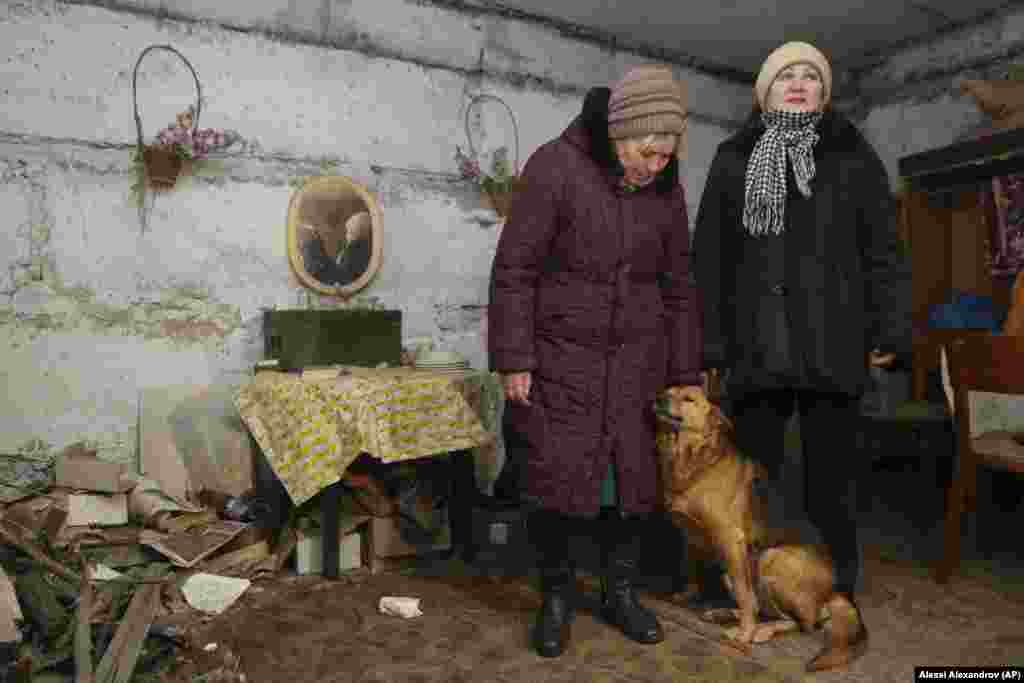
11/12Lilia (left) and Tetyana, both residents of a village on the outskirts of Donetsk, speak to a journalist in a basement used as a bomb shelter on January 30. They live in an area controlled by the separatists, not far from the front line with government forces. Lilia and five other people live in a five-story apartment building without heat or water. Many houses in the region were abandoned because of heavy damage incurred during the military conflict in 2014-15.
With freezing temperatures hardening the ground and a lack of foliage, midwinter is considered an optimal time for military action -- a fear shared by Ukrainian soldiers and civilians near the front lines in the east as Russia masses more than 100,000 troops around the country's borders.
Show moreShow less
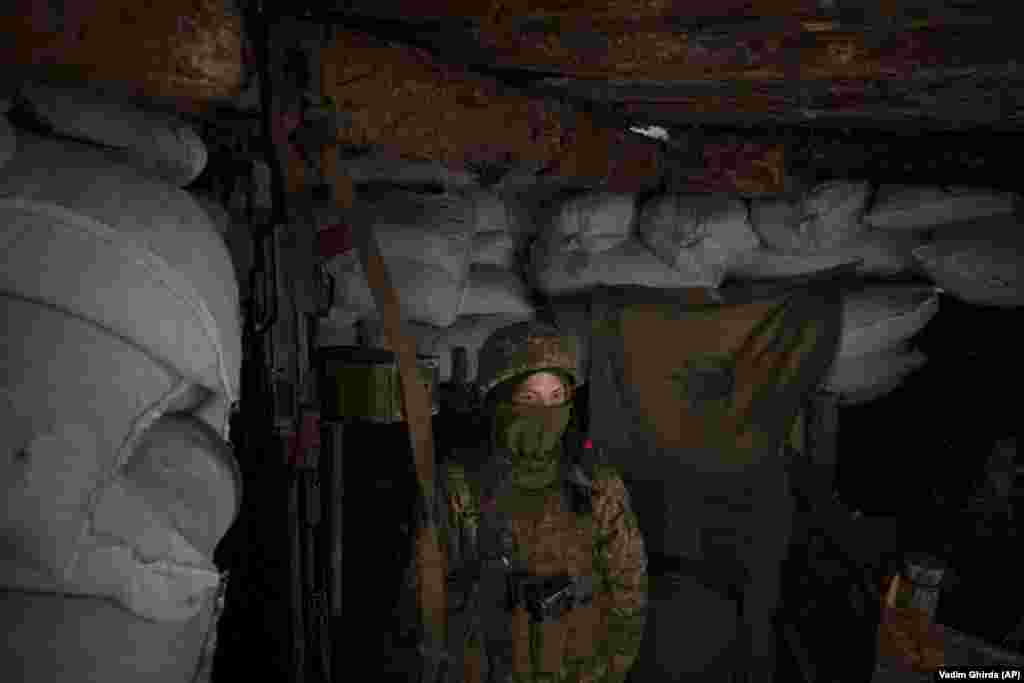
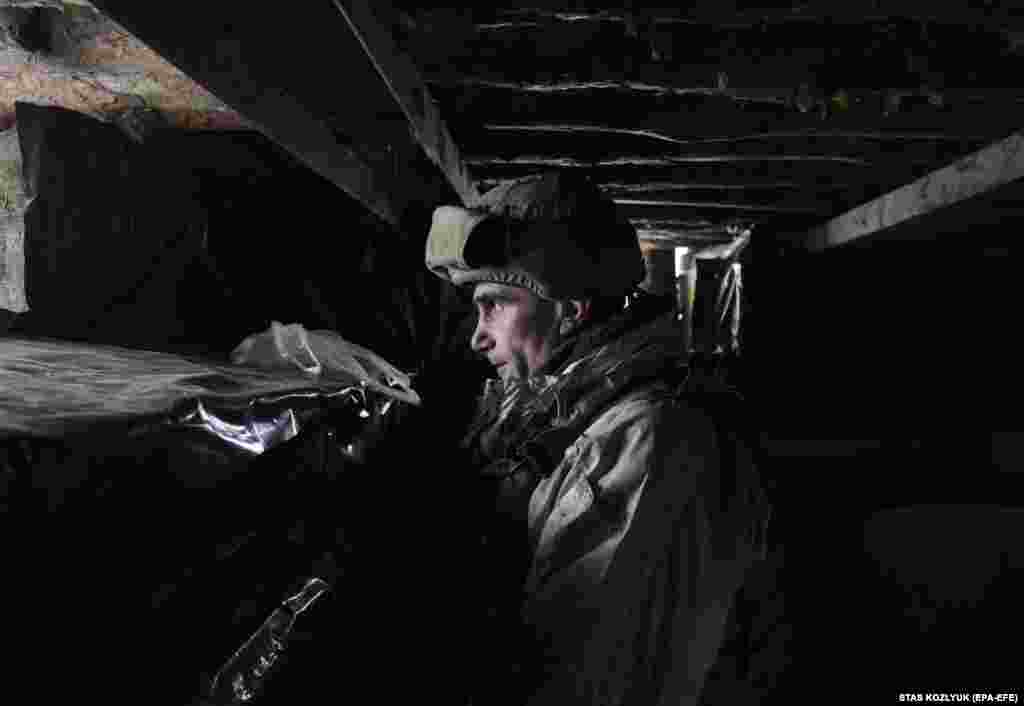
12/12A Ukrainian soldier keeps watch in a trench on January 29 at the front line with the separatists in the village of Verkhnotoretske in the Donetsk region.
With freezing temperatures hardening the ground and a lack of foliage, midwinter is considered an optimal time for military action -- a fear shared by Ukrainian soldiers and civilians near the front lines in the east as Russia masses more than 100,000 troops around the country's borders.
Show moreShow less
Previous slide
Next slide
"We are currently working on finding who ordered the disturbances and who could be the final beneficiaries of them. We do realize, however, who would be interested in destabilizing the situation in Ukraine," Klymenko said.
The press conference was held amid concerns in Ukraine and the West about a possible wide-scale invasion of Ukraine by Russia, which has concentrated more than 100,000 troops along the Ukrainian border.
U.S. officials said earlier that Russia might organize incidents of sabotage and be in involved in efforts to destabilize the internal situation in Ukraine.
RFE/RL's Ukrainian Service has seen its audience grow significantly since Russia's full-scale invasion in February 2022 and is among the most cited media outlets in the country. Its bold, in-depth reporting from the front lines has won many accolades and awards. Its comprehensive coverage also includes award-winning reporting by the Donbas.Realities and Crimea.Realities projects and the Schemes investigative unit.