



Human Rights
- By RFE/RL
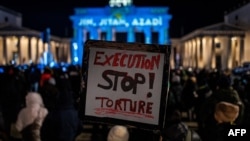
US State Department Calls For Halt To Executions Of Protesters In Iran
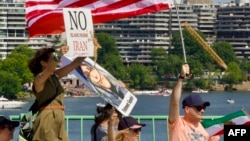
The US State Department sharply criticized the execution of Iranians by authorities and called for Tehran to release political prisoners amid signs it has ramped up its use of the death penalty in recent months to sow fear and quell dissent.
Iran is one of the world's leading executioners, according to human rights groups, who say Tehran is using the cover of the current war with the United States to justify increased usage of capital punishment and spread fear among Iranians.
According to the latest data, 424 people have been put to death so far in Iran in 2026.


In a post on July 26, Riley Barnes, US assistant secretary of state for democracy, human rights, and labor, called for a halt to the execution of individuals "for peacefully exercising human rights and fundamental freedoms."
"We condemn the Iranian regime's action in executing its own citizens, brave young Iranians who dared to speak out," Barnes wrote on X.
"We join the people of Iran in calling on the regime to release all political prisoners and stop executing individuals for peacefully exercising human rights and fundamental freedoms. The world is watching," he added.
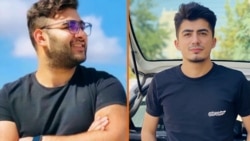
The latest execution to date was that of 26-year-old law graduate Mehdi Khaneki, whom the Iranian judiciary hanged on July 22 for alleged weapons offenses and actions that "benefited" Israel, the United States, and "hostile groups."
The Paris-based National Council of Resistance of Iran, the political arm of Mojahedin-e Khalq (MEK), disputed the charges, saying Khaneki was hanged because of his membership in the group and participating in protests in the city of Karaj.
US officials, including US President Donald Trump, have repeatedly condemned Iran for executing protesters.
After Iran's judiciary announced on July 19 that two men had been executed over their alleged involvement in violence linked to antigovernment protests that began in December and intensified in January amid widespread economic discontent, Trump called Iran leaders "savages."
Trump reposted several messages on his Truth Social platform about the executions of Erfan Esfandiari and Gol Mohammad Mohammadi, including one where he reposted a message about Mohammadi's execution while adding: "The latest one of 52,000, plus, innocent protesters. Savages!!!"
Trump's claim that 52,000 protesters were killed by authorities in the uprising early this year, has not been independently verified.

According to human rights groups, at least 7,000 people were killed during the nationwide protests, although the real death toll is believed to be significantly higher.
Most of the killings occurred from January 8 to 10, the peak of the crackdown. Tens of thousands of others were arrested nationwide.
Esfandiari and Mohammadi were convicted for allegedly being connected to the killing of four police officers in Isfahan during the January protests.
Rights groups say the charges were fabricated and that their trials were held without access to independent legal counsel.
Politically Motivated Executions
Amnesty International said Iranian authorities have sharply escalated politically motivated executions since the US and Israeli attacks on Iran began in late February, including the execution of people arrested in connection with the January protests and individuals accused of spying for Israel.
“The international community's failure to pursue justice is emboldening the Iranian authorities to continue committing atrocity crimes,” Amnesty Secretary-General Agnes Callamard said on July 8, the six-month anniversary of the deadliest day of the crackdown on protesters.
The Norway-based Iran Human Rights Group (IHRNGO) has warned that authorities could use the broader conflict to accelerate executions of political prisoners.
"With the breakdown of the cease-fire and the resumption of the war, we are deeply concerned that the authorities will exploit the situation to intensify the execution of political prisoners," IHRNGO Director Mahmood Amiry-Moghaddam said in a statement on July 16 following the execution of Mohammad Amini Dehaghani, another protester.
"Hundreds of political prisoners and protesters are currently facing capital charges, and we estimate that around 100 have already been sentenced to death."
Watchdogs have urged action to prevent the execution of 10 men currently sentenced to death over the January protests in Isfahan.
In a statement on July 23, the Independent International Fact-Finding Mission on the Islamic Republic of Iran "urged Iranian authorities to immediately halt the executions of 10 young men sentenced to death after taking part in a protest in Isfahan earlier this year," adding that the UN body "strongly condemned the execution on 19 July of two other men in the same case."
"The Mission is gravely concerned by Iranian authorities fast-tracking capital punishment cases that are related to the protests and national security issues," it said.
The scale of the repression, which began with security forces killing thousands of protesters in January, has drawn widespread condemnation, including through a hunger strike by hundreds of death row prisoners at the Ghezel Hesar prison where Khaneki was executed.
The protest, which began on July 12, spread outside the prison, with over 500 family members demonstrating in solidarity, facing violent crackdowns from security forces, while inmates endure severe health deterioration and communication blackouts.
Amnesty International reported in May that Iran carried out at least 2,159 executions in 2025, describing the figure as unprecedented and the highest annual total recorded since 1981.
Iranian Sisters, 20, Tried In High-Profile Case Tied To January Protests
Sixteen people are facing charges connected to protests in the Iranian city of Isfahan in January, during which a colonel in Iran's Revolutionary Guard was killed. Rights defenders are raising concerns about the legitimacy of the case, including the charges against two young twin sisters, 20-year-old Taraneh and Romina Rahimi. Sources in Iran told RFE/RL's Radio Farda that authorities used torture to extract confessions from the defendants, and there are concerns that they might face the death penalty.
Iran Executes Man Charged Over January Protests As Death Row Inmates Stage Hunger Strike
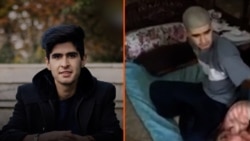

Iran has executed another person in connection with anti-government protests that swept across the country in January. Mehdi Khaneki was hanged at Ghezel Hesar prison in Karaj after he was accused of belonging to an armed opposition group, according to an official news outlet. The execution came as some 1,500 death row inmates at the prison continued a hunger strike demanding an end to executions.
Iran Continues Executions Amid Protest By Death Row Inmates
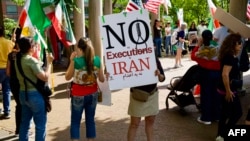
Iran executed a man it accused of carrying out "operational actions" during nationwide protests at the start of the year as the country's leadership ratchets up its crackdown on dissent, sparking a hunger strike among hundreds of death row inmates.
The Iranian judiciary's official Mizan news agency said 26-year-old law graduate Mehdi Khaneki was executed on July 22 for alleged weapons offenses and actions that "benefited" Israel, the United States, and "hostile groups."
The Paris-based National Council of Resistance of Iran (NCRI), the political arm of Mojahedin-e Khalq (MEK), disputed the charges, saying Khaneki was hanged because of his membership in the group and participating in protests in the city of Karaj.
The exiled opposition group -- which Iran considers a terrorist organization but was removed from US and EU terrorism lists more than a decade ago -- also said Khaneki had been "severely tortured" by security forces after being detained in February.
Rights groups say Tehran has executed more than 50 people on charges linked to the January protests since war broke out with the United States at the end of February as authorities try to keep a lid on any anger building over the conflict. The Hengaw rights group said at least 109 people overall were executed in June alone.
Another part of the crackdown has been the increasing use of a new law introduced following the 12-day war with Israel last year, expanding penalties for alleged espionage.
Some of those charged with spying have been hanged, along with dozens of other political prisoners, in recent weeks.
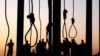
"These continued executions are yet another sign of the persistent uprising of the Iranian people and their brave youth against religious fascism, as well as the regime's dread of an explosion of public rage," said Maryam Rajavi, president-elect of NCRI.
The scale of the repression, which began with security forces killing thousands of protesters in January, has drawn widespread condemnation, including through a protest by hundreds of death row prisoners at the Ghezel Hesar prison where Khaneki was executed.
The protest spread outside the prison, with over 500 family members demonstrating in solidarity, facing violent crackdowns from security forces, while inmates endure severe health deterioration and communication blackouts.
Iran has become a global leader in executions, according to research from rights groups, rivaled only by China. At least 1,639 people were executed in 2025, a report by Iran Human Rights (IHRNGO) and the ECPM (Together Against the Death Penalty) said.
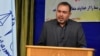
"After all these years and all these executions, what has been achieved? Has poverty been prevented? Has hunger ended?" one prisoner said during the protest inside the prison, a video of which was posted on social media.
"Have you ever thought about our families? About the eyes of children whose fathers are taken away with ropes around their necks? About mothers who place strands of their hair inside their children’s burial shrouds?"
- By RFE/RL
Trump Calls Iranian Officials 'Savages' After Latest Executions Of Protesters
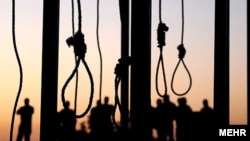
President Donald Trump condemned Iran's leadership after the execution of two protesters over the weekend, calling officials "savages" amid a widening crackdown on dissent during the war with the United States.
Iran's judiciary announced on July 19 that two men were executed over their alleged involvement in violence linked to anti-government protests that began in December and intensified in January amid widespread economic discontent.
Trump reposted several messages on his Truth Social platform about the executions of Erfan Esfandiari and Gol Mohammad Mohammadi, including one where he reposted a message about Mohammadi's execution while adding: "The latest one of 52,000, plus, innocent protesters. Savages!!!"
Trump's claim that 52,000 protesters were killed by authorities in the uprising early this year, has not been independently verified.
According to human rights groups, at least 7,000 people were killed during the nationwide protests, although the real death toll is believed to be significantly higher.
Most of the killings occurred from January 8 to 10, the peak of the crackdown. Tens of thousands of others were arrested nationwide.
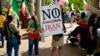
In another post on July 21, Trump shared a message featuring a photograph of Esfandiari alongside the appeal: "Please help. Please be their voice." He also reposted an image of a woman crying in front of a burning Iranian flag while holding a sign reading: "DON'T KILL US."
A day earlier, Trump had also reposted a Truth Social message by Iranian journalist and activist Masih Alinejad calling attention to Esfandiari's execution.
Esfandiari and Mohammadi were convicted for allegedly being connected to the killing of four police officers in Isfahan during the January protests.
Rights groups say the charges were fabricated and that their trials were held without access to independent legal counsel.
Iranian authorities have said that more than 3,000 people were killed during the unrest, blaming what they described as "terrorist acts" backed by the United States and Israel.
Trump's comments on the executions echo his rhetoric from before the war.
As nationwide protests spread across Iran in January, he repeatedly condemned Tehran's crackdown and warned the United States could intervene militarily if the government continued killing peaceful demonstrators.
On January 14 Trump told CBS News that "If they hang them, you're going to see some things... We will take very strong action if they do such a thing."
He also publicly voiced support for the protesters, telling Iranians that "help is on its way."
On February 28, the United States and Israel launched a joint attack on Iran, escalating tensions into a wider regional conflict.
Since then, Iranian authorities have carried out a growing number of arrests and executions involving both alleged links to the conflict and participation in earlier protests.
Rights groups condemned the executions warning that they signal a wider crackdown on protesters facing death sentences.
The Norway-based Iran Human Rights Group (IHRNGO) said the hangings of Esfandiari and Mohammadi brought the number of protesters executed in connection with the January unrest to at least 23.
It noted that another January protester, Mohammad Amini Dehaghani, was reportedly hanged in Isfahan Central Prison last week.
IHRNGO Director Mahmood Amiry-Moghaddam warned that authorities could use the broader conflict to accelerate executions of political prisoners.
"With the breakdown of the cease-fire and the resumption of the war, we are deeply concerned that the authorities will exploit the situation to intensify the execution of political prisoners,” he said in a statement.
"Hundreds of political prisoners and protesters are currently facing capital charges, and we estimate that around 100 have already been sentenced to death.
He urged the international community, particularly the European Union, to make an immediate halt to executions a priority in dealings with Tehran.
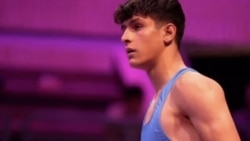
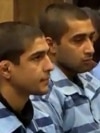
The Iranian rights group Hengaw reported that 10 other defendants in the same case Esfandiari and Mohammadi were tried in remained at imminent risk of execution.
"Following these executions, the lives of the remaining 10 young defendants in the case are in immediate danger. They remain in solitary confinement at Dastgerd Prison under emergency conditions after their families were summoned for what were believed to be final visits.”
A recent tally by Amnesty International said there had been at least 45 "politically motivated executions" under cover of what the authorities call "wartime conditions" since US and Israeli air strikes on Iran began on February 28.
Iran executed at least 1,639 people in 2025, the highest annual figure recorded since 1989, according to Iran Human Rights and Together Against the Death Penalty.
Amnesty International has ranked Iran as the country with the second-highest number of executions globally, after China.
With reporting by RFE/RL's Radio Farda
The Shadowy Iranian Judge Sending Protesters To Their Death
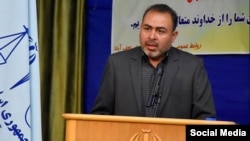
Not much is known about Judge Mohammad Reza Tavakoli, except his penchant for handing out harsh punishments. Honored by the Iranian judiciary as an "exemplary judge," he may be about to add 12 men to the dozens of political prisoners already executed in recent months.
On July 5, the country’s Supreme Court upheld the death sentences imposed by Tavakoli on the men for their alleged role in killing special forces officers during protests in Isfahan, in central Iran, on January 8.
Their executions might now be imminent.
A recent tally by Amnesty International said there had been 44 “politically motivated executions” under cover of what the authorities call “wartime conditions” since US and Israeli air strikes on Iran began on February 28. There was another on July 15, with the execution of Mohammad Amini Dehaqani for his role in nationwide protests in January.
Judge Tavakoli is now set to become responsible for a huge share of the total death sentences carried out. Given his previous record, this should come as no surprise.
A 'Model Judge' Of The Islamic Republic
Iranian media affiliated with the authorities have celebrated Tavakoli as one of the “model judges of the Islamic republic.” He has also won praise and recognition from other members of the judiciary.
But despite his prominence, almost nothing is known about his background. It has not even been established where and when he was born or educated.
According to reports in official Iranian media, he was appointed deputy judicial chief of the General and Revolutionary Courts of Isfahan and head of Branch One of the Isfahan Revolutionary Court in November 2023.
It was in April the following year that he came to prominence, after issuing a death sentence against rap artist Toomaj Salehi.
The 33-year-old had originally been detained for singing about Iran’s nationwide Women, Life, Freedom protests in 2022. Following his release, he posted a video claiming he’d been tortured -- and was promptly rearrested.
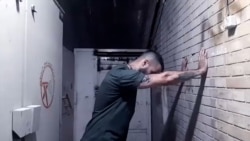
The case caused an international outcry, with protests in Europe and North America and vocal support from Western lawmakers, before a higher court quashed Salehi’s sentence and ordered his release.
Human rights activists said the case represented “a new low” in Tehran's crackdown on dissent. A bipartisan group of 12 US lawmakers called for US sanctions against Tavakoli, but they were not imposed.
This was not the first time he’d reached for the ultimate punishment.
In 2020, in a previous role, Tavakoli sent 30-year-old Mostafa Salehi to his death for allegedly killing a security officer during 2017-18 protests in Isfahan.
In 2024, Tavakoli added to his reputation as a harsh judge.
First, in May, he gave 15 Baha'i women -- members of Iran's largest non-Muslim minority, which has faced decades of systematic persecution -- maximum five-year prison sentences for allegedly promoting their faith.
Then, in December, he gave 22 political defendants the harshest penalties available under Iranian law on charges of membership in groups allegedly aimed at undermining national security and spreading propaganda against the state.
These cases, as if often the case with political trials in Iran, were marred by flimsy evidence, lack of defense lawyers, and allegations that defendants had been tortured.
12 More Victims
Tavakoli’s latest trial revolves around what has become known in Iran as the Alikhani Square case.
State-run news agencies and media outlets released videos purporting to show how protesters killed four members of security forces in Isfahan at the height of the nationwide protests on January 8.
National TV also aired confessions, which appeared to be made under duress, by some of the defendants.
In total, the court presided over by Tavakoli put 59 people on trial, sentencing 23 people to between 5-10 years in prison and handing down the 12 death sentences.
Tavakoli handled all stages of the cases in just three one-hour sessions. None of the defendants had a lawyer and no documentation of the charges has been published by the judiciary.
The condemned men are aged between 18 and 24. Some of them were minors at the time of the alleged offences.
- By Kian Sharifi and
- RFE/RL's Radio Farda
Curtains On Khamenei As Iran Stages Six-Day Farewell
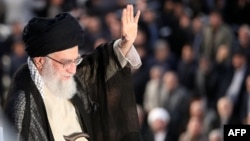
More than four months after he was killed in the opening strikes of the war with the United States and Israel, Ali Khamenei, who ruled the country for more than three decades with an iron first, is finally being buried.
Starting on July 4, Iran is staging what officials are calling one of the largest, most complex funerals in its history: six days of ceremonies stretching across Tehran, Qom, and Mashhad -- with stops in Baghdad, Karbala, and Najaf in neighboring Iraq -- before his body reaches its final resting place at the Imam Reza shrine on July 9.
The event is expected to have the scale of pageantry usually reserved for founding figures, but having ruled Iran for nearly 37 years, Khamenei leaves as the Islamic republic's longest-serving supreme leader and a defining force in Iran's modern history.
The drawn-out affair, according to Taghi Rahmani, a rights activist and husband of Nobel Peace Prize Winner Narges Mohammadi, is designed as a show of the state "still standing" and reasserting itself after the war. It will also attempt to gloss over the deaths of tens of thousands of Iranians at the hands of Khamenei's regime.
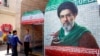
Rahmani added that the Islamic republic is trying to project strength both to foreign audiences and domestically, through fear and authority, even as he says the gap between the state and Iranian society is vast -- a population he described as impoverished, weakened, repressed, and resentful, but also cowed by a postwar execution wave .
Why Now, And Why Like This
The funeral was supposed to happen in March, not long after he was killed on February 28. It didn't, and the reasons for the delay tell their own story about the state Iran finds itself in.
Plans were revised repeatedly in the immediate aftermath of Khamenei's death since the country was still at war. So, officials weighed security threats, uncertainty over foreign attendance, and an unresolved succession question.
What emerged instead was a body kept in storage for months while the Islamic republic tried to figure out how to bury its second supreme leader without the ceremony collapsing into chaos or becoming a flashpoint itself.
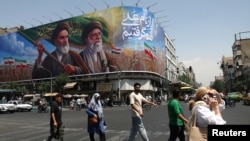
Security is now the dominant concern, with sources telling RFE/RL's Radio Farda that there is heightened security around Tehran's Mosala prayer grounds, where the funeral procession will begin.
Planners are also trying to avoid a repeat of two infamous disasters: The crush that killed eight and injured thousands at Ayatollah Ruhollah Khomeini's funeral in 1989, and the stampede that killed scores at General Qassem Soleimani's burial in 2020. Provincial officials in Khorasan Razavi, where Khamenei will be interred, have floated using helicopters to manage crowds around the casket.
Khomeini's funeral also saw thousands of mourners rushing toward the casket of the Islamic republic's founder, causing his shroud-wrapped body to roll out. Organizers will certainly want to avoid a repeat of that.
The Reckoning
The staging can't fully paper over what Khamenei's rule actually meant for the people being asked to mourn him.
For over three decades he sat atop a system that treated dissent as foreign conspiracy and answered it with deadly force -- from the 2009 Green Movement to the 2022 Women, Life, Freedom uprising to the deadly protest wave that broke out just weeks before the war began.
So it's not surprising that, among many others, the families of protesters killed by security forces celebrated Khamenei's death in the war, despite the conflict fueling fear and anxiety in society.
"I felt that justice had prevailed over oppression," Moslem Haqiqi, whose son Milan Haqiqi was killed in 2022, told Radio Farda. "It brought some comfort to the wounds that had weighed heavily on my heart for years."
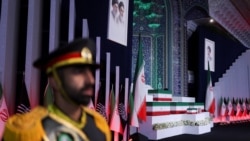
But some argue that Khamenei's death in the strike on his residence gave the Islamic republic an opportunity to cast him as a sanctified figure and to try to rebuild some of its crumbling legitimacy through a funeral even larger than those held for Khomeini or Soleimani.
Rahmani framed the war itself as bad luck for Iran's political opposition.
"This war in fact rendered many efforts less effective, weakened Iran's middle class considerably, and for now the regime has established authority and fear," he said. Still, he argued that dominance is fragile and could still collapse with the right strategy from opposition forces.
Watch For Mojtaba
The single biggest open question hanging over the week is whether Iran's third supreme leader shows up at all.
Mojtaba Khamenei has not been seen in public since the war began in February. No video, audio, or new photograph of him has surfaced since his appointment -- only written statements read aloud on state television.
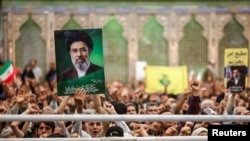
Even his father-in-law, Gholam Ali Haddad Adel, has said publicly he's had no contact with him and no information about his condition since before the war. Mojtaba didn't even attend the July 2 funeral for his wife, who was killed in the same strike that killed his father.
Officials organizing the funeral have declined to say whether he'll attend.
If he does appear, the moment to watch isn't whether he's somewhere in the crowd -- it's whether he leads the funeral prayer himself. Some observers believe Mojtaba could take it on if he attends, though officials have given no indication either way. Stepping to the front to lead prayers over his own father's body would be the closest thing to a public coronation this succession has had.
With contributions by Vahid Pourostad and Fereshteh Ghazi of RFE/RL's Radio Farda
More Iranian Women Go Hijab-Free As Dress Code Enforcement Appears To Slacken
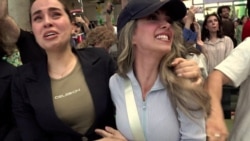
Residents of Iranian cities say it's increasingly common for women to go out without a head scarf, a violation that previously would have resulted in harassment or detention. In a year when Iran has been shaken by mass protests and war, it appears there's less focus on enforcing the country's strict dress code. But one rights activist pointed out to RFE/RL's Radio Farda that greater permissiveness does not mean the law itself has changed.
French Lawmakers Sponsor Death-Row Prisoners As Iran Ramps Up Executions
A group of 75 French lawmakers have taken the unusual step of formally sponsoring individual death-row political prisoners in Iran as the country's authorities continue to ramp up executions.
The move, taken on June 29 as part of a new National Assembly campaign organized by the Iran Freedom Congress (IFC), marked the IFC's first international human rights campaign since the group's founding earlier this year.
Under the sponsorship mechanism, each participating MP publicly attaches their name to an individual prisoner sentenced to death or facing imminent execution to give each case a parliamentary backer and a diplomatic pressure point.
Negin Shiraghaei, a member of the IFC’s Central Council, said the campaign took shape almost immediately after the congress's founding, calling the rise in executions an urgent priority "from literally the first day," despite the body being less than two months old.
Speaking to RFE/RL’s Radio Farda, she said that the choice of France was deliberate, citing the country's abolition of capital punishment 45 years ago as added leverage.
Shiraghaei described the sponsorship campaign as working on multiple levels.
Public pressure from foreign parliamentarians is felt both by Tehran and by their own governments, she said, while stressing that symbolic measures alone are "not enough by themselves" and need to be paired with concrete follow-through.
Among the IFC's specific requests, she said, is that foreign embassies request daily physical observers at the trials of those facing execution -- a demand Tehran "may not even agree" to, but one meant to signal that defendants have international backing.
Shiraghaei also argued that human rights should be made a nonnegotiable item in any future talks between Western governments and Tehran, criticizing what she called a pattern of human rights being set aside once economic or political interests are at stake in negotiations.
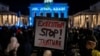
Since the start of the US-Israeli war against Iran on February 28, the Islamic republic has arrested hundreds of people on charges of collaborating with the US and Israel, and in some cases executed them on charges of "espionage" and "acting against national security."
Iran Human Rights Monitor, a foreign-based group that documents rights abuses, characterized the pace of executions as "a political purge" exploiting wartime conditions.
"The regime's priority is not external war, but internal suppression," it said in an April statement, noting the number of political executions in the first six weeks of the war already exceeded the total for all of 2025.
Iran is one of the world's biggest executioners, hanging hundreds of people per year, many for drug-related offenses and homicide.
With reporting by Hannah Kaviani of RFE/RL's Radio Farda
- By RFE/RL and
- Will Tizard
Iranian Artist, Activist, And Filmmaker Marjane Satrapi Honored At Paris Memorial
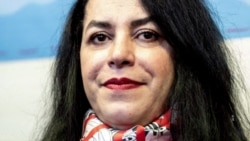

Iranian-born author Marjane Satrapi, who wrote the hit graphic novel Persepolis, was laid to rest on June 19 in Paris amid tributes honoring her work. Her graphic novel was later adapted into a Cannes-winning animated film. Known for her wit, provocative and irreverent storytelling, and outspoken positions on human rights, Satrapi was buried at Père Lachaise Cemetery amid commemorations from international artists.
- By Ray Furlong
Tehran's Crackdown On Political Dissent Continuing Unabated
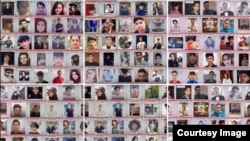
Recent reports from Iran suggest that an intense crackdown on political opposition within the country that began during mass protests in January is continuing unabated.
On June 13, the Iranian Writers' Association announced Yousef Ansari, a poet and novelist arrested on January 8, had received a sentence of four months in prison plus another eight months suspended.
RFE/RL's Radio Farda learned that Fereydoun Farahani, a music professor and visiting professor of architecture at Pars University, had been arrested for social media posts he made during the demonstrations.
He had posted a song called In Praise Of The Nation's Desire For Freedom on his Instagram.
In Isfahan Province, the judiciary announced that 100 "traitors" would have their property confiscated, without providing any further details.
For several weeks now, the Iranian authorities have announced similar measures against hundreds of people.
The Iran Human Rights Group, a watchdog based in Norway, reported on June 8 that at least 40 prisoners, including 19 protesters, had been hanged on politically motivated charges so far this year.

Also on June 13, the Tasnim news agency, which is affiliated with the Islamic Revolutionary Guards Corps, reported that a suspect had been arrested for being "in contact with foreign espionage elements."
Separately, the Coordination Council of Iranian Teachers' Unions released in a statement on June 13 condemning the security pressure, arrests, judicial rulings, and restrictions imposed on teachers' union activists, saying they cannot be considered isolated incidents.
Such actions are "a clear and organized pattern to weaken independent teachers' unions and silence the voice of society's demands," the statement said.
Another part of the crackdown has been the increasing use of a new law introduced following the 12-day war with Israel last year, expanding penalties for alleged espionage.
Some of those charged with spying have been hanged, along with dozens of other political prisoners, in recent weeks.
The scale of the repression, which began with security forces killing thousands of protesters in January, has drawn widespread international condemnation.
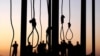
In recent days, a number of Nobel laureates have raised their voices on this.
Some 16 laureates told RFE/RL that they were among the 75 prize winners listed on a letter organized by the National Council of Resistance of Iran (NCRI) as belonging to the Mojahedin-e Khalq (MEK), an exiled opposition group that Iran considers a terrorist organization but which was removed from US and EU terrorism lists more than a decade ago.
These included Barry Barish and Reinhard Genzel, prize winners for physics in 2017 and 2020 respectively, Oliver Hart, prize winner for economics in 2016, and Brian Kobilka, the winner for chemistry in 2012.
The letter expresses "deep and urgent concern regarding the widespread, systematic, and ongoing violations of human rights in Iran."
"I signed it to protest the execution of political prisoners," Jack Szostak, Nobel laureate for medicine in 2009, told RFE/RL in an e-mail.
Another signatory, 2014 medicine laureate May-Britt Moser, told RFE/RL she signed "because I think it is horrible to kill people, and most of these people are completely innocent."
In a report from late May, Amnesty International announced that at least 78 protesters and political prisoners sentenced sentenced to death were at risk of execution, including at least 41 people who were arrested in relation to the January protests.
- By RFE/RL's Radio Farda and
- Will Tizard
Iran Executes 2 More Over January Protests, Jails Man 10 Years For Filming
Two more men have been executed in Iran in connection with the January protests with human rights groups condemning growing repression in the country. Iran's judiciary announced on June 1 that the men were hanged after being convicted of attacking a mosque. More than 40 people have now been executed in Iran since the start of the war with the United States and Israel. An Iranian man was also sentenced to 10 years in prison for simply shooting video of protests that first erupted in December 2025 over economic hardship.
Iran Has Carried Out Nearly 30 Political Executions Since Start Of US-Israel War
Iran executed two men on May 13 as the accelerated campaign of political hangings since the start of the war with the United States and Israel shows no signs of abating.
Ehsan Afrashteh, a cybersecurity and network specialist, was hanged on charges of espionage for Israel, Tehran's archfoe, early in the day.
By late evening, Mohammad Abbasi, who took part in mass protests in January, was executed at Ghezel Hesar Prison on charges of killing a security officer in Malard, a town near Tehran.
Abbasi's family was summoned to prison for what they were told would be a visit, only to be turned away at the gate, according to the US-based rights group HRANA. They later learned of his execution by phone.
The Iranian judiciary's Mizan news agency framed his hanging as "qisas," an Islamic concept that refers to a retributive execution carried out at the request of the victim's family.
The Islamic republic had published footage of his trial, in which he was accused of killing a member of the security forces during the peak of the mass protests on January 8-9.
Weeks of nationwide demonstrations against Iran's clerical rulers erupted in late December. The authorities responded with an unprecedented crackdown, killing several thousand protesters.
In Afrashteh's case, two sources who spoke to RFE/RL's Radio Farda said he was approached by a foreign intelligence service while visiting Turkey. He informed Iran's Intelligence Ministry before he returned home only to be arrested at Imam Khomeini International Airport the moment he landed and transferred to prison, the sources said.
HRANA had previously reported that Afrashteh's confessions during detention were "fabricated," he had rejected the charges, and his family's assets had been seized and relatives placed under surveillance.
Rights groups and sources close to the family say Afrashteh's case illustrates the Islamic republic's use of forced confessions and wartime courts to eliminate perceived security threats.
'Political Purge'
The executions are the latest in an intensifying campaign of hangings since March 18 -- weeks after the United States and Israel launched a bombing campaign of Iran.
There have been at least 29 confirmed political executions since then. They fall under three broad categories: protesters who took part in the mass demonstrations in January and charged with moharebeh, or "enmity against God"; members or alleged members of the exiled opposition group Mujahedin-e Khalq Organization (MEK) convicted of armed rebellion; and those convicted of spying for the CIA or Mossad, the Israeli intelligence agency.
Rights organizations have condemned the trials of those executed. The Oslo-based Center for Human Rights in Iran in April said many of the trials were marked by "torture, forced confessions, and the complete absence of due process."
Iran Human Rights Monitor, a foreign-based group that documents human rights abuses, characterized the pace of executions as "a political purge" exploiting wartime conditions.
"The regime's priority is not external war, but internal suppression," it said in an April statement, noting the number of political executions in the first six weeks of the war already exceeded the total for all of 2025.
Last month, UN Human Rights Chief Volker Turk called on Iran to "establish a moratorium on the use of capital punishment" and release prisoners "arbitrarily detained."
"I am appalled that -- on top of the already severe impacts of the conflict -- the rights of the Iranian people continue to be stripped from them by the authorities, in harsh and brutal ways," he said.
Iran is one of the world's biggest executioners, hanging hundreds of people per year, many for drug-related offenses and homicide.
Nobel Laureate Narges Mohammadi In Critical Condition After Transfer To Tehran Hospital

The brother of imprisoned Iranian Nobel Peace Prize laureate Narges Mohammadi says doctors cannot yet offer a definitive prognosis on her condition, days after Iranian authorities released her on bail amid a health crisis that her family says nearly killed her.
Hamidreza Mohammadi told RFE/RL’s Radio Farda on May 12 that after 10 days in the critical care unit of a hospital in the northwestern city of Zanjan, the family arranged their own ambulance to transport her to Tehran, where she is now being treated by a medical team. He said her blood pressure had dropped to critically low levels during her hospitalization.
"The doctors cannot say anything definitive because Narges's medical file is complicated," he said, citing her underlying health conditions, including cardiac inflammation, as compounding factors.
He added that the coming week would be devoted entirely to tests and angiography to determine the extent of her health deterioration before any treatment could begin.

Mohammadi, 54, suffered a suspected heart attack in Zanjan prison on March 24 while serving a sentence that carries 18 years still to run. Her Paris-based lawyer said last week that she had lost 20 kilograms and was unrecognizable from her state before her most recent arrest in December.
In a joint statement released on May 12, more than 110 Nobel laureates urged Iranian authorities and the international community to act "without delay" to secure her release and ensure continued access to medical treatment.
"Medical experts warn that her life may be at imminent risk," the signatories said, adding that she had been denied specialized medical care for months while imprisoned.
Her brother said the Iranian judiciary did not need to resort to executions to silence activists.
"When there is a lot of noise and the attention of the international community is elsewhere, the Iranian government uses this silent killing," he said, adding that it had been the regime's plan for Mohammadi to die quietly amid the conflict with the United States and Israel, eliminating what he called one of the most powerful voices in Iranian civil society.

The warning echoes a passage from Mohammadi's forthcoming memoir, due for publication at the end of this summer, in which she writes that authoritarian regimes do not always need the gallows -- sometimes they simply wait for the body to fail.
"Every day we witness Narges getting worse," her brother said. "The question is whether we want to stop fighting to stay alive, or force [the Islamic republic] to abandon this use of prisoners' illnesses as a weapon."
Mohammadi was awarded the Nobel Peace Prize in 2023 for her decades of campaigning for human rights and women's rights in Iran.
She was unable to receive the award in person, as she was imprisoned at the time. Her foundation has called for her permanent release, saying she must never return to the conditions that caused her health to collapse.
Hannah Kaviani of RFE/RL's Radio Farda contributed to this report.
'Forced Confessions': Iranian Prisoners Speak Amid Wave Of Executions
Iran announced the hanging of three more men on May 4 as a wave of executions continued amid the backdrop of Tehran's war with the United States and Israel. Before being hanged on the weekend, another two members of Iran's Kurdish minority issued audio statements from prison. One human rights activist told RFE/RL's Radio Farda that there are concerns the rate of executions will increase as Iranian authorities attempt to instill fear in the population.