





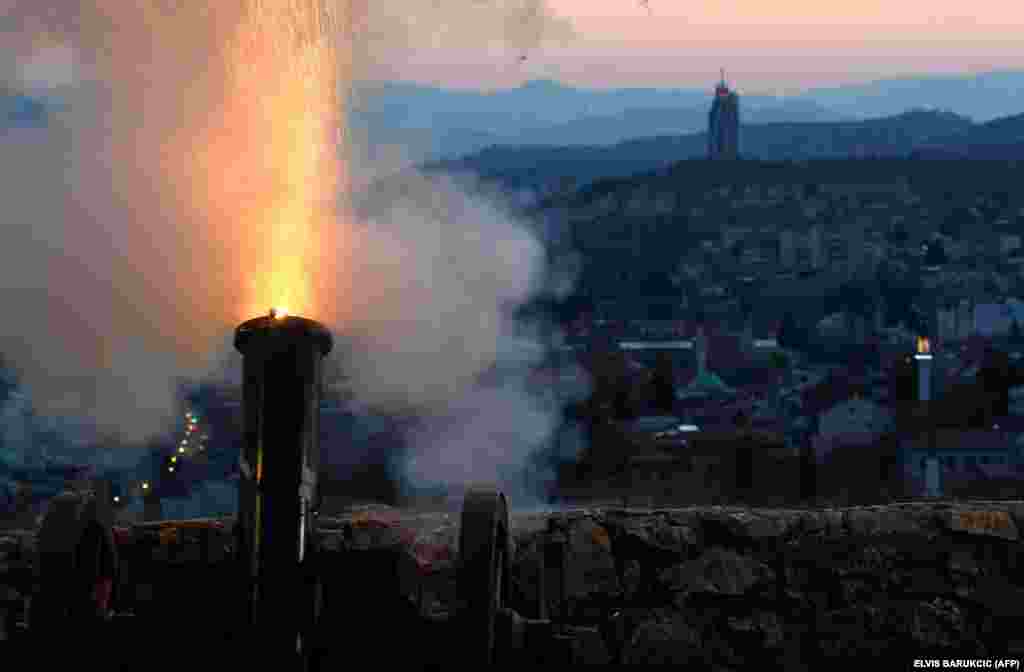
Millions of Muslims around the world are now abstaining from eating and drinking from dawn until sunset to mark the holy month of Ramadan, which concludes in late May.
The Islamic month of fasting is when Muslims believe the Koran was revealed to the Prophet Muhammad and is about togetherness. It is marked by joyful group "iftars," where the faithful break their all-day fasts by feasting with family and friends and go to evening prayers at mosques.
But this year, Ramadan will be significantly different due to lockdowns and social-distancing protocols aimed at slowing the deadly coronavirus pandemic that has resulted in the closure of mosques and religious centers around the world.
Ramadan Begins For World's Muslims Amid COVID-19 Pandemic
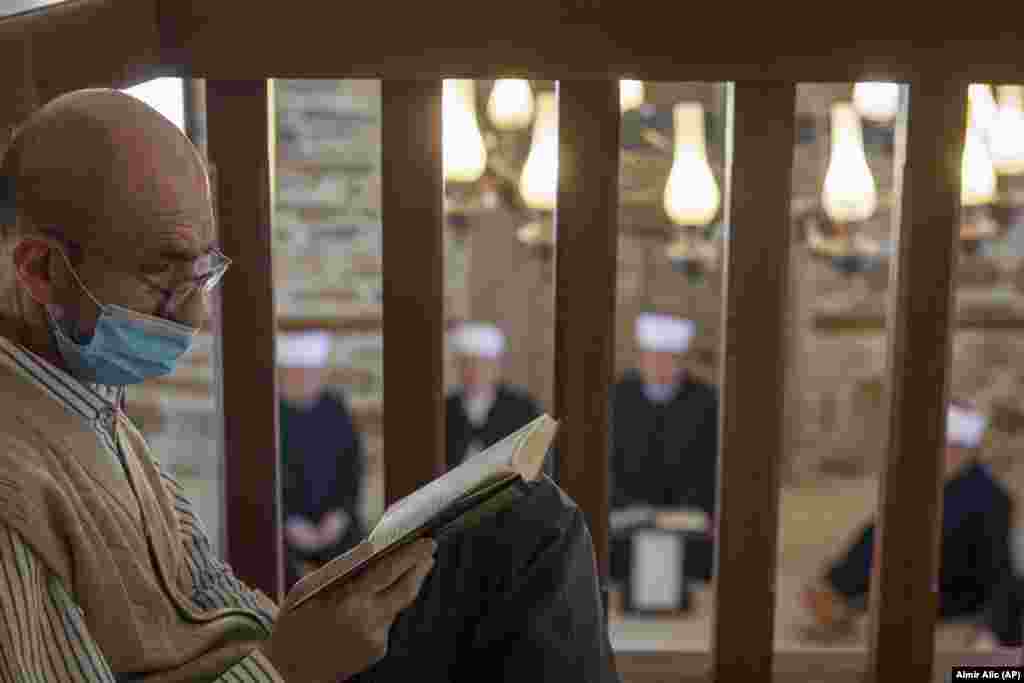
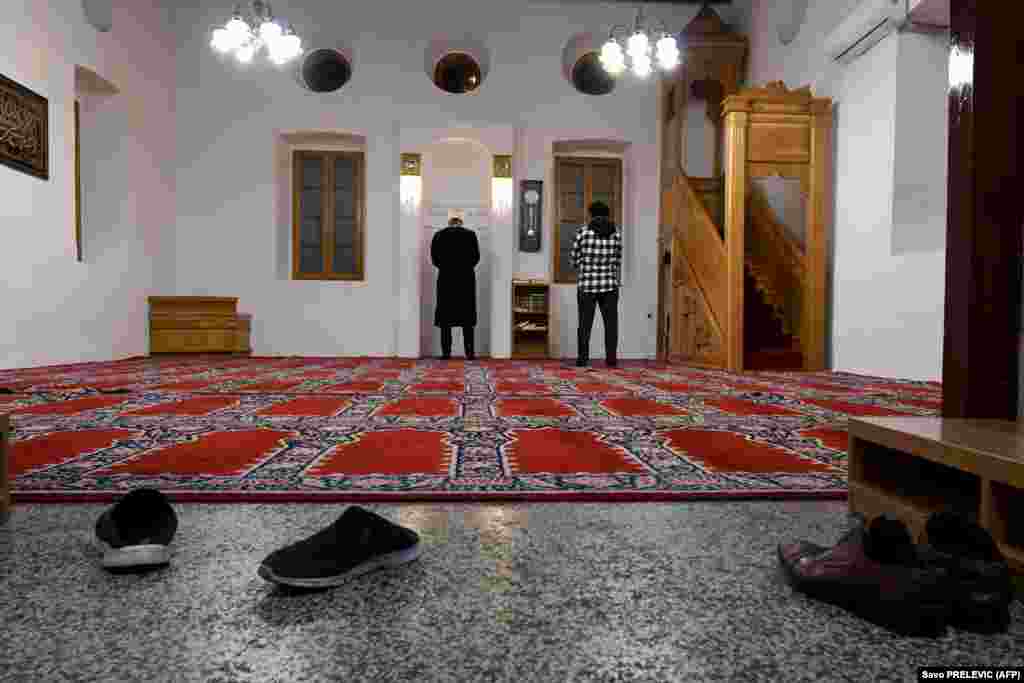
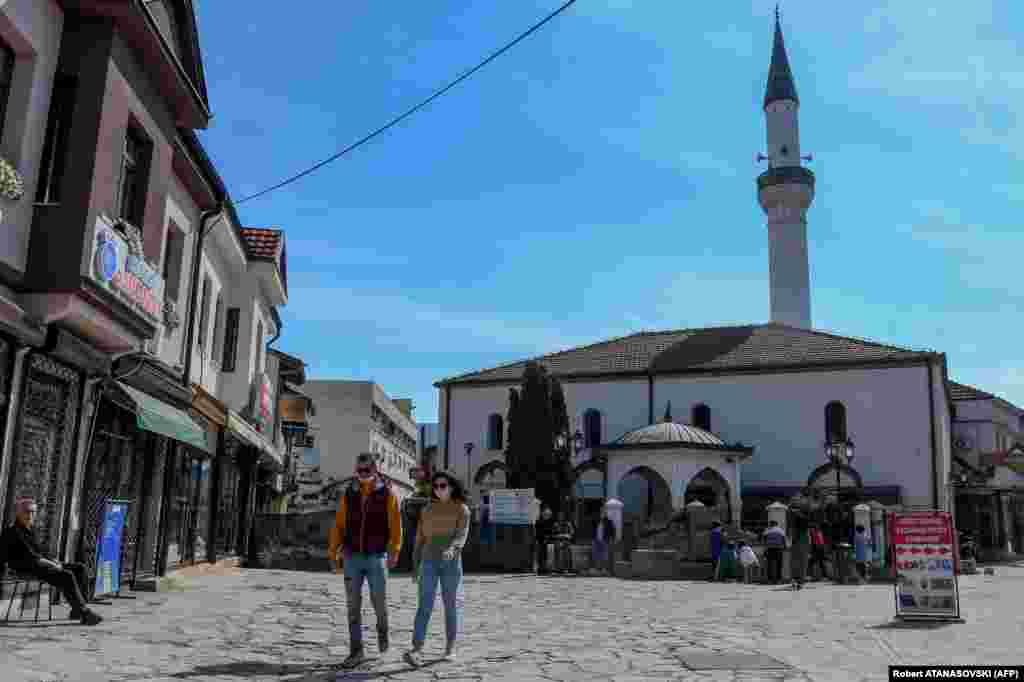

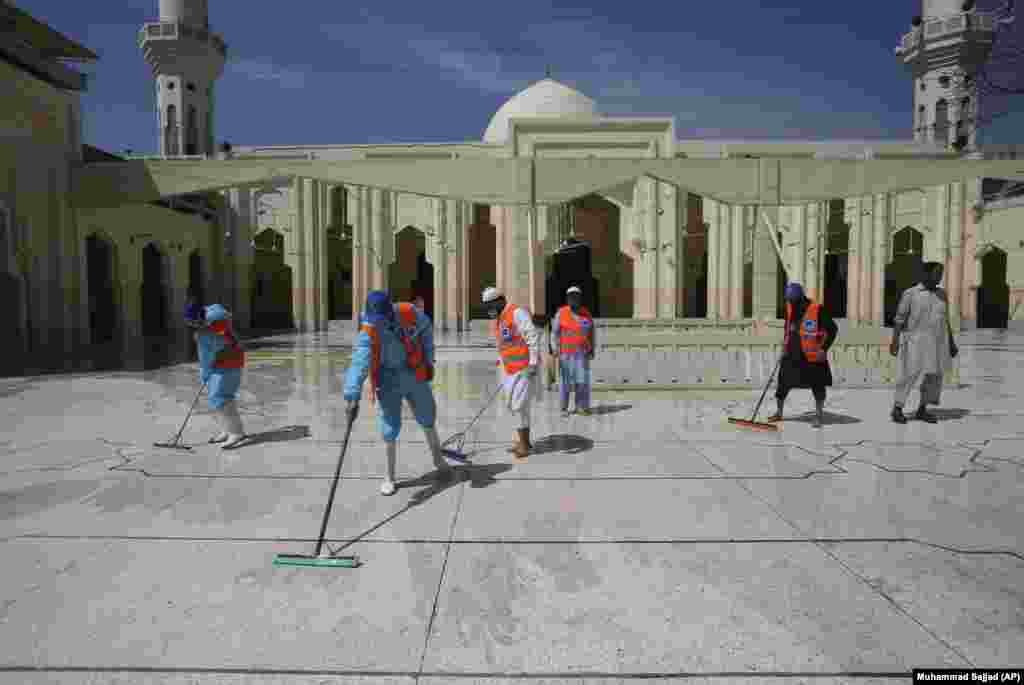


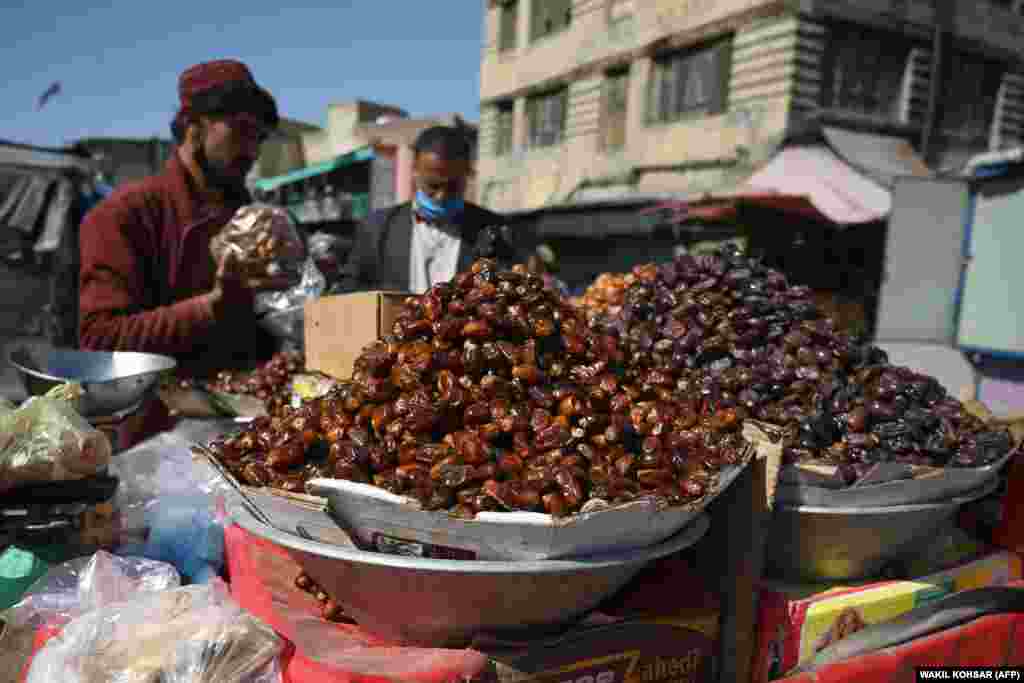
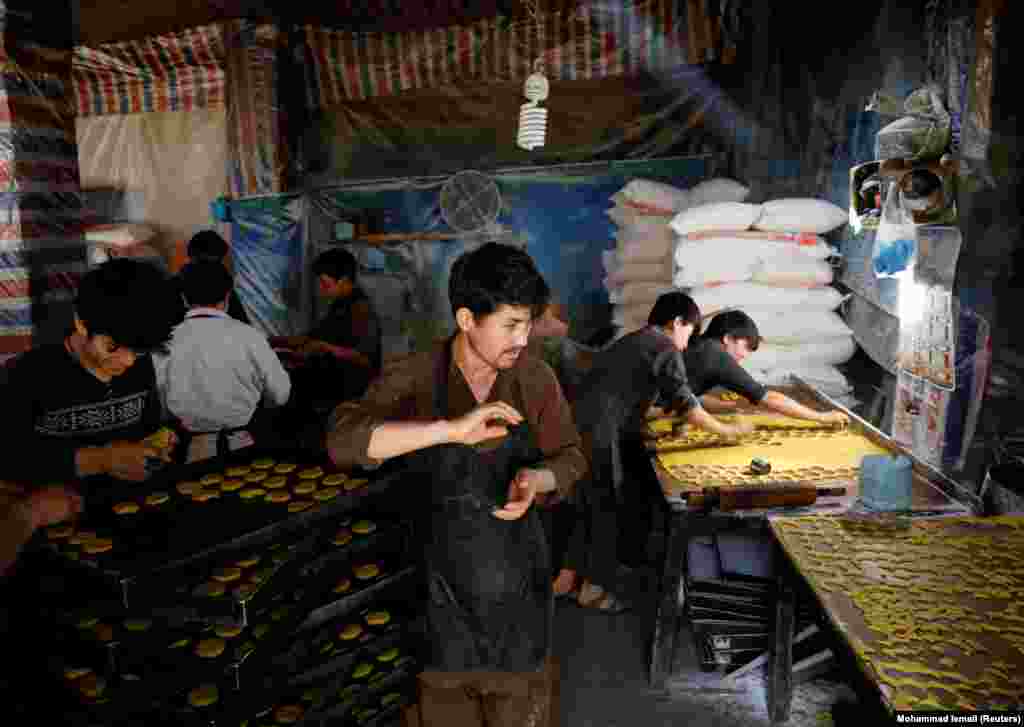

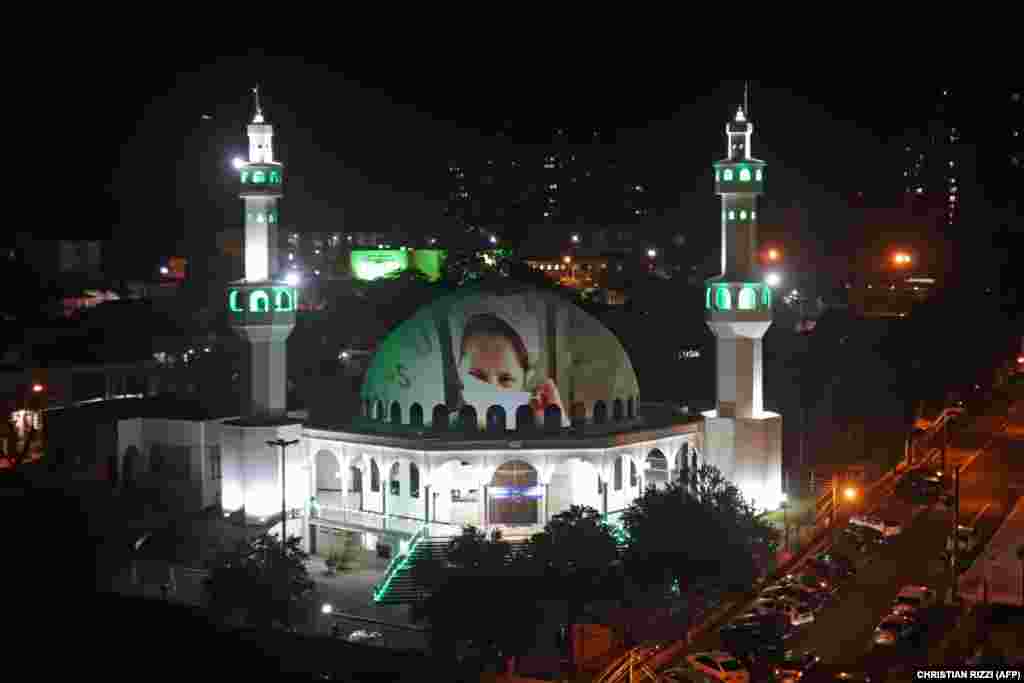

It will force Muslims to give up some of those cherished Ramadan rituals to prioritize their health and refrain from actions that could lead to a further spread of the deadly coronavirus, which has killed almost 200,000 people worldwide as of April 24.
Instead, worshippers will pray at home and break their fasts in small groups. Others will join online prayer groups and Koran recitations.
In a few countries, including Pakistan, many mosques will remain open and communal prayers will take place despite fears about spreading the pandemic.
Iran
In the Middle Eastern country hit hardest by the coronavirus, restrictive measures have been eased recently to salvage a struggling economy that is under pressure from crippling U.S. sanctions.
But Supreme Leader Ayatollah Ali Khamenei has instructed citizens to avoid gatherings and create a Ramadan-like experience at home.
"Because of being deprived of public prayers, speeches, and so on during Ramadan, we should create the same sense in our homes," Khamenei said in an April 9 speech.
Despite some new allowances for greater freedom to travel and the opening of shops, Iranian authorities have extended an order to close shrines and other religious centers until May 4.
Ahead of Ramadan, which is expected to begin in Iran on April 25, some clerics and Friday Prayers leaders have called on their supporters to follow their speeches and sermons on social media, including the popular Instagram.
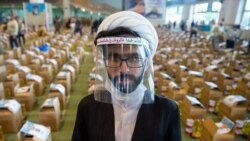
Speaking earlier this week, President Hassan Rohani told Iranians to celebrate Ramadan while bearing in mind the country's "special circumstances" due to the coronavirus outbreak, which has killed more than 5,500 and infected more than 88,000, according to official figures as of April 25. The real figures are believed to be significantly higher.
"There will be no communal iftars," Rohani said earlier this week.
In many cities and provinces, charity groups and the paramilitary Basij force have said they will distribute food packages to those in need, an important part of charity during Ramadan.
WATCH: Muhammad Munir, a virologist at Lancaster University in the United Kingdom, says governments and public health officials need much more data before deciding when to relax lockdown restrictions.


Meanwhile, some health officials have said there are no indications that fasting raises the risk of contracting the coronavirus. "There's no research proving that fasting results in an increased risk of COVID-19," Health Ministry nutrition expert Zahra Abdollahi told the government news agency IRNA on April 24.
But she added that those at greater risk of contracting the virus -- including diabetics and cancer patients as well those who think fasting could damage their health -- should refrain from performing it until the pandemic is over.
Afghanistan
In neighboring Afghanistan, where the coronavirus has spread to some 30 of the country's 34 provinces -- killing 47 people and infecting 1,463 as of April 25 -- the Hajj and Endowment Ministry said on the eve of Ramadan that in areas under a lockdown people should pray in their homes and refrain from going to mosques.
But Hajj and Religious Affairs Minister Abdul Hakim Munib said people who wanted to perform their prayers in mosques should follow official health guidelines. "Those who want to want to go to mosques and pray with their community won’t be blocked," Munib said. “Our advice is to sanitize the mosques, perform ablution at home, respect social distancing during prayers while also wearing masks,” he added at a press conference on April 22.
He also said the elderly and sick who are at greatest risk of contracting the coronavirus do not need to fast during Ramadan, adding that they can perform their religious duty when the pandemic has ended.
Kabul resident Shir Shah told RFE/RL's Radio Free Afghanistan on April 22 that he will be respecting the guidelines while urging his fellow citizens to do the same. "I’d like to ask everyone to respect the [official] health advice," he said. "It’s been said that if sick people go to the mosques the virus will spread further."
Pakistan
The government in Islamabad, under pressure from influential clerics, has loosened restrictions on communal prayers at mosques. The decision has led to concern among health-care workers who have called on the government to reverse its decision.
Pakistani Prime Minister Imran Khan told journalists on April 22 that people want to go to mosques during Ramadan to be closer to God. "Do we forcefully tell [the people] not to go to mosques? And if they go, will the police put worshippers in jail? This does not happen in an independent society," he said.

The comments came as doctors with the Pakistani Medical Association told Khan and clerics that lockdowns were needed to slow the spread of the COVID-19 outbreak, which has so far killed more than 250 people and infected more than 11,000 in the country as of April 25. Many think the actual numbers are even higher.
"Unfortunately, our rulers have made a wrong decision; our clerics have shown a nonserious attitude," Qaiser Sajjad, secretary-general of the Pakistani Medical Association, told journalists.
Worshippers have been told to bring their own prayer mats to the mosques, respect social-distancing measures, and perform their ablutions at home.
Russia
In Russia, the country's top Muslim cleric has said that mosques will be temporarily closed during Ramadan and that group prayers will not be held.
Russian Grand Mufti Talgat Tadzhuddin added, however, that imams will be online to lead prayers and read the Koran. He said Muslims in Russia -- where there are millions of migrant workers from predominantly Islamic countries -- will have a "unique month of Ramadan," while adding that "I believe that blessed Ramadan will still be solemn for everyone."
Russia has so far reported a COVID-19 death toll of more than 600 people and more than 68,000 infections as of April 25. Some critics believe those figures to be significantly undercounted.

Central Asia
In some of the five countries that make up Central Asia, officials and clerics have called on the faithful to pray in their homes, even in Tajikistan, where authorities claim -- amid widespread skepticism -- that there are no coronavirus infections. (Officials in Turkmenistan have also not reported any infections.)
"People should pray at home with their family members. The reason is to prevent gatherings. It is fine for [people] to pray [the evening prayers of] Taraweeh at home," Jamoluddin Khomushi, from the Tajik Islamic Ulema Council, said this week.
For his part, Tajik President Emomali Rahmon urged Muslims to abstain from fasting, saying it makes people "vulnerable to infection from infectious diseases."
RFE/RL's Coronavirus Crisis Archive
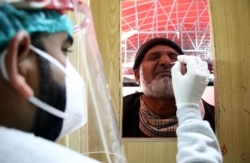
Features and analysis, videos, and infographics explore how the COVID-19 pandemic is affecting the countries in our region.
Tajikistan has for many years been criticized by the U.S. Commission on International Religious Freedom for restrictions and crackdowns on religion, which the government strictly controls.
Rahmon also urged farmers and manual workers to postpone the rituals. "Although this disease is not registered in our country, this does not mean that we should be careless and sit idle," he said on April 23.
In Kyrgyzstan, where many of those who have contracted COVID-19 are believed to be devout Muslims who traveled to Saudi Arabia, Pakistan, and other countries for religious purposes, people have been urged to forego communal prayers and group fast-breaking ceremonies during Ramadan.
"This year the sacred month of Ramadan coincided with the coronavirus lockdown in our country, therefore Muslims must conduct all religious rituals -- prayers, Friday Prayers, and their iftar ceremony only at home," Kyrgyz Mufti Maksat Toktomushev said in a video statement on April 15. "Stay at home with your family members, follow quarantine rules until this is over."
Kyrgyzstan has reported 665 cases of coronavirus and eight deaths as of April 25.
In Kazakhstan, where 25 deaths and 2,482 coronavirus cases have been reported, Grand Mufti Nauryzbai Kazhy Taganuly has announced that Friday Prayers and special Ramadan prayers will not be performed at mosques due to the pandemic.
The mufti has said medical workers, police, and the military may postpone fasting this year, Inform.kz reported.
In Uzbekistan, where an increasingly stricter coronavirus lockdown has been imposed since first being announced in late March, the authorities have taken several measures that are designed to stop the spread of the virus and that will affect Ramadan.
Despite being hit relatively lightly by the pandemic thus far -- with 1,836 infections and just eight deaths as of April 24 -- Uzbekistan's mosques have been closed and will remain shuttered during the month of fasting.
Additionally, all special evening prayer events during the holiday have been canceled and large iftar parties forbidden.
The government also announced that special mobile food markets have been set up with subsidized prices to help the less fortunate buy goods.
With charity for the poor being a big part of Ramadan, officials have asked that all such donations be given to special centers instead of taking such charity to people's homes, to reduce person-to-person contact and thus the spread of the disease.
But should the worst occur to a Muslim worshipper, the official Uzbek Muslim board declared on April 13 that anyone who dies from the coronavirus will become a martyr.

