


US Targets UAE Bank Over Billions In Suspected Iran-Linked Transactions
WASHINGTON -- The United States on August 28 moved to further restrict Iran's access to the global financial system, targeting a bank in the United Arab Emirates (UAE) over alleged ties to Iranian shadow banking networks and sanctioning a Bank Melli executive and a Hong Kong-based company.
The Treasury Department's Financial Crimes Enforcement Network (FinCEN) proposed barring US financial institutions from maintaining correspondent accounts for Banque Misr UAE, which Washington described as a key channel for Iran's access to US dollars.
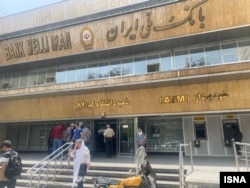
The Treasury said the bank processed about $1.8 billion between January 2024 and June 2026 for 103 companies potentially linked to Iranian shadow banking networks. It said some customers were apparent front companies for Iran's Defense Ministry and the Islamic Revolutionary Guards Corps (IRGC) and alleged the bank's network was used to launder money and evade US sanctions.
Separately, the Treasury's Office of Foreign Assets Control sanctioned Reza Mohammad Taeedi, manager of Bank Melli's Dubai branch, accusing the bank of facilitating billions of dollars in transactions for the IRGC's Quds Force and helping fund Iran-aligned groups.
OFAC also sanctioned Hong Kong-based Kameng Trading Limited, which the Treasury said helped a sanctioned Iranian exchange house launder money and access the international financial system.
"Today's action intensifies our pressure campaign against Iran," State Department spokesman Tommy Pigott said, adding that Washington would target individuals and entities involved in illicit financial activity on behalf of Tehran.
Treasury Secretary Scott Bessent said the action against Banque Misr UAE was the "first step" in holding the bank accountable.
The measures are part of Operation Economic Outcast, launched by the Trump administration on August 24 to intensify pressure on Iran's financial networks and expand sanctions risks for institutions doing business with the Iranian regime.
Iran Urges Countries to Reject New US Sanctions
Iran's Foreign Ministry has called on countries around the world to refrain from implementing new US sanctions against Tehran, describing Washington's economic measures as illegal and condemning them as "state terrorism" and a "crime against humanity."
In a statement published on X on August 28, the ministry said that taking part in implementing US sanctions amounted to complicity in imposing the unlawful will of one state on independent countries and disrupting their legitimate economic and trade relations.
The ministry called on the international community to uphold the rule of law and said Iran would use all available means to defend itself against what it described as a combined US-Israeli military and economic assault.
The statement came days after US Treasury Secretary Scott Bessent announced Operation Economic Outcast, an expanded US campaign aimed at increasing economic pressure on Iran and its international financial and commercial connections.
Bessent announced the initiative on August 24, describing it as an unprecedented campaign against Iran and its enablers. The measures expand the potential use of secondary sanctions against countries and entities that continue doing business with Tehran, including in sectors such as digital assets, gold, technology, aviation, and shipping.
Iran-Linked Tanker Hijacked By Somali Pirates 'Not Registered In Eritrea'
An Eritrean official said on August 28 that a US-sanctioned oil tanker which was diverted by pirates from the coast of Yemen to Somalia last week was not registered in Eritrea, despite flying the country's flag.
Information Minister Yemane Gebremeskel said the oil tanker Sibu 1, which was sanctioned by the US Treasury Department last December on suspicion of being affiliated with Iran's "shadow fleet," has no connection to Eritrea.
The vessel is listed on ship-tracking websites as being Eritrean-flagged, but the UN International Maritime Organization database shows its current flag status as "Eritrea False," indicating its registration is not recognized.
According to ship-tracking data, the tanker was last seen on August 24, about 6 kilometers off the northeastern coast of Somalia.
With reporting by Reuters
IRGC Warns Against Possible New Protests In Iran
The intelligence wing of Iran's Islamic Revolutionary Guards Corps (IRGC) issued a statement on August 27 warning of growing social discontent and the possibility of renewed street protests in Iran.
It claimed that Iran's opponents, including the United States and Israel, were shifting toward exerting pressure from within after failing, in its view, to achieve regime change through military strikes.
The IRGC said its perceived adversaries were using tactics including the activation of crisis centers, psychological warfare, turmoil in monetary and financial markets, and anti-security operations. It also accused them of exploiting domestic weaknesses and shortages and encouraging public dissatisfaction to spread into the streets.
The statement said the IRGC was prioritizing efforts to confront actions it considered disruptive to public order, national solidarity, and cohesion. In recent days, concerns about possible renewed protests have grown amid a rising dollar exchange rate and gasoline shortages.
Iranians Say SIM Card Cutoffs Have Become A Tool To Punish Critics
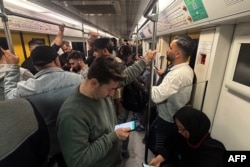
Cutting off SIM cards has emerged as one of the more effective tools available to Iranian authorities seeking to punish critics and civil society activists, with consequences that go well beyond losing mobile phone service.
Because access to banking, government, insurance, judicial, and even educational services in Iran is now tied to a verified mobile number and one-time SMS codes, cutting off a person's SIM effectively locks them out of a wide range of essential services and civil rights.
One woman, Donya Rad, said she recently discovered she could not renew her car insurance because a new mandatory rule requires registering one's address through a state housing portal -- a process that requires an SMS verification code she could not receive.
She wrote on X that SIM cutoffs have become so routine over the past two or three years that people talk about them the "way they complain about traffic or the weather." She described it as "a punishment that arrives before any legal charges are filed."
To read the full report, click here.
6 Months Into The Iran War, These 4 Issues Could Shape What's Next
WASHINGTON -- Six months since US and Israeli air strikes against Iran launched a conflict that has shaken energy markets and disrupted global shipping, there is still no clear end to the confrontation. While Iran's military capabilities have suffered major damage, it retains leverage in the Strait of Hormuz.
Experts interviewed by RFE/RL from across Washington's policy spectrum see the next phase being shaped by four questions: how long Iran can withstand economic pressure, can diplomacy turn military gains into a durable settlement, what happens to Hormuz, and whether Russia and China help Tehran rebuild.
Retired Vice Admiral Robert Harward, a former deputy commander of US Central Command, describes the situation as a "steady state." But he argues that the clock is ticking for Tehran.
"Time is their biggest problem," HThis is how Washington is now presenting the conflict, with Treasury Secretary Scott Bessent announcing what he called an " economic onslaught" of measures to further isolate Iran on August 24. Bessent will press G20 finance ministers on this during meetings in Asheville, North Carolina, on August 31-September 1.
arward told RFE/RL, saying sustained economic pressure could eventually become an internal threat to the Iranian government.
Bread-and-butter issues sparked the mass demonstrations in December-January that were put only down with brutal force involving the killing of thousands of protesters.
To read the full report, click here.
Iran's Araqchi Says 'Creative Discussions' Held With Qatar's Prime Minister
Iranian Foreign Minister Abbas Araqchi said he held “creative discussions” with Qatar’s Prime Minister and Foreign Minister Sheikh Mohammed bin Abdulrahman Al Thani amid a stalled diplomatic process.
“Putting diplomacy back on track isn’t impossible,” Araqchi wrote on his X page on August 28, but added that diplomatic efforts “hinged on US understanding of one simple fact: pressure doesn’t work.”
He also said Tehran wanted Washington to “build trust, speak respectfully, acknowledge our rights, and uphold commitments.”
Araqchi’s comments come as negotiations between the United States and Iran have been effectively paused in recent months, with the two countries remaining far apart on key issues related to the conflict.
Just a day earlier, Iran again insisted that it would not allow inspectors from the UN’s atomic watchdog to visit nuclear facilities damaged in military attacks since the beginning of the war until new inspection procedures are established.
Strait Of Hormuz Traffic Falls Below Recent Average
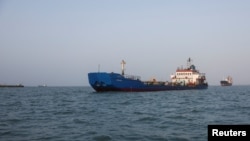
Only five commodity vessels transited the Strait of Hormuz on August 27, a figure three times below the recent daily average.
According to data published on August 28 by ship-tracking service Kpler, the five vessels that transited the waterway included two medium-range tankers and one very large gas carrier. Over the past 10 days, an average of 15 ships per day transited the strait.
The figures shown by monitoring sources could change, as some ships typically switch off their transponders during voyages.
The safe passage of ships through the Strait of Hormuz, which once accounted for one-fifth of global oil trade, has become one of the central issues in the Middle East since the start of the war between the United States and Iran.
The matter has also been a major obstacle to a negotiated settlement of the conflict, with Tehran and Washington remaining far apart over the terms of control of the strait.
With reporting by Reuters.
US Treasury To Press G20 Members To Cut Iran’s Illicit Revenue Flows
WASHINGTON -- US Treasury Secretary Scott Bessent will later this month press counterparts to sever financial and economic channels that Washington says help sustain Iran’s government and the Islamic Revolutionary Guards Corps (IRGC), US officials said.
Bessent will press the issue at the G20 finance ministers’ and central bank governors’ meeting in Asheville, North Carolina, on August 31-September 1.
That summit will follow a gathering of G20 finance and central bank deputies in Asheville on August 29-30.
A Treasury official on August 27 told reporters on a call that Iran-related sanctions and illicit finance would be raised in every bilateral meeting Bessent holds with G20 counterparts.
The secretary will discuss Iran-related activity that the Treasury has identified in specific countries and make clear that Washington will be “uncompromising” in targeting sources of what it describes as illicit Iranian revenue.
The official said the US was seeking greater consistency among G20 members as part of its campaign against Iran, known as Operation Economic Outcast. Washington wants countries to comply with US sanctions and help disrupt what the official called Iran’s “financial criminal network.”
Asked about the message to Middle Eastern countries, including Saudi Arabia, the official said the US had held extensive discussions with countries across the region in recent days and had received what he described as receptive responses.
Treasury officials cited Bahrain, Japan, and Britain as countries that had issued statements supporting the administration’s position on Operation Economic Outcast. Washington, they said, would continue discussions within the G20 and beyond to build international solidarity against Iran’s illicit financial networks.
The official did not say whether the G20’s final communique would contain specific language endorsing the Iran campaign. Instead, they said the communique was expected to center on five themes: economic growth, public-private partnerships, global imbalances, sovereign debt, and financial literacy.
Pakistan Signs Defense Pact With Kuwait, Hiking Involvement In Middle East
Pakistan increased its security involvement in the tense Middle East, signing a defense cooperation protocol with Kuwait to "significantly" expand military cooperation, the Defense Ministry in Islamabad said on August 27.
The ministry said that under the agreement, Pakistan's military will support long-time US ally Kuwait in training, capacity building, border management, and other areas.
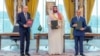
Pakistan and fellow Sunni Muslim nations Saudi Arabia and Turkey on August 7 signed what was labeled the Mecca Defense Agreement in order to "strengthen collective deterrence against any act of aggression."
The members stressed that the pact was not aimed at Shi'ite-led Iran, which has vied with Saudi Arabia for decades for military, political, and religious influence in the region.
Pakistan has said that other nations could join the mutual defense agreement, including Egypt and Bangladesh.
The signees pledged that an armed attack on one member would be treated as an attack on all.
US President Donald Trump has said he was pleased by the signing of the Mecca defense pact, although some experts pointed out it could reduce those countries' reliance on Washington in security matters.