



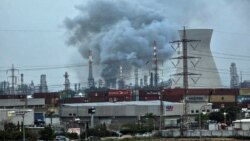
Iranian Revolutionary Guards Say Spokesman Killed
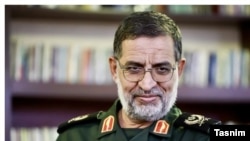
Iran's Islamic Revolutionary Guards Corps said on March 20 that US-Israeli strikes had killed their spokesman Ali Mohammad Naini.
The IRGC said in a statement on its Sepah News platform that Naini "was martyred" in a "criminal cowardly terrorist attack by the American-Zionist side at dawn."
IRGC did not provide further details about the attack that led to the killing of the senior commander, but the Israel Defense Forces (IDF) later said that Naini had been "eliminated."
"In his role as the IRGC's main propagandist for the past 2 years, he disseminated the regime's terrorist propaganda to its proxies across the Middle East in order to influence and advance terror attacks against Israel," the IDF said on its X account.
Just hours earlier, the Fars news agency, which is close to the IRGC, had published comments from Naini, quoting him as saying as saying the country was continuing with "missile production even under wartime conditions, and there are no particular problems with our stockpiles."
Naini, a brigadier general, was described in the statement as having “transformative ideas and effective models in the field of soft warfare.”
The 68-year-old had previously been active in the IRGC’s political-security and media sectors, and was considered one of the figures close to the Revolutionary Guards' command structure.
With reporting by AFP
Historic Sites Closed For Persian New Year Ceremonies
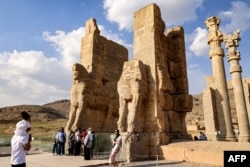
The head of Iran’s national heritage sites said the tomb of famed Persian poet Hafez, the ancient city of Persepolis, and other historic landmarks would be closed for Norouz ceremonies today, when such sites are usually open to large crowds of visitors.
According to Iranian media, Farhad Azizi said on March 20 that the decision was due to the country’s “current situation,” RFE/RL's Radio Farda reports.
According to the official, museums under the Ministry of Cultural Heritage and Tourism will also remain closed during Norouz, the Persian New Year.
At the same time, the head of the Hegmataneh World Heritage site -- an ancient Median-era complex dating back to the 7th century BC -- said it would also be closed during Norouz.
In a separate report, the governor of Isfahan said 21 historical sites in the province had suffered serious damage during the war, with total losses estimated at $500 million.!
Israeli Air Defense Soldier Arrested On Suspicion Of Spying For Iran
Israeli authorities said they had arrested a reserve soldier who served in the country’s air defense system, known as the “Iron Dome,” on suspicion of passing information to Iran.
The soldier was identified as Raz Cohen, a 26-year-old resident of Jerusalem.
Authorities say that he had been in contact with Iranian intelligence agents for several months and, under their direction, carried out various security-related tasks, including transferring sensitive information.
The Times of Israel reports that the soldier had been recruited via Telegram and had passed on coordinates of bases and the names of responsible personnel.
Iraq Pulled Into Iran War As Tehran Expands The Battlefield
- By Frud Bezhan
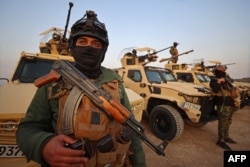
Since the United States and Israel launched their bombing campaign against Iran, Tehran has expanded the battlefield across the Middle East.
That includes in Iran’s western neighbor, Iraq, where Tehran’s proxy forces have carried out almost daily attacks against US targets, including diplomatic and military facilities, triggering retaliatory American air strikes.
Iran itself has carried out waves of missile and drone strikes in Iraq's semiautonomous Kurdish region in the north, where Iranian Kurdish opposition groups operate camps and offices.
The intensifying violence has threatened to destabilize Iraq, a Shi’ite-majority country of some 46 million people that is still recovering from years of insecurity following the US-led invasion in 2003 and the long conflict it set off.
“The chances of Iraq being pulled deeper into the Iran war are extremely high,” said Colin Clarke, executive director of the Soufan Center, a New York-based think tank.
“That's partly a result of Tehran's influence, especially over the past two decades, where the regime has become in many ways inextricably linked with Iraqi militias.”
Read more here.
UK Couple Being Used As 'Human Shields' In Iran, Says Family

The family of a British couple imprisoned in Iran say the pair are being used as “effective human shields” amid the US-Israeli war, as they renewed criticism of the UK government’s efforts to secure their release.
Lindsay and Craig Foreman are being held in harsh conditions in Tehran’s Evin prison, their son Joe Bennett said, according to Reuters.
"My parents are living under a 'drone of drones', the constant, maddening buzz of 600 machines in the sky," Joe Bennett, Lindsay Foreman's son, said in a statement.
"They are sharing small rectangular cells with rats and cockroaches, sleeping on metal bunks without mattresses in a state of constant physical pain."
The couple were arrested in January 2025 while passing through Kerman during a round-the-world motorcycle trip. They were later sentenced to 10 years in prison on espionage charges, which they and their family deny.



Bennett said Britain’s support had been “almost non-existent,” leaving the family feeling abandoned, though the government has called the sentence “totally unjustifiable” and pledged to continue pressing for their release.
Reuters said the Foreign Ministry's press office did not immediately respond to a request for comment.
Iran Enters Persian New Year With Families Cut Off By Internet Blackout
Iran is entering Norouz, the Persian New Year, under a prolonged Internet blackout that has now stretched into its third week -- exceeding 480 hours of disruption, Internet connectivity monitor NetBlocks said on March 20.
"With international connectivity cut and domestic service limited, many families are unable to contact loved ones when it's most needed," NetBlocks said in a post on X on March 20.
The Islamic republic cut Internet access across Iran in the early hours of February 28, shortly after the start of US and Israeli attacks. Connectivity from inside the country has dropped to around 1 percent since the conflict started.
Experts and rights groups say Internet shutdowns in Iran can limit information leaving the country and help authorities control the narrative during unrest or conflict.
Iran Warns UK Over Bases
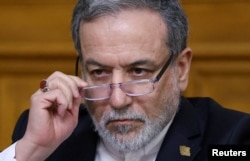
Iran's Foreign Minister Abbas Araqchi has told his British counterpart, Yvette Cooper, that any US use of UK bases would be seen as "participation in aggression" against the Islamic republic.
The Iranian Foreign Ministry said Araqchi discussed the matter in a phone conversation with Cooper, although it was not clear when the call took place.
He also criticized the UK for allowing the use of its military bases by the US, saying such actions would be seen as participating in aggression and would be “recorded in the history of relations between the two countries,” according to a Foreign Ministry statement released on March 20.
Iranian Revolutionary Guards Say Spokesman Killed
Iran's Islamic Revolutionary Guards Corps said on March 20 that US-Israeli strikes had killed their spokesman Ali Mohammad Naini.
The IRGC said in a statement on its Sepah News platform that Naini "was martyred" in a "criminal cowardly terrorist attack by the American-Zionist side at dawn."
IRGC did not provide further details about the attack that led to the killing of the senior commander, but the Israel Defense Forces (IDF) later said that Naini had been "eliminated."
"In his role as the IRGC's main propagandist for the past 2 years, he disseminated the regime's terrorist propaganda to its proxies across the Middle East in order to influence and advance terror attacks against Israel," the IDF said on its X account.
Just hours earlier, the Fars news agency, which is close to the IRGC, had published comments from Naini, quoting him as saying as saying the country was continuing with "missile production even under wartime conditions, and there are no particular problems with our stockpiles."
Naini, a brigadier general, was described in the statement as having “transformative ideas and effective models in the field of soft warfare.”
The 68-year-old had previously been active in the IRGC’s political-security and media sectors, and was considered one of the figures close to the Revolutionary Guards' command structure.
With reporting by AFP
Iranian Workers Left Without Income Or Support, Says Representative
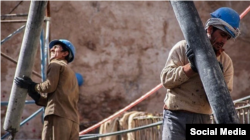
A trade representative for construction workers says that with the halt of development projects, around 80 to 90 percent of workers in the sector have become unemployed and many worksites have shut down.
According to the Iranian Labor News Agency (ILNA), Mikaeil Sediqi, a board member of the Construction Workers’ Trade Associations, said in an interview on March 19 that there has been a lack of government support and that, under wartime conditions, workers have been left without income or backing.
He also pointed to a 60 to 70 percent rise in insurance costs and severe inflation, warning that construction workers are facing a serious livelihood crisis.
“Today, given the exorbitant prices of basic goods such as rice and cooking oil, and inflation of 200 to 300 percent, most of these meagre earnings go toward rent," Sediqi said. "It is truly unclear how a worker is supposed to survive under these conditions with such wages. We have explicitly expressed our opposition to this level of pay.”
In recent months, the government has faced widespread criticism for failing to protect citizens during wartime, both in terms of providing air raid siren systems and shelters, and in terms of emergency economic planning.
Israel Pounds Tehran As Netanyahu Says Iran 'Being Decimated'
Air defense systems were activated across parts of Tehran early on March 20, with explosions reported in the west, center and east of the capital as state media said defenses were responding to “hostile targets.”
According to RFE/RL's Radio Farda, Iranian outlets reported that several “hostile aircraft” were intercepted, while an explosion in eastern Tehran was said to have struck a residential building.
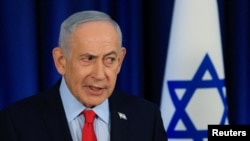
The Israeli military said it had begun “a large wave of attacks against regime infrastructure” in the city, while Prime Minister Benjamin Netanyahu declared: “We are winning and Iran is being decimated.”
The attacks come nearly four weeks into a war sparked by a joint US-Israeli assault on February 28, with Netanyahu claiming Iran’s ability to enrich uranium and produce ballistic missiles has been destroyed.
Iran has continued retaliatory strikes firing missiles toward Israel and Persian Gulf states.
Air defenses intercepted projectiles over Jerusalem late on March 19, while the United Arab Emirates, Kuwait, and Saudi Arabia reported attacks on energy and military sites early on March 20.
Tehran warned it would show “zero restraint” if further strikes hit its infrastructure.
Fighting has also intensified in Lebanon, where local authorities say Israeli strikes have now killed more than 1,000, prompting renewed calls for a truce.
Despite the escalating violence, Netanyahu said: “I also see this war ending a lot faster than people think.”
In the wake of Netanyahu's comments, the price of oil dipped by more than 2 percent, AFP reported.
With reporting by AFP
Multiple Gulf States Report Incoming Missiles
Authorities in the United Arab Emirates and Kuwait said air defenses were responding to missile attacks early on March 20, as the conflict in the Middle East showed no signs of easing.
A Kuwait Army statement said air defenses were "responding to hostile missile and drone threats." The UAE's Interior Ministry reported "a missile threat."
Kuwait's state oil company KPC later reported that its Mina Al-Ahmadi refinery was hit by multiple drone attacks early on March 20.
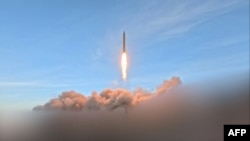
There was no immediate word on injuries or damages in the separate attacks, likely from Iran.
Elsewhere, Bahrain's Interior Ministry said air raid sirens were activated, and Saudi Arabia's Defense Ministry said it had intercepted six drones in the country's east and north.
Saudi Arabia's foreign minister on March 18 said the kingdom "reserves the right" to act militarily against Iran after Riyadh was targeted by Iranian ballistic missiles.
Meanwhile, the Israel Defense Forces (IDF) said it had begun a new wave of attacks on targets in Tehran, the Iranian capital.
The IDF said it "has begun a wave of strikes targeting infrastructure of the Iranian terror regime across Tehran."