



Multiple Gulf States Report Incoming Missiles
Authorities in the United Arab Emirates and Kuwait said air defenses were responding to missile attacks early on March 20, as the conflict in the Middle East showed no signs of easing.
A Kuwait Army statement said air defenses were "responding to hostile missile and drone threats." The UAE's Interior Ministry reported "a missile threat."
Kuwait's state oil company KPC later reported that its Mina Al-Ahmadi refinery was hit by multiple drone attacks early on March 20.
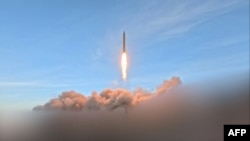
There was no immediate word on injuries or damages in the separate attacks, likely from Iran.
Elsewhere, Bahrain's Interior Ministry said air raid sirens were activated, and Saudi Arabia's Defense Ministry said it had intercepted six drones in the country's east and north.
Saudi Arabia's foreign minister on March 18 said the kingdom "reserves the right" to act militarily against Iran after Riyadh was targeted by Iranian ballistic missiles.
Meanwhile, the Israel Defense Forces (IDF) said it had begun a new wave of attacks on targets in Tehran, the Iranian capital.
The IDF said it "has begun a wave of strikes targeting infrastructure of the Iranian terror regime across Tehran."
Iranian Workers Left Without Income Or Support, Says Representative
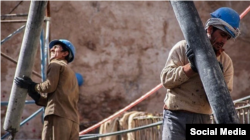
A trade representative for construction workers says that with the halt of development projects, around 80 to 90 percent of workers in the sector have become unemployed and many worksites have shut down.
According to the Iranian Labor News Agency (ILNA), Mikaeil Sediqi, a board member of the Construction Workers’ Trade Associations, said in an interview on March 19 that there has been a lack of government support and that, under wartime conditions, workers have been left without income or backing.
He also pointed to a 60 to 70 percent rise in insurance costs and severe inflation, warning that construction workers are facing a serious livelihood crisis.
“Today, given the exorbitant prices of basic goods such as rice and cooking oil, and inflation of 200 to 300 percent, most of these meagre earnings go toward rent," Sediqi said. "It is truly unclear how a worker is supposed to survive under these conditions with such wages. We have explicitly expressed our opposition to this level of pay.”
In recent months, the government has faced widespread criticism for failing to protect citizens during wartime, both in terms of providing air raid siren systems and shelters, and in terms of emergency economic planning.
Israel Pounds Tehran As Netanyahu Says Iran 'Being Decimated'
Air defense systems were activated across parts of Tehran early on March 20, with explosions reported in the west, center and east of the capital as state media said defenses were responding to “hostile targets.”
According to RFE/RL's Radio Farda, Iranian outlets reported that several “hostile aircraft” were intercepted, while an explosion in eastern Tehran was said to have struck a residential building.
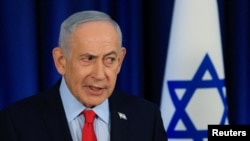
The Israeli military said it had begun “a large wave of attacks against regime infrastructure” in the city, while Prime Minister Benjamin Netanyahu declared: “We are winning and Iran is being decimated.”
The attacks come nearly four weeks into a war sparked by a joint US-Israeli assault on February 28, with Netanyahu claiming Iran’s ability to enrich uranium and produce ballistic missiles has been destroyed.
Iran has continued retaliatory strikes firing missiles toward Israel and Persian Gulf states.
Air defenses intercepted projectiles over Jerusalem late on March 19, while the United Arab Emirates, Kuwait, and Saudi Arabia reported attacks on energy and military sites early on March 20.
Tehran warned it would show “zero restraint” if further strikes hit its infrastructure.
Fighting has also intensified in Lebanon, where local authorities say Israeli strikes have now killed more than 1,000, prompting renewed calls for a truce.
Despite the escalating violence, Netanyahu said: “I also see this war ending a lot faster than people think.”
In the wake of Netanyahu's comments, the price of oil dipped by more than 2 percent, AFP reported.
With reporting by AFP
Multiple Gulf States Report Incoming Missiles
Authorities in the United Arab Emirates and Kuwait said air defenses were responding to missile attacks early on March 20, as the conflict in the Middle East showed no signs of easing.
A Kuwait Army statement said air defenses were "responding to hostile missile and drone threats." The UAE's Interior Ministry reported "a missile threat."
Kuwait's state oil company KPC later reported that its Mina Al-Ahmadi refinery was hit by multiple drone attacks early on March 20.
There was no immediate word on injuries or damages in the separate attacks, likely from Iran.
Elsewhere, Bahrain's Interior Ministry said air raid sirens were activated, and Saudi Arabia's Defense Ministry said it had intercepted six drones in the country's east and north.
Saudi Arabia's foreign minister on March 18 said the kingdom "reserves the right" to act militarily against Iran after Riyadh was targeted by Iranian ballistic missiles.
Meanwhile, the Israel Defense Forces (IDF) said it had begun a new wave of attacks on targets in Tehran, the Iranian capital.
The IDF said it "has begun a wave of strikes targeting infrastructure of the Iranian terror regime across Tehran."
EU Leaders Call For 'Moratorium' On Strikes Against Energy, Water Sites In Middle East
The European Council called for a "moratorium" on attacks on energy and water facilities in the Middle East, as tit-for-tat strikes by Israel and Iran continue to roil oil markets in the ever-expanding conflict.
"Developments in Iran and the wider region threaten regional and global security," a Council statement said on March 19.
The comments come after a meeting of EU leaders in Brussels to discuss developments in the US-Israeli war on Iran and Russia's war on Ukraine.
Tehran has launched attacks on the gas and oil facilities of US Gulf Arab allies in retaliation for US-Israeli strikes against Iran that began on February 28 and have killed many of the regime's leaders and destroyed much of its military capabilities.
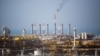
After Israel struck Iran's massive South Pars gas field on March 18, Tehran vowed retaliation and struck out against energy sites in the Gulf, hitting -- among others -- Qatar's main gas hub, Ras Laffan.
QatarEnergy CEO Saad al-Kaabi said Tehran's attacks knocked out 17 percent of the country's liquefied natural gas (LNG) export capacity and caused around $20 billion in lost annual revenue.
The Council urged "de-escalation and maximum restraint, the protection of civilians and civilian infrastructure, and full respect of international law by all parties, including the principles of the United Nations Charter and international humanitarian law."
The statement also said it "strongly condemns Iran’s indiscriminate military strikes against countries in the region and expresses its solidarity with countries affected."
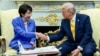
"It calls on Iran and its proxies to immediately cease these attacks and respect the sovereignty and territorial integrity of countries in the region," it added
Amid calls by US President Donald Trump for countries that utilize the Strait of Hormuz for their energy supplies to help protect shipping there, the EU statement said it "condemns any acts that threaten navigation or prevent vessels from entering and exiting" the crucial waterway.
But it did not disclose any specific plans to join a potential coalition being created by Trump, saying, instead, that it called for the reinforcement of EU maritime defensive operations EUNAVFOR ASPIDES and EUNAVFOR ATALANTA.
The two operations are direct EU military operations aimed at safeguarding freedom of navigation in the Red Sea and on monitoring and reporting on shadow fleets in the Gulf region.
The statement did say that European leaders welcomed "the increased efforts announced by member states, including through strengthened coordination with partners in the region, to ensure freedom of navigation in the Strait of Hormuz, once the conditions are met."
Earlier, US European allies and Japan expressed readiness for "appropriate" efforts to secure passage through the Strait of Hormuz. The statement did not outline specific parameters of the contributions by European nations and Japan, a country that was shipping most of its oil through the Strait of Hormuz.
Zineb Riboua: What The War On Iran Means For China And Russia
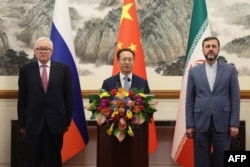
Beijing and Moscow are both close partners of Tehran. With the US-Israeli strikes approaching a third week and Iran retaliating across the region, the conflict is poised to possibly -- and significantly -- affect those ties, the broader roles Russia and China play in the Middle East, and their relations with Washington.
Zineb Riboua is a research fellow with the Hudson Institute's Center for Peace and Security in the Middle East and an expert on Chinese and Russian involvement in the region. She spoke to RFE/RL's Georgian Service about how China and Russia are responding to the war and what they stand to lose or gain.
To read the full interview, click here.
Netanyahu Says Iran War Could End 'Faster Than People Think'
Israeli Prime Minister Benjamin Netanyahu says Iran no longer has the capacity to continue its ballistic missile program or enrich uranium after weeks of US-Israeli air strikes, adding that the war could end "faster than people think."
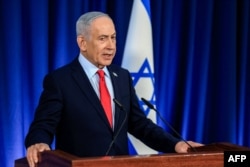
Speaking at a news conference on March 19, Netanyahu also said Tel Aviv was continuing to create conditions for Iranians to overthrow the longstanding hard-line regime in Tehran. However, he added that it was "too early" to assess whether people in Iran would take advantage of the situation inside the country.
"In the end, everything will depend only on them," Netanyahu said in Hebrew during a live television broadcast.
The joint US-Israeli military effort against Tehran, which started on February 28, came after mass protests across Iran the month before that were met with a brutal crackdown by Iranian military forces. Thousands of demonstrators were killed.
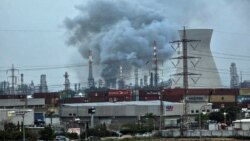
Israel's Haifa Oil Refinery Hit By Iranian Missile
An oil refinery in the northern Israeli port city of Haifa was hit on March 19 after the country's military warned of missile launches from Iran, Israeli media reported.
Israel's public broadcaster Kan 11 aired images showing dark plumes of smoke rising from the refinery area, and said in a post on X that there were "no concerns about the leakage of hazardous materials."
Israel's Energy Ministry confirmed the strike, saying it did not cause "significant damage" to the facility. Energy Minister Eli Cohen said power was "briefly disrupted, with electricity restored to most of those who were affected."
"The damage to the power grid in the north is localized and not significant," said Cohen. "In the barrage toward the north, there was no significant damage to Israeli infrastructure sites."
Police said bomb disposal units were deployed to several sites in Haifa where munitions landed, and no casualties were reported.
Israel's Environmental Protection Ministry said debris from an intercepted missile that fell in Haifa is being examined "as a hazardous materials incident."
European Nations, Japan Say Ready To Help Secure Passage Through Strait Of Hormuz
US European allies and Japan say they are ready for "appropriate" efforts to secure passage through the key Strait of Hormuz, as the already widespread conflict in the Middle East threatens to spin out of control, with energy infrastructure damaged across the region.
"We express our readiness to contribute to appropriate efforts to ensure safe passage through the Strait," said a joint statement from the leaders of the United Kingdom, France, Germany, Italy, the Netherlands, and Japan published on March 19.
"We welcome the commitment of nations who are engaging in preparatory planning," it added, while also criticizing Tehran for its recent attacks on civilian vessels and energy infrastructure in the region.
The statement did not outline specific parameters of the contributions by European nations and Japan.
To read the full report, click here.
Israel's Strike On South Pars Hits Iran, And Iranians, Where It Hurts Most
When Israeli jets struck the South Pars gas complex near Asaluyeh, they hit more than pipes and compressors. They struck the single piece of infrastructure most essential to Iran’s ability to function -- a field that provides 75 percent of Iran's domestic gas supply and powers roughly 80 percent of the country's electricity generation.
The strike halted output at two refineries with a combined daily capacity of around 100 million cubic meters, sending prices soaring and triggering Iranian retaliatory strikes on energy infrastructure in Gulf Arab states, including Qatar's Ras Laffan liquefied natural gas (LNG) terminal.
South Pars was already struggling before the first bomb fell. Straddling the maritime border with Qatar in the Persian Gulf -- where the same reservoir is known as North Dome and supplies roughly 20 percent of global LNG -- Iran's side of the field has suffered years of chronic underinvestment.
To read the full report, click here.
Tulsi Gabbard Says US, Israel Have Different Goals In War With Iran
US Director of National Intelligence Tulsi Gabbard stated on March 19 during a hearing before the House Intelligence Committee on worldwide threats that the United States and Israel do not have the same goals in their military operations against Iran.
"The objectives that have been laid out by the president are different from the objectives that have been laid out by the Israeli government," Gabbard said.

"We can see through the operations that the Israeli government has been focused on disabling the Iranian leadership," she added. "[US President Donald Trump] has stated that his objectives are to destroy Iran's ballistic missiles launching capability, their ballistic missile production capability, and their navy," she added.
Gabbard also commented on the war with Iran in a meeting with the US Senate Intelligence Committee on March 18, saying that US attacks have weakened the Iranian government but the Islamic republic still exists and poses a threat to US interests.