

US Could Lift Sanctions On Iranian Oil On Tankers, Says Bessent
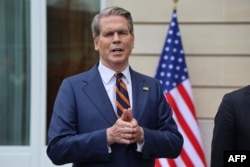
US Treasury Secretary Scott Bessent said Washington may soon lift sanctions on roughly 140 million barrels of Iranian oil stranded on tankers, aiming to boost global supply and ease prices amid disruptions caused by Iran’s closure of the Strait of Hormuz.
Speaking in an interview with the Fox Business Network on March 19, Bessent said the additional oil could cover "10 days to two weeks of supply" and help stabilize markets.
Bessent added that the US could release more oil from the Strategic Petroleum Reserve, the government’s emergency oil stockpile, and is in talks with Japan on securing safe passage through the strait, with Tokyo potentially increasing its own emergency stock releases.
He stressed that Washington would not intervene in financial markets but would focus on boosting physical supply to offset shortages.
Bessent also warned that China has become an “unreliable” supplier of refined fuels, citing reduced exports of products such as jet fuel, which has added to supply strains in Asia.
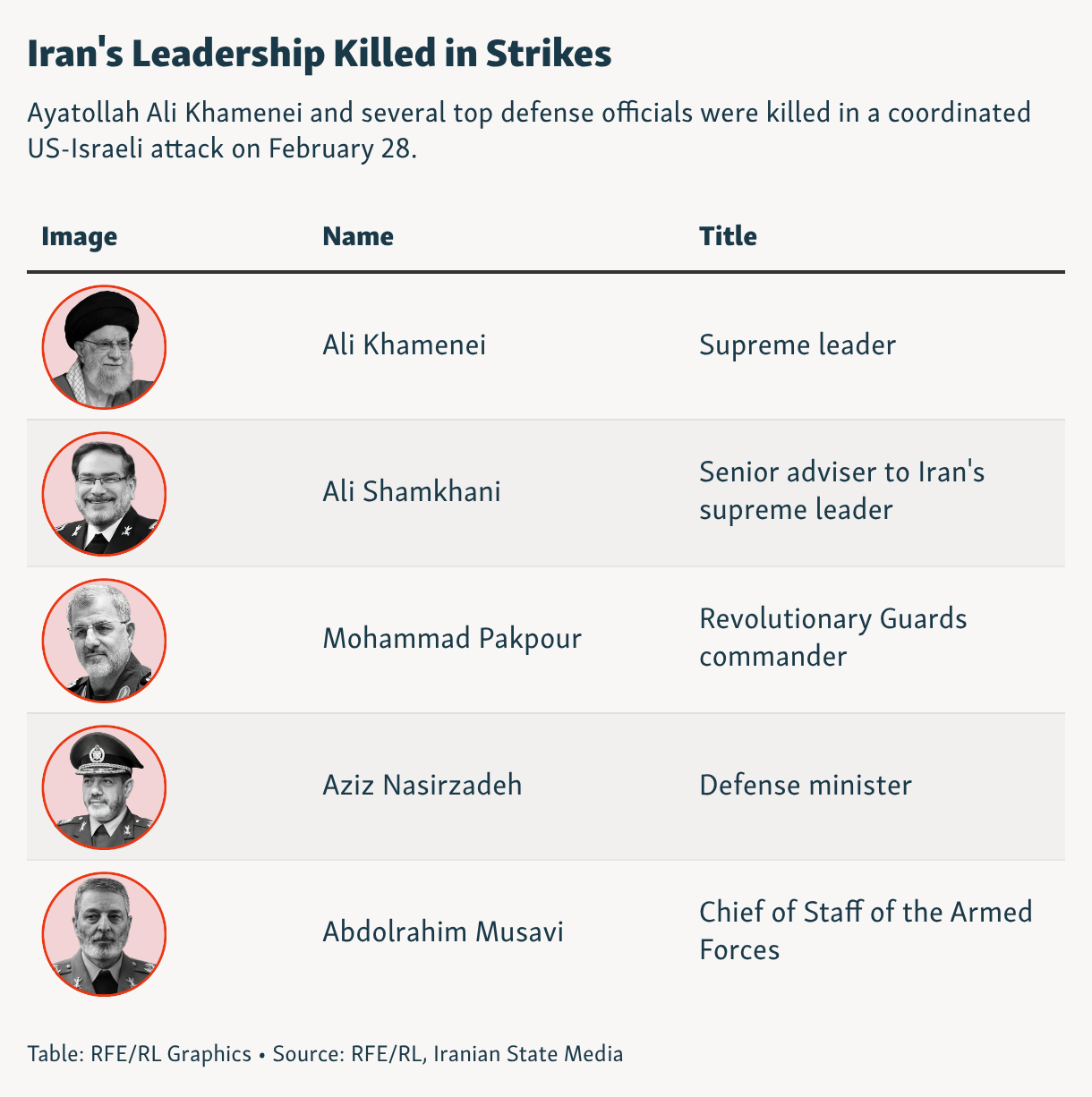
RFE/RL's graphics department has updated its list of top Iranian officials who have been confirmed dead since the US and Israel's war on Iran began on February 28.
US Central Command (CENTCOM) has shared a video on X, showing what it says are US forces "destroying Iranian naval targets that threaten international shipping in and near the Strait of Hormuz."
Kallas Says Iran Attacks On Qatar Risk Further Escalation
EU foreign policy chief Kaja Kallas has warned that Iran's attacks on Qatar's energy infrastructure are fueling instability in the region.
"The Iran's attacks on Qatar's energy infrastructure create further chaos and it's clear that we need an exit from this war, not [an] escalation," Kallas told reporters ahead of the EU council meeting in Brussels on March 19.
"This is equally important for Ukraine, as Russia stands to gain from the Iran war," she later wrote in a post on X.
Iran Says It Will 'Boycott US' But Compete At World Cup
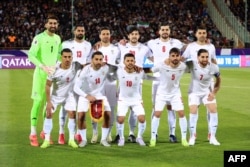
Iran will "boycott the United States" but still plans to compete in the upcoming soccer World Cup, the country's football federation chief, Mehdi Taj, said as uncertainty grows over the team’s participation amid the ongoing conflict.
Iran is scheduled to play group matches in the US, but officials have opened talks with soccer's world governing body, FIFA, about relocating games. World Cup co-host Mexico has indicated it would be willing to stage Iran's games at the tournament, if needed.
FIFA has not changed the tournament schedule, although US President Donald Trump has warned that Iranian players could face safety risks if they travel to the country. Tehran rejected those remarks, insisting its team cannot be excluded.
The dispute comes despite earlier assurances from FIFA that Iran would be welcome, raising questions over logistics, visas, and security ahead of the tournament co-hosted by the United States, Canada, and Mexico.
If Iran -- which is drawn with Belgium. Egypt, and Italy in the group phase -- does not participate in the World Cup, it is unclear which country could replace it.
Saudi Refinery Stops Oil Loadings As Gulf Energy Facilities Come Under Fire
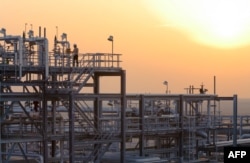
The key Saudi port of Yanbu has stopped oil loadings, two sources told Reuters on March 19, after the Saudi Defense Ministry said it had intercepted a ballistic missile over the city.
Earlier, an aerial attack targeted Saudi Aramco’s SAMREF refinery in the Red Sea port on March 19, though an industry source said the impact was minimal.
The attacks follow an Iranian evacuation warning for energy facilities across Saudi Arabia, the United Arab Emirates, and Qatar after a strike on Iran’s South Pars gas field.
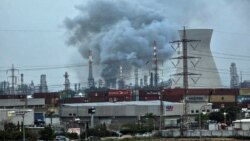
Yanbu is a critical export hub on the Red Sea and one of the main alternatives for Persian Gulf oil shipments since Iran effectively shut the Strait of Hormuz, a route that normally carries about a fifth of global supply.
The UAE’s Fujairah port, another key outlet, has also been hit by attacks, disrupting operations.
Strikes across the region -- including damage to Qatar’s Ras Laffan LNG hub -- have heightened concerns over energy supply security.
Based on reporting by Reuters
Oil Jumps, Stocks Slide As Gulf Attacks Raise Energy Supply Fears
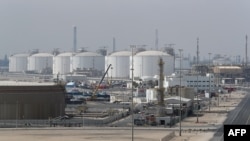
Oil prices surged and global stocks fell sharply on March 19 as escalating attacks on Persian Gulf energy infrastructure heightened fears of supply disruptions.
Brent crude jumped 7 percent to pass $115 per barrel, while US crude briefly topped $100, after Iranian strikes hit Qatar’s Ras Laffan liquefied natural gas hub and followed threats to target more regional facilities. European gas prices spiked more than 30 percent.
Equity markets reacted negatively, with major Asian indexes -- including Tokyo and Seoul -- posting steep losses, with declines seen across global markets.
The conflict has effectively disrupted traffic through the Strait of Hormuz, a key route for about a fifth of global oil and gas flows, adding to market volatility.
Rising energy costs have fueled concerns about renewed inflation and potential interest rate hikes, with central banks warning of growing economic uncertainty as the crisis deepens.
Based on reporting by Reuters
Iran Prison Conditions Deteriorate Sharply Amid War, Rights Group Says
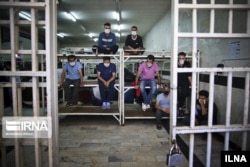
Iran’s prison conditions have sharply deteriorated since the outbreak of war on February 28, with widespread reports of human rights violations, according to the Norway-based group Iran Human Rights (IHRNGO).
The group said Internet shutdowns and increased militarization have left detainees isolated, with special forces taking control of several prisons across the country.
Saying it had "received alarming reports about conditions in prisons across Iran," IHRNGO cited severe shortages of food, water, and medicine, along with unsanitary conditions, restricted access to health care, and the closure of prison commissaries. At least one prisoner has died after being denied medical treatment, while others have launched hunger strikes in protest.
While some inmates convicted of minor offenses have been temporarily released, political prisoners, death row inmates, and others serving long sentences remain in deteriorating conditions or have been transferred to unknown locations.
IHRNGO also reported overcrowding, violence, and intensified security measures in multiple facilities, raising concerns about the safety and welfare of detainees nationwide.
Iran Executes 3 Over Alleged Protest Killings
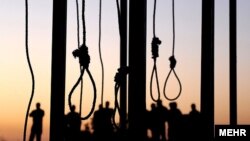
Iran has reportedly executed three men who, according to Iranian state media, were convicted of killing two police officers during unrest earlier this year.
The judiciary’s news agency, Mizan Online, said on March 19 that the death sentences of "three convicted rioters" had been carried out.
According to Reuters, the executions took place in the religious city of Qom. The judiciary said the men had been found guilty of murder and "waging war against God," including carrying out acts that it claimed benefited Israel and the United States.
Iranian authorities said the three had participated in attacks with knives and other weapons during protests on January 8, resulting in the deaths the policemen.
Iran is one of the world’s most prolific users of the death penalty, with executions often rising during periods of unrest.
Earlier on March 18, the Foreign Ministry in Stockholm said Iran had executed a Swedish citizen, prompting condemnation from Sweden and EU foreign policy chief Kaja Kallas.
Vessel Hit By 'Unknown Projectile' At Qatar Gas Hub
The United Kingdom Maritime Trade Operations (UKMTO), a shipping security monitoring group, reported early on March 19 that it had received information about a vessel being struck near Ras Laffan, Qatar's primary hub for liquefied natural gas production.
"It has been reported to UKMTO that a vessel has been hit by an unknown projectile. All crew are reported safe and well," the group said on X.