


Qalibaf: Cease-Fire In Lebanon Just As Important As Truce In Iran
Mohammad Baqer Qalibaf, Iran's parliamentary speaker, spoke by phone with his Lebanese counterpart, Nabih Berri, on April 16, according to Iranian media, and said he was "continuously following the situation in Lebanon and establishing a cease-fire in the country."
He considered this issue "very important" for Iran and said, "For us, a cease-fire in Lebanon is as important as a cease-fire in Iran."
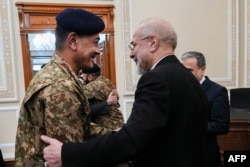
Qalibaf headed the Iranian delegation negotiating with the United States in the Islamabad talks last weekend and yesterday met with Asim Munir, the commander of the Pakistani Army, who traveled to Iran as a mediator.
Berri, for his part, said he also considered any relationship with Israel to be against the interests of the Lebanese people. The speaker of the Lebanese parliament is an ally of Hezbollah and close to the Iranian government.
Hezbollah is both a militant group and political party that controls much of southern Lebanon. It is considered a terrorist organization by the United States, although the European Union has only blacklisted its armed wing.
The telephone conversation between the two took place at the same time as US efforts to continue negotiations between Lebanese and Israeli officials and establish a cease-fire in the country.
Iran has made a cease-fire in Lebanon one of its conditions for any agreement with the United States. However, Israel's prime minister announced on April 15 that the country's military would continue its attacks on Hezbollah.
Iran Thinks It's Winning. That View Is Guiding Its War And Diplomacy.
- By Frud Bezhan
The United States and Israel's bombing campaign has devastated Iran's military, decapitated much of its leadership, and destroyed critical infrastructure.
Yet Tehran still believes it is winning the weekslong confrontation. That Iran's theocracy has survived at all has been touted in the Islamic republic as a victory. The country has also obtained a new and powerful card: control of the Strait of Hormuz.
Since the war began on February 28, Iran has effectively closed one of the world's key arteries for global oil and gas supplies, a move that has rattled energy markets, upended the global economy, and handed Tehran new leverage.
Iran's perception of victory has shaped the country's conduct in the conflict, where it has refused to capitulate despite suffering enormous material losses. The Islamic republic's confidence has extended to the negotiating table, where it is aiming to end the war on its own terms.
To read the full report, click here.
US Widens Naval Blockade of Iran, WSJ Reports
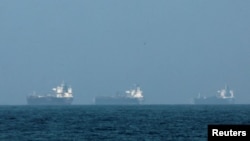
The United States has widened its naval blockade of Iran by authorizing inspections and possible seizures of sanctioned vessels and ships suspected of carrying contraband, The Wall Street Journal reports.
“In addition to enforcing the blockade, all Iranian vessels, vessels with active OFAC sanctions, and vessels suspected of carrying contraband, are subject to belligerent right to visit and search,” the US Naval Forces Central Command said, using an acronym for the Office of Foreign Assets Control.
The central command notice said that these vessels, regardless of location, are subject to visit, board, search, and seizure.
The move marks a further escalation in Washington’s pressure campaign against Tehran during the current conflict and could increase risks to commercial shipping and energy markets already unsettled by tensions around the Strait of Hormuz.
US officials also said no ship had violated the blockade in its first 48 hours.
Amid Iran War Talks, China Tests Its Clout In Pakistan-Taliban Conflict
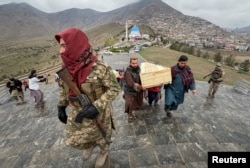
As US President Donald Trump says the war in Iran could be over "very soon" and Pakistani mediators in Tehran to meet with officials, another nearby conflict has been drawing Beijing's attention.
Since late February, fighting between Afghanistan and Pakistan has intensified, with Islamabad declaring an "open war" with its neighbor. Strikes have killed hundreds and displaced hundreds of thousands, according to the United Nations Office for the Coordination of Humanitarian Affairs in Afghanistan. The conflict has alarmed the international community and perturbed China, which is a partner to both countries and sensitive to violence along its western borders.
Against that backdrop, Beijing has stepped in to play a diplomatic role, announcing on April 8 that it hosted weeklong talks in Urumqi in western China in hopes of brokering a cease-fire. At stake is not just tempering hostilities but a broader test of China's ability to manage instability on its periphery, where it has deep economic and political ties.
While all sides have publicly backed dialogue, deep disagreements over militant groups and cross-border attacks threaten to derail any meaningful de-escalation. Delegations from all three sides were quick to tout the value of the talks. China's Foreign Ministry called them "frank and pragmatic," while the Taliban called them "useful" and said they took place "in a constructive atmosphere."
But even as the talks were under way, Afghanistan accused Pakistan of carrying out shelling across its border, raising questions about whether China can end the conflict and how much diplomatic capital it is willing to attach to the discussions as it also navigates the war in Iran.
"The Taliban and Pakistani diplomats know how to come up with word formulas that make China look good and even limited border easement measures," Michael Semple, an Afghanistan expert at Queen's University Belfast, told RFE/RL. "But agreement on the issue of Taliban support for the Tehrik-e Taliban Pakistan (TTP) is likely to prove elusive for now."
Read more here.
Iranian Police Say More Than 3,500 Thieves Arrested Since Start Of War
The head of the Iranian police's criminal investigation department said security forces have arrested more than 3,500 thieves since the start of the war, adding that 71 were “brought down by direct gunfire.”
Mohammad Qanbari told state television on April 16 that the arrests came despite a roughly 25 percent decline in theft during the recent war.
He gave no further details on those shot, but referred to an order by police chief Ahmadreza Radan, who said last year that “because of wartime conditions, an order to open fire in dealing with thieves has also been issued.”
Qanbari added that more than 5,000 vehicles had recently been recovered from arrested suspects.
Iran Says Some Progress Made In US Talks Under Pakistan Mediation, But Differences Remain
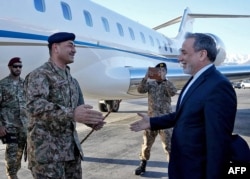
Iran and the United States have made limited progress toward a possible agreement under Pakistan’s mediation, but major differences remain more than halfway through a two-week cease-fire, a senior Iranian official said on April 16.
“The trip of the Pakistani army chief [Asim Munir] to Tehran was effective in reducing differences in some areas, but fundamental disagreements still remain in the nuclear field.... More hopes have been created for extending the cease-fire and holding a second round of talks,” the official said, according to Reuters.
He added that "the fate of Iran’s highly enriched uranium and the duration of Iran’s nuclear restrictions are among the highly disputed issues for which no solution has yet been found.”
Munir visited Tehran on April 15 after Pakistan hosted initial peace talks last weekend that failed to produce a permanent settlement to the war that began with US-Israeli strikes on Iran on February 28.
Pakistan’s Foreign Ministry said no date has yet been set for a second round of talks.
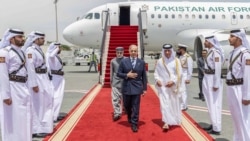
Meanwhile, Pakistani Prime Minister Shehbaz Sharif arrived in Qatar on April 16 for talks on Pakistan's "ongoing efforts for regional and global peace” before continuing to Turkey.
With reporting by Reuters and AFP
Lebanon 'Not Aware' Of Trump-Promised Peace Talks With Israel
Talks between several countries around the Middle East are heating up amid a diplomatic push to clinch peace deals around the region.
US President Donald Trump said the leaders of Israel and Lebanon will hold talks on April 16 -- the first such negotiations since 1993 -- as they seek a cease-fire to end more than six weeks of war with Iran-backed Hezbollah. Hezbollah is both a militant group and political party that controls much of southern Lebanon. It is considered a terrorist organization by the United States, although the European Union has only blacklisted its armed wing.
Separately, Gila Gamliel, a member of Israel's security cabinet, told Israel's Army Radio that Prime Minister Benjamin Netanyahu will speak with Lebanese President Joseph Aoun. But AFP and Reuters quoted unnamed Lebanese sources as saying Beirut was "not aware" of any talks and had "no information" about upcoming contact with Israel's leadership.
Amid the Lebanon impasse, Iran and the United States are reportedly looking to arrange a second round of peace talks as a fragile, Pakistani-brokered two-week cease-fire that paused 40 days of fighting expires on April 22.
Attention also turns to Paris on April 16, where a separate but linked crisis will dominate. French President Emmanuel Macron and British Prime Minister Keir Starmer will co-chair a videoconference of around 40 nations aimed at restoring freedom of navigation in the Strait of Hormuz.
To read the full report, click here.
Iranian Activists Warn Of Unemployment, Mass Layoffs Caused By War
Amid growing concern over rising unemployment -- particularly job losses and worker layoffs caused by the war -- labor and political activists have called for urgent measures to prevent the problem spreading across the country.
Speaking to the semiofficial labor-focused ILNA news agency, reformist political activist Jalil Sazgarnejad warned that damage to production and industrial infrastructure could trigger business closures or reduced activity, leading to widespread unemployment in Iran.
He said damage to major industrial units such as factories, refineries, and power plants would naturally affect many smaller downstream businesses.
"In such a situation, the first step taken by some enterprises is workforce reduction, the result of which will be higher unemployment and social problems for many families,” he said.
The former lawmaker called on the government, civil society institutions, and the private sector to implement support and compensation measures to manage the economic and social consequences of the conflict.
According to the semiofficial ISNA news agency, the head of the union representing contract and temporary workers also said the war could lead to layoffs and disruption to employment, adding that the government should provide timely support to economic and production enterprises and protect workers.
Fathollah Bayat said some businesses were struggling to obtain raw materials because wartime conditions had made imports -- especially those requiring foreign currency -- extremely difficult.
"This will certainly affect production, employment, and workforce retention," he said. Therefore, the government and authorities must help and remain engaged."
ILNA reported that the war, direct strikes on some production and service units, and the broader economic crisis had led to a “significant increase in the unemployed population, workforce reductions in various sectors, stagnation in businesses, and consequently a multifold rise in applicants for unemployment insurance in different provinces.”
The report identified Tehran Province, Khuzestan Province, and Bushehr Province as the “main economic victims of the war.”
In addition, Iran’s Internet shutdown -- now lasting more than 47 days -- has effectively destroyed many online businesses in the country.
3 Iranian Police Officers Killed In Restive Province
The police information center in Iran's Sistan-Baluchistan Province announced on April 16 that "three patrol officers from the police emergency support unit in Saravan County" were killed in the province following an armed attack.
The center did not release further details about the incident and said only that "efforts to arrest those responsible for the attack" are continuing.
No group has yet claimed responsibility for the attack.
Armed assaults on military and law enforcement facilities in Sistan-Baluchistan have occurred previously.
In the most recent case before Iran's war with the United States and Israel, five police officers were killed in August, near the Daman checkpoint in Iranshahr.
The Jaish al-Adl Baluch separatist militant organization claimed responsibility for that attack, as well as several others.
Jaish al-Adl, which is designated a terrorist group by both Iran and the United States, says it is fighting the Islamic republic for the rights of the Baluch minority.
Members of the Baluch minority, many of whom are Sunni Muslims in Shi'a-majority Iran, have long faced disproportionate discrimination and violence at the hands of the authorities. Many live in Sistan-Baluchistan, one of Iran's poorest provinces.
China Urges Iran To Safeguard Shipping In Hormuz Strait
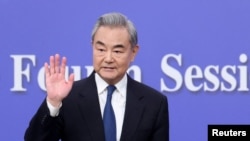
Chinese Foreign Minister Wang Yi has urged Iran to ensure freedom and safety of navigation through the Strait of Hormuz during a phone call with his Iranian counterpart, Abbas Araqhchi, as tensions over the Iran conflict threaten global energy supplies.
The Chinese Foreign Ministry said Wang described the situation as being at a “critical stage” between conflict and peace, and called for respect for Iran’s sovereignty while maintaining open maritime transit.
Araqchi welcomed China’s role and expressed a willingness to pursue a negotiated solution, according to the Chinese statement.
The call on April 15 comes amid a US naval blockade of Iranian ports and the effective closure of the strait by Tehran following attacks by the US and Israel.
Although recent talks in Islamabad failed to yield an agreement, further negotiations may resume soon as mediators push to extend a fragile cease-fire set to expire on April 22.
China has criticized the blockade as “dangerous” and is seeking de-escalation in the region.