

European Leaders Condemn Killing Of Protesters
German Chancellor Friedrich Merz, French President Emmanuel Macron, and British Prime Minister Keir Starmer condemned the killing of protesters in Iran and urged the Iranian authorities to refrain from violence in a joint statement.
"We are deeply concerned about reports of violence by Iranian security forces and strongly condemn the killing of protesters. The Iranian authorities have the responsibility to protect its own population and must allow freedom of expression and peaceful assembly without fear of reprisal," the statement released by Merz's office said.
"We urge the Iranian authorities to exercise restraint, to refrain from violence, and to uphold the fundamental rights of Iran's citizens," it added.
Iran's Internet Shutdown Hides Violations, Amnesty International Says
A day after the Iranian authorities began restricting access to the internet, Amnesty International warned that the regime has used the blackout "to hide the true extent of grave human rights violations and crimes."
"This blanket internet shutdown not only hides human rights violations but amounts to a serious human rights violation in itself," Rebecca White, a researcher at Amnesty International's Security Lab, wrote in a press release on January 9.
"Amnesty International reiterates its calls for urgent global diplomatic action, warning of the risk of further bloodshed amid the internet blackout, which provides cover for security forces who commit grave violations," she added.
The statement came amid a mounting death toll from the regime’s brutal crackdown on nationwide protests against Iran's clerical rulers.
Iran Human Rights NGO: 51 Dead So Far
The Norway-based Iran Human Rights organization has said that over the last 13 days of protests in Iran, "at least 51 protesters, including nine children" have been killed and hundreds more injured.
The organization also says it is investigating reports of dozens of protesters being killed in cities such as Tehran, Mashhad, and Hamedan, which have not yet been included in the NGO's count.
Due to the internet outage and difficulties reporting on the ground in Iran, RFE/RL's Radio Farda can not confirm these numbers.
"The nationwide internet shutdown is reminiscent of the bloody crackdown on the November 2019 protests when several hundred protesters were killed," said Iran Human Rights director Mahmud Amiri-Moghaddam.
"Over the past 13 days, the extent of the government’s use of force against protesters has been increasing, and the risk of intensified violence and the widespread killing of protesters after the internet shutdown is very serious."
'I Am Asking You To Help': Iran's Former Crown Prince To Trump
Reza Pahlavi, the exiled Iranian opposition figure and the eldest son of the former shah, has asked US President Donald Trump to be ready to intervene "to help the people of Iran."
In a public letter to Trump, posted on X, Pahlavi warned that the Iranian regime planned to use an internet blackout in the country to "murder" protesters. Earlier, Trump outlined that the killing of peaceful protesters would be decisive in the US reaction to the situation.
"[Iranian Supreme Leader] Ali Khamenei, fearing the end of his criminal regime at the hands of the people and with the help of your powerful promise to support the protesters, has threatened the people on the streets with a brutal crackdown. And he wants to use this blackout to murder these young heroes," Pahlavi wrote on X.
"Last night, you saw the millions of brave Iranians in the streets facing down live bullets. Today, they are facing not just bullets but a total communications blackout. No Internet. No landlines," he said. The NetBlocks cyber watchdog reported on January 9 that Iran had been "offline" for 24 hours.
"Mr. President, this is an urgent and immediate call for your attention, support, and action," Pahlavi said. "Please be prepared to intervene to help the people of Iran."
'We Saw Blood On The Sidewalks'
A 25-year-old female protester in Mashhad, a city in northeast Iran, spoke to RFE/RL's Radio Farda on January 9. She said she managed to get online via Starlink.
“The crowd in Mashhad’s Vakil Abad [neighborhood] was so large that security forces were afraid to show up. People had dressed in dark colors. We had been told to wear dark clothes and wear black masks. Before the internet was shut down, everyone was talking about it on Instagram. The protesters chanted against the clerics [in power] and also 'Long live the shah.'"
"In Haft Tir [Street], the crowd was so large that security forces would use tear gas from the rooftops. We heard from some they had managed to take control of the police station in Haft Tir, there was shooting. we saw blood on the sidewalks, but we didn’t see anyone bloody though."
"I didn’t see any security forces even though I walked for 12 kilometers and, as I said, the crowd was so large that there weren’t any security forces in Vakil Abad. We couldn’t enter Haft Tir Street because of the crowd."
"The morale was high. When security forces would use tear gas, people would chant: 'Dishonorable, dishonorable.' They would shout: 'Don’t be afraid.' They would tell each other to stay close together. People were really not afraid.... The crowd that was there will not not give in. Young and old had come out to protest, some elderly people could hardly walk but they were protesting. There was an old man who kept cursing at [Iran’s Supreme Leader Ali] Khamenei. We’re tired of the high prices and the [forced ] hijab and everything else. It’s not just one or two things -- we want the [whole] establishment to change."
Who Are The Protesters Killed In Iran?
A boxer. A truck driver. A hip-hop artist. A student. A law intern. A sports coach.
Dozens of protesters have been killed in a brutal government crackdown on ongoing nationwide demonstrations against Iran's clerical establishment.
RFE/RL's Radio Farda has verified the deaths of 25 protesters as of January 9, including five minors, although the actual death toll is believed to be higher.
The demonstrations erupted in the bazaars of the capital, Tehran, on December 28. But since then, they have spread to scores of cities and towns across the country of some 92 million people.
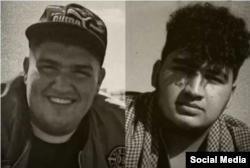
More than half of the deaths verified by RFE/RL occurred in the western provinces of Lorestan, Ilam, and Kermanshah. The three impoverished provinces are home to ethnic minorities and have been hit hard by Iran's worsening economic crisis, a catalyst for the demonstrations.
The vast majority of the protesters who have been killed were young men and most died of gunshot wounds. Iranian security forces have used heavy-handed tactics, including directly firing on crowds.
To read the whole report by RFE/RL's Radio Farda, click here.
Khamenei Says Islamic Republic Will Not Back Down
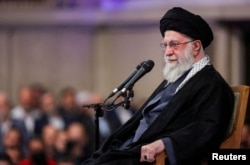
The day after Iran witnessed its largest-ever street demonstration on the 12th night of a new round of protests, Supreme Leader Ayatollah Ali Khamenei said that "the Islamic republic will not back down."
In his second address since the protests began on December 28, Khamenei called the protesters "a bunch of saboteurs, rioters, and people harmful to the country" and claimed they were "destroying the country's buildings to please the American president."
He went on to point to US President Donald Trump's message warning that he would take action against the Iranian government if protesters were killed.
Khamenei accused Trump of having "the blood of Iranians on his hands" in the 12-day war between Iran and Israel that took place in June 2025. "Now he says I support the Iranian nation, and a handful of inattentive and thoughtless people believe him," he added.
He also called Trump "a father with arrogance and pride," adding, "If he knows that the arrogant men of the world, such as Pharaoh and Nimrod, Reza Khan and Mohammad Reza, were overthrown at the height of their pride, he too will be overthrown."
Khamenei did not elaborate what he meant by "overthrowing" the US president, whose presidential term is based on a four-year law.
The twelfth day of protests in Iran, which began with a strike and widespread protest by market traders in Kurdish areas of Iran and a number of other cities, turned into the most widespread street demonstrations in recent times on Thursday evening, January 8, following the call of Prince Reza Pahlavi.
The new round of protests were sparked in the Tehran bazaar with economic demands, but immediately after that, people in dozens of cities, especially small towns, all over the country took to the streets each night and chanted slogans against the government and the Leader of the Islamic Republic.
According to images and video footage from January 8, the protests were met with a severe crackdown in many places, as well as clashes between people and security forces. There were also reports of attacks on police and Basij bases.
The protests on January 8 gradually intensified to the point that the Iranian government issued a complete Internet blackout nationwide.
State Media Reports Deaths Of Police And Security Forces
The Islamic Republic of Iran Broadcasting Agency reported the killing of "a number" of law enforcement and security forces, in addition to the killing of "a number" of protesters.
The state-run news agency also called the widespread protests in Tehran "gatherings in various locations in groups of several dozen to several hundred people" and, like Iranian officials and other state media outlets, described the protesters as "rioters, counter-revolutionaries, and terrorists."
Iran Television also broadcast numerous reports of damage and arson, without mentioning the extent of the protests across the country and their demand to overthrow the government, or the repression of the protesters by security forces, claiming that the purpose of the protests was "to create chaos and insecurity for the people."
The heavily censored state TV was apparently downplaying the mass reports that were reported in Iran last night.
Since late on January 8, Iran's Internet connection with the world has been completely cut off, and even websites within the country are inaccessible from abroad. Of the government news channels, only the Iranian Broadcasting Agency channel is being updated.
Iran Witnesses Biggest Protests So Far As Demonstrators Change Tactics
Iran saw its largest protests to date on January 8, the 12th night of the ongoing wave of unrest, with crowds flooding streets in major cities, small towns, and neighborhoods across Tehran.
The day started with bazaar strikes and demonstrations in Kurdish regions in western Iran and other cities. After sunset, fueled by a call from opposition leader and former crown prince Reza Pahlavi, protests erupted into the most massive public defiance since the 2022 uprising.
Raw footage shows brutal crackdowns, but protesters adopted bolder tactics: direct clashes with security forces and torching police and Basij paramilitary outposts.
To read the rest of the report by RFE/RL's Kian Sharifi, click here.
Human Rights Groups Condemn Unlawful Use Of Force, Arbitrary Arrests
Two prominent human rights groups have condemned the Iranian authorities' crackdown on the ongoing protests in the country, saying that the response has been marked by the unlawful use of force and arbitrary mass arrests.
In joint findings announced on January 8, Amnesty International and Human Rights Watch (HRW) said that at least 28 protesters and bystanders -- including children -- were killed by security forces between December 31 and January 3 in 13 cities across eight provinces of Iran. The wave of protests began on December 28 and has since spread to much of the country.
HRW said that it and Amnesty found evidence of security forces -- including the Iranian police and the Islamic Revolutionary Guards Corps (IRGC) -- using "rifles, shotguns loaded with metal pellets, water cannons, tear gas, and beatings to disperse, intimidate, and punish largely peaceful protesters."
"The frequency and persistence with which the Iranian security forces have unlawfully used force, including lethal force, against protesters, combined with systematic impunity for members of the security forces who commit grave violations, indicate that the use of such weapons to crush protests remains entrenched as state policy," said Michael Page, deputy Middle East and North Africa director at Human Rights Watch.
"People in Iran daring to express their anger at decades of repression and demand fundamental change are once again being met with a deadly pattern of security forces unlawfully firing at, chasing, arresting, and beating protesters in scenes reminiscent of the Woman Life Freedom uprising of 2022. Iran’s top security body, the Supreme National Security Council, must immediately issue orders for security forces to stop the unlawful use of force and firearms," said Diana Eltahawy, Amnesty International’s Deputy Director for the Middle East and North Africa."