


Central Asian Leaders Express Concern Over Middle East
Central Asian leaders have expressed concern about the situation in the Middle East following Iranian missile and drone attacks on Gulf states hosting US forces and US–Israeli strikes on Iran.
Kazakh President Qasym-Zhomart Toqaev expressed "serious" concern over the escalation of the conflict in calls with UAE President Sheikh Mohamed bin Zayed Al Nahyan and Qatar's Amir Sheikh Tamim bin Hamad Al Thani, his office said.
Toqaev expressed regret over the damage to civilian infrastructure in the UAE and emphasized that attacks on civilian facilities in the Gulf region deserve strong condemnation.
Uzbek Foreign Minister Baxtiyor Saidov emphasized the importance of respecting sovereignty, territorial integrity, and international law, and highlighted the need for a peaceful resolution -- but did not directly condemn the Iranian attacks -- in calls with the leaders of the UAE, Bahrain, Qatar, Kuwait, Oman, and Jordan.
Kyrgyzstan also expressed concern over the escalating situation and urged restraint and peaceful resolution, while Tajik President Emomali Rahmon sent condolences to Iran over the death of its supreme leader.
Turkmenistan, which shares a long border with Iran, has remained silent in official state media and government outlets, issuing no statements on neither the Iranian strikes nor the wider conflict. On March 2, the country closed all of its border crossings to regular transit.
Grossi: No Indication Iran's Nuclear Facilities Hit
Rafael Grossi, director-general of the International Atomic Energy Agency, said that there is "no indication" that Israel and the United States have attacked Iran's nuclear facilities, but so far the IAEA has not been able to contact Iranian nuclear officials.
"We have no indication that any of the nuclear installations, including the Bushehr Nuclear Power Plant, the Tehran Research Reactor, or other nuclear fuel cycle facilities, have been damaged or hit," Grossi said in a statement to the board of governors of the IAEA on March 2.

"Efforts to contact the Iranian nuclear regulatory authorities...continue, with no response so far. We hope this indispensable channel of communication can be reestablished as soon as possible," he added.
Grossi urged all parties to exercise "maximum restraint" in avoiding further escalation.
"To achieve the long-term assurance that Iran will not acquire nuclear weapons and for maintaining the continued effectiveness of the global non-proliferation regime, we must return to diplomacy and negotiations," he added.
Grossi concluded his remarks by saying that contacts with Iran have not been interrupted but are "very limited."
Red Crescent Says 555 People Killed In US-Israeli Attacks On Iran
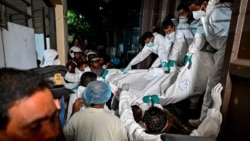
The Iranian Red Crescent Society announced on March 1 that 555 people have been killed so far in joint US-Israeli attacks on Iran.
According to the report, the attacks affected 131 cities in Iran and rescue, relief, transportation, and medical services operations for the injured are ongoing.


The director of East Azerbaijan Crisis Management also announced that over the past two days, various locations in the cities of Tabriz, Sarab, Maragheh, and Shabestar have been attacked, resulting in a total of 42 deaths.
It was not immediately clear how many of those killed were civilians.
The death toll from a missile strike on the Shajre Tayyiba elementary school in Hormozgan Province on February 28 has reportedly reached 148. A local official said more than 95 people were injured in the attack, most of whom were students.
These numbers could not be independently verified.
Larijani Says Iran 'Will Not Negotiate' With US
Iranian Supreme National Security Council chief Ali Larijani said Tehran "will not negotiate" with Washington, hours after US President Donald Trump vowed to continue to punish the "terrorists" with the "full force" of the American military.
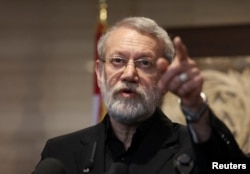
In a post on X early on March 2, Larijani said: "We will not negotiate with the United States."
"Today, the Iranian nation is defending itself," he added.
To read the full report, click here.
Satellite Images Show Damage To Military Sites Across Iran
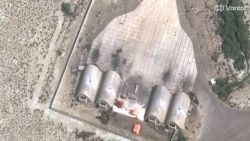
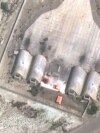
Before-and-after photos released on March 1 show extensive damage to missile bases, radar installations, and aircraft facilities in Iran after a barrage of US and Israeli air strikes. One set of images shows the Tehran compound of Ayatollah Ali Khamenei, Iran's supreme leader, who was killed in a strike on February 28.
Israel Strikes Back At Iran-Allied Hezbollah Sites In Lebanon
Israel said early on March 2 that its military had struck back at sites held by the Lebanon-based Hezbollah movement after the Iran-allied militant group claimed responsibility for a missile and drone attack on northern Israel.
Israel said that "in response to Hezbollah's projectile fire toward the State of Israel," its forces had "begun striking targets of the Hezbollah terrorist organization across Lebanon."
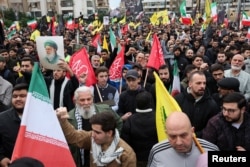
Details remained scarce, but witnesses reported hearing explosions in Beirut's southern suburbs, a Hezbollah stronghold.
A day earlier, Shi'ite Muslim-led Hezbollah -- long considered an Iranian proxy group -- had expressed solidarity with Tehran after the US and Israeli air strikes but suggested it would not become involved in the conflict.
In a statement, however, Hezbollah cited the killing of Iranian Supreme Leader Ayatollah Ali Khamenei as one of the reasons for its decision to launch a new attack.
The group said it launched "a barrage of missiles and a swarm of drones...in retaliation for the pure blood of [Khamenei]...and in defense of Lebanon and its people, and in response to the repeated Israeli attacks."
Much of Hezbollah's capabilities and its leadership were destroyed by Israeli air strikes in 2024. Hezbollah has been designated a terrorist organization by the United States, while the EU has deemed its armed wing but not its political section as a terror group.
With reporting by Reuters and AFP
US, Arab Allies 'Strongly Condemn' Iranian Attacks On Gulf States
In a joint statement, the United States, Bahrain, Jordan, Kuwait, Qatar, Saudi Arabia, and the United Arab Emirates "strongly" condemned what it called Iran's "indiscriminate and reckless missile and drone attacks against sovereign territories across the region."
"These unjustified strikes targeted sovereign territory, endangered civilian populations, and damaged civilian infrastructure," the statement said.
Earlier, the Saudi-led Gulf Cooperation Council (GCC) condemned Tehran for its attacks against member states and asserted their "right to respond" to the actions. The GCC consists of Bahrain, Kuwait, Oman, Qatar, Saudi Arabia, and the United Arab Emirates.
The joint statement of Washington and its Arab allies said Iran's "actions represent a dangerous escalation that violates the sovereignty of multiple states and threatens regional stability. The targeting of civilians and of countries not engaged in hostilities is reckless and destabilizing behavior."
Following massive US and Israeli air strikes, Iran has retaliated against Gulf nations hosting US military bases by firing rockets that have caused casualties and damages in most of the regional countries.
Early on March 2, the Israeli Defense Forces said it had resumed attacks targeting the Iranian capital, Tehran. The Israeli military did not immediately provide the attacks targeting what it called "the heart of Tehran."
Gulf Countries Assail Attacks By Iran, Assert 'Right To Respond'
- By RFE/RL
The Gulf Cooperation Council (GCC) has condemned Tehran for its attacks against member states and asserted their "right to respond" to the actions.
The group on March 1 said its ministerial council, "in light of this unjustified Iranian aggression against GCC countries...will take all necessary measures to defend their security and stability and to protect their territories, citizens, and residents, including the option of responding to the aggression."
The Saudi-led GCC also consists of Qatar, Oman, the United Arab Emirates, Bahrain, and Kuwait. The countries have all reported Iranian attacks on their territories following the US and Israeli air strikes against Iran beginning on February 28.
Iran has attacked the GCC states -- which host US military assets -- along with Israel in retaliation for the US and Israeli attacks against its territory.
"Despite the numerous diplomatic efforts undertaken by the GCC countries to avoid escalation, and despite their affirmation that their territories would not be used to launch any attacks against the Islamic Republic of Iran, the latter has continued to carry out military operations targeting GCC countries, affecting numerous civilian and residential facilities," it said following an extraordinary videoconference meeting.
Trump: We Will Continue at 'Full Force' Until Mission Completed
US President Donald Trump vowed on March 1 to press ahead with military operations against Iran at "full force," saying the campaign would continue until Washington achieves all of its objectives.
In a six-minute video address posted on Truth Social, Trump acknowledged that more American casualties are likely following the deaths of three US service members in what he described as a war launched to counter Iran's nuclear aspirations.
“Sadly, there will likely be more [casualties] before it ends,” Trump said. “That’s the way it is.”
He added that the United States would “avenge their deaths and deliver the most punishing blow to the terrorists who have waged war against, basically, civilization."
To read the full report, click here.
Iran Military Strikes Could Take 4 Weeks, Says Trump
US President Donald Trump has said in an interview with the British Daily Mail newspaper that the military operation against Iran, which has been launched with the participation of Israel, could last up to four weeks.
"It's always been a four-week process. We figured it will be four weeks or so," he said in a telephone interview from his Florida residence.
Noting that Iran is a large country, Trump added that military strikes will “take four weeks -- or less."