




Iran Targets Kuwait Airport, Bahrain Desalination Plant
Iran continued its retaliatory attacks on Arab countries hosting US bases in the Persian Gulf on March 8, targeting Kuwait International Airport and a desalination plant in Bahrain.
The latest attacks also claimed the lives of two Kuwaiti border guards, bringing the death toll in the conflict in the southern Persian Gulf country to 16, according to the AFP news agency, citing the Kuwaiti Interior Ministry.
According to the agency, after large explosions were heard on March 7 in the cities of Dubai in the United Arab Emirates and Manama in Bahrain, Saudi Arabia, the United Arab Emirates, Qatar and Kuwait have reported new attacks on their territory.
Bahrain's Interior Ministry announced on March 8 that a desalination plant in the country had been targeted following an Iranian drone attack.
Bahrain has accused Tehran of indiscriminately targeting civilian infrastructure with a deliberate agenda.
In a region facing chronic shortages of drinking water and low annual rainfall, this marks the second desalination plant to be targeted in the past week.
According to Ahmad Nafisi, deputy political and security governor of Hormozgan Province in Iran, the US military attacked one of the desalination plants on Qeshm Island last week. The claim drew immediate concern from Kaveh Madani, director of the United Nations Water Institute.
"The desalination plant and part of the Qeshm water and electricity facilities, which supplied between 12,000 and 15,000 liters of water daily to Qeshm Island and its affiliated villages, have been hit. Currently, water supply is facing challenges in 30 villages in the central, Hara and Shahab districts of Qeshm," Nafisi said.
Madani, while warning about the consequences of such actions, described the strike as "very dangerous."
Wladimir Van Wilgenburg: Kurdish Groups Need US 'Guarantees' Before Iran Offensive
The United States is considering arming Iranian Kurdish opposition groups based in neighboring Iraq, according to reports, with the aim of fomenting an uprising inside the Islamic republic.
The possibility of the United States supplying weapons to the exiled groups and supporting potential cross-border ground attacks in western Iran comes amid a joint US-Israeli aerial campaign against Tehran, launched on February 28.
RFE/RL spoke to Iraq-based Kurdish expert Wladimir van Wilgenburg, who said the Iranian Kurdish groups are deeply cautious about becoming entangled in the US-Israeli war on Iran.
"These Kurdish groups will not launch an offensive if they don't have any guarantees for any form of political recognition," said van Wilgenburg.
To read the interview, click here.
Israel Targets F-14 Fighter Jets At Isfahan Airport
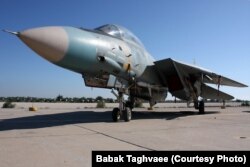
The Israeli Army announced on March 8 that it had targeted Iranian F-14 fighter jets at Isfahan Airport the day before.
"Reconnaissance and defense systems that were considered a threat to our Air Force aircraft were also attacked," the message on X added.
On March 7, news and photos of an explosion and bombing in the city of Isfahan were published.
Iran purchased 80 F-14s from the United States in the 1970s, when it was an ally of Washington's, of which 79 were delivered to Iran. The United States has been withdrawing its F-14s since 2006.
The Israeli Army also announced on March 7 that it had destroyed "16 Quds Force aircraft" at Tehran's Mehrabad Airport that were purportedly delivering weapons to Hezbollah.
Iranian Jews In Israel Speak Of Pain And Hope Amid Conflict
TEL AVIV -- Bijan Bahordari has two flags in the window of his fast-food restaurant: the blue-and-white Israeli Star of David and that of pre-revolutionary Iran, the green-white-red tricolor with a golden lion and sun in the center.
After ladling stuffed peppers, rice, and a rich red sauce into a takeaway container for a customer, he stopped to talk about what it's like to witness his adopted homeland at war with the land of his birth.
"I wish and I hope that they finish the regime now. And I am waiting to go back there. Seventeen years, I lived there. And I remember everything," he told RFE/RL. "In the morning, I check my phone, the radio, the TV -- it doesn't matter what."
To read the full report by RFE/RL's Ray Furlong, click here.


Cracks In Iranian Leadership? An Apology, Then More Regional Attacks
Iran could be moving closer to electing a new supreme leader even as some cracks appeared to be developing among the surviving rulers in Tehran, while the United States and Israel vowed to hit Iran harder than ever as the war passed the one-week mark.
After Iranian President Masud Pezeshkian said he wanted to "personally apologize to neighboring countries" that had been hit by Iranian missiles and drones, powerful national-security chief Ali Larijani and others on March 7 defiantly lashed out and Tehran struck again at the United States's Arab allies in the region.
Separately, Iranian state media late on March 7 quoted hard-line Ayatollah Hossein Mozafari, a member of the Assembly of Experts --– which will elect the country's next ruler -- as saying the body could meet in the next 24 hours to make a decision.
To read the full report, click here.
Magic Bullet? Sci-Fi Laser Weapons Are Now An Anti-Drone Reality
Shaky amateur footage showing rockets apparently disappearing in bursts of sparks over Lebanon were shared online on March 2, along with claims the videos showed the results of a futuristic Israeli air defense weapon in action amid the ongoing conflict in the Middle East.
These claims have been widely disputed, but one element of the discussion is based on reality: Since December 2025, the Israeli military has fielded a laser weapon, dubbed Iron Beam, designed to counter "various aerial threats" faced by Israel.
To read the full report by Amos Chapple, click here.

Sirens In Israel, Iranian Oil Fields Struck, Netanyahu Vows 'Surprises'
TEL AVIV -- Sirens rang out here early on March 8 amid the latest ballistic missile attack, shortly after the Israeli military announced it had launched a fresh wave of air strikes on Iran.
The early morning exchanges followed what appeared to be the first Israeli attack on Iranian oil fields and a late-night TV address by Prime Minister Benjamin Netanyahu in which he said Israel had an "organized plan with many surprises" in store.
Netanyahu told Israelis the campaign would "destabilize the regime" and that "the moment of truth is drawing near."
In a statement on the attacks on Iranian oil fields, the Israeli Defense Force (IDF) said "the military forces of the Iranian terror regime make direct and frequent use of these fuel tanks."
The attack followed an announcement by IDF chief Eyal Zamir on March 6 that operations against Iran were entering a "new phase."
Iran's Fars news agency said three oil depots in western Tehran were struck by Israeli jets.

Russia Told Not To Provide Targeting Intelligence To Iran
US special envoy Steve Witkoff on March 7 said Moscow has been told not to provide targeting intelligence to Iran amid air strikes by US and Israel forces.
US officials on March 6 told RFE/RL that Russia is providing Iran with targeting information to attack US troops and military assets in the Middle East, confirming a Washington Post report that suggested Moscow is playing a substantial if indirect part in the widening regional conflict.

Witkoff was asked by reporters aboard Air Force One if he had told Moscow not to offer information to Tehran.
"I have strongly said that," he said, without providing details.
Witkoff has met with Russian President Vladimir Putin several times and is leading the US delegation in trilateral talks with Moscow and Kyiv to end the war in Ukraine.
US intelligence agencies have declined to comment publicly on the reports.
US President Donald Trump said he had had no indication Russia was supporting Iran.
"If they are, they're not doing a very good job because Iran is not doing too well," Trump said.
Russia and Iran are longtime allies. Tehran has provided deadly drones to Moscow for use in the war against Ukraine.
Trump Says Does Not Want Iranian Kurds To Launch Offensive
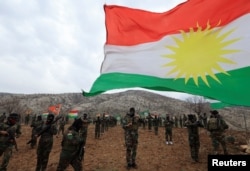
US President Donald Trump on March 7 said he did not want ethnic Kurds to launch a ground offensive against the regime in Iran, saying he did not want to see them “get hurt and killed.”
"We're not looking to the Kurds going in," he told reporters aboard Air Force One on March 7.
"We're very friendly with the Kurds, as you know, but we don't want to make the war any more complex than it already is."

“Yeah, I have ruled that out. I don’t want the Kurds going in. I don’t want to see the Kurds get hurt and killed,” he added.
“They’re willing to go in, but I’ve told them I don’t want them going in. The war’s complicated enough without getting the Kurds involved.”
Two days earlier, Trump had told Reuters that he would be "all for" an offensive by Iranian Kurdish fighters in support of the US-Israeli war.
"I think it's wonderful that they want to do that. I'd be all for it,” he told the news agency at the time.
Several Iranian opposition Kurdish groups are based in Iraq's semi-autonomous Kurdish region and have been waging a low-level insurgency against Tehran for years. Some have demanded autonomy within Iran while others are fighting for secession from the Islamic republic.
Kurds make up around 10 percent of Iran's population and primarily live in the country's west along the border with Iraq. Iran has long been accused of suppressing and discriminating against the country's ethnic minorities, including Kurds.
US Forces Begin Using British Air Bases For 'Defensive Operations'
US forces have begun using bases in Britain for "defensive operations" in the Middle East as attacks on Iran by the United States and Israel enter their second week.
The British Defense Ministry said the United States has started utilizing the facilities for "specific defensive operations to prevent Iran firing missiles into the region."
US President Donald Trump had expressed anger with British Prime Minister Keir Starmer for initially refusing to assist with offensive operations in the US-Israeli war with Iran.
Starmer defended his initial decision by saying any British action "must always have a lawful basis and a viable, thought-through plan."
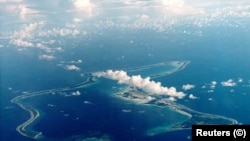
He later granted a US request to use two British military bases for a "specific and limited defensive purpose" -- Fairford in southwestern England, and the UK-US Diego Garcia base in the Indian Ocean.
Air Chief Marshal Knighton, chief of the Defense Staff, indicated that Britain could play a more active role in the future, saying “campaigns and conflicts evolve over time.”