



Oil, War, And The Strait of Hormuz: Can Washington Safeguard Global Energy Markets From Iran?
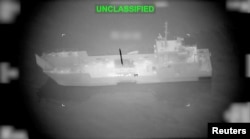
WASHINGTON -- As the United States and Israel's conflict with Iran converges on the Strait of Hormuz -- the world’s most critical energy chokepoint -- the economic consequences of a major disruption to oil and gas supplies could reverberate around the world.
About one-fifth of global oil and liquefied natural gas (LNG) normally flows through the narrow waterway connecting the Persian Gulf to international markets. Yet tanker traffic has slowed sharply amid security concerns, military threats, and reports that Iran is deploying mines and other asymmetric measures to inflict damage on vessels attempting to use the Strait.
Already the market response has been seen: oil surged toward $120 per barrel before retreating slightly while aviation fuel prices remain around double the levels seen in January.
For analysts, these swings underscore a fundamental question: Can Tehran leverage the global energy system as a strategic weapon -- or can the United States and its partners prevent that scenario?
Read more here.
EU foreign policy chief Kaja Kallas has announced new sanctions against Iranian government individuals and entities she says have been "responsible for serious human rights violations."
3 Ships Damaged By Projectiles In The Strait Of Hormuz
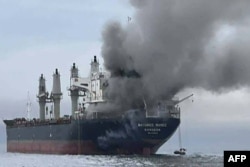
Maritime security sources and informed officials said March 11 that three ships in the Strait of Hormuz were struck by projectiles of unknown origin. One of the attacks caused a fire on board a vessel, forcing most of its crew to evacuate.
The Thai-flagged bulk carrier Mayuree Naree was struck and damaged about 11 nautical miles north of Oman, according to Reuters, which cited two maritime security sources.
United Kingdom Maritime Trade Operations (UKMTO), a British naval coordination center that monitors security threats to commercial shipping, subsequently said the fire on the vessel had "been extinguished and there is no environmental impact at this time."
Thailand’s Transport Ministry said hours later that three crew members were missing. The three had been working in the ship’s engine room. Oman's navy rescued the rest of the crew.
Earlier, the Japanese-flagged container ship One Majesty also sustained minor damage after being struck by an unidentified projectile about 25 nautical miles (46 kilometers) northwest of Ra's Al-Khaimah in the United Arab Emirates.
According to the UKMTO, the vessel’s crew "are safe and accounted for."
Another bulk carrier was also struck by an unidentified projectile about 50 nautical miles (93 kilometers) northwest of Dubai.
The maritime risk-management company Vanguard Tech said the projectile damaged the hull of the Marshall Islands-flagged vessel Star Gwyneth, but its crew were safe.
Ship traffic through the Strait of Hormuz, a vital passage through which around 20 percent of global oil and gas exports pass, has fallen by 97 percent since the start of the US–Israel war with Iran on February 28.
With these latest incidents, the number of ships attacked since the start of the conflict has reached at least 14.
The Netblocks Internet connectivity monitor says that Iran's digital blackout has now entered a 12th day "with connectivity still at 1% of ordinary levels."
Experts and rights groups say Internet shutdowns in Iran can limit information leaving the country and help authorities control the narrative during unrest or conflict.
Iran Threatens To Target US, Israeli Banks After Tehran Strike
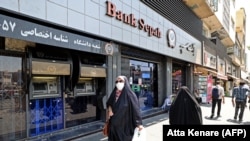
The Iranian military’s joint operational command says that the Islamic Revolutionary Guards Corps will target economic centers and banks belonging to the United States and Israel in the Middle East.
In a message, published on March 11, a spokesperson for Khatam al-Anbiya’s central headquarters said the decision was taken in response to the “enemy” targeting a bank in Iran.
The statement did not name the bank or its location, but said it had been struck overnight.
However, Bank Sepah – one of Iran’s largest state-owned banks -- later said one of its branches on the Haqqani Highway in Tehran was hit by a missile at 1 a.m. on March 11.
Iran’s state television channel IRINN reported separately that the bank in question was located in Tehran and claimed employees had been working an extra shift to prepare March salary payments. According to the report, a “high” number of people were killed in the attack.
In its statement, Khatam al-Anbiya added that this “illegitimate and unconventional” act in the war had “left our hands free to target economic centers and banks belonging to” the United States and Israel “in the region.”
The statement also urged people in countries where such banks are located not to remain within a one-kilometer radius of them.
Drones Crash Near Dubai Airport, Injuring 4
The emirate of Dubai said on March 11 that two drones crashed near the city’s airport, leaving four people injured, though air traffic continues to operate normally.
The incident, which injured two citizens of Ghana, one from India and one from Bangladesh, comes as Iran’s attacks on Gulf countries continue on the 12th day of the war between the United States and Israel and Iran.
And speaking of Iranian soccer, the president of football's world governing body FIFA, Gianni Infantino, has been talking to Donald Trump, whose country is co-hosting this year's World Cup. According to Infantino, the US President "reiterated that the Iranian team is, of course, welcome to compete in the tournament in the United States" despite the current conflict with Iran.
Iran Women’s Footballer Withdraws Asylum Bid In Australia
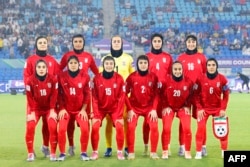
An Iranian women’s national soccer team member who initially sought asylum in Australia has withdrawn her request after speaking with teammates, Australian Home Affairs Minister Tony Burke said on March 11.
Seven members of the visiting squad had sought sanctuary after being branded “traitors” in Iran for silently protesting during the national anthem before a match.
Burke told the Australian parliament that one player reversed her decision after contacting teammates who had returned with the team and encouraged her to speak with the Iranian Embassy.
Because the embassy learned the group’s location, Australian authorities moved the remaining asylum-seeking players from a safe house to another location.
The rest of the team flew from Sydney to Kuala Lumpur early on March 11.
With reporting by AFP
Iran Police Chief Warns Protesters Will Be Treated As 'Enemies'
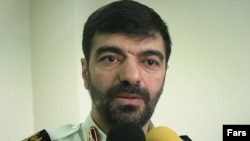
Iran's top police commander has warned that protesters supporting Tehran’s foes during the regional war will be treated as “enemies” rather than demonstrators, AFP reports.
National police chief Ahmad-Reza Radan said in remarks aired by state broadcaster IRIB late on March 10 that anyone acting “in line with the wishes of the enemy” would face the same response as hostile forces.
He added that security forces were ready, “with their hands on the trigger,” to defend the Islamic republic.
The warning follows a harsh crackdown on anti-government protests earlier this year sparked by economic grievances in sanctions-hit Iran.
Authorities say more than 3,000 people died in the unrest, while rights groups report far higher tolls.
Officials fear renewed demonstrations as the conflict with the United States and Israel escalates.
The United Kingdom Maritime Trade Operations (UKMTO), a British naval coordination center that monitors security threats to commercial shipping, issued a post on X this morning, warning that "a container vessel has sustained damage from a suspected but unknown projectile" near the Strait of Hormuz. It reported that "all crew members are safe and accounted for."
In a subsequent X post, it said that "a cargo vessel has been hit in the Straits of Hormuz which has resulted in a fire onboard." It added that the ship "had requested assistance and the crew are evacuating the vessel." It then advised ships in the straits "to transit with caution."