



Pakistan Prepares To Host Crucial US-Iran Peace Talks
Top US and Iranian officials are due to gather in Islamabad on April 10 for what could be the most consequential diplomatic encounter between the two countries in over four decades, even as disputes over the Strait of Hormuz and Israel's bombardment of Lebanon continue to cloud prospects for a deal to end the war, which entered a two-week ceasefire on April 8.
US Vice President JD Vance, special envoy Steve Witkoff, and Jared Kushner are expected to lead the American delegation. Iran has sent Foreign Minister Abbas Araqchi and parliament speaker Mohammad Bagher Qalibaf -- who has been vociferous in anti-US statements in recent weeks.
It was not immediately clear whether formal negotiations would begin on April 10 or 11 but Pakistan has declared two days of public holidays in the capital ahead of the talks, as authorities often do for major diplomatic events for security reasons.
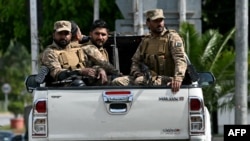
The sessions are to be held at the Serena Hotel in Islamabad's heavily fortified Red Zone, where over 10,000 police, paramilitary, rangers, and army personnel have been deployed. Visa conditions have been waived for delegates and journalists arriving for the talks.
Iran's Ex-Foreign Minister Dies Of Wounds Sustained In Israeli Strike
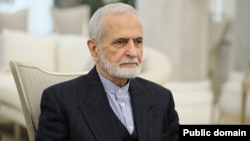
Kamal Kharrazi, Iran's former foreign minister and head of the country’s Strategic Council on Foreign Relations, has died more than a week after his home in Tehran was targeted in an Israeli strike.
On April 1, Kharrazi's residence was hit in an attack that killed his wife. Kharrazi himself survived but was critically wounded.
Late on April 9, state media confirmed his death by publishing a condolence message from Iran’s First Vice President Mohammad Reza Aref.
Kharrazi was 82 at the time of his death. He spent a decade as head of Iran’s official news agency, IRNA, before serving eight years as ambassador to the United Nations. He then served two consecutive terms as foreign minister under reformist President Mohammad Khatami (1997-2005) and in recent years led the Strategic Council on Foreign Relations, which advises the supreme leader on foreign affairs.
Trump Warns Tehran Against Imposing Tolls For Hormuz Shipping
US President Donald Trump rejected comments by Tehran that it would begin charging fees to tankers traveling through the Strait of Hormuz, which is considered a free waterway under international law.
"There are reports that Iran is charging fees to tankers going through the Hormuz Strait — They better not be and, if they are, they better stop now!" Trump posted on April 9 on his Truth Social platform.
Tehran's planned imposition of a toll for ships to pass through the strait will likely be a key point of contention at US-Iran talks set to begin in Islamabad on April 10.
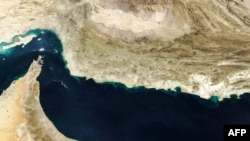
Tehran agreed to reopen the waterway during the two-week cease-fire with the United States, but it has also spoken of a toll system to fund its reconstruction following US-Israeli air strikes. Ships have not previously been charged for passing through the strait.
The European Union, Britain, Greece, and others have denounced Iran's plan to create a waterway toll. Bloomberg reported that shipping companies would be expected to pay up to $2 million per vessel, with half going to Iran and half to Oman.
To read the full story, click here.
Britain's Starmer, In Call With Trump, Speaks Of Need To Restore Hormuz Shipping
British Prime Minister Keir Starmer on April 9 spoke with US President Donald Trump on the need to formulate a plan to restore shipping "as quickly as possible" through the crucial Strait of Hormuz, Downing Street said.
"They agreed that now there is a cease-fire in place and agreement to open the strait, we are at the next stage of finding a resolution," the statement said, adding that the call took place while Starmer was in Qatar during a three-day visit to region.
"The leaders discussed the need for a practical plan to get shipping moving again as quickly as possible," Downing Street said. Starmer discussed Britain's efforts to organize partners to form to a "viable plan" on restoring freedom of navigation in the waterway, it said.
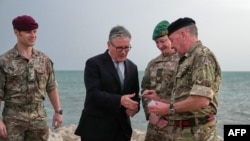
During his visit to the Gulf, Starmer rejected the possibility that Tehran could charge for letting ships use the vital Strait of Hormuz.
"Our position is 'open' means open for safe navigation," he told British TV. "That means toll-free navigation and vessels can get through," he added.
Some 20 percent of global supplies of oil and gas transit through the Strait of Hormuz, which Iran has effectively blocked, creating a bottleneck of traffic and a worldwide energy crunch.
Starmer said during his Middle East trip that Israel's continued attacks on Lebanon were "wrong." He also criticized Trump's use of threats, saying that he would "never use" such a threat as "a whole civilization will die tonight."
He also condemned Iran for its retaliatory attacks on Gulf states, often targeting oil and natural gas facilities and US-linked military sites.
Trump has repeatedly expressed his frustration with Starmer after he refused a US request to use UK bases for offensive strikes against Iran, although the prime minister later gave permission to use select bases for defensive operations.
State Department Urges Iraq To Prevent Attacks By Iran-Aligned Groups On US-Linked Sites
The US State Department says it has summoned the Iraqi ambassador after a drone struck a major US diplomatic facility, including the ambush of US diplomats, in Baghdad.
"Deputy Secretary of State Christopher Landau today summoned Iraqi Ambassador Nizar Khirullah to express the U.S. government's strong condemnation of the egregious terrorist attacks by Iran-aligned militia groups launched from Iraqi territory against U.S. diplomatic personnel and facilities, including the April 8 ambush of U.S. diplomats in Baghdad," the State Department statement said on April 9.
The US Embassy in Baghdad said earlier that an Iraqi "terrorist militia" group, which it accused of being aligned with Iran, had conducted multiple drone attacks near the Baghdad Diplomatic Support Center and Baghdad International Airport.
The State Department said Deputy Secretary of State Christopher Landau acknowledged the Iraqi security forces' efforts to respond while stressing "the Iraqi government's failure to prevent these attacks."
NATO Chief Warns Of Deepening Russia–Iran Cooperation Fueling Middle East Instability
WASHINGTON -- NATO Secretary-General Mark Rutte on April 9 said growing cooperation between Russia and Iran is strengthening both countries’ military capabilities, with direct consequences for the war in Ukraine and rising instability across the Middle East.
Speaking at a conference in Washington, Rutte described a widening network of coordination among Russia, Iran, China, and North Korea, calling it a shared effort that is “absolutely” reshaping security dynamics across multiple regions.
He pointed in particular to the exchange between Moscow and Tehran, saying Iran is supplying Russia with advanced drone and military technology used in Ukraine, while Russia is providing financial resources in return.
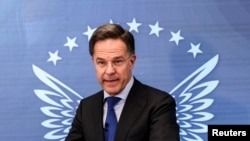
“That is technology into Russia, money from Russia to Iran,” Rutte said. “And the money is being spent for Iran to create…chaos.”
Rutte accused Iran of acting as a major destabilizing force in the Middle East, citing its support for regional proxy groups and its continued development of missile and nuclear capabilities.
He warned that Iran’s expanding missile range -- reportedly reaching distances of up to 4,000 kilometers -- indicates that the technology is nearing operational maturity.
According to Rutte, such developments pose risks not only to the Middle East but also to Western interests, as Iranian capabilities become increasingly sophisticated and far-reaching.
The NATO chief argued that efforts by the United States to curb Iran’s nuclear and ballistic missile programs remain critical in limiting those threats.
His remarks come amid heightened tensions in the Gulf region. Rutte said NATO could play a role in safeguarding maritime security in the strategically vital Strait of Hormuz, a key global oil transit route.
“If NATO can help, obviously then there is no reason not to be helpful,” he said, emphasizing the importance of keeping the waterway open.
He noted ongoing coordination among a group of 34 countries, led in part by British Prime Minister Keir Starmer, alongside the United States, to ensure freedom of navigation in the area.
At the same time, Rutte sought to highlight continued transatlantic cooperation despite political tensions. He said increased European defense spending -- including purchases of US weapons -- has strengthened NATO’s military capacity.
His comments followed criticism of the alliance by US President Donald Trump, who has threatened to scale back US military commitments to NATO allies.
Rutte maintained that cooperation within the alliance remains strong, even as geopolitical challenges -- from Ukraine to the Middle East -- become increasingly interconnected.
Statement Attributed To Mojtaba Khamenei Touches On Hormuz, Vengeance
A statement attributed to Iran’s supreme leader, Ayatollah Mojtaba Khamenei, appeared to underscore Tehran’s intention to control the Strait of Hormuz and regulate shipping in the key artery for oil and gas deliveries.
The statement, read out on state TV on April 9, said Iran “will definitely bring the management of the Strait of Hormuz to a new stage,” but did not provide details. “Iran is not seeking war but will not forfeit its rights,” it said.
It also vowed to avenge the deaths of Mojtaba Khamenei’s father, Ayatollah Ali Khamenei, and Iran's "martyrs."
Mojtaba Khamenei has not been seen in public since he was named to succeed his father, who was killed in an air strike on the first day of the US-Israeli war with Iran, on February 28.
The statement made a brief apparent reference to upcoming talks with the US in Islamabad, urging government supporters to demonstrate in the streets by saying “your cries in the squares are as effective as a result of the negotiations.”
Netanyahu Seeks Israeli Talks With Lebanon 'As Soon As Possible'
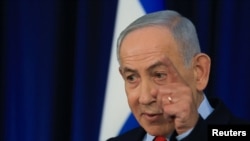
Prime Minister Benjamin Netanyahu said Israel wants to hold direct talks with Lebanon “as soon as possible.”
Netanyahu was speaking on April 9, a day after heavy Israeli strikes on Lebanon, home to the Iran-backed militant group Hezbollah, killed more than 200 people and threatened to upend a US-Iran cease-fire deal and upcoming talks.
Hezbollah has been declared a terrorist organization by the US.
"In light of Lebanon's repeated requests to open direct negotiations with Israel, I instructed the cabinet yesterday to start direct negotiations with Lebanon as soon as possible," he said in a statement. "The negotiations will focus on disarming Hezbollah and establishing peaceful relations between Israel and Lebanon."
Shortly before Netanyahu’s statement, Lebanese President Joseph Aoun said that “the only solution to the situation in Lebanon is to achieve a cease-fire between Israel and Lebanon, followed by direct negotiations between them.”
Reuters cited a senior Lebanese official as saying Lebanon had spent the last day pushing for a temporary truce to allow for broader talks with Israel. The official said that no date or location had been set and that Lebanon needed the US as a mediator and guarantor of any agreement, Reuters reported.
Netanyahu had rejected an offer for direct talks with Lebanon in March. His new statement came amid broad international criticism of the Israeli strikes, which Tehran says violate the cease-fire agreement reached by the US and Iran late on April 7. The US and Israel say the deal does not include Lebanon.
UPDATE: The US State Department will host a meeting next week to discuss ongoing cease-fire negotiations with Israel and Lebanon, a department official told RFE/RL on condition of anonymity.
US-Iran Cease-Fire Wobbles Over Israeli Strikes On Lebanon
A disagreement between Washington and Tehran over whether a temporary cease-fire agreed earlier this week also covers Lebanon is shaking the accord as Israel vows to continue to hit Iran-backed Hezbollah "wherever required."
Hezbollah, which is based in Lebanon, is considered a terrorist organization by Israel and the United States.
Iranian negotiators are set to meet a US delegation led by Vice President JD Vance later this week for the first peace talks of the war.
But a temporary truce announced earlier this week to allow for the talks appears strained with no sign Iran had fully lifted its blockade of the Strait of Hormuz, which has caused the worst disruption to global energy supplies in history. Tehran said there would be no deal as long as Israel was striking Lebanon.
"Whoever acts against Israeli civilians -- will be struck. We will continue to strike Hezbollah wherever required, until we restore full security to the residents of the north" of Israel, Prime Minister Benjamin Netanyahu said in a social media post on April 9.
Hours later, Iranian parliament speaker Mohammad Baqer Qalibaf hit back with a post of his own, insisting that Lebanon was "an inseparable part of the ceasefire." He added that "violations carry explicit costs and STRONG responses."
To read the full article, click here.
Russia Condemns Israeli Strikes, Says Cease-Fire Deal Must Include Lebanon
- By RFE/RL
Russia vocally criticized Israeli strikes on Lebanon, saying they “sharply increase the risk of a resumption of large-scale armed confrontation in the Middle East” and that the Pakistan-brokered cease-fire deal between the US and Iran must include Lebanon.
“We decisively condemn this Israeli attack on Lebanon, which has caused large numbers of casualties among innocent people and widespread destruction of civilian infrastructure,” Foreign Ministry spokeswoman Maria Zakharova said in a statement.
She said the strikes, which came after the United States and Iran agreed earlier this week on a two-week cease-fire and planned talks in Islamabad in the coming days, “threaten to disrupt the emerging negotiation process.”
In a separate statement on an April 9 phone call between Russian Foreign Minister Sergei Lavrov and his Iranian counterpart, Abbas Araqchi, the Russian ministry said Moscow welcomed the cease-fire deal and Israeli’s involvement.
In the call, Lavrov stressed that” Moscow firmly believes the…agreements, as announced by Pakistani mediators, have a regional dimension and…apply to Lebanon,” the ministry statement said.
Russia has close ties with Iran, which also says the cease-fire agreement includes Lebanon. The US and Israel say it does not, and Israel says it will continue to target Iran-backed Hezbollah militants “wherever required.”