



Lebanese Prime Minister Cancels US Trip Amid Hezbollah Pressure
Lebanese Prime Minister Nawaf Salam has canceled a trip to the United States next week amid pressure from Iran-backed Hezbollah.
It's not clear whether or how this will affect talks with Israel, which were scheduled to take place under US mediation next week.
The Lebanese government is desperate for Israel to stop strikes on Hezbollah, an Iran-backed proxy force based in Lebanon that is considered a terrorist organization by Israel and the United States.
Hezbollah attacked Israel in early March, following the US and Israeli air strikes on Iran on February 28. Israel says its strikes on Hezbollah amount to self-defense and are not covered by the current US-Iran truce.
Announcing his decision to cancel his visit in a social media post, Salam said it was "in order to follow up on the government's work from Beirut."
Earlier, a senior Hezbollah lawmaker in Lebanon said the planned talks with Israel broke Lebanese law. The group also organized a protest in Beirut denouncing Salam.
Islamabad Talks Are 'Face-To-Face,' White House Official Says
WASHINGTON -- A White House official has said the talks in Islamabad are direct, "face-to-face" talks with US, Iranian, and Pakistani officials in the same room.
This is significant. Many previous rounds of talks have been indirect, with negotiating teams in separate rooms while intermediaries relay messages between them. It was not clear earlier what format today's talks were taking place in.
As we noted earlier, these are the highest-level negotiations between the two countries since the Islamic Revolution in 1979.
They come after more than a month of conflict starting with US and Israeli air strikes on Iran on February 28. In response, Iran has fired ballistic missiles at numerous neutral countries in the Persian Gulf as well as Israel and effectively closed the Strait of Hormuz, one of the most important international shipping lanes.
Hormuz Statements Highlight A Stumbling Block In Talks
As negotiations continue in Islamabad, a social media post by US President Donald Trump and reports by Iranian state media have have underscored the fraught nature of the talks.
Writing on his Truth Social platform, Trump said "We're now clearing out the Strait of Hormuz."
He did not add any details, although the post came after an Axios report that US naval vessels had passed through the crucial waterway for the first time since US and Israeli air strikes began the war with Iran on February 28.
The Wall Street Journal also reported that two US warships had transited the strait.
Iranian state media have denied the US naval presence. Instead, they said, a single US vessel turned back after being warned it would soon be attacked if it did not change course.
The details of what is actually happing in the strait are not immediately clear.
But the competing statements highlight one of the key stumbling blocks in the talks: Washington is demanding Iran reopen the Strait, while Iran sees its chokehold on the waterway as its most significant piece of leverage.
US-Iran Talks Begin In Pakistan
Talks between US and Iranian negotiators have begun in Islamabad, according to media reports.
It's not immediately clear if the talks are face-to-face or if the US and Iranian teams are in separate rooms, with Pakistani mediators relaying messages between them.
Either way, these are the highest-level negotiations between the two countries since the Islamic Revolution in 1979.
The US delegation is led by Vice President JD Vance, accompanied by President Donald Trump's special envoy Steve Witkoff and son-in-law Jared Kushner. The Iranian team is led by parliamentary Speaker Mohammad Baqer Qalibaf and Foreign Minister Abbas Araqchi.
The talks are aimed at securing peace following the announcement of a two-week cease-fire by Trump on April 8.
There are many sticking points. Tehran says Israel's ongoing strikes in Lebanon against its proxy force, Hezbollah, is a cease-fire violation. Washington says the same about Iran's near-total blockade of the Strait of Hormuz.
Smoke Billowing Over Southern Lebanon Amid Apparent Israeli Strikes
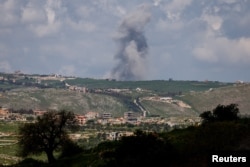
Video showed smoke rising over locations in southern Lebanon on April 11, after the Israeli Defense Forces (IDF) published new footage of strikes on Iran-backed Hezbollah, which is designated a terrorist organization by Israel and the United States.
Iran has said that Israel's continuing strikes in Lebanon are a violation of the cease-fire agreement with the United States. Israel says it is not covered by the truce. The issue has threatened to disrupt the talks in Pakistan.
Lebanese state media reported that the IDF and Hezbollah were exchanging fire on April 11. Several deaths were reported in the south of the country.
Pakistani Prime Minister Holds Separate Talks With Iranian, US Teams
Pakistani Prime Minister Shehbaz Sharif has begun a meeting with US Vice President JD Vance, following talks with the Iranian delegation, kicking off a day of diplomacy in Islamabad aimed at ending the US-Israeli conflict with Iran.
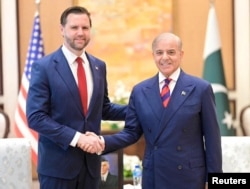
There were no immediate details about the talks with Vance, who is leading a delegation that includes President Donald Trump's special envoy Steve Witkoff and son-in-law Jared Kushner.
Meanwhile, Iran's Fars news agency -- which is close to the Islamic Revolutionary Guards Corps (IRGC) -- cited Iranian government sources as saying Tehran's delegation, following its talks with Sharif, was now discussing direct or indirect talks with the US team later on April 11.
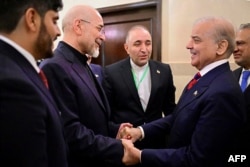
Talks Beginning In Islamabad, Iranian State TV Reports
The Iranian delegation has begun a meeting with Pakistani Prime Minister Shehbaz Sharif, according to Iranian state TV.
The report said negotiators were initially scheduled to discuss the United States' "breach of promise," an apparent reference to Israel's ongoing attacks in Lebanon against Hezbollah, which Israel and the United States have designated a terrorist organization.
Tehran says the attacks are violations of the cease-fire. Washington says the same about Iran's ongoing near-total blockade of the Strait of Hormuz.
David Schenker: US And Iran 'Very Far' Apart Before Pakistan Talks
David Schenker, a senior fellow at the Washington Institute for Near Eastern Affairs, told Current Time that all options are on the table for President Donald Trump as the US and Iran remain "very far" apart as they head into negotiations in Pakistan.
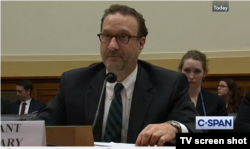
In an interview on April 10, Schenker, who served as assistant secretary of state for Near Eastern affairs from 2019 to 2021, said he viewed the US operation in Iran as a significant conventional military success.
However, he said that some of the most significant issues in the conflict, such as Iran's uranium enrichment program and control of the Strait of Hormuz, have yet to be resolved. He also said Iran's leadership may be "less flexible" than it was before he war.
To read the full interview, click here.
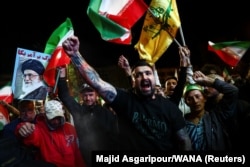
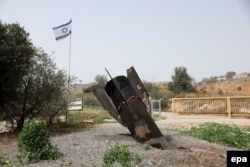
In Photos: Week Six Of The Iran War
Images from the sixth week of the US-Israeli war with Iran and the beginning of a fragile temporary cease-fire.
To view the full gallery, click here.
US Delegation, Led by JD Vance, Arrives In Islamabad
A delegation of US officials led by Vice President JD Vance and including President Donald Trump's special envoy Steve Witkoff and son-in-law Jared Kushner landed on the morning of April 11 at an air base in Islamabad.
They were received by Pakistani army chief Field Marshal Asim Munir and Foreign Minister Ishaq Dar.
The Iranian delegation, led by parliamentary Speaker Mohammad Baqer Qalibaf and Foreign Minister Abbas Araqchi, arrived on April 10.
These will be the highest-level US-Iran talks since the Islamic Revolution of 1979 and the first official negotiations between the two sides since 2015, when they reached a deal on Iran's nuclear program.