
Accessibility links

Breaking News

Two Of Nazarbaev's Sons-In-Law Pushed Out Of Key Energy Posts In Wake Of Kazakh Unrest

Updated
Kairat Sharipbaev is reportedly out as chief executive of the state oil pipeline firm KazTransOil.

Two sons-in-law of former Kazakh President Nursultan Nazarbaev have been pushed out of top jobs at two major state companies, Kazakh officials said.

The announcement, made on January 15 by the country’s sovereign wealth fund, comes in the wake of last week’s unprecedented political turmoil and was the latest indication that the current government of President Qasym-Zhomart Toqaev was moving to purge or squeeze members of Nazarbaev’s extended family.

In a statement, the sovereign wealth fund, called Samruk-Kazyna, said that Kairat Sharipbaev had resigned as chief executive of natural-gas pipeline operator QazaqGaz. Dimash Dosanov, meanwhile, left his position as CEO of state oil pipeline firm KazTransOil.

Samruk-Kazyna gave no reasons for their resignations.

Both companies play a key role in the country's oil and gas industry, an industry that fueled Kazakhstan's economic growth for decades.

Sharipbaev is widely known to be married to Nazarbaev’s eldest daughter, Darigha, though neither Sharipbaev nor Darigha Nazarbaeva have ever commented on their relationship.

Dosanov is the husband of Nazarbaev's youngest daughter, Aliya.

The announcement came just days after Toqaev publicly criticized a lucrative car-recycling company that is owned by Aliya Nazarbaeva, indicating authorities were moving to take control of it.

Toqaev has said publicly he wanted Nazarbaev's associates to share their wealth with the public by making regular donations to a new charity foundation.

The unrest, which started with a protest in the remote western region of Manghystau over a sharp rise in car fuel prices, exploded into nationwide protests in major cities and towns. The violence was worst in the commercial capital, Almaty.

Amid the unrest, Toqaev moved to push Nazarbaev out of his position on the National Security Council, a position Nazarbaev had retained after resigning in 2019 and essentially handing the presidency to Toqaev.

Nazarbaev, who had ruled Kazakhstan since the Soviet collapse, has not been seen in public since December 28, and rumors have circulated that he had fled the country or was in ill health.

His spokesman has denied that Nazarbaev, 81, had left the country, saying only that he was in the capital, Nur-Sultan.

Kazakh officials have said that almost 10,000 people were arrested during the nationwide protests. Prosecutors said on January 15 that 225 people had been killed in total nationwide, including 19 police or security officers.

Toqaev has blamed rights activists and independent journalists for "inciting" the protests, which also led to the arrest of several reporters in towns and cities across the country.

Aftermath: Peacekeepers And Destruction In Kazakhstan
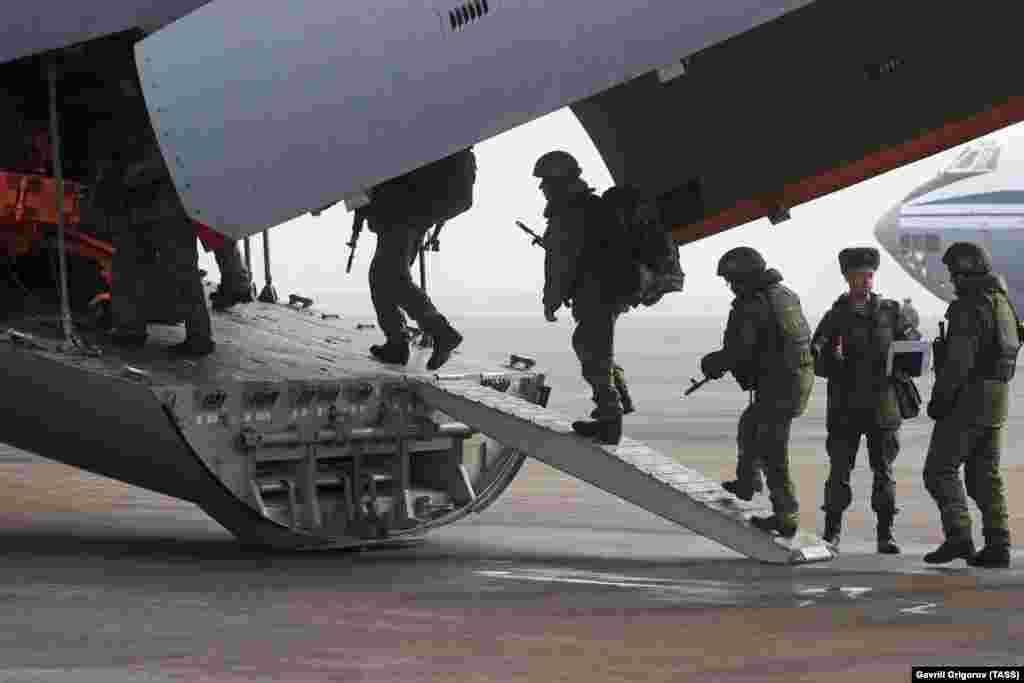
Russian troops from the Collective Security Treaty Organization (CSTO) board a homebound flight at Almaty International Airport. The withdrawal of the Russia-led peacekeeping mission began on January 13, a week after massive protests and violence swept Kazakhstan. 
1/20 Russian troops from the Collective Security Treaty Organization (CSTO) board a homebound flight at Almaty International Airport. The withdrawal of the Russia-led peacekeeping mission began on January 13, a week after massive protests and violence swept Kazakhstan. 
Scenes of foreign troops and fire damage in Almaty, one week after the massive unrest that swept Kazakhstan, sparked by a hike in gas prices.
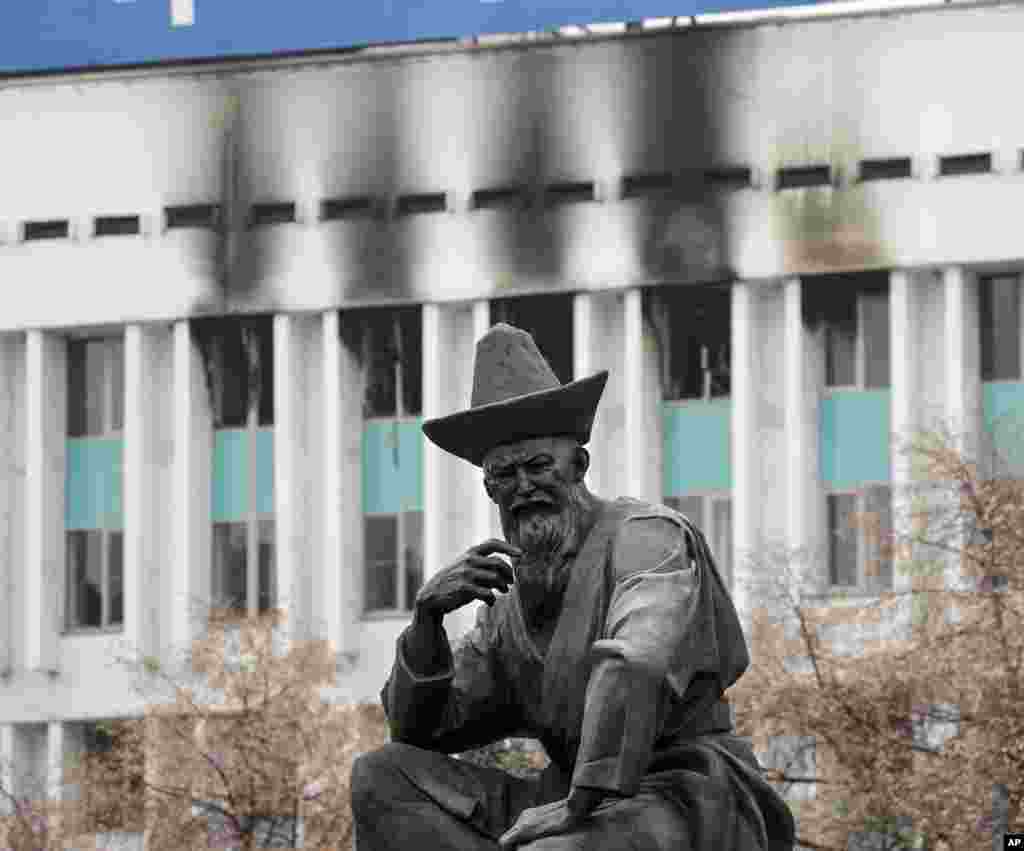
A fire-damaged building and sculpture on Almaty's central square on January 11. 
2/20 A fire-damaged building and sculpture on Almaty's central square on January 11. 
Scenes of foreign troops and fire damage in Almaty, one week after the massive unrest that swept Kazakhstan, sparked by a hike in gas prices.
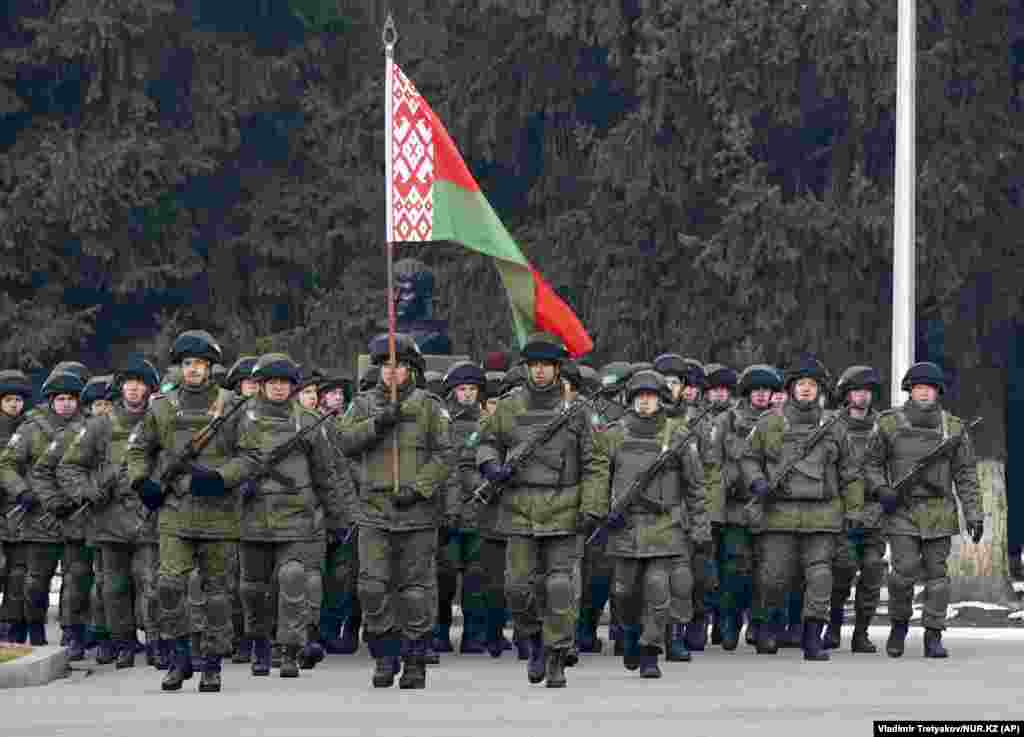
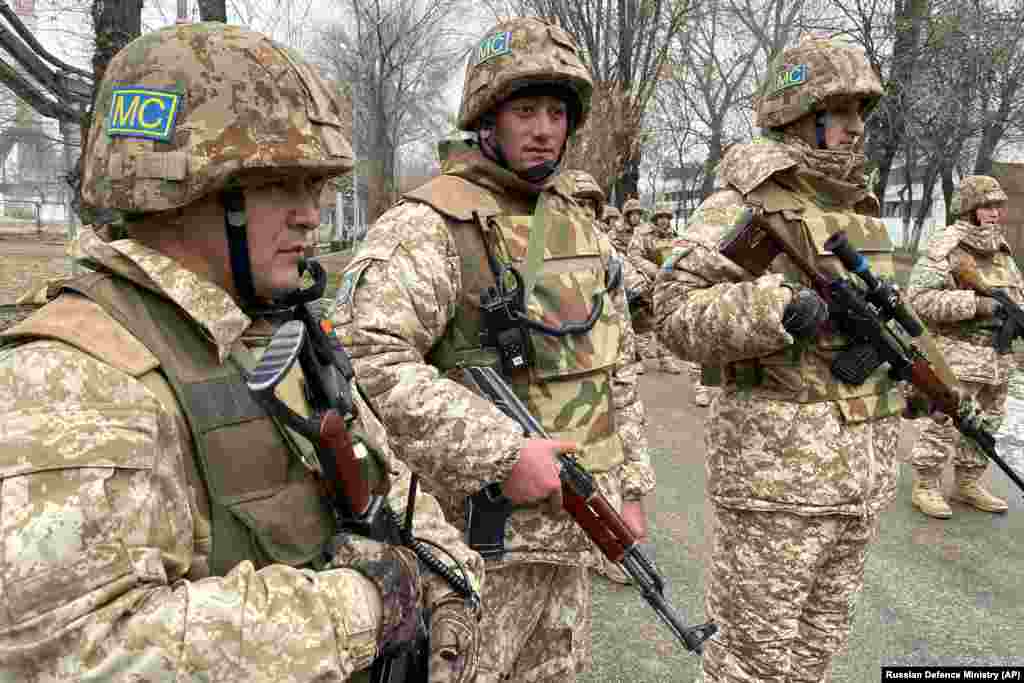
Belarusian CSTO peacekeepers in Almaty during the official withdrawal ceremony from Kazakhstan on January 13. 
3/20 Belarusian CSTO peacekeepers in Almaty during the official withdrawal ceremony from Kazakhstan on January 13. 
Scenes of foreign troops and fire damage in Almaty, one week after the massive unrest that swept Kazakhstan, sparked by a hike in gas prices.
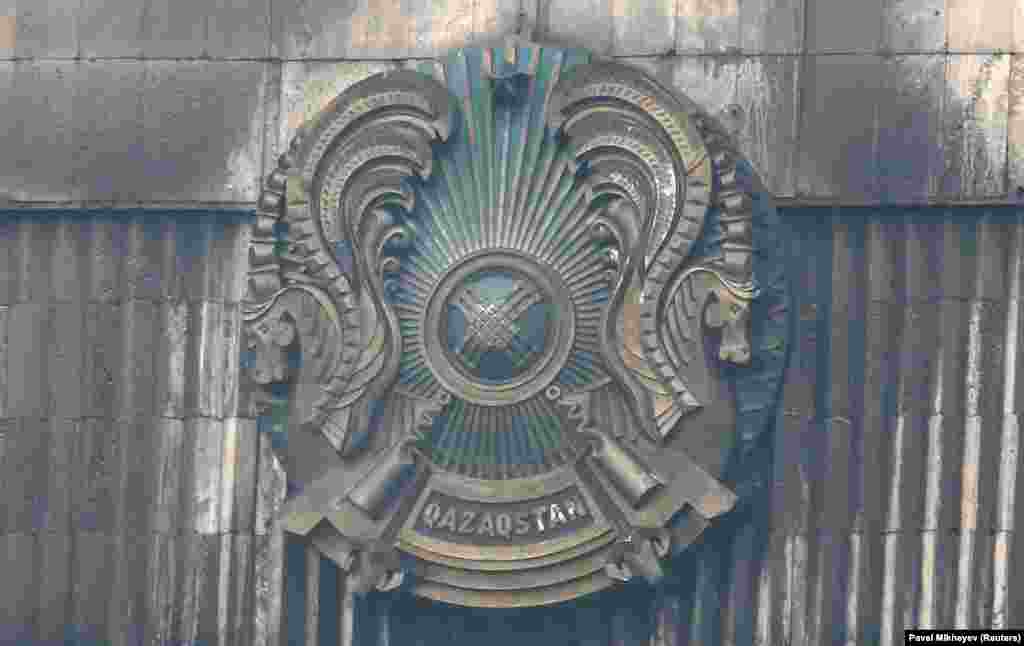
The fire-damaged Kazakh national emblem on Almaty's city hall on January 11. 
4/20 The fire-damaged Kazakh national emblem on Almaty's city hall on January 11. 
Scenes of foreign troops and fire damage in Almaty, one week after the massive unrest that swept Kazakhstan, sparked by a hike in gas prices.
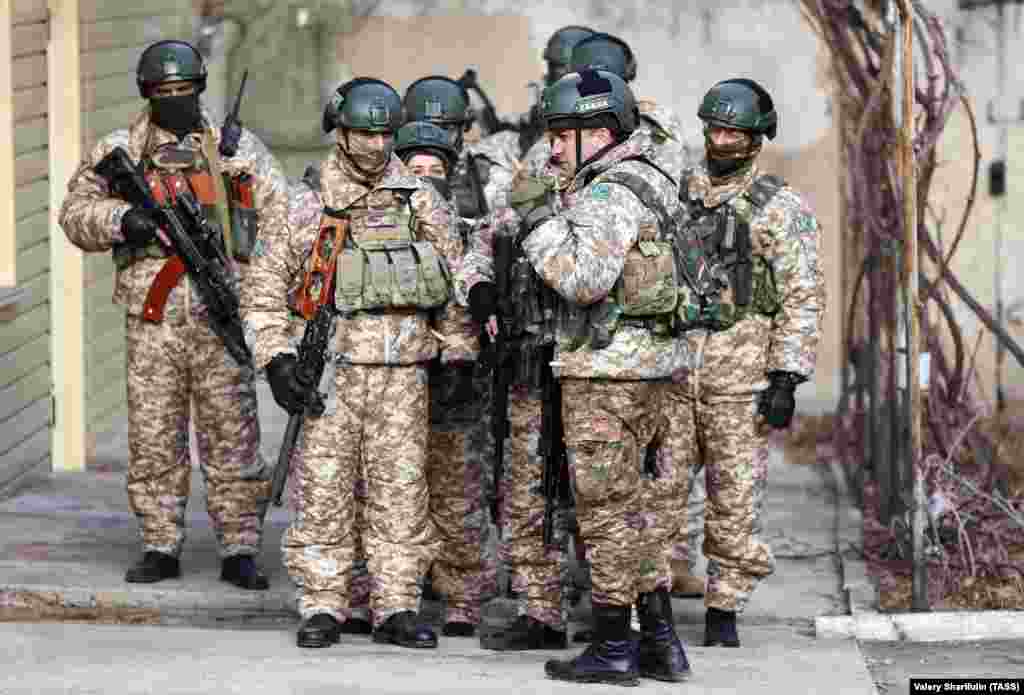
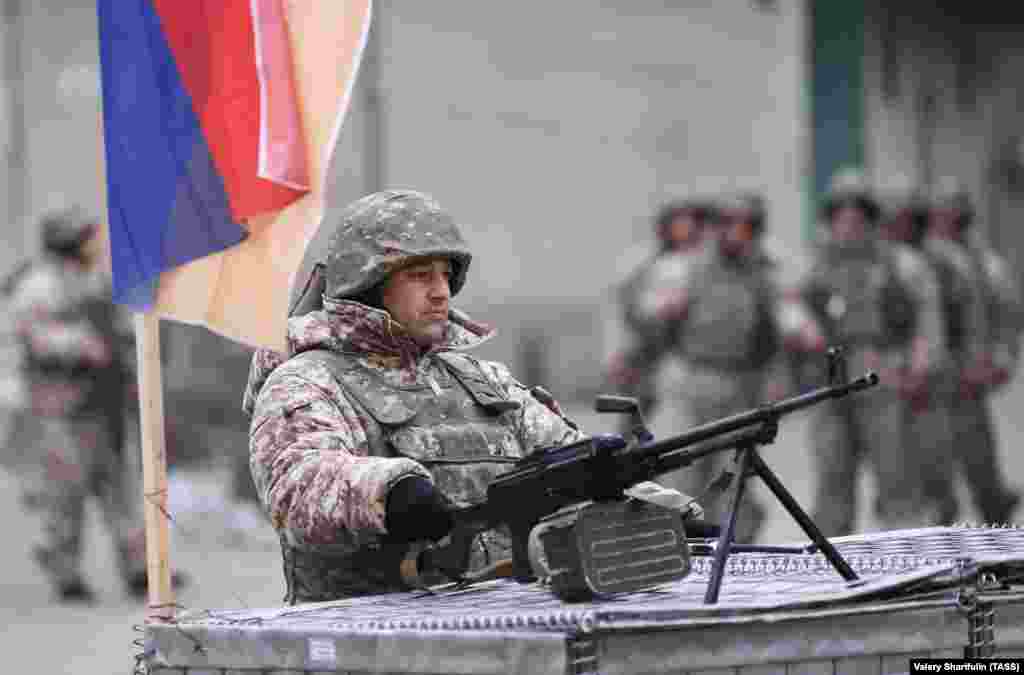
Armenian CSTO peacekeepers guarding a water-pumping facility in Almaty on January 12. 
5/20 Armenian CSTO peacekeepers guarding a water-pumping facility in Almaty on January 12. 
Scenes of foreign troops and fire damage in Almaty, one week after the massive unrest that swept Kazakhstan, sparked by a hike in gas prices.
Blood inside a bullet-riddled car in Almaty on January 10. 
6/20 Blood inside a bullet-riddled car in Almaty on January 10. 
Scenes of foreign troops and fire damage in Almaty, one week after the massive unrest that swept Kazakhstan, sparked by a hike in gas prices.
Tajik CSTO peacekeepers at a power plant at an unspecified location on January 10. 
7/20 Tajik CSTO peacekeepers at a power plant at an unspecified location on January 10. 
Scenes of foreign troops and fire damage in Almaty, one week after the massive unrest that swept Kazakhstan, sparked by a hike in gas prices.
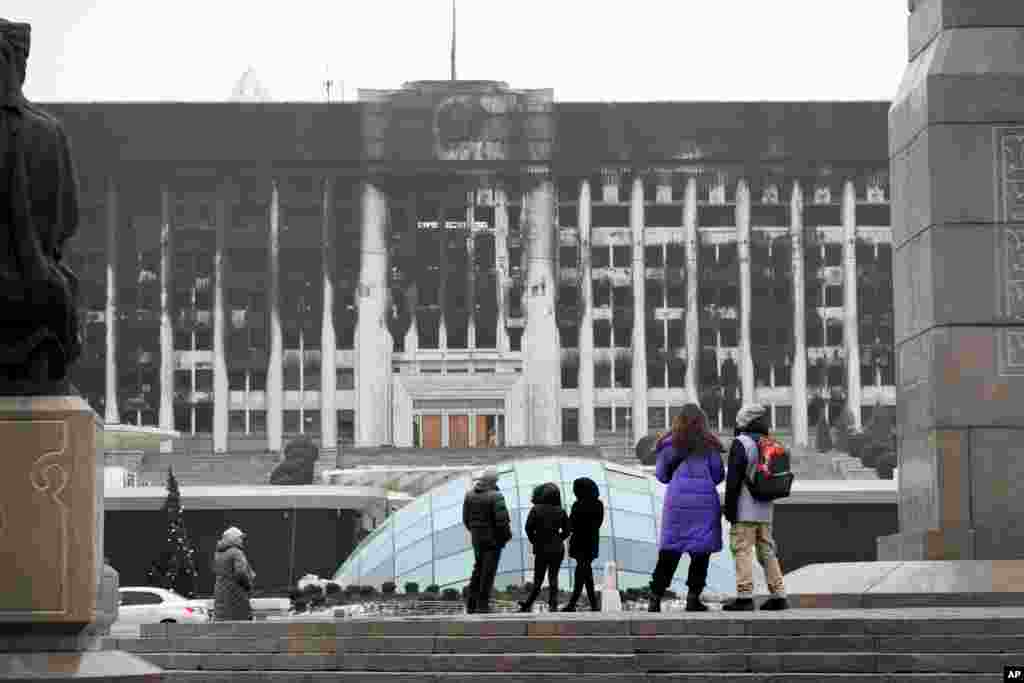
Locals look at the charred city hall building in Almaty's central square on January 11. 
8/20 Locals look at the charred city hall building in Almaty's central square on January 11. 
Scenes of foreign troops and fire damage in Almaty, one week after the massive unrest that swept Kazakhstan, sparked by a hike in gas prices.
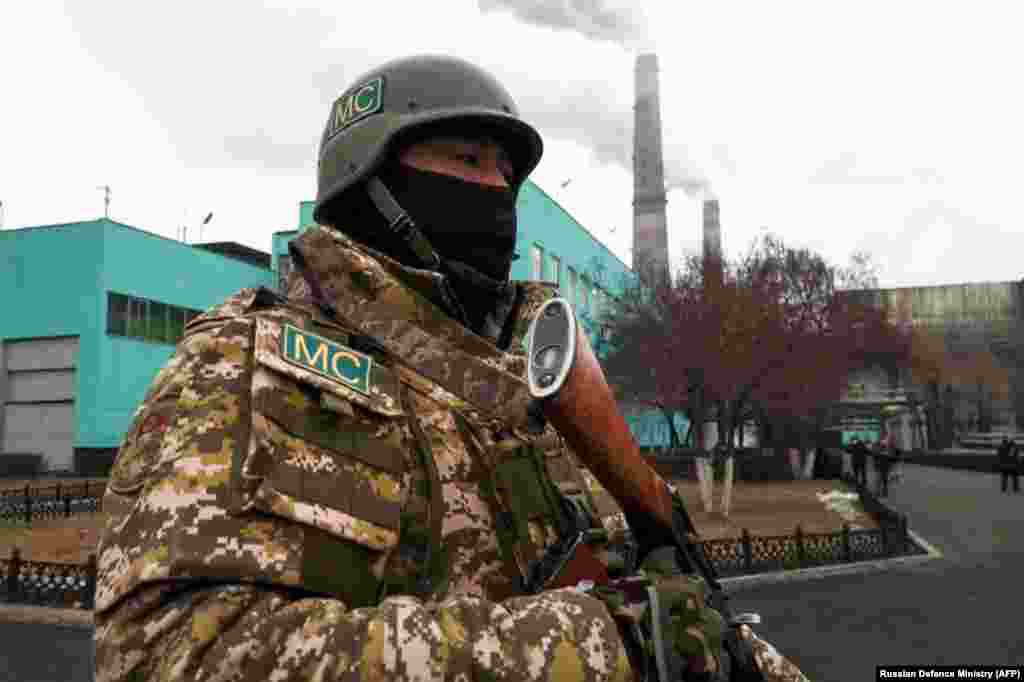
A Kyrgyz CSTO peacekeeper standing guard outside a power plant in Almaty on January 11.
9/20 A Kyrgyz CSTO peacekeeper standing guard outside a power plant in Almaty on January 11.
Scenes of foreign troops and fire damage in Almaty, one week after the massive unrest that swept Kazakhstan, sparked by a hike in gas prices.
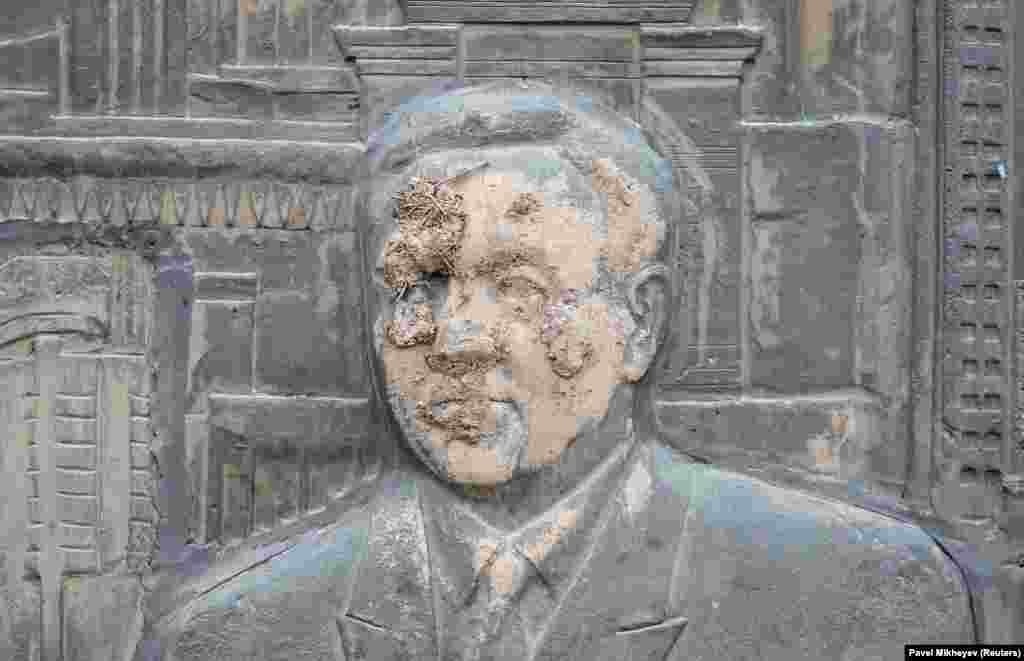
A detail of a public monument in Almaty depicting Kazakhstan's first president, Nursultan Nazarbaev, which was smeared with mud during the recent protests. 
10/20 A detail of a public monument in Almaty depicting Kazakhstan's first president, Nursultan Nazarbaev, which was smeared with mud during the recent protests. 
Scenes of foreign troops and fire damage in Almaty, one week after the massive unrest that swept Kazakhstan, sparked by a hike in gas prices.
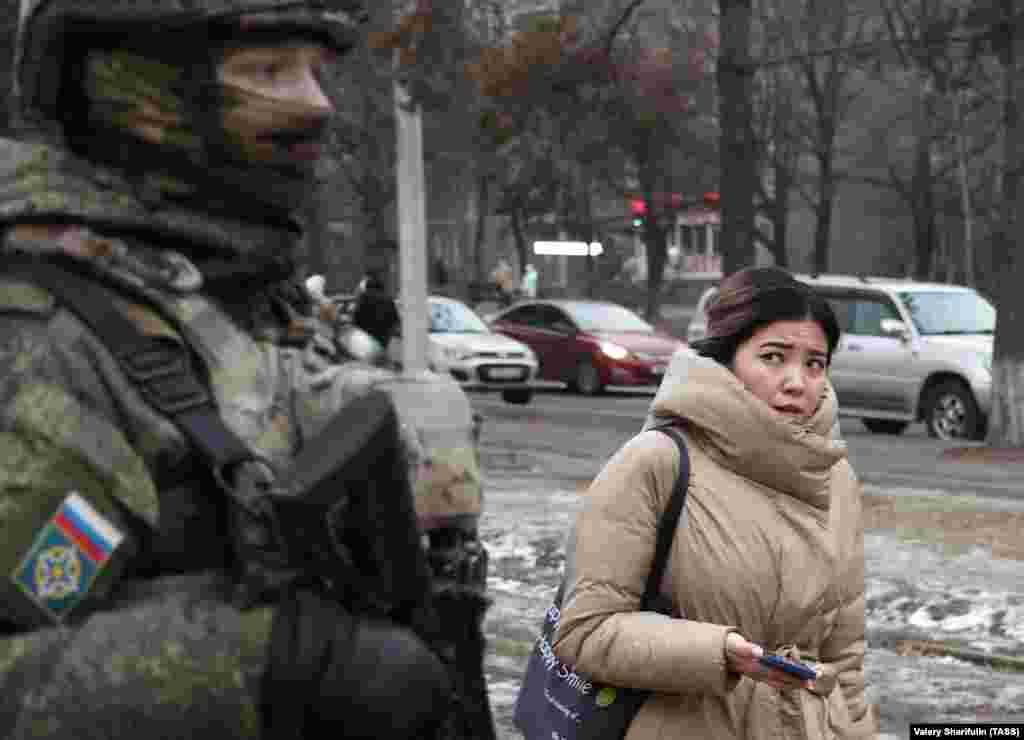
A woman glances at a Russian CSTO peacekeeper in Almaty on January 11. 
11/20 A woman glances at a Russian CSTO peacekeeper in Almaty on January 11. 
Scenes of foreign troops and fire damage in Almaty, one week after the massive unrest that swept Kazakhstan, sparked by a hike in gas prices.
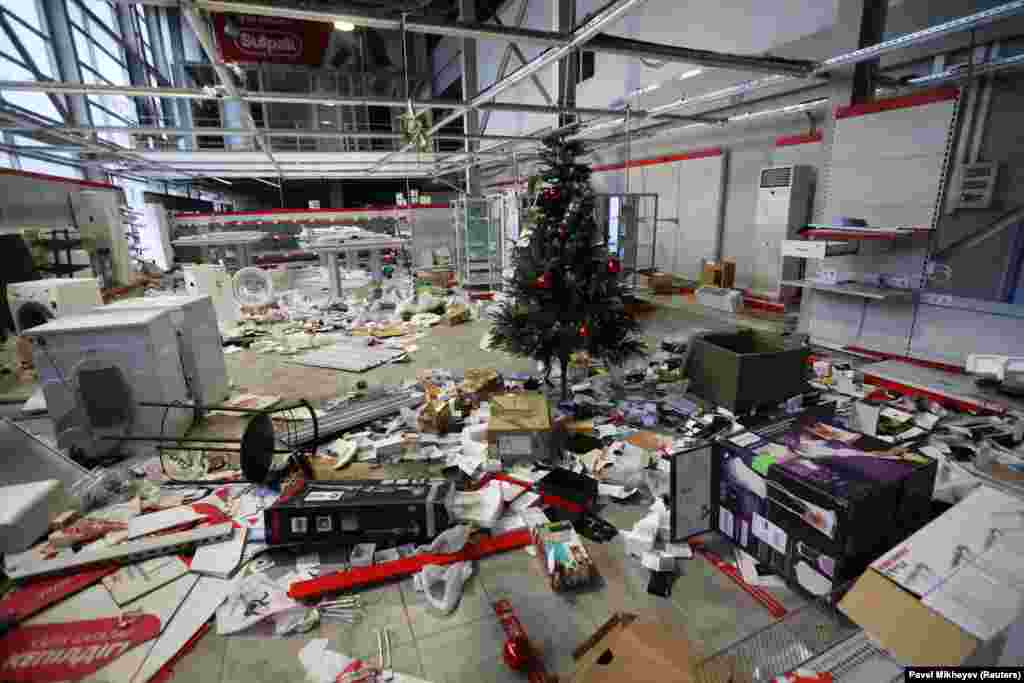
An electronics store that was looted during the unrest, photographed on January 9. 
12/20 An electronics store that was looted during the unrest, photographed on January 9. 
Scenes of foreign troops and fire damage in Almaty, one week after the massive unrest that swept Kazakhstan, sparked by a hike in gas prices.
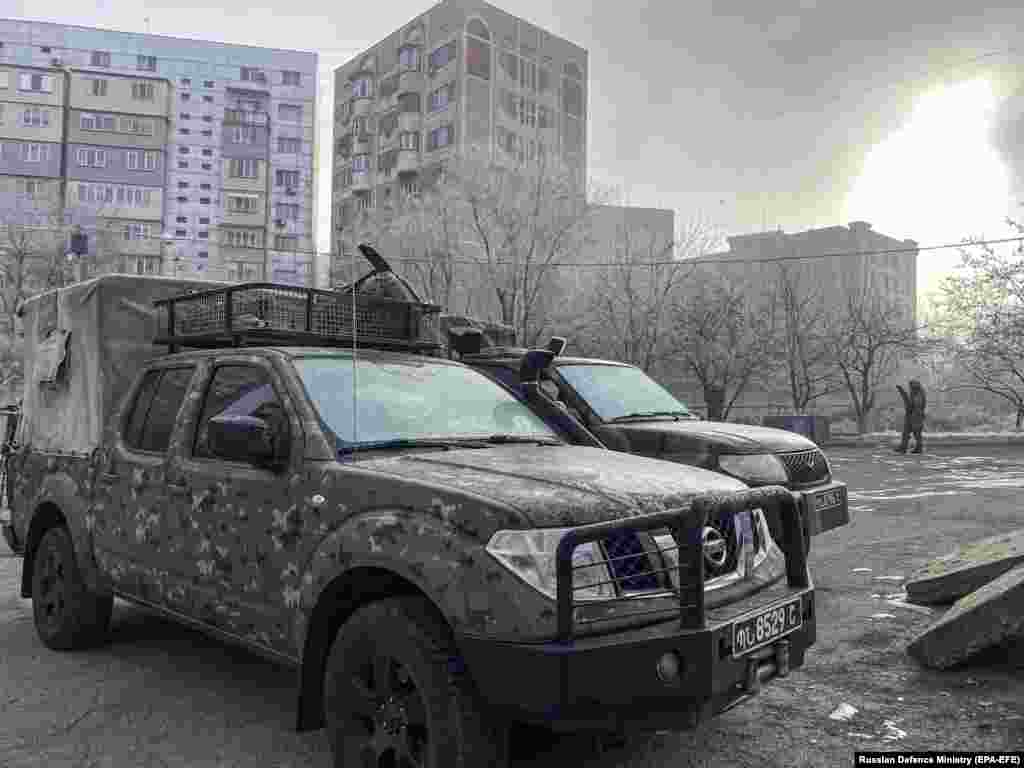
Armenian military vehicles photographed in Almaty on January 12. 
13/20 Armenian military vehicles photographed in Almaty on January 12. 
Scenes of foreign troops and fire damage in Almaty, one week after the massive unrest that swept Kazakhstan, sparked by a hike in gas prices.
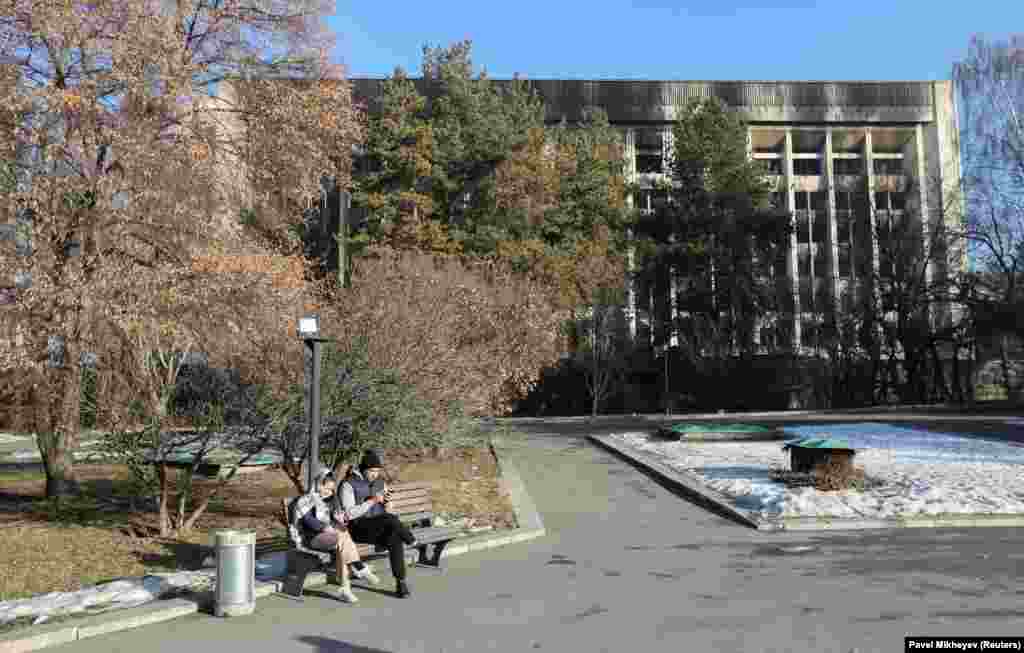
Two people browse on their phones in front of Almaty's charred city hall on January 12. 
14/20 Two people browse on their phones in front of Almaty's charred city hall on January 12. 
Scenes of foreign troops and fire damage in Almaty, one week after the massive unrest that swept Kazakhstan, sparked by a hike in gas prices.
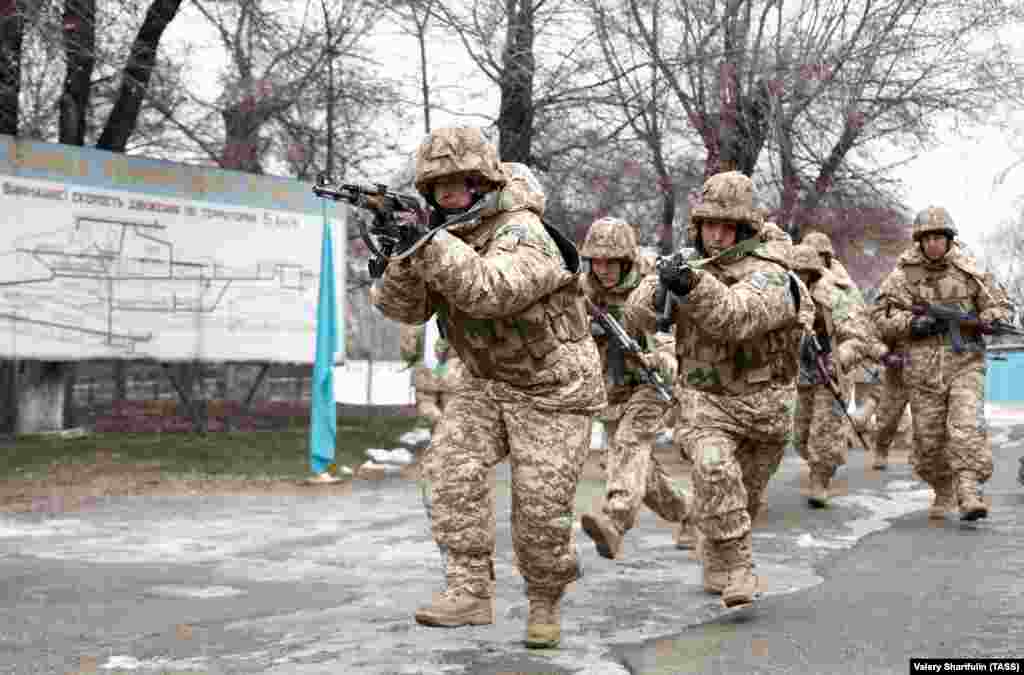
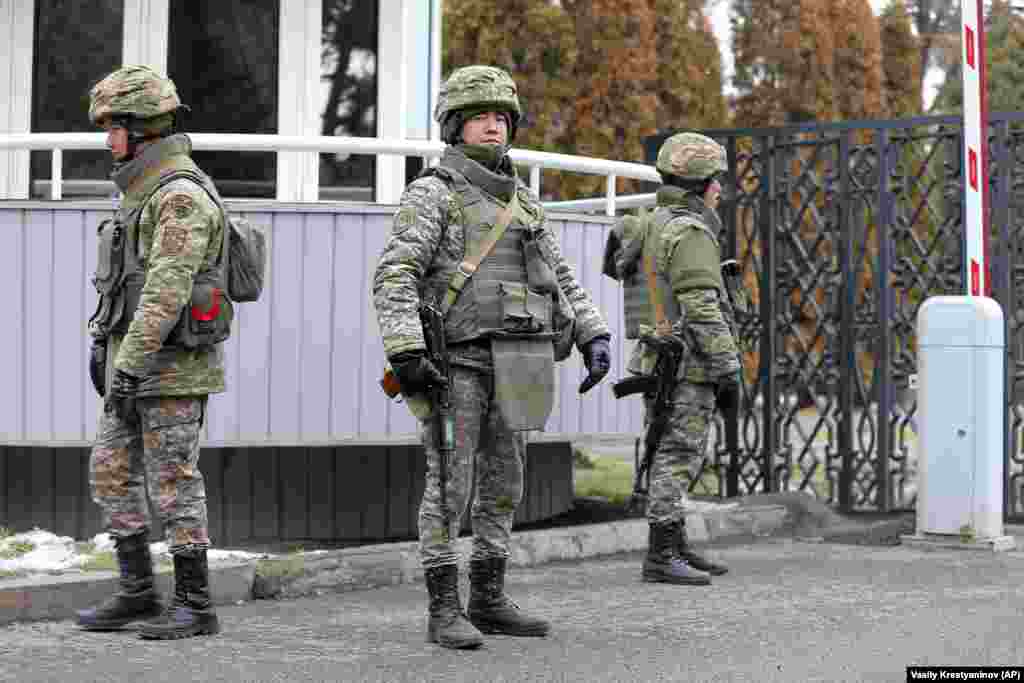
Kazakh troops guard an airport outside Almaty on January 11. 
15/20 Kazakh troops guard an airport outside Almaty on January 11. 
Scenes of foreign troops and fire damage in Almaty, one week after the massive unrest that swept Kazakhstan, sparked by a hike in gas prices.
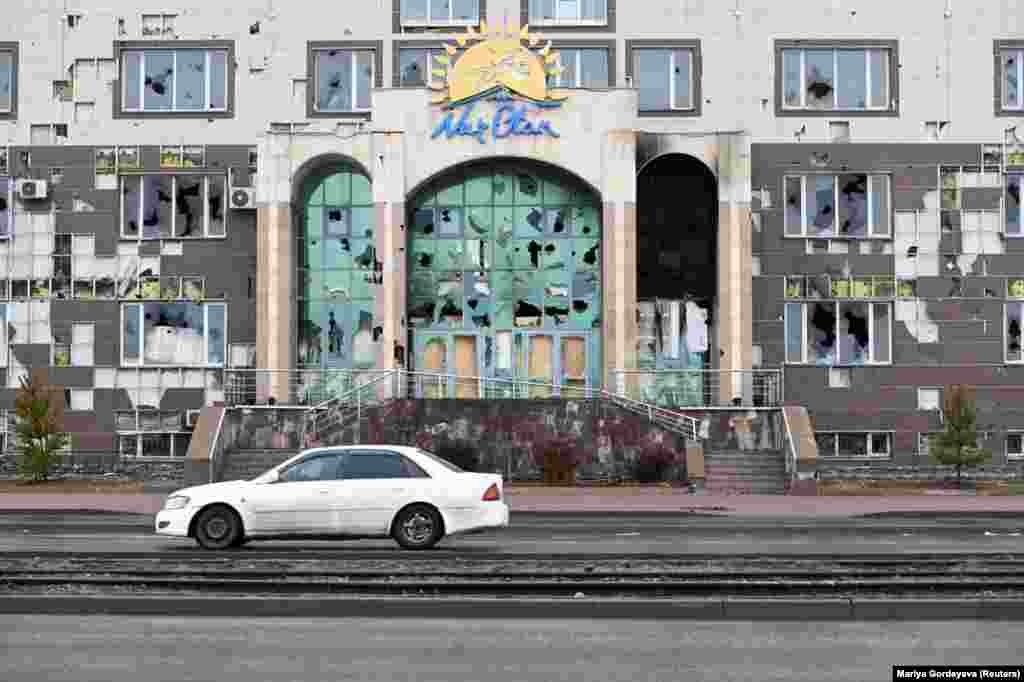
The badly damaged Almaty headquarters of Kazakhstan's ruling Nur Otan party office. The photo was made on January 8 but released by Reuters on January 12.
16/20 The badly damaged Almaty headquarters of Kazakhstan's ruling Nur Otan party office. The photo was made on January 8 but released by Reuters on January 12.
Scenes of foreign troops and fire damage in Almaty, one week after the massive unrest that swept Kazakhstan, sparked by a hike in gas prices.
Tajik CSTO troops guard an unspecified location in Almaty on January 11. 
17/20 Tajik CSTO troops guard an unspecified location in Almaty on January 11. 
Scenes of foreign troops and fire damage in Almaty, one week after the massive unrest that swept Kazakhstan, sparked by a hike in gas prices.
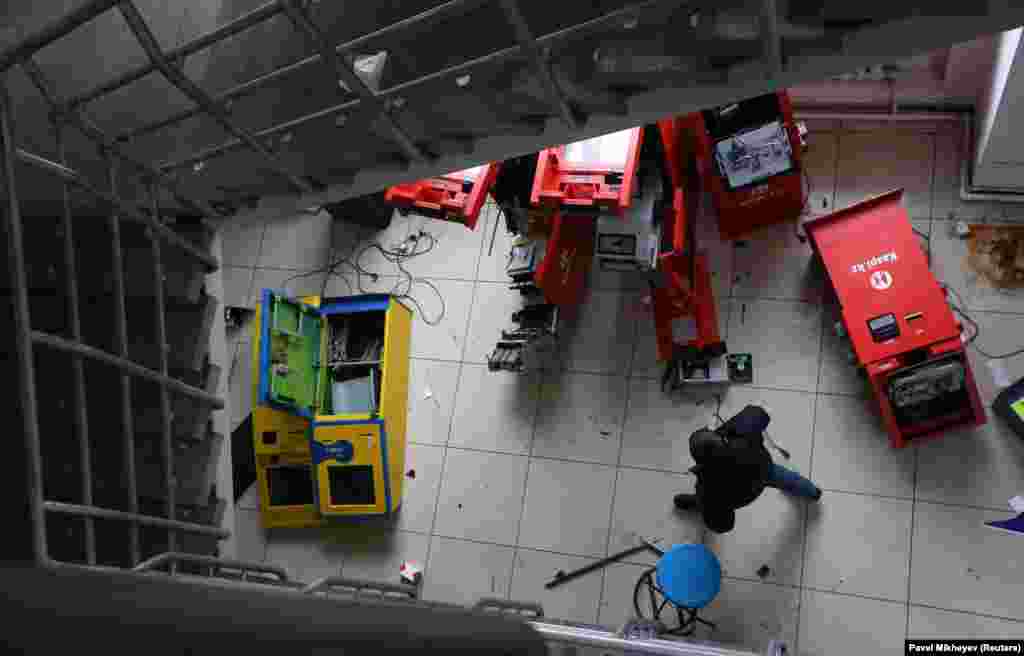
Damaged ATM machines and payment kiosks in Almaty on January 9. 
18/20 Damaged ATM machines and payment kiosks in Almaty on January 9. 
Scenes of foreign troops and fire damage in Almaty, one week after the massive unrest that swept Kazakhstan, sparked by a hike in gas prices.
Armenian CSTO peacekeepers stationed outside a bakery in Almaty on January 11. 
19/20 Armenian CSTO peacekeepers stationed outside a bakery in Almaty on January 11. 
Scenes of foreign troops and fire damage in Almaty, one week after the massive unrest that swept Kazakhstan, sparked by a hike in gas prices.
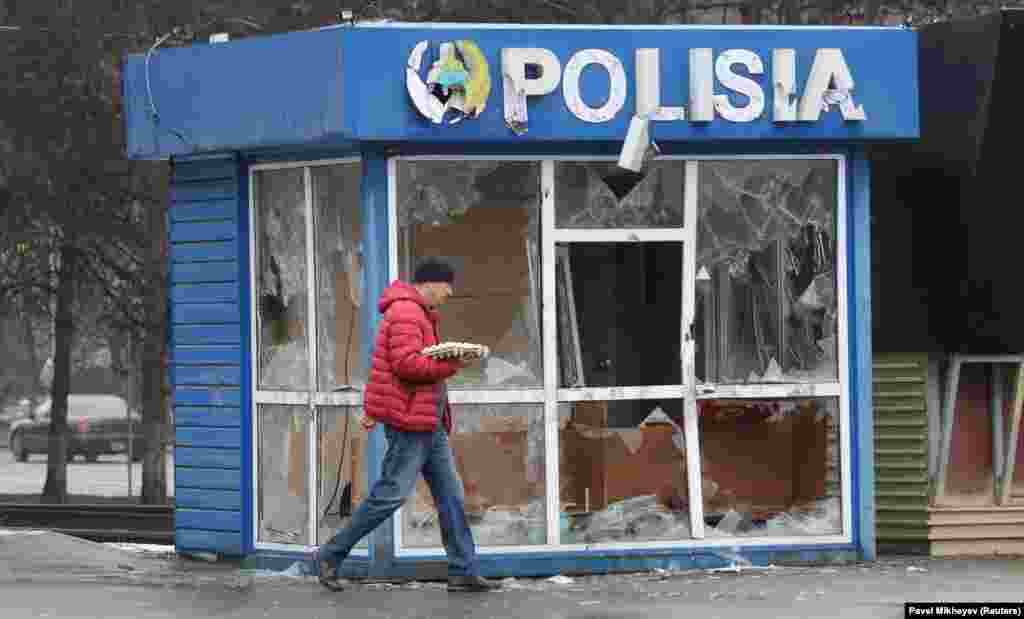
A heavily damaged police kiosk in Almaty on January 8. 
20/20 A heavily damaged police kiosk in Almaty on January 8. 
Scenes of foreign troops and fire damage in Almaty, one week after the massive unrest that swept Kazakhstan, sparked by a hike in gas prices.
Previous slide
Next slide

On January 15, authorities said they had detained a deputy energy minister and several other officials who they believe were responsible for the "unjustified" fuel increase that led to the protests.

In related news, the Russian Defense Ministry announced that the Russian troops who had deployed to Kazakhstan during the recent unrest have returned home. The troops, which were requested by Toqaev, were part of a force sent by the Collective Treaty Security Organization, a Russia-led alliance of six former Soviet states.

More than 2,000 troops in total were sent to Kazakhstan, mainly Russian soldiers, but also small contingencies from other member states Belarus, Tajikistan, Kyrgyzstan, and Armenia.

The Russian Defense Ministry said on January 15 that all of its planes carrying troops had returned. It was not clear whether troops from other alliance countries remain in Kazakhstan.

With reporting by Reuters
  • 16x9 Image

    RFE/RL's Kazakh Service

    RFE/RL's Kazakh Service offers informed and accurate reporting in the Kazakh and Russian languages about issues that matter in Kazakhstan, while providing a dynamic platform for audience engagement and the free exchange of news and ideas.

This item is part of
XS
SM
MD
LG