


Accessibility links

Breaking News

U.S., North Korean Officials Make Final Preparations For Trump-Kim Summit

Updated
U.S. President Donald Trump (left) and North Korean leader Kim Jong Un

U.S. President Donald Trump said June 11 that his summit with North Korean leader Kim Jong Un in Singapore could "work out very nicely" as officials from both countries met in Singapore to make final preparations for the event.

U.S. Secretary of State Mike Pompeo told a news conference on June 11 that preparations were moving quite rapidly and "and we anticipate that they will come to their logical conclusion even more quickly than we anticipated."

The discussions between Trump and Kim on June 12 are expected to focus on Pyongyang's nuclear weapons and efforts to denuclearize the Korean Peninsula.

North Korea's Road To The Nuclear Club

Open hostilities between the United States and North Korea date back to 1950, when war erupted on the Korean peninsula against the backdrop of a growing Cold War between the United States and the Soviet Union, which along with China came to North Korea's aid.
1/20 Open hostilities between the United States and North Korea date back to 1950, when war erupted on the Korean peninsula against the backdrop of a growing Cold War between the United States and the Soviet Union, which along with China came to North Korea's aid.
U.S. President Donald Trump and North Korean leader Kim Jong Un were convening in Singapore for a historic summit to discuss security disputes, Pyongyang's nuclear-weapons program, and the six-decade-old division of the Korean Peninsula. So how did we get here?
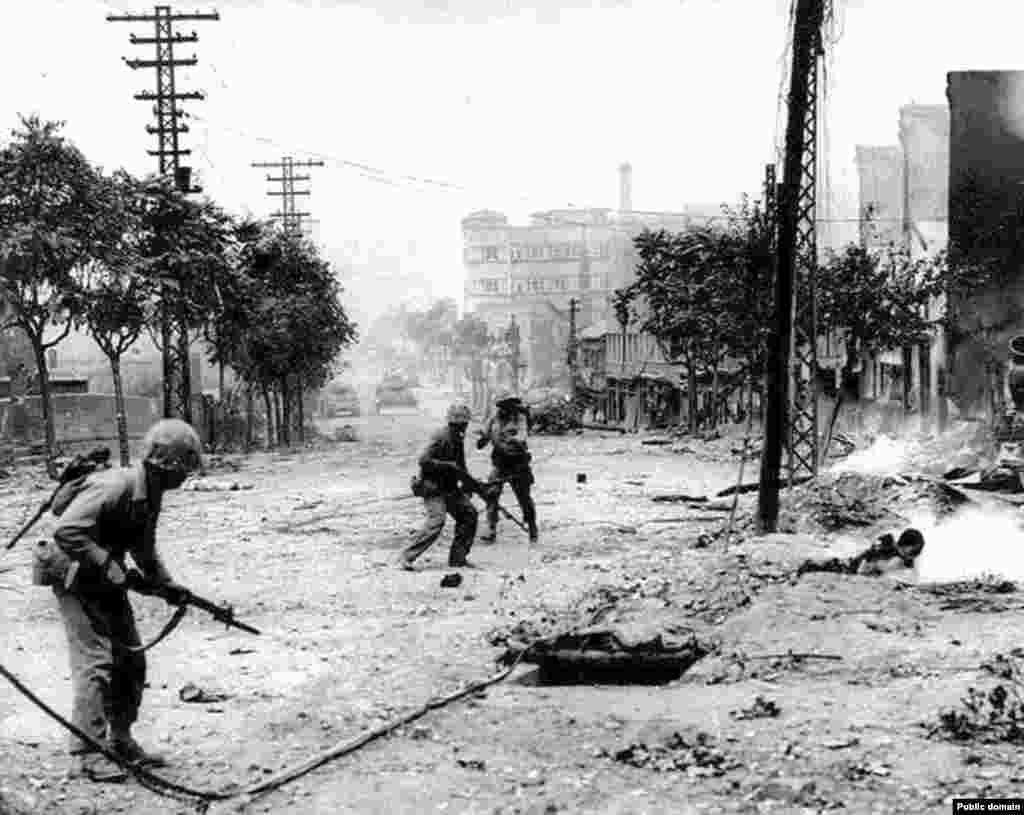
U.S. marines during a street-battle in Seoul in 1950. The conflict began after communist North Korea invaded the south, and U.S. forces led a UN-backed effort to support South Korea.
2/20 U.S. marines during a street-battle in Seoul in 1950. The conflict began after communist North Korea invaded the south, and U.S. forces led a UN-backed effort to support South Korea.
U.S. President Donald Trump and North Korean leader Kim Jong Un were convening in Singapore for a historic summit to discuss security disputes, Pyongyang's nuclear-weapons program, and the six-decade-old division of the Korean Peninsula. So how did we get here?
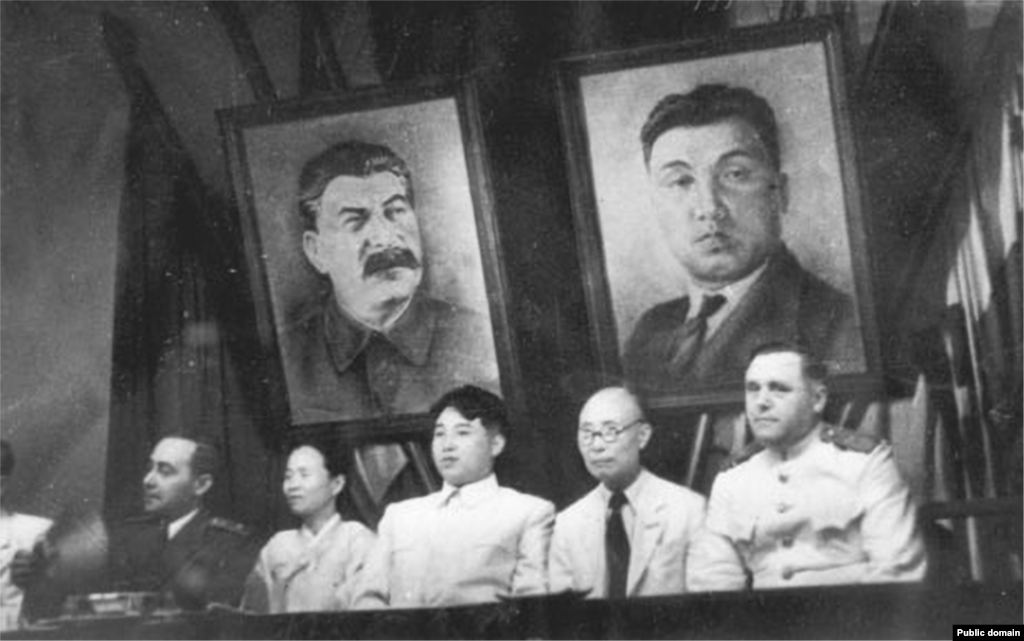
When the Korean War ended in a stalemate and with Soviet-backed Kim Il Sung (center) in charge, the “Hermit Kingdom” pursued a policy of “all-fortressization,” prioritizing military development over popular well-being.
3/20 When the Korean War ended in a stalemate and with Soviet-backed Kim Il Sung (center) in charge, the “Hermit Kingdom” pursued a policy of “all-fortressization,” prioritizing military development over popular well-being.
U.S. President Donald Trump and North Korean leader Kim Jong Un were convening in Singapore for a historic summit to discuss security disputes, Pyongyang's nuclear-weapons program, and the six-decade-old division of the Korean Peninsula. So how did we get here?
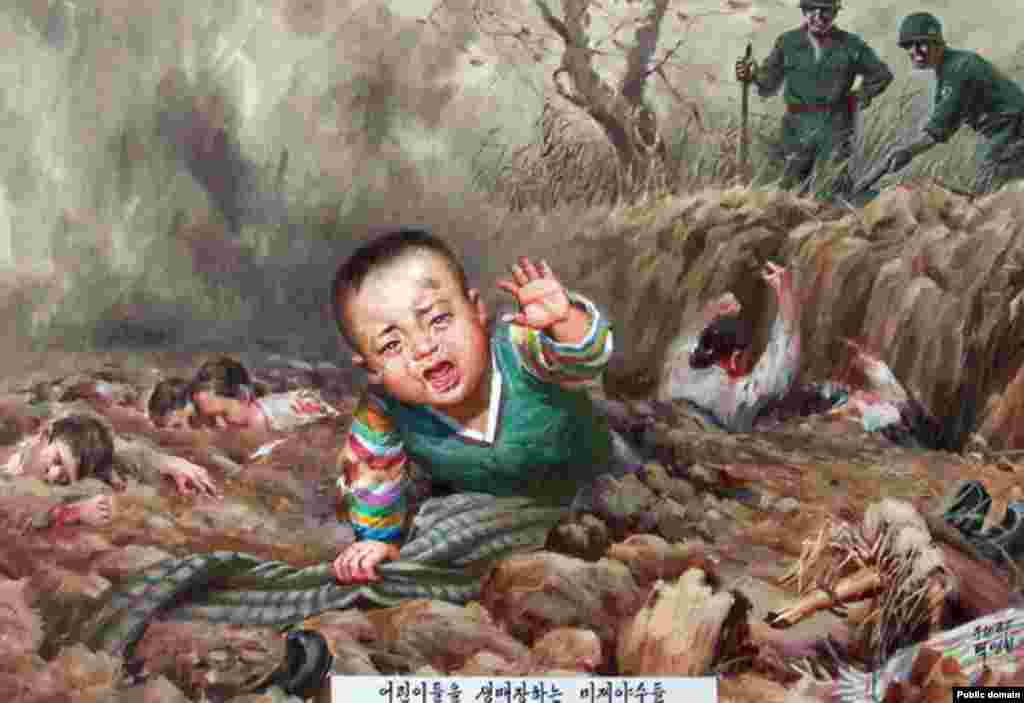
The North Korean regime justified the race toward military might by portraying (through propaganda like this painting) a brutish America as a lurking threat.
4/20 The North Korean regime justified the race toward military might by portraying (through propaganda like this painting) a brutish America as a lurking threat.
U.S. President Donald Trump and North Korean leader Kim Jong Un were convening in Singapore for a historic summit to discuss security disputes, Pyongyang's nuclear-weapons program, and the six-decade-old division of the Korean Peninsula. So how did we get here?
After the death of Kim Il Sung in 1994, his son Kim Jong Il (pictured, right) took over a regime that was a menace mostly to its own people. But the situation was about to become more dangerous.
5/20 After the death of Kim Il Sung in 1994, his son Kim Jong Il (pictured, right) took over a regime that was a menace mostly to its own people. But the situation was about to become more dangerous.
U.S. President Donald Trump and North Korean leader Kim Jong Un were convening in Singapore for a historic summit to discuss security disputes, Pyongyang's nuclear-weapons program, and the six-decade-old division of the Korean Peninsula. So how did we get here?
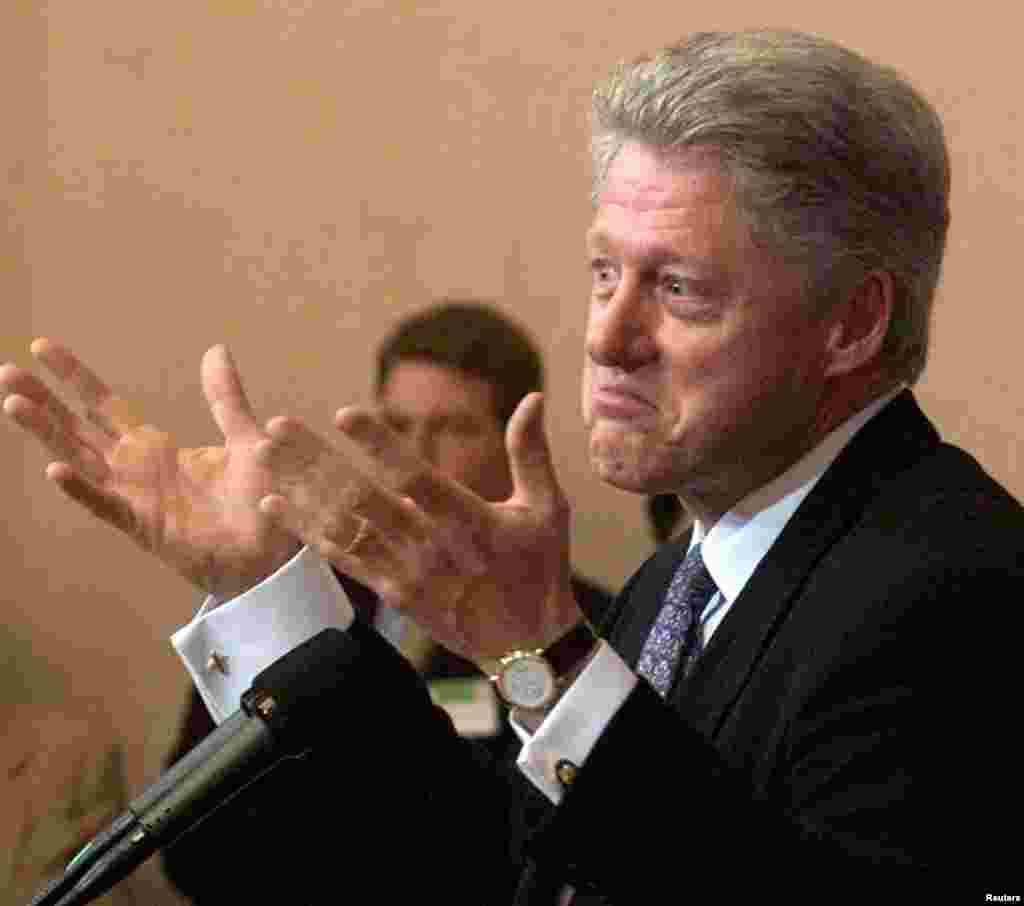
U.S. President Bill Clinton reacts to a question after discussing reports that North Korea had developed a secret underground nuclear complex.
6/20 U.S. President Bill Clinton reacts to a question after discussing reports that North Korea had developed a secret underground nuclear complex.
U.S. President Donald Trump and North Korean leader Kim Jong Un were convening in Singapore for a historic summit to discuss security disputes, Pyongyang's nuclear-weapons program, and the six-decade-old division of the Korean Peninsula. So how did we get here?
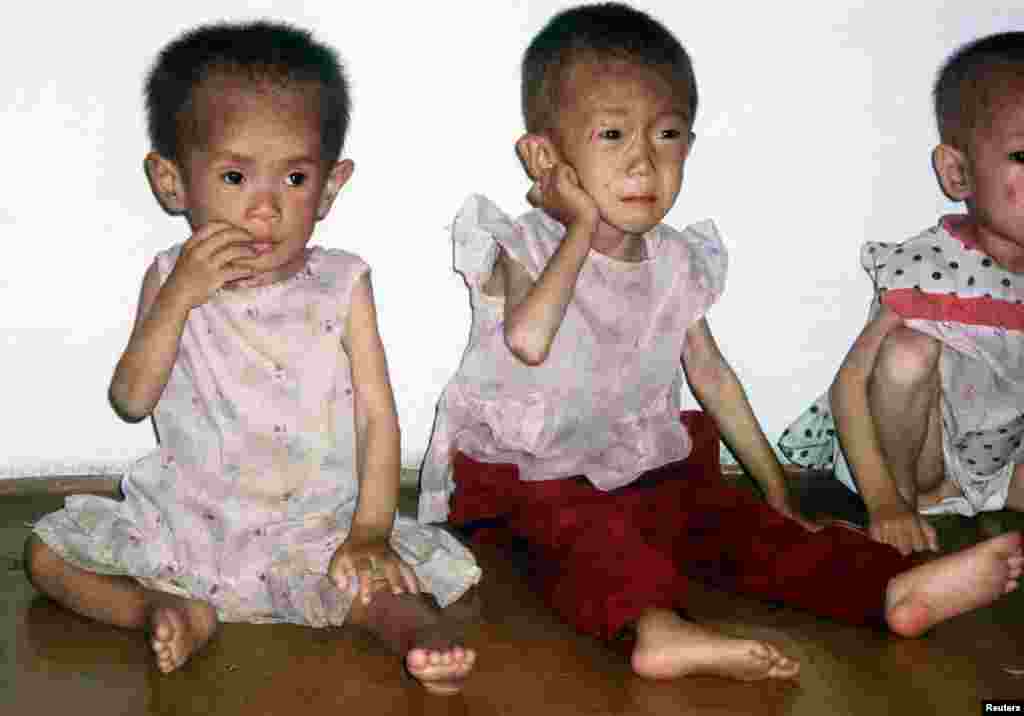
Throughout the '90s, even as famine racked the country, North Korea’s secret, and vastly expensive, nuclear-weapons program was developing apace.
7/20 Throughout the '90s, even as famine racked the country, North Korea’s secret, and vastly expensive, nuclear-weapons program was developing apace.
U.S. President Donald Trump and North Korean leader Kim Jong Un were convening in Singapore for a historic summit to discuss security disputes, Pyongyang's nuclear-weapons program, and the six-decade-old division of the Korean Peninsula. So how did we get here?
Then, in 2006, North Korea gave China 20 minutes' warning before detonating its first underground nuclear weapon.
8/20 Then, in 2006, North Korea gave China 20 minutes' warning before detonating its first underground nuclear weapon.
U.S. President Donald Trump and North Korean leader Kim Jong Un were convening in Singapore for a historic summit to discuss security disputes, Pyongyang's nuclear-weapons program, and the six-decade-old division of the Korean Peninsula. So how did we get here?
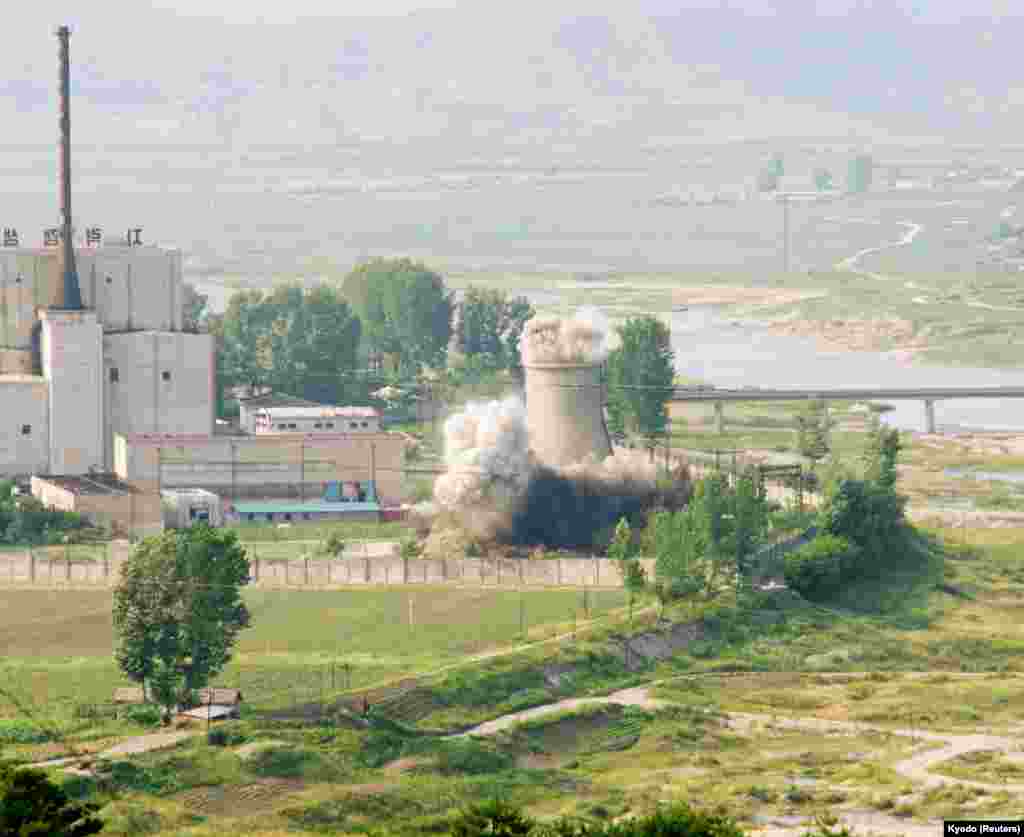
Despite negotiating several acts of apparent “good faith,” like this demolition of a cooling tower at a plutonium-producing reactor in 2008, the international community seemed unable to stop North Korea’s development of nuclear weapons and the ballistic missiles needed to carry them.
9/20 Despite negotiating several acts of apparent “good faith,” like this demolition of a cooling tower at a plutonium-producing reactor in 2008, the international community seemed unable to stop North Korea’s development of nuclear weapons and the ballistic missiles needed to carry them.
U.S. President Donald Trump and North Korean leader Kim Jong Un were convening in Singapore for a historic summit to discuss security disputes, Pyongyang's nuclear-weapons program, and the six-decade-old division of the Korean Peninsula. So how did we get here?
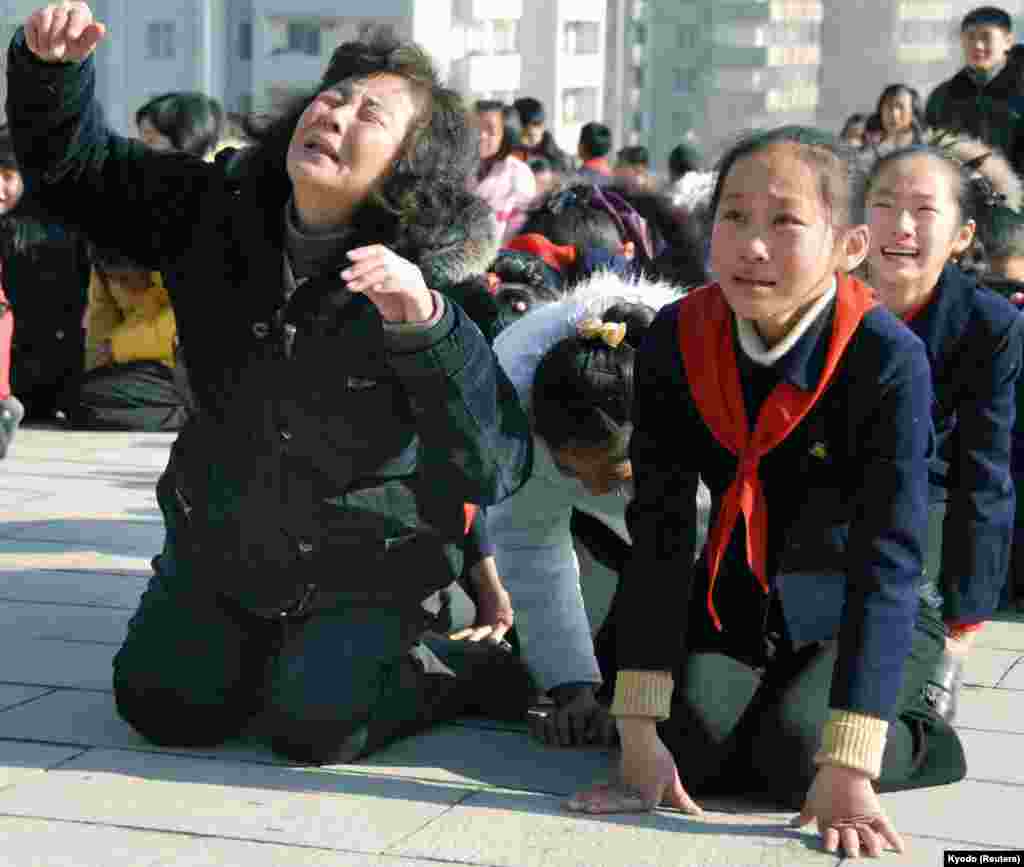
Kim Jong Il died in 2011...
10/20 Kim Jong Il died in 2011...
U.S. President Donald Trump and North Korean leader Kim Jong Un were convening in Singapore for a historic summit to discuss security disputes, Pyongyang's nuclear-weapons program, and the six-decade-old division of the Korean Peninsula. So how did we get here?
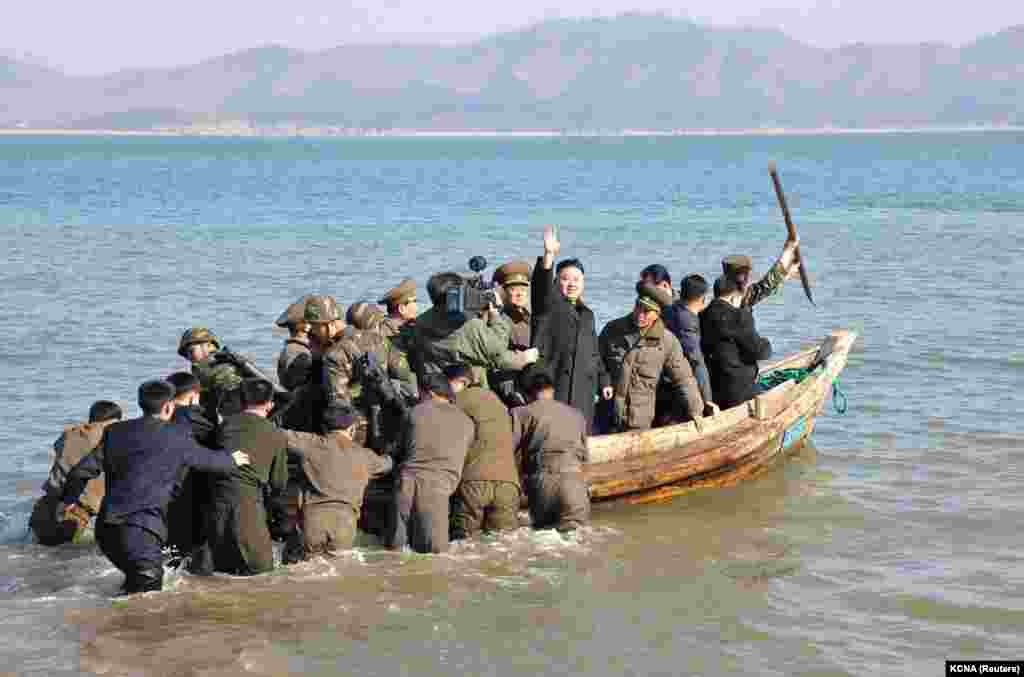
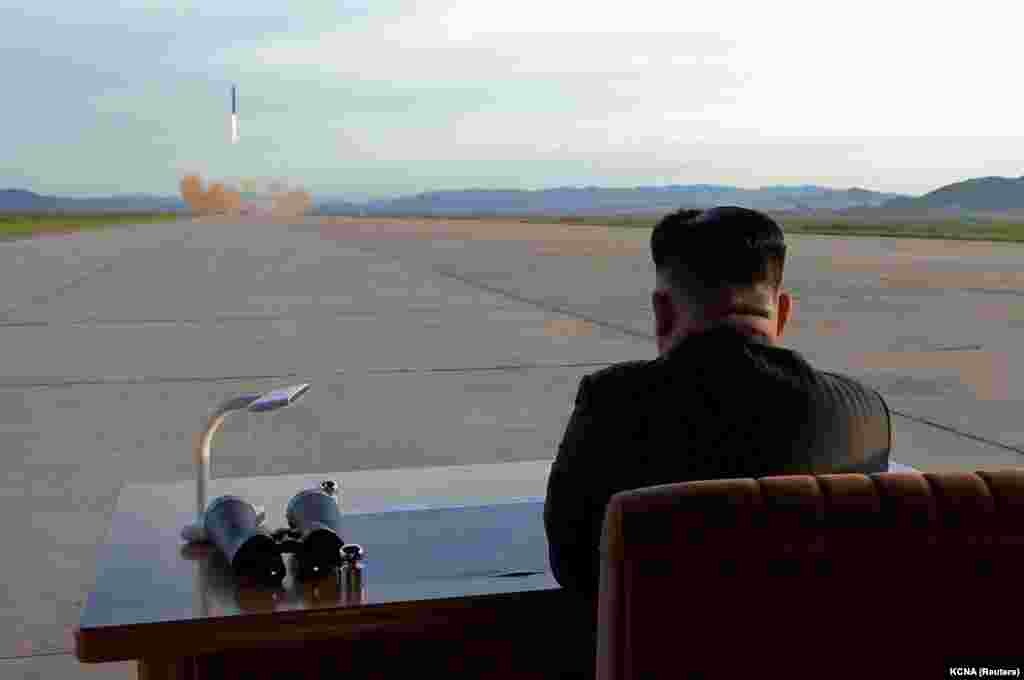
...but son and successor Kim Jong Un reportedly kept the communist country firmly on course for its goal of a long-range, nuclear-capable missile.
11/20 ...but son and successor Kim Jong Un reportedly kept the communist country firmly on course for its goal of a long-range, nuclear-capable missile.
U.S. President Donald Trump and North Korean leader Kim Jong Un were convening in Singapore for a historic summit to discuss security disputes, Pyongyang's nuclear-weapons program, and the six-decade-old division of the Korean Peninsula. So how did we get here?
In 2017, a flurry of successful missile tests sparked the ire of new U.S. President Donald Trump.
12/20 In 2017, a flurry of successful missile tests sparked the ire of new U.S. President Donald Trump.
U.S. President Donald Trump and North Korean leader Kim Jong Un were convening in Singapore for a historic summit to discuss security disputes, Pyongyang's nuclear-weapons program, and the six-decade-old division of the Korean Peninsula. So how did we get here?
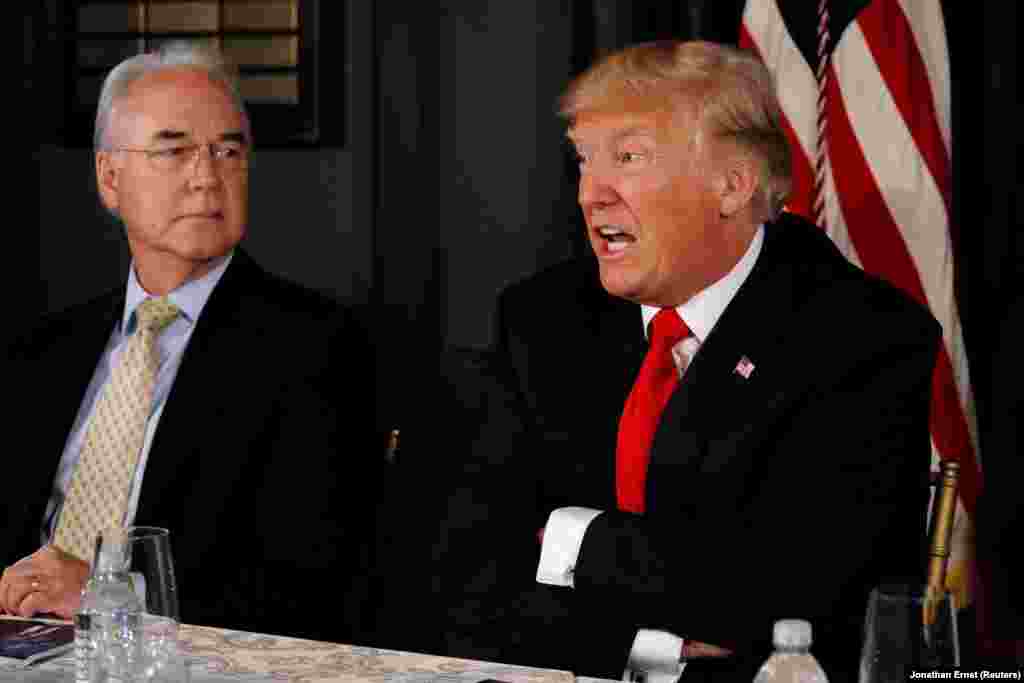
In August, Trump vowed "fire and fury like the world has never seen" if Kim continued to threaten the United States.
13/20 In August, Trump vowed "fire and fury like the world has never seen" if Kim continued to threaten the United States.
U.S. President Donald Trump and North Korean leader Kim Jong Un were convening in Singapore for a historic summit to discuss security disputes, Pyongyang's nuclear-weapons program, and the six-decade-old division of the Korean Peninsula. So how did we get here?
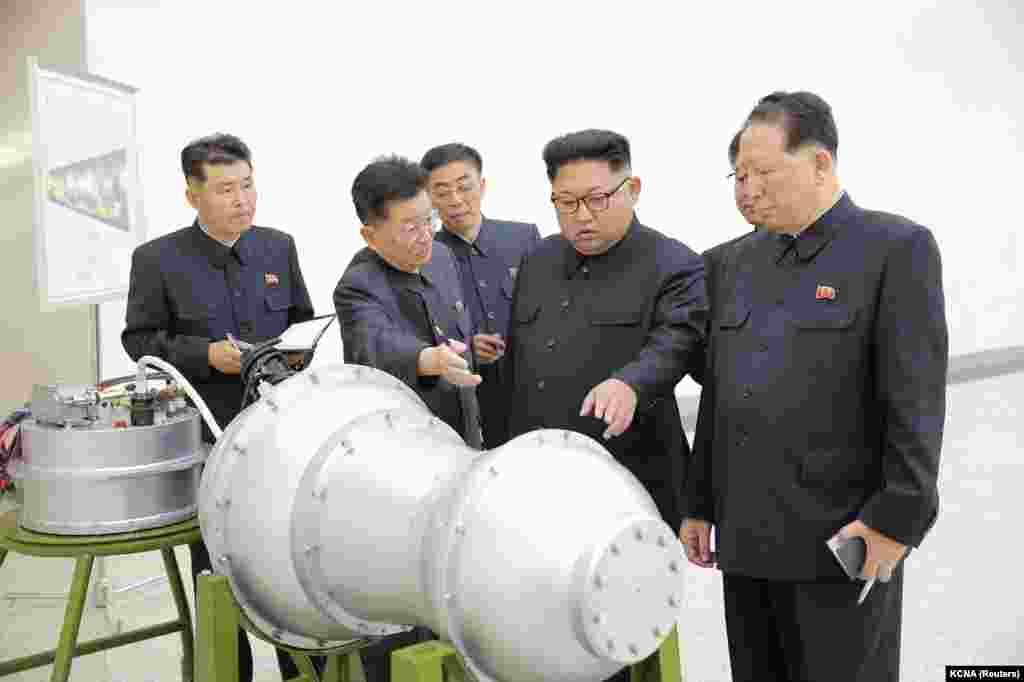
<p>Kim inspecting what North Korean media claimed was a hydrogen bomb small enough to be slotted into an intercontinental ballistic missile (ICBM). The North Korean leader doubled down, responding to Trump&#39;s challenge by threatening U.S. territory (Guam) with &ldquo;an enveloping fire.&rdquo;</p>
14/20

Kim inspecting what North Korean media claimed was a hydrogen bomb small enough to be slotted into an intercontinental ballistic missile (ICBM). The North Korean leader doubled down, responding to Trump's challenge by threatening U.S. territory (Guam) with “an enveloping fire.”

U.S. President Donald Trump and North Korean leader Kim Jong Un were convening in Singapore for a historic summit to discuss security disputes, Pyongyang's nuclear-weapons program, and the six-decade-old division of the Korean Peninsula. So how did we get here?
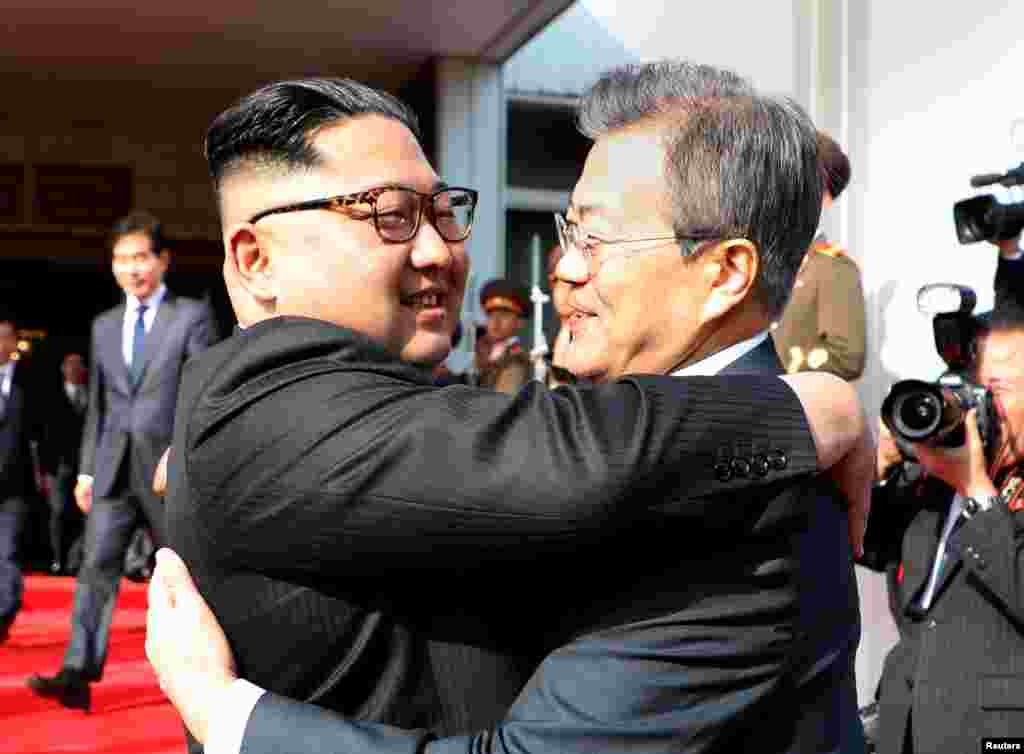
Then, in moves that took the world by surprise, Kim met with South Korean President Moon Jae-in...
15/20 Then, in moves that took the world by surprise, Kim met with South Korean President Moon Jae-in...
U.S. President Donald Trump and North Korean leader Kim Jong Un were convening in Singapore for a historic summit to discuss security disputes, Pyongyang's nuclear-weapons program, and the six-decade-old division of the Korean Peninsula. So how did we get here?
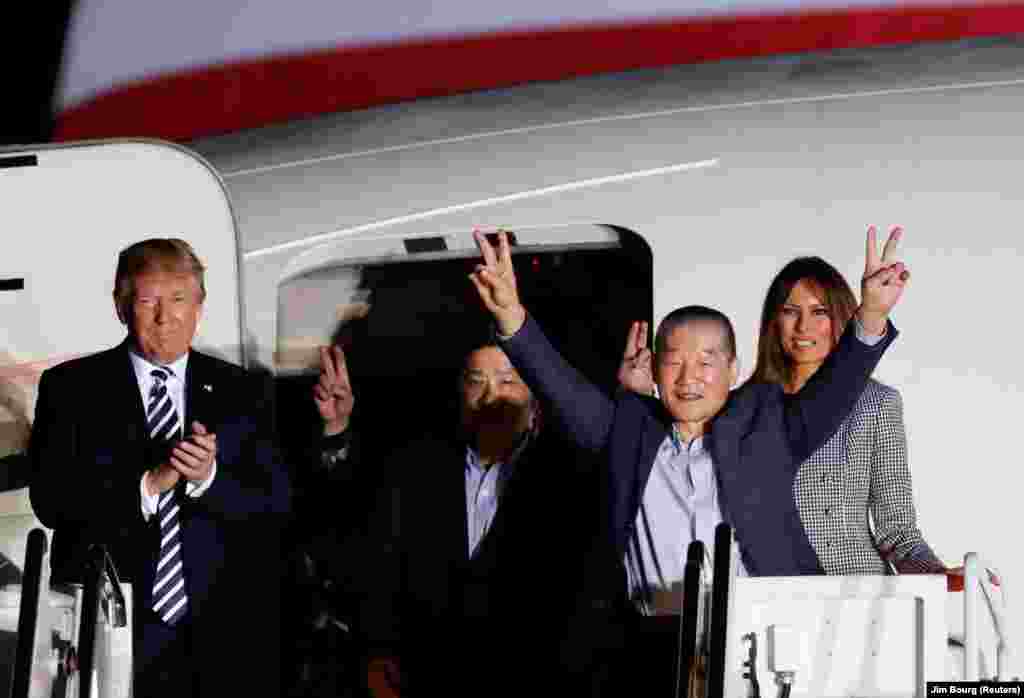
...released three U.S. prisoners...
16/20 ...released three U.S. prisoners...
U.S. President Donald Trump and North Korean leader Kim Jong Un were convening in Singapore for a historic summit to discuss security disputes, Pyongyang's nuclear-weapons program, and the six-decade-old division of the Korean Peninsula. So how did we get here?
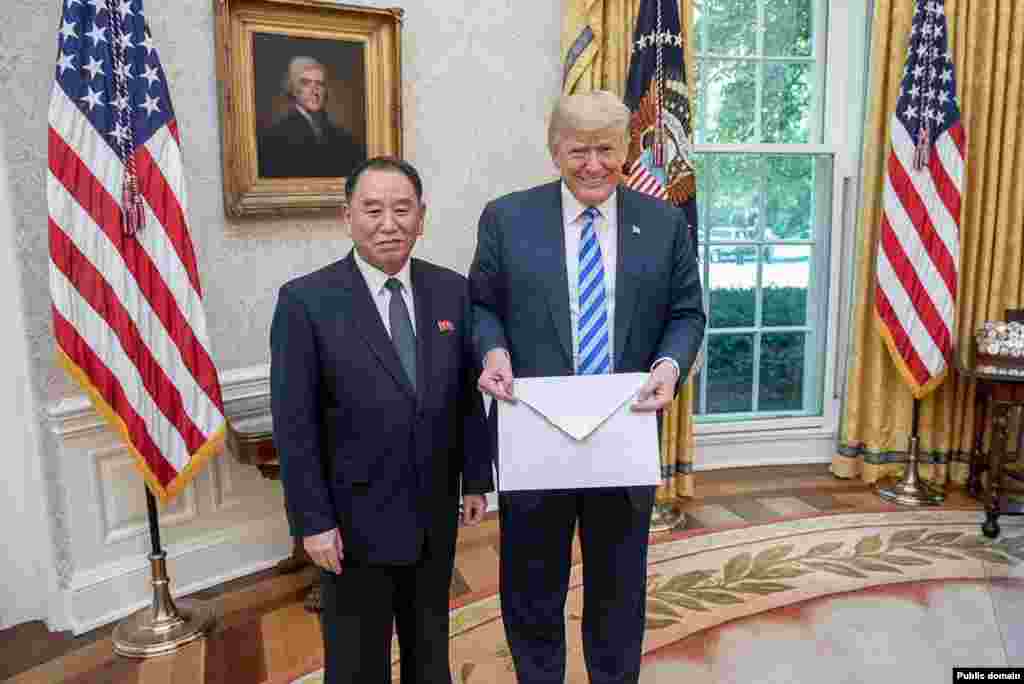
...extended an invitation (though an envoy) to meet with Trump...
17/20 ...extended an invitation (though an envoy) to meet with Trump...
U.S. President Donald Trump and North Korean leader Kim Jong Un were convening in Singapore for a historic summit to discuss security disputes, Pyongyang's nuclear-weapons program, and the six-decade-old division of the Korean Peninsula. So how did we get here?
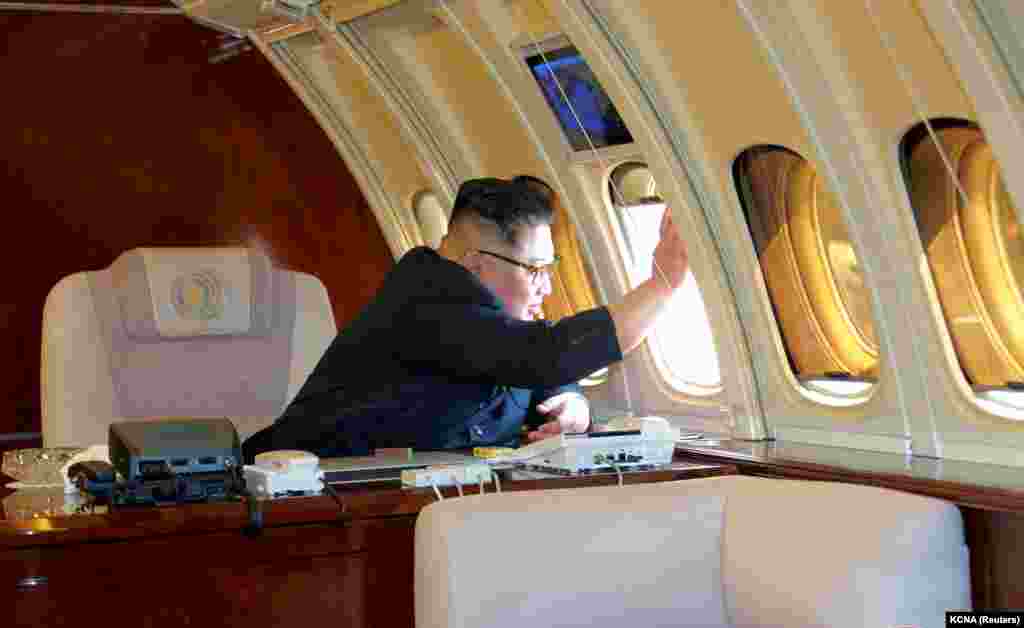
...and hopped on a plane to Singapore.
18/20 ...and hopped on a plane to Singapore.
U.S. President Donald Trump and North Korean leader Kim Jong Un were convening in Singapore for a historic summit to discuss security disputes, Pyongyang's nuclear-weapons program, and the six-decade-old division of the Korean Peninsula. So how did we get here?
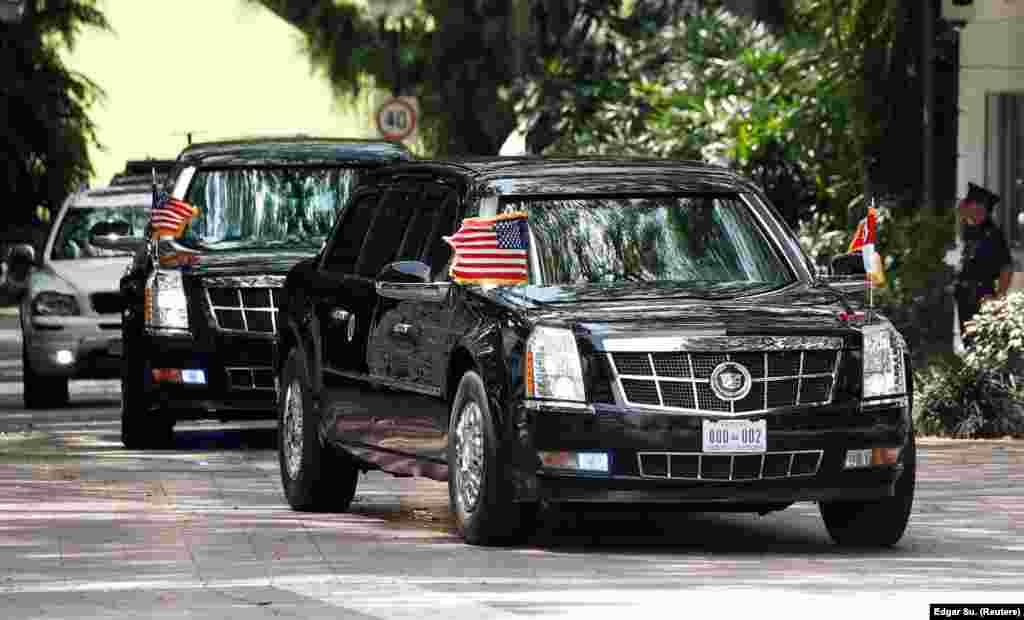
The U.S. president&#39;s motorcade rolling through central Singapore on June 11. Trump indicated the meeting might only be the start of a process to denuclearize the Korean Peninsula.
19/20 The U.S. president's motorcade rolling through central Singapore on June 11. Trump indicated the meeting might only be the start of a process to denuclearize the Korean Peninsula.
U.S. President Donald Trump and North Korean leader Kim Jong Un were convening in Singapore for a historic summit to discuss security disputes, Pyongyang's nuclear-weapons program, and the six-decade-old division of the Korean Peninsula. So how did we get here?
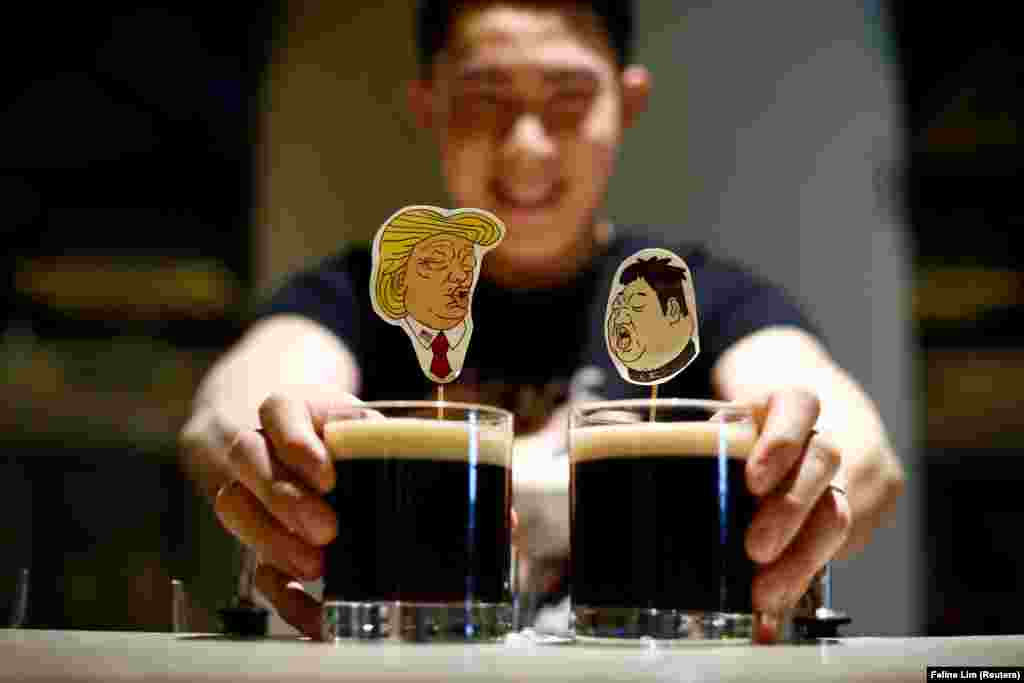
But most people hope the meeting will bring at least improved relations and de-escalation, or maybe -- as this Singapore bar-owner has called his new cocktail -- a bromance.
20/20 But most people hope the meeting will bring at least improved relations and de-escalation, or maybe -- as this Singapore bar-owner has called his new cocktail -- a bromance.
U.S. President Donald Trump and North Korean leader Kim Jong Un were convening in Singapore for a historic summit to discuss security disputes, Pyongyang's nuclear-weapons program, and the six-decade-old division of the Korean Peninsula. So how did we get here?
Previous slide
Next slide

The summit provides "an unprecedented opportunity to change the trajectory of our relationship and bring peace and prosperity" to North Korea, Pompeo said.

But Pompeo declined to indicate that a quick breakthrough was possible, saying instead that the summit should set the framework for "the hard work that will follow."

He said North Korea must achieve complete, verifiable, and irreversible denuclearization, adding that sanctions will not be lifted until that happened.

"If diplomacy does not move in the right direction...those measures will increase," Pompeo said.

Pompeo also said Washington would offer "different and unique" guarantees "to provide them sufficient certainty that they can be comfortable that denuclearization is not something that ends badly for them." He refused to go into details about those guarantees.

But North Korea has long sought an end to the U.S. military presence in South Korea where Washington has around 28,000 troops stationed.

Pyongyang has demanded the end of what it calls a "hostile policy" toward it by the United States.

Late on June 11, word emerged from the gathering in Singapore that Trump and Kim would start the summit by meeting one-on-one, alone except for a pair of translators.

Those reports unleased a storm of criticism on social media from U.S. national security veterans who said having aides present would ensure staffers are on hand to take accurate notes.

After their spending about an hour together on their own, Trump and Kim are expected to continue their talks with the full delegations from both of their countries.

Just hours ahead of the June 12 talks were due to begin, Kim left his luxury hotel for a nighttime stroll around some of Singapore's main sights.

He even posed for selfies with his guide, Singapore's Foreign Minister Vivian Balakrishnan.

Trump and Kim arrived hours apart on June 10 in Singapore, preparing for the June 12 meeting on the resort island of Sentosa, which will be the first time a sitting U.S. president will meet with a North Korean leader.

At a working lunch with Singapore's Prime Minister Lee Hsien Loong, Trump voiced optimism, telling Lee, "We've got a very interesting meeting in particular tomorrow, and I think things can work out very nicely."

On June 10, Trump had said he would know "within a minute" if Kim was serious about giving up his nuclear weapons.

Besides Pompeo, Trump's delegation includes national security adviser John Bolton, White House Chief of Staff John Kelly, and White House Press Secretary Sarah Sanders.

North Korean defectors and human rights campaigners have called for human rights abuses in North Korea to be highlights at the summit.

"It is not time to focus on nuclear weapons. It is time to focus on how North Korea oppresses its people," Yeonmi Park, a defector who now lives in New York, told Reuters on June 11.

The United Nations also has called for human rights issues to be included in the negotiations.

Tomas Ojea Quintana, the UN special rapporteur on the human rights situation in North Korea, has said that "a human rights dialogue should be included" in the talks "for this new process to be successful."

"Human rights and security and peace are interlinked, definitely," Quintana said on June 7.

Quintana also called on North Korea to issue "a general amnesty to release hundreds of prisoners who are under detention" in order to signal "their willingness to commit to the UN human rights principles."

When asked on June 9 whether he would raise the issue of North Korea's gulags and rights abuses, Trump said "We're going to raise every issue."

Meanwhile, Tehran has advised North Korea to be wary of negotiating with Trump following his withdrawal from Iran's 2015 nuclear agreement with world powers.

Foreign Ministry spokesman Bahram Ghasemi said on June 11 that North Korea should approach this week's summit with Trump with "awareness."

Ghasemi said Iran views Trump and the United States with "great pessimism" over "quitting treaties and violating their commitments."

With reporting by AP, AFP, and Reuters
  • 16x9 Image

    RFE/RL

    RFE/RL journalists report the news in 24 languages in 18 countries where a free press is banned by the government or not fully established. We provide what many people cannot get locally: uncensored news, responsible discussion, and open debate.

This item is part of
XS
SM
MD
LG