




For decades, Russia's manned space flight program was an engineering marvel, a low-tech, no-frills system that reliably and safely ferried scores of astronauts and cosmonauts into orbit.
With the US space shuttle fleet grounded in 2011, Soyuz and Progress vehicles were the workhorses for the International Space Station (ISS), trucking supplies to the station and bringing men and women back to Earth, while also providing booster power to keep it in orbit and oriented.
In recent years, however, Russia's overall space program has taken a series of hits, its reputation battered by corruption scandals, dwindling funding, not-insignificant accidents, and management accused of putting politics above science.
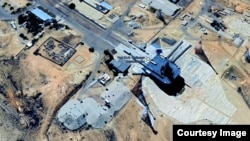
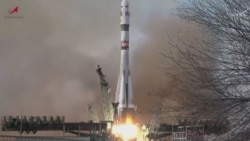
The latest blow? As a Soyuz capsule carrying two Russians and one American blasted off from the storied Baikonur complex last month, a major component of the launchpad -- called a maintenance or service cabin – failed to move out from under the blast of exhaust from the ascending rocket.
It’s not yet clear whether human error or a technical mishap was to blame, but the Russian space agency, Roscosmos, said repairs would be needed.
The problem is that this specific site –- Launchpad 31/6 –- is the only one at Baikonur capable of carrying out manned Soyuz launches. Experts say best case scenario is repairs will take a few months; it’s also possible it could take years.
“If that thing is destroyed, it’s going to take them time to be able to launch rockets again,” said Terry Virts, a former NASA astronaut and ISS commander who flew on a Soyuz launched from Baikonur, “and with all of their effort going into their war machine, I’m not sure if they will be able to launch anytime soon.”

“Although they are Russians and they tend to make do,” he added.
While US private companies like SpaceX and Boeing can ship people –- including Russian cosmonauts -- -- and small cargos back and forth to the station, they can’t handle the Russian-built Progress crafts, which are used to keep it properly oriented.
Other non-Russian vehicles -- Northrop Grumman’s Cygnus; the Japanese HTV-X; Boeing’s Starliner – could make up some of the difference, said Scott Pace, director of the Space Policy Institute at George Washington University, in Washington.
“Not likely to be a problem in the short term but could be a problem if there is a long gap in Progress missions,” he said. “I've heard a range of estimates for the time to repair the site: ranging from an optimistic six months to a pessimistic two years.”

“We simply no longer have spaceports and launch complexes capable of carrying out manned launches,” said Vadim Lukashevich, a space industry expert and former designer with the Sukhoi Design Bureau, a major aerospace manufacturer.
“Russia has found itself in a situation where the weakest link is breaking, and everything has broken,” he told BFM.ru, a Russian news portal.
Better Days
Baikonur has been synonymous with the Soviet and Russian space programs for nearly seven decades.
The sprawling complex in the steppes of southern Kazakhstan has hurled hundreds of rockets -- and ballistic missiles – skyward, playing a part in some of history's greatest spaceflight achievements: Sputnik, the world's first satellite; Yuri Gagarin, the first human in space.
The complex outlived the Soviet collapse; Russia now leases the facility from Kazakhstan.

In the years before private space companies began flying to the ISS, Baikonur was the only place that could handle getting people and cargo into orbit. The facility was home to reliable, low-cost launches for commercial satellites, netting Russia nearly $10 billion in revenue over the past 25 years, according to one estimate.
After Russia seized Ukraine's Crimean Peninsula in 2014, Western countries, including the United States, began hitting Russian companies and top officials with sanctions. Still, NASA and Roscosmos continued to cooperate in operating the ISS.
Roscosmos’s reputation was dented by a series of mishaps, including a still-unexplained man-made hole found on a Russian-built module at the station; an emergency landing of crew members returning to Earth; and a scandal involving the demotion of a respected cosmonaut.
For years, the agency was headed by Dmitry Rogozin, a bombastic nationalist former lawmaker. Under his watch, Roscosmos constructed a new facility to replace Baikonur -- the Vostochny cosmodrome, in the Far Eastern region of Amur.
That project, however, was plagued by massive cost overruns and corruption investigations; construction workers walked off the job in 2017, some going on hunger strike in protest at unpaid wages. Last month, part of the Vostochny complex suffered blackouts after a local power provider cut off electricity due to unpaid bills.
Rogozin made several eyebrow-raising comments during his tenure, including suggesting that the man-made hole found in the Russian capsule was drilled deliberately by an American astronaut. He allowed three cosmonauts on the station to pose with the flags of separatist forces in eastern Ukraine, which drew an unusual public rebuke from NASA.

Shortly after, he was pushed out of his job, replaced with a more technocratic former deputy prime minister.
In a statement issued after the November 27 launch incident, NASA said it was "aware Roscosmos is inspecting" the facility but referred further questions to the Russian agency.
"NASA coordinates closely with its international partners, including Roscosmos, for the safe operations of the International Space Station and its crew members," a spokesman said.
'It's Hard To Say How Realistic That Is'
Punishing Western sanctions, imposed in response to Russia’s all-out invasion of Ukraine in 2022, curtailed Roscosmos’s ability to acquire technology and equipment to maintain its aging infrastructure.
The technology on which the Soyuz and Progress vehicles are designed is largely homegrown, developed and manufactured by Russia’s own industrial suppliers. To some degree, that insulates the space program from disruptions due to the separation from global markets.
Authorities may try to scavenge parts and equipment from other facilities at Baikonur or otherwise, some experts said: Vostochny, for example, or a facility called Plesetsk, in Russia’s far north, which handles satellite and missile launches.

Roscosmos itself has ordered the repairs to be completed by April, a time frame that many experts are skeptical of.
If the work proceeds quickly, they might still be able to complete it, said Nurlan Aselkan, editor in chief and publisher of the Kazakh journal Space Research and Technology.
“It’s hard to say how realistic that is,” he said, though engineers may have already found a replacement to the damaged cabin, at an aerospace military base in Russia’s Tambov region, and are now rushing to deliver it to Kazakhstan.
The incident also served as a wake-up call for the beleaguered Russian agency to scale back its plans, Aselkan said.
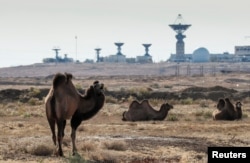
“I believe that, to a certain extent, this accident pushed Roscosmos toward realism, because it created a situation where these ambitions -- the creation of an entire new infrastructure, new rockets, new ships at the Far Eastern [Vostochny] cosmodrome -- were inconsistent with capabilities,” he said.
For all this, he said, “Baikonur will remain the main cosmodrome for Roscosmos for the foreseeable future.”
On December 9, a Soyuz capsule shepherding two Russians and one American back to Earth from the ISS banged down onto the Kazakh steppes – safely - as countless have done in years past.