

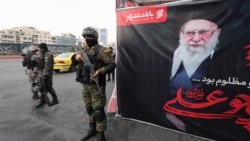
Human rights media outlets covering news from the Kurdish regions of Iran have published videos of the funeral and mourning ceremonies for two brothers who were reportedly shot during protests in the Jafarabad district of the western Kermanshah Province on January 3.
The younger of the two brothers, Rasul, 17, died at the scene, while his older sibling, Reza, 20, died later in the hospital, according to reports.
RFE/RL's Radio Farda’s Hannah Kaviani spoke with with Raz Zimmt, director of the Iran and the Shi'ite axis research program at the Institute for National Security Studies (INSS), on reports of a potential new conflict between Iran and Israel. Zimmt says he does not believe an escalation is imminent, but warns that the risk of miscalculation remains high. Here are some excerpts from the interview:
...whenever there are protests in Iran, there is this wishful thinking in Israel that this time it might result in a regime change in Iran. So it's very clear that the Israeli objective -- I would say the ultimate objective -- is to see some kind of regime change in Iran, especially today, when we see those protests, even though they are not wider or more significant than compared to the previous rounds of protests in Iran in recent years, but the sense in Israel is that due to the ongoing economic crisis and the shortages of water and electricity and the crisis of legitimacy and the impact of the war, it's becoming more and more difficult for the Iranian regime to deal effectively with those protests.
And then, of course, what happened in Venezuela and the statements made by Trump certainly increases the -- I would say the appetite in Israel -- that something might happen in Iran that could certainly bring about a change in the regime.
...from the Israeli point of view, the simplest conclusion is that here we see again the readiness of President Trump to use force, if necessary, to bring out some kind of change. Of course, nobody speaks about regime change in Venezuela, but even if Trump decides to strike several headquarters of the revolutionary guards or the Basij [volunteer Islamic militia] in Iran in retaliation for the killing of demonstrators in Iran, the sense in Israel is that this could certainly give additional support to the opposition inside Iran.
So, I think the bottom line is that Israel certainly considers what happened in Venezuela -- but also the direct threats against Iran -- as something which could perhaps be implemented in Iran as well, not just in Latin America.
Good morning. We'll get the live blog rolling today with some comments that were made while we were away.
First this from former Iranian crown prince Reza Pahlavi:
And also this from the former US ambassador to the UN, Nikki Haley:
We are now closing the live blog for today, but we'll be back tomorrow at 7:30 a.m. Central European time with more coverage of events in Iran as they happen. Until then, good night and take care.
UN Chief Calls On Iran To Respect Right To Peaceful Protest
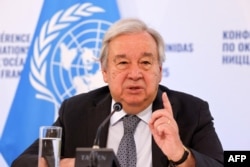
UN Secretary-General Antonio Guterres has urged Iran to respect demonstrators' right to "protest peacefully," according to the AFP news agency.
Stephane Dujarric, a spokesperson for Guterres, told reporters that the secretary general emphasized "the need to prevent any further casualties."
He also called on Tehran "uphold the right of freedom of expression, association and peaceful assembly" and that "all individuals must be allowed to protest peacefully and express their grievances."
Iranian Security Forces Shoot At Protesters
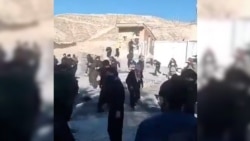
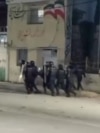
Iranian security forces shot and reportedly killed protesters as demonstrations continue across the country. The Norway-based human rights group Hengaw reported that at least four people were killed and 30 were wounded in the western Iranian city of Malekshahi on January 3. (WARNING: Viewers may find the content of this video disturbing)

What Might US Military Action In Venezuela Mean For Iran?
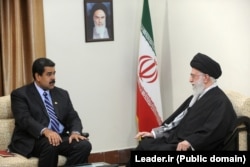
RFE/RL's Kian Sharifi has been looking at what the ouster of Nicolas Maduro in Venezuela might mean for Iran:
Washington is unlikely to carry out a similar operation in Iran. But the brazen Venezuela attack has sent a clear signal to Tehran that the United States is willing to use force to remove its enemies, experts say.
Trump recently warned Iran that Washington was “locked and loaded” and ready to intervene if Tehran killed “peaceful protesters” during ongoing antiestablishment protests. Iranian security forces have so far killed at least 19 protesters in a brutal state crackdown.
However, experts say the United States replicating its Venezuela operation in Iran and deposing Supreme Leader Ayatollah Ali Khamenei -- who has been in power since 1989 -- is unlikely.
Read more here
'People Are No Longer Afraid To Die,' Says Activist
Motahareh Gounei, is a student activist and a human rights defender based in Iran who has been arrested several times in the past. She spoke to Radio Farda’s Roya Karimi Majd about the protests.
“I witnessed a scene in Qom where a crowd was moving toward the security forces without fear --unafraid that they might be shot. People are truly fed up. We have had enough. Even if they execute us, we are exhausted by the life the Islamic republic has imposed on us, by this suffocating atmosphere. Our most basic demands are inseparable from the survival of the Islamic republic itself: when will it end? When will [Iranian Supreme Leader Ayatollah Ali] Khamenei’s political life end?
People see that an individual they didn't elect is deciding their fate based on his dictatorial nature --because he is a dictator, because he is obsessed with power and incapable of relinquishing it. All barriers between the people and the establishment have collapsed. People are no longer afraid to die.
Today, we want the world to know that we do not want the Islamic republic. We do not want this establishment.”
'We Have Been Stuck In Our Homes': Afghan Refugees In Iran Fear Fallout From Protests
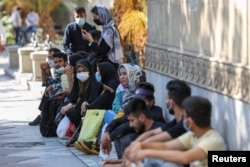
A number of Afghans living in Iran say they have been facing severe hardships due to the widespread protests and the presence of increased security forces in various areas in the country in recent days.
Leda Amini, an Afghan refugee and human rights activist living in Tehran, says she is deeply concerned about the situation created by the protests in the past few days.
She told Radio Azadi on January 3 that the situation is not good now and that her son, who works in a shop, was stuck at his workplace until late at night due to the protests.
"This issue has made us all very worried, because a very small movement can cause us a big headache," she said. "We try not to participate in any kind of gathering and even not go to areas where there are protests. Last night, the situation where my son works was abnormal. My son called and said that the situation was very bad, and he could not come home. The weather was also cold. We were all very worried until midnight."
Another Afghan refugee, who also lives in Tehran and does not want to be named due to the sensitivity of the issue, told RFE/RL's Radio Azadi that the protests have made it difficult for her to even leave her home.
"The situation in our area is very bad. My husband and I cannot go out. We have been stuck in our homes for a week. The restrictions on the streets and markets have increased unreasonably. We are all worried about the fate of our refugees."
Meanwhile, a number of Afghan refugees from the Iranian cities of Yazd and Mashhad told Radio Azadi that the government has issued a statement urging foreign nationals not to participate in the protests.
They also said that their Internet services have been weaker than usual.
Many Afghan refugees say that the increased presence of security forces in various areas and restrictions on movement have made their situation even more difficult.
Further Details About Unrest In Ilam
Regime-affiliated media is coming out with information about security forces storming a hospital in the western city of Ilam and dispersing protesters with shotgun pellets and tear gas.
Previous reports from inside Iran said that security forces attacked protesters. The Norway-based NGO Hengaw accused the Iranian authorities of trying to remove the bodies of dead protesters from the hospital.
The Fars news agency, which is affiliated with the Islamic Revolutionary Guards Corps (IRGC), published an article claiming that protesters were using the hospital as a "barracks."
Fars claims that after security forces clashed with protesters in the city of Malekshahi on January 3, in the surrounding Ilam Province, injured protesters were transferred to Ilam's Imam Khomeini Hospital where "conditions in the hospital became inflamed."
The news agency claimed that "the clashes spread from the hospital grounds to the surrounding streets and continued until last night."
"Last night, during an operation by security forces, a number of protesters were arrested in the hospital and its surroundings," Fars claimed, adding that the conditions in the hospital are currently "almost normal."
Given Fars's affiliation with the IRGC, we are seeking independent verification from protesters inside Ilam.