



Accessibility links

Breaking News

Overall Turnout At 9.2 Percent On First Day Of Russia's Weeklong Constitutional Vote

Updated
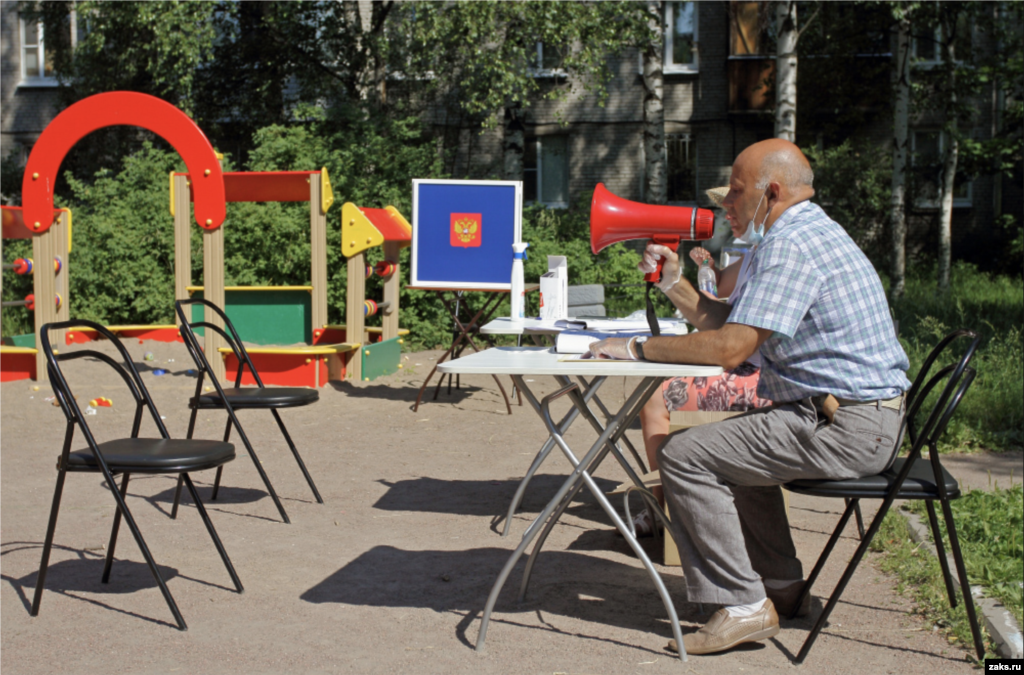
A children's playground served as a polling site in the city of Pushkin on June 25. Election officials used a megaphone to call residents to come and cast their ballots.
1/15 A children's playground served as a polling site in the city of Pushkin on June 25. Election officials used a megaphone to call residents to come and cast their ballots.
From parking lots and playgrounds to railway stations and airports, Russian authorities have opened polling stations in some unusual places to boost turnout in a controversial vote that could allow President Vladimir Putin to serve another two terms in office. Russians began nationwide voting on June 25 for constitutional reforms that could pave the way for Putin to remain as the country's president until 2036.
A boy rides his scooter past an outdoor polling station in St. Petersburg. Voting began on June 25 and is scheduled to last until July 1.
2/15 A boy rides his scooter past an outdoor polling station in St. Petersburg. Voting began on June 25 and is scheduled to last until July 1.
From parking lots and playgrounds to railway stations and airports, Russian authorities have opened polling stations in some unusual places to boost turnout in a controversial vote that could allow President Vladimir Putin to serve another two terms in office. Russians began nationwide voting on June 25 for constitutional reforms that could pave the way for Putin to remain as the country's president until 2036.
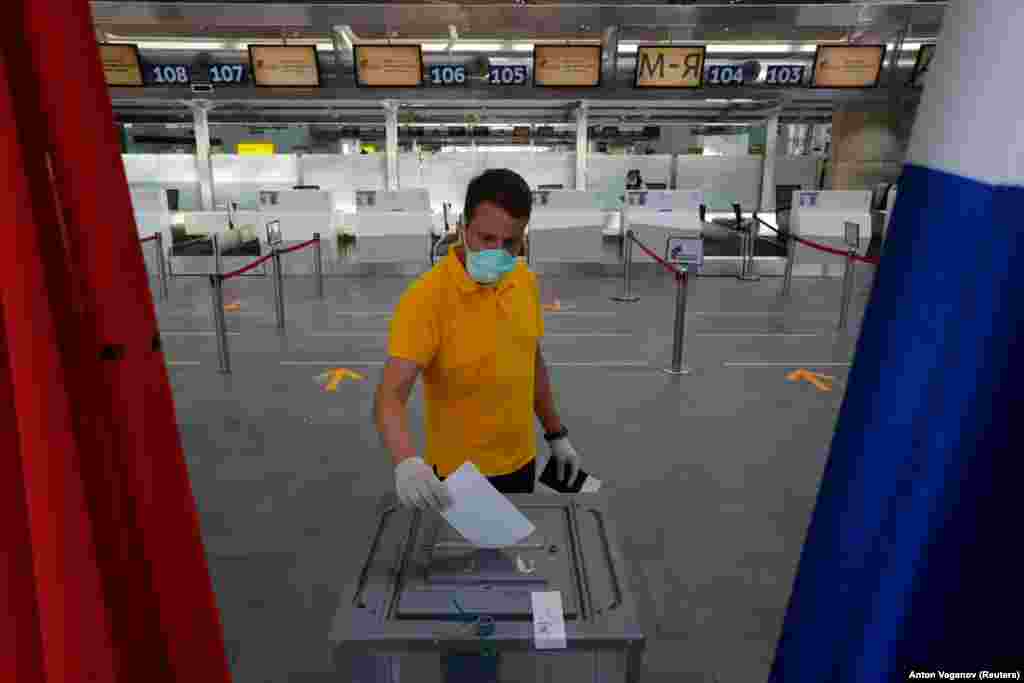
A man casts his ballot at a polling station created at Pulkovo International Airport in St. Petersburg on June 25. Authorities opened polling stations a week early and are letting voters cast ballots over a seven-day period to stop overcrowding amid the coronavirus pandemic.
3/15 A man casts his ballot at a polling station created at Pulkovo International Airport in St. Petersburg on June 25. Authorities opened polling stations a week early and are letting voters cast ballots over a seven-day period to stop overcrowding amid the coronavirus pandemic.
From parking lots and playgrounds to railway stations and airports, Russian authorities have opened polling stations in some unusual places to boost turnout in a controversial vote that could allow President Vladimir Putin to serve another two terms in office. Russians began nationwide voting on June 25 for constitutional reforms that could pave the way for Putin to remain as the country's president until 2036.
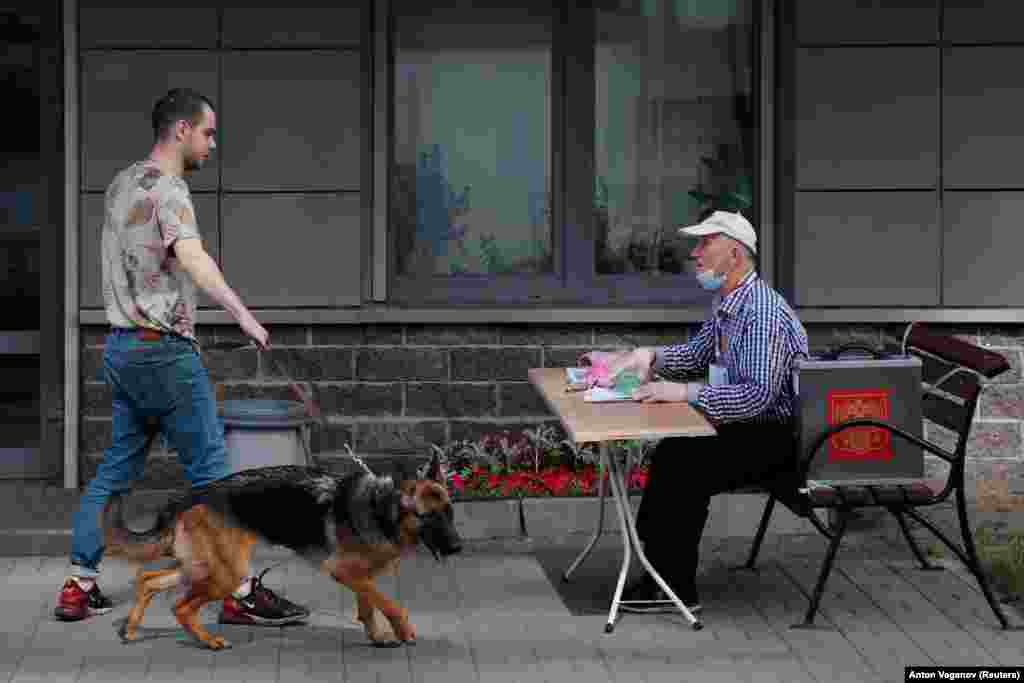
A voter in St. Petersburg took his dog to an outdoor polling station.
4/15 A voter in St. Petersburg took his dog to an outdoor polling station.
From parking lots and playgrounds to railway stations and airports, Russian authorities have opened polling stations in some unusual places to boost turnout in a controversial vote that could allow President Vladimir Putin to serve another two terms in office. Russians began nationwide voting on June 25 for constitutional reforms that could pave the way for Putin to remain as the country's president until 2036.
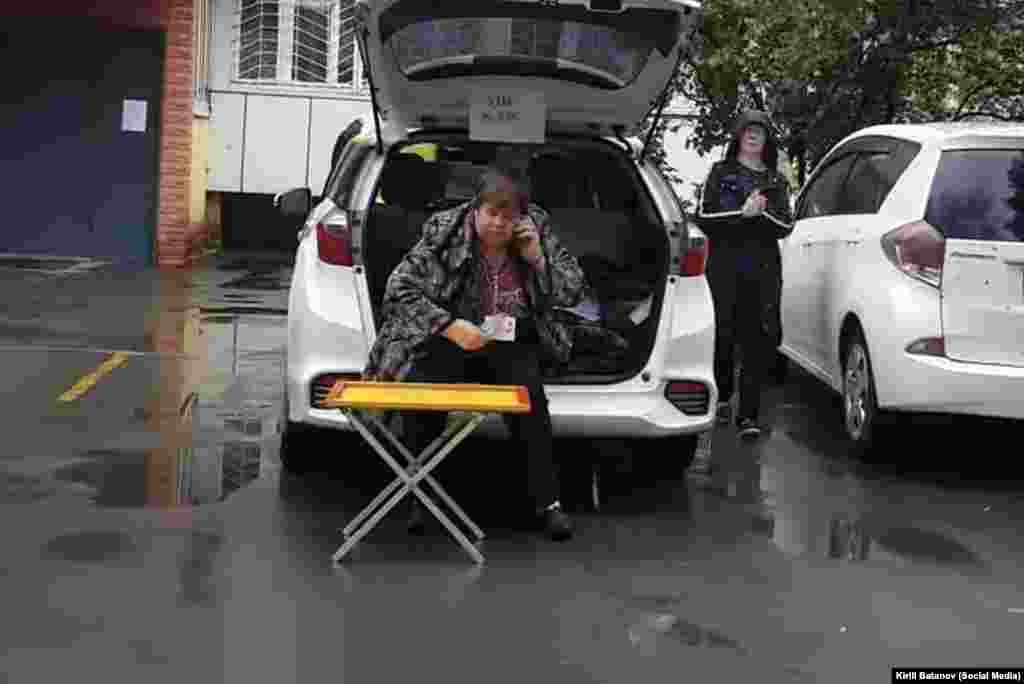
Voting from the back of a car in Russia&#39;s Pacific port city of Vladivostok. Vladimir Putin&#39;s<span style="font-size: 1em;">&nbsp;last term as president&nbsp;</span><span style="font-size: 1em;">was supposed to end in 2024.&nbsp;</span><span style="font-size: 1em;">But if the constitutional amendment is approved, he would be allowed to&nbsp;</span><span style="font-size: 1em;">run twice more.</span>
5/15 Voting from the back of a car in Russia's Pacific port city of Vladivostok. Vladimir Putin's last term as president was supposed to end in 2024. But if the constitutional amendment is approved, he would be allowed to run twice more.
From parking lots and playgrounds to railway stations and airports, Russian authorities have opened polling stations in some unusual places to boost turnout in a controversial vote that could allow President Vladimir Putin to serve another two terms in office. Russians began nationwide voting on June 25 for constitutional reforms that could pave the way for Putin to remain as the country's president until 2036.
A polling tent in the Siberian city of Novosibirsk on June 25
6/15 A polling tent in the Siberian city of Novosibirsk on June 25
From parking lots and playgrounds to railway stations and airports, Russian authorities have opened polling stations in some unusual places to boost turnout in a controversial vote that could allow President Vladimir Putin to serve another two terms in office. Russians began nationwide voting on June 25 for constitutional reforms that could pave the way for Putin to remain as the country's president until 2036.
Outdoor voting benches in the city of Linevo on June 25
7/15 Outdoor voting benches in the city of Linevo on June 25
From parking lots and playgrounds to railway stations and airports, Russian authorities have opened polling stations in some unusual places to boost turnout in a controversial vote that could allow President Vladimir Putin to serve another two terms in office. Russians began nationwide voting on June 25 for constitutional reforms that could pave the way for Putin to remain as the country's president until 2036.
A parking-lot polling station in the&nbsp;Zakamsk district of Perm
8/15 A parking-lot polling station in the Zakamsk district of Perm
From parking lots and playgrounds to railway stations and airports, Russian authorities have opened polling stations in some unusual places to boost turnout in a controversial vote that could allow President Vladimir Putin to serve another two terms in office. Russians began nationwide voting on June 25 for constitutional reforms that could pave the way for Putin to remain as the country's president until 2036.
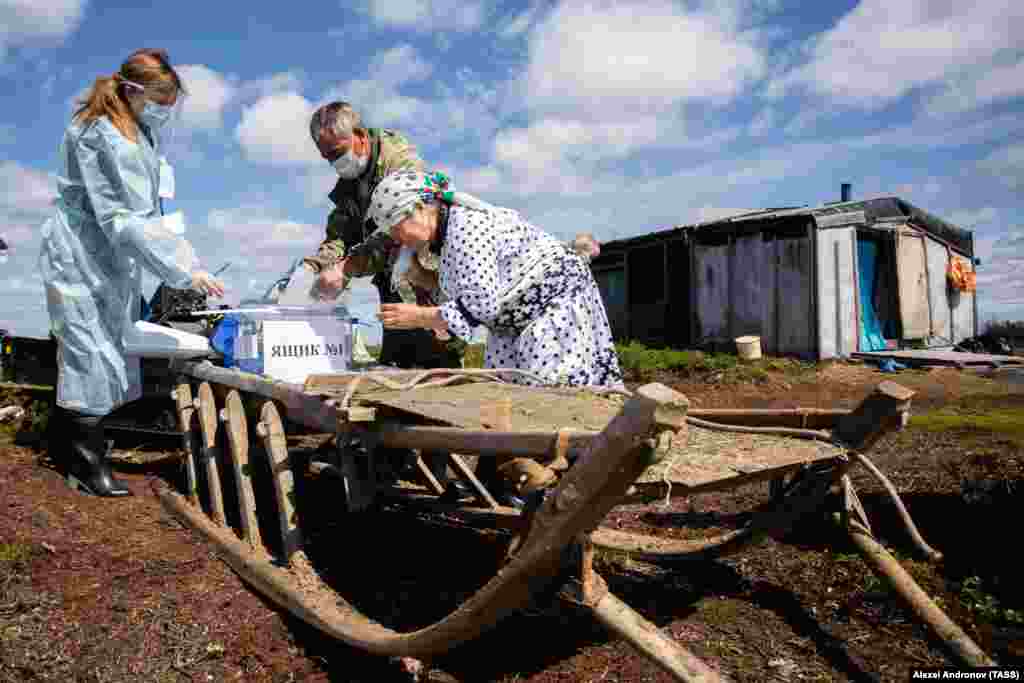
Residents of a remote Khanty cattle camp take part in early voting.
9/15 Residents of a remote Khanty cattle camp take part in early voting.
From parking lots and playgrounds to railway stations and airports, Russian authorities have opened polling stations in some unusual places to boost turnout in a controversial vote that could allow President Vladimir Putin to serve another two terms in office. Russians began nationwide voting on June 25 for constitutional reforms that could pave the way for Putin to remain as the country's president until 2036.
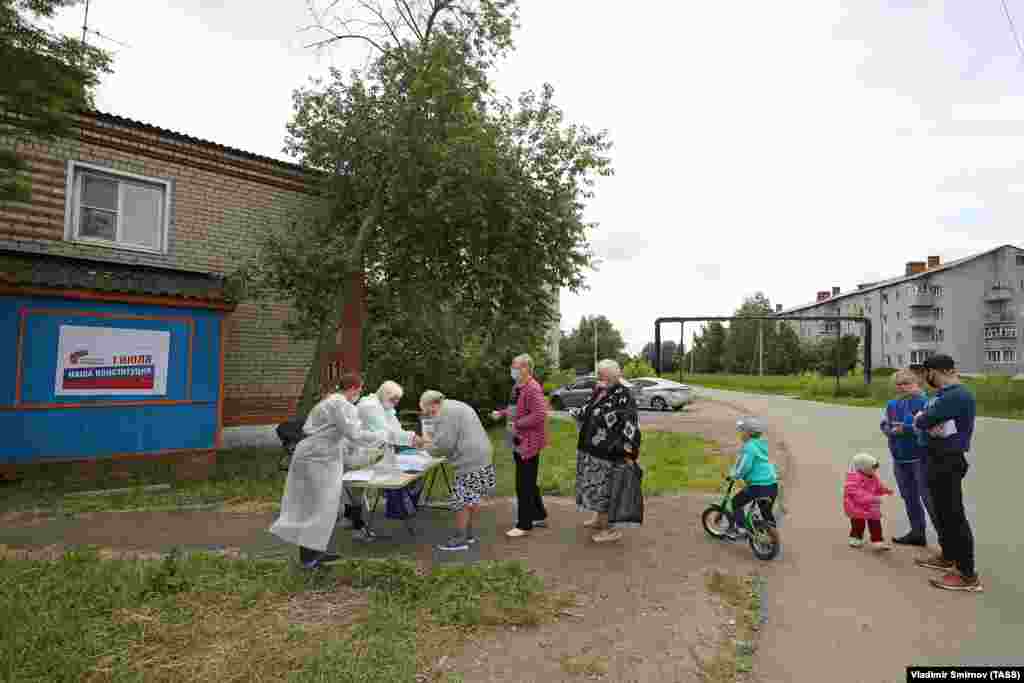
Residents visit an outdoor polling station in the village of Lugovoye.
10/15 Residents visit an outdoor polling station in the village of Lugovoye.
From parking lots and playgrounds to railway stations and airports, Russian authorities have opened polling stations in some unusual places to boost turnout in a controversial vote that could allow President Vladimir Putin to serve another two terms in office. Russians began nationwide voting on June 25 for constitutional reforms that could pave the way for Putin to remain as the country's president until 2036.
A woman casts her vote at a polling station inside Moscow&#39;s Kazansky railway station.
11/15 A woman casts her vote at a polling station inside Moscow's Kazansky railway station.
From parking lots and playgrounds to railway stations and airports, Russian authorities have opened polling stations in some unusual places to boost turnout in a controversial vote that could allow President Vladimir Putin to serve another two terms in office. Russians began nationwide voting on June 25 for constitutional reforms that could pave the way for Putin to remain as the country's president until 2036.
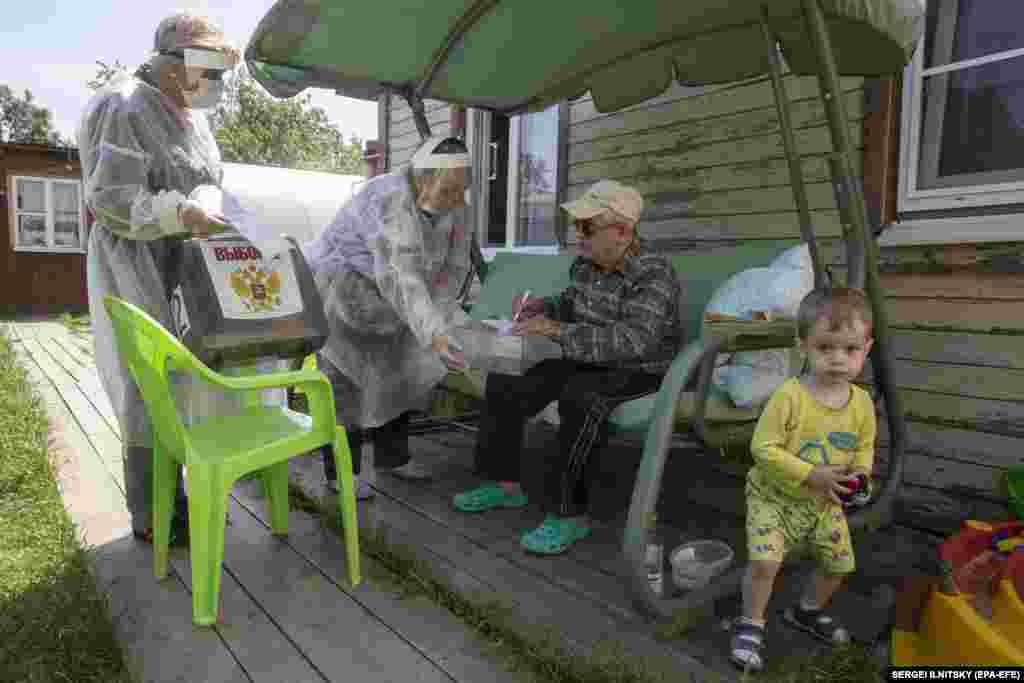
Mobile polling-station workers wear protective gear as they visit homes in the village of Vostryakovo outside Moscow.&nbsp;The vote has raised concerns among health officials as the number of new coronavirus infections in Russia remains stubbornly high at above 7,000 a day.<br />
&nbsp;
12/15 Mobile polling-station workers wear protective gear as they visit homes in the village of Vostryakovo outside Moscow. The vote has raised concerns among health officials as the number of new coronavirus infections in Russia remains stubbornly high at above 7,000 a day.
 
From parking lots and playgrounds to railway stations and airports, Russian authorities have opened polling stations in some unusual places to boost turnout in a controversial vote that could allow President Vladimir Putin to serve another two terms in office. Russians began nationwide voting on June 25 for constitutional reforms that could pave the way for Putin to remain as the country's president until 2036.
A voting bus on June 25 in Kazan, the capital of Russia&#39;s Republic of Tatarstan.
13/15 A voting bus on June 25 in Kazan, the capital of Russia's Republic of Tatarstan.
From parking lots and playgrounds to railway stations and airports, Russian authorities have opened polling stations in some unusual places to boost turnout in a controversial vote that could allow President Vladimir Putin to serve another two terms in office. Russians began nationwide voting on June 25 for constitutional reforms that could pave the way for Putin to remain as the country's president until 2036.
Outdoor voting for constitutional amendments in Kerch. The city and the rest of the Crimean Peninsula was forcibly annexed by Russia in 2014.
14/15 Outdoor voting for constitutional amendments in Kerch. The city and the rest of the Crimean Peninsula was forcibly annexed by Russia in 2014.
From parking lots and playgrounds to railway stations and airports, Russian authorities have opened polling stations in some unusual places to boost turnout in a controversial vote that could allow President Vladimir Putin to serve another two terms in office. Russians began nationwide voting on June 25 for constitutional reforms that could pave the way for Putin to remain as the country's president until 2036.
A woman casts her vote in the city of Kerch.&nbsp;<span style="font-size: 1em;">If Putin serves&nbsp;</span><span style="font-size: 1em;">two more terms,&nbsp;</span><span style="font-size: 1em;">he would be Russian president&nbsp;</span><span style="font-size: 1em;">until 2036, when he would be&nbsp;</span><span style="font-size: 1em;">83.</span>
15/15 A woman casts her vote in the city of Kerch. If Putin serves two more terms, he would be Russian president until 2036, when he would be 83.
From parking lots and playgrounds to railway stations and airports, Russian authorities have opened polling stations in some unusual places to boost turnout in a controversial vote that could allow President Vladimir Putin to serve another two terms in office. Russians began nationwide voting on June 25 for constitutional reforms that could pave the way for Putin to remain as the country's president until 2036.
Previous slide
Next slide

Russia's Central Electoral Commision (CEC) says overall turnout was about 9 percent on the first day of a weeklong vote for constitutional amendments that could pave the way for an extension of President Vladimir Putin’s rule by 12 years.

The CEC said on June 26 that just over 10 million voters casts ballots on June 25, including remote online voting -- a first-day turnout representing 9.2 percent of all registered voters.

Turnout for online voting by residents of Moscow and the Nizhny Novgorod region was 52.8 percent of those who applied in advance for permission to vote remotely -- or about 618,200 ballots cast, election officials said.

Putin proposed the sweeping constitutional reforms earlier this year and insisted on putting it to a nationwide vote even though it was not required by law.

The plan has sparked sharp criticism from opposition members and human rights groups who call it nothing more than an attempt at a power grab by Putin.

Under current rules, Putin is forbidden from seeking a third consecutive six-year term.

Power To The Putin: What's In Russia's Constitutional Reforms Package?
please wait

No media source currently available

0:00 0:03:24 0:00

But if the constitutional changes are approved, Putin's presidential term-limit clock will be reset to zero -- opening the way for him to run for reelection when his current term expires in 2024, and again in 2030.

There is no minimum turnout required to make the vote valid. But analysts say the Kremlin fears a low turnout could undermine the perceived legitimacy of the constitutional changes.

Voting stations opened on June 25 for a week to help avoid crowds on July 1, the day designated for the nationwide vote, as Russia continues to grapple with the coronavirus pandemic.

The vote already had to be postponed from its originally scheduled date of April 22 due to the virus outbreak. Early voting has been allowed since June 10 for people who don't have access to polling stations.

But journalists and opposition figures already are complaining about irregularities in the vote.

In one instance, Pavel Lobkov, a journalist and presenter on TV Rain (Dozhd), said he voted at a Moscow polling station in the morning, then an hour later he was able to cast another ballot online because he had originally registered to participate that way.

“Case closed…The system counted two votes. Everything is filmed on video. It is clear that in this way from each state employee there will be 30 votes in favor,” Russian opposition leader Aleksei Navalny tweeted after Lobkov’s video appeared online.

With reporting by Reuters, Interfax, and TASS
  • 16x9 Image

    RFE/RL

    RFE/RL journalists report the news in 24 languages in 18 countries where a free press is banned by the government or not fully established. We provide what many people cannot get locally: uncensored news, responsible discussion, and open debate.

This item is part of
XS
SM
MD
LG