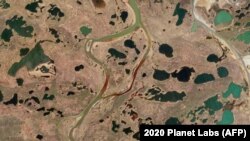
An aerial view of the large diesel spill in the Ambarnaya River in the Arctic.
Russian authorities have arrested three managers at a thermal power plant that leaked tons of fuel into the fragile Arctic environment.
The disaster occurred on May 29, when a holding tank at the facility near the industrial city of Norilsk spilled at least 20,000 tons of diesel fuel into the soil, two rivers, and a downstream lake.
Russia’s Investigative Committee said on June 10 that the head of the power station, Pavel Smirnov, and two top engineers were arrested on suspicion of violating environmental protection rules.
The committee said it had established that the fuel-storage tank needed repairs in 2018 but continued to function in violation of safety regulations.
"As a result the accident occurred," the investigators' statement said.
Another manager at the plant was arrested and charged earlier this month.
The power plant is owned by a subsidiary of Norilsk Nickel, the world's leading nickel and palladium producer, which said the leak was caused when pillars supporting a storage tank sank due to thawing permafrost soil.
The Prosecutor-General's Office has also issued preliminary findings revealing that sagging ground helped trigger the disaster.
Russian President Vladimir Putin ordered a state of emergency after the extent of the spill became known and Norilsk Nickel has since promised to pay for the costs of the cleanup, estimated at 10 billion rubles ($145 million).
Norilsk Nickel is own by Russia’s richest man, Vladimir Potanin. The company denies allegations that management hushed up and downplayed the scale of the disaster for at least two days after the accident.
Emergency Crews Rush To Clean Up Fuel Spill In Siberian Arctic
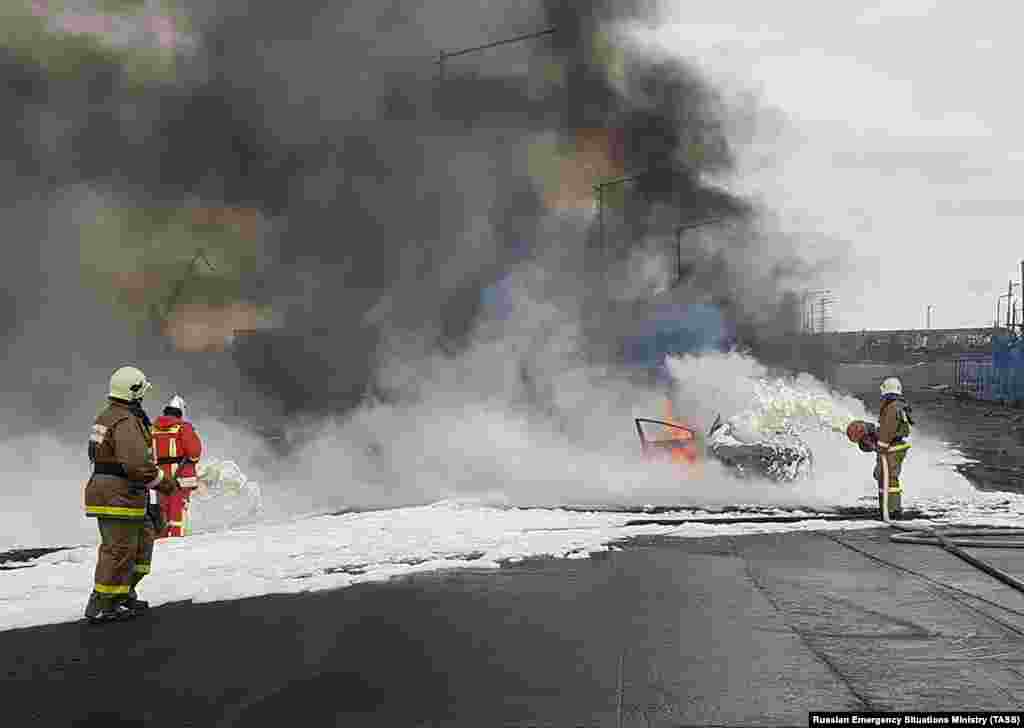
1/18Firefighters battle a blaze that erupted at a power plant in a metallurgical facility near the industrial Arctic city of Norilsk after a tank collapsed and caused fuel to combust.
Russian President Vladimir Putin has declared a state of emergency after thousands of tons of fuel spilled from a thermal power plant near the Siberian industrial city of Norilsk on May 29.
Show moreShow less
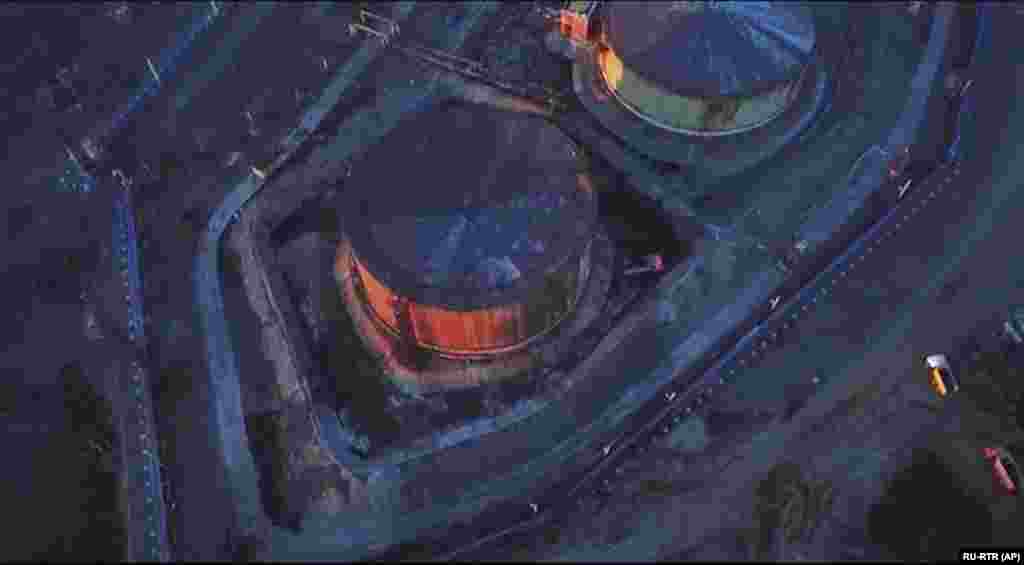
2/18The plant is owned by a subsidiary of Norilsk Nickel, the world's leading nickel and palladium producer, which said the incident was caused when the foundation pillars of a storage tank built on permafrost collapsed. The company said the collapse was caused by the permafrost melting as a result of warming due to climate change.
Russian President Vladimir Putin has declared a state of emergency after thousands of tons of fuel spilled from a thermal power plant near the Siberian industrial city of Norilsk on May 29.
Show moreShow less
3/18Cleanup operations are now under way in Siberia after at least 20,000 tons of diesel fuel leaked from the plant and seeped into the soil, two rivers, and a lake downstream.
Russian President Vladimir Putin has declared a state of emergency after thousands of tons of fuel spilled from a thermal power plant near the Siberian industrial city of Norilsk on May 29.
Show moreShow less
4/18The Ambarnaya River outside Norilsk. Local rivers have been colored red by the massive fuel leak.
Russian President Vladimir Putin has declared a state of emergency after thousands of tons of fuel spilled from a thermal power plant near the Siberian industrial city of Norilsk on May 29.
Show moreShow less
5/18A satellite image released by the World Wildlife Fund shows the extent of the crimson spill in the waterways near Norilsk.
Russian President Vladimir Putin has declared a state of emergency after thousands of tons of fuel spilled from a thermal power plant near the Siberian industrial city of Norilsk on May 29.
Show moreShow less
6/18A photo issued by the environmental watchdog Greenpeace Russia illustrating the impact that the leak has had on the local environment.
Russian President Vladimir Putin has declared a state of emergency after thousands of tons of fuel spilled from a thermal power plant near the Siberian industrial city of Norilsk on May 29.
Russian President Vladimir Putin has declared a state of emergency after thousands of tons of fuel spilled from a thermal power plant near the Siberian industrial city of Norilsk on May 29.
Show moreShow less
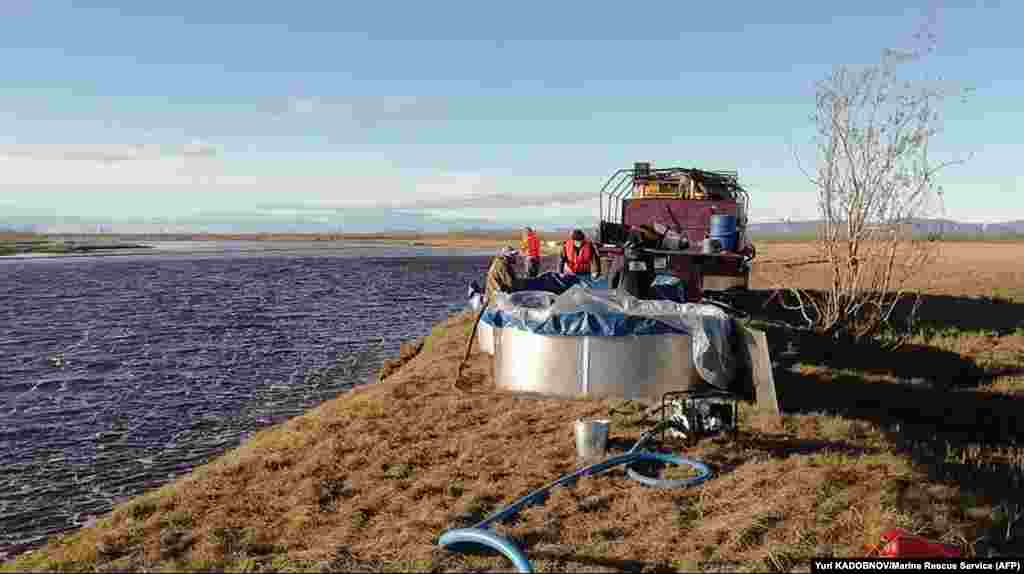
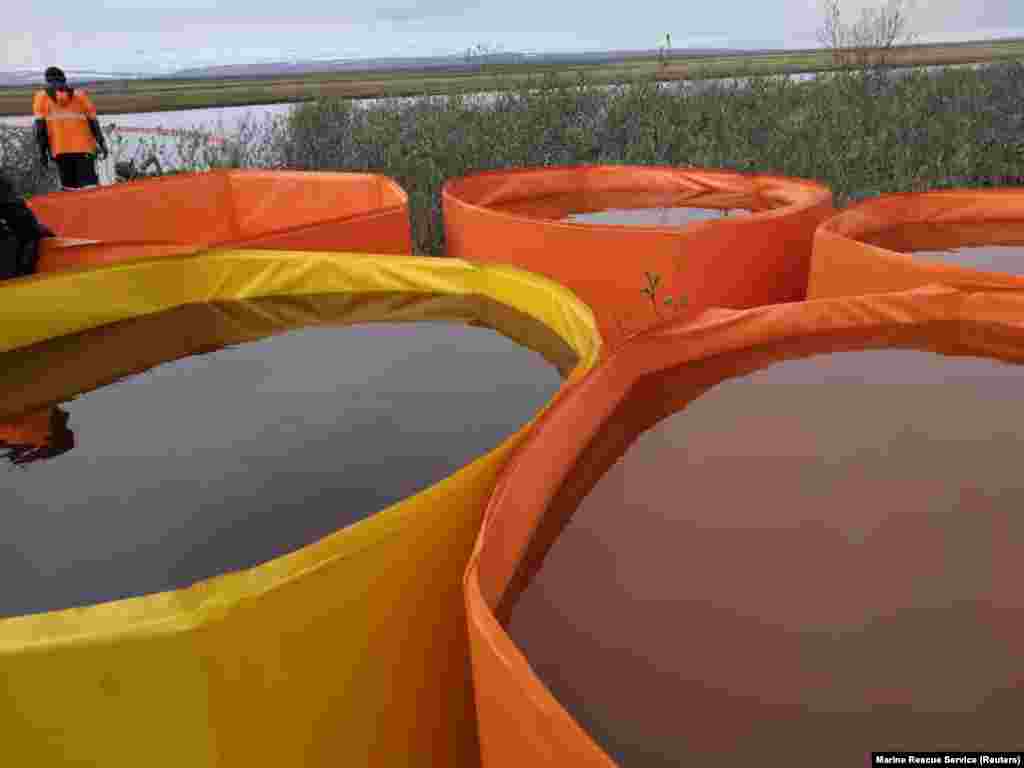
8/18Employees from the Russian Emergency Situations Ministry have been mobilized to tackle the diesel spill.
Russian President Vladimir Putin has declared a state of emergency after thousands of tons of fuel spilled from a thermal power plant near the Siberian industrial city of Norilsk on May 29.
Show moreShow less
9/18Trucks have been deployed at the scene to help with cleanup operations.
Russian President Vladimir Putin has declared a state of emergency after thousands of tons of fuel spilled from a thermal power plant near the Siberian industrial city of Norilsk on May 29.
Show moreShow less
10/18Emergency workers are still battling to contain the damage, days after the incident.
Russian President Vladimir Putin has declared a state of emergency after thousands of tons of fuel spilled from a thermal power plant near the Siberian industrial city of Norilsk on May 29.
Russian President Vladimir Putin has declared a state of emergency after thousands of tons of fuel spilled from a thermal power plant near the Siberian industrial city of Norilsk on May 29.
Show moreShow less
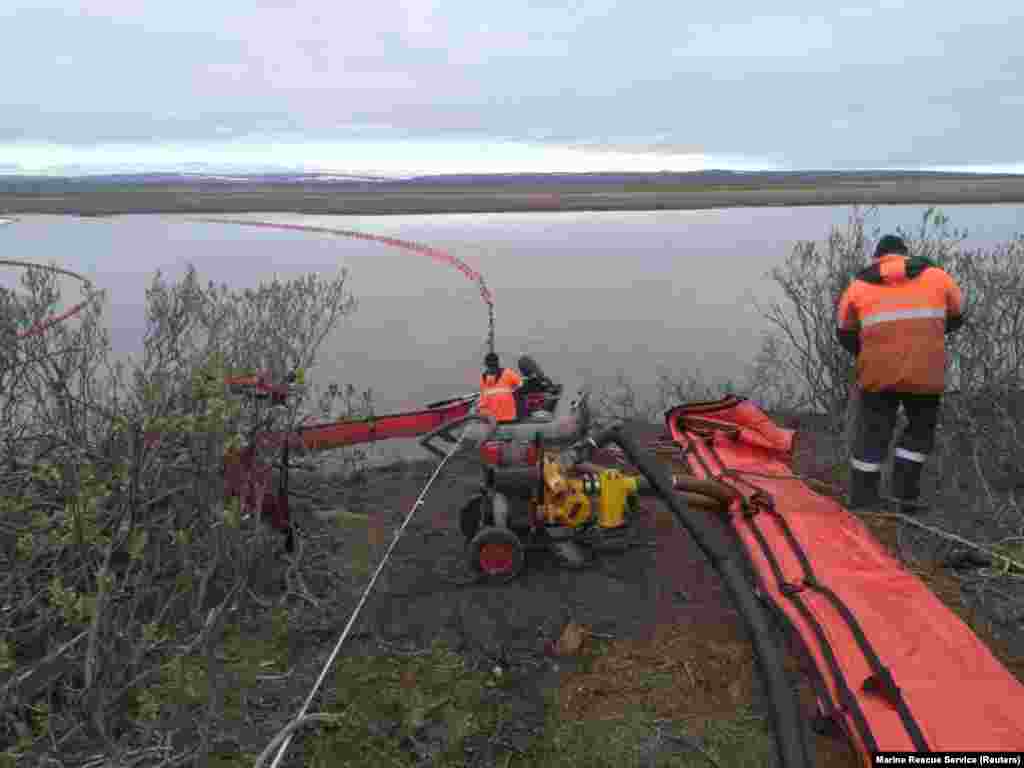
12/18They have been using pumps in their efforts to remove the pollution caused by the diesel fuel in the Ambarnaya River outside Norilsk.
Russian President Vladimir Putin has declared a state of emergency after thousands of tons of fuel spilled from a thermal power plant near the Siberian industrial city of Norilsk on May 29.
Russian President Vladimir Putin has declared a state of emergency after thousands of tons of fuel spilled from a thermal power plant near the Siberian industrial city of Norilsk on May 29.
Show moreShow less
14/18Additional workers from Russia's Emergency Situations Ministry have been flown in to help deal with the aftermath of the spill, which Greenpeace has described as the "first accident of such a scale in the Arctic."
Russian President Vladimir Putin has declared a state of emergency after thousands of tons of fuel spilled from a thermal power plant near the Siberian industrial city of Norilsk on May 29.
Show moreShow less
15/18The Emergency Situations Ministry has erected tents at the site to accommodate the workers who have been brought in to deal with the effects of the accident.
Russian President Vladimir Putin has declared a state of emergency after thousands of tons of fuel spilled from a thermal power plant near the Siberian industrial city of Norilsk on May 29.
Show moreShow less
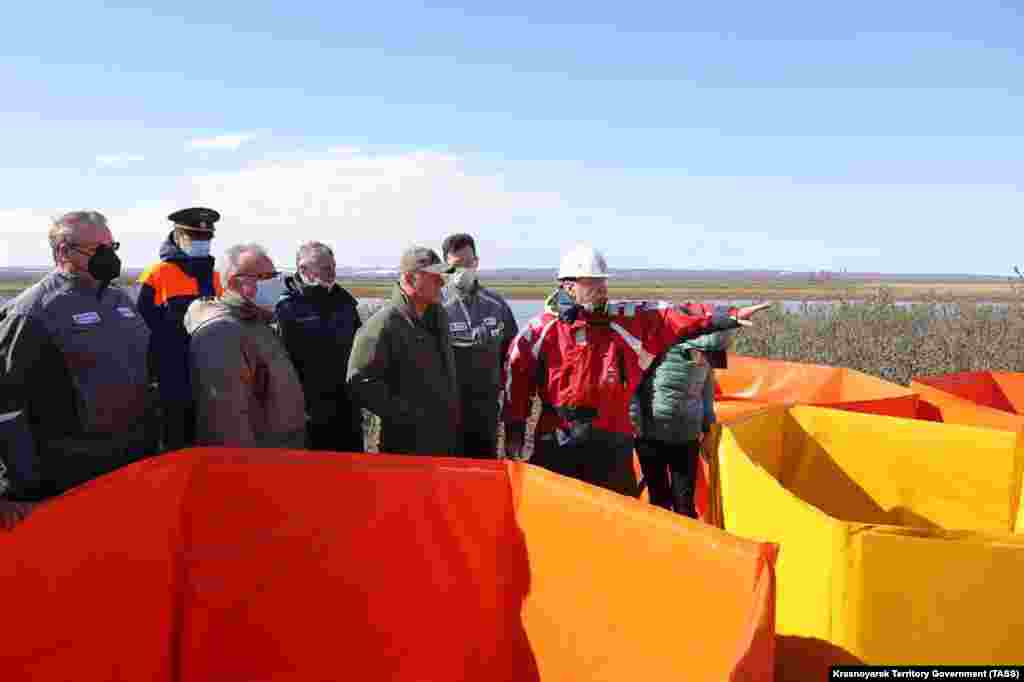
16/18Russian Emergency Situations Minister Yevgeny Zinichev (front row, second from right) and Krasnoyarsk Governor Aleksandr Uss (front row, second from left) inspect the aftermath of the accident on June 4.
Russian President Vladimir Putin has declared a state of emergency after thousands of tons of fuel spilled from a thermal power plant near the Siberian industrial city of Norilsk on May 29.
Show moreShow less
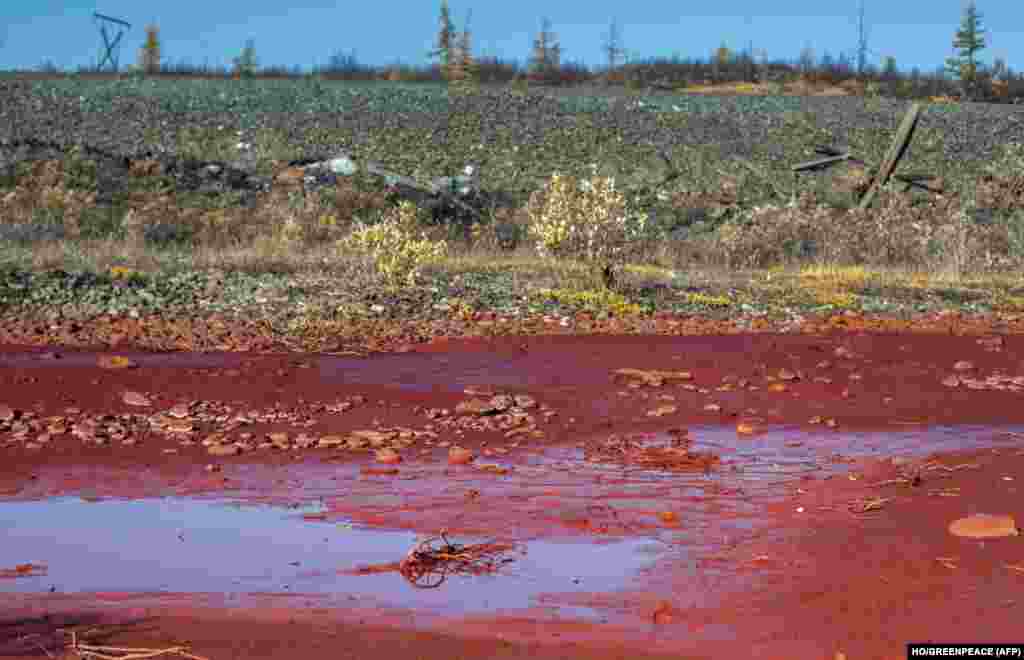
17/18A photo from a previous chemical spill in the area in September 2016 shows puddles of bright red, polluted water on the banks of the River Daldykan near Norilsk. At the time, officials said the pollution may have been caused by a broken pipe at a Norilsk Nickel facility.
Russian President Vladimir Putin has declared a state of emergency after thousands of tons of fuel spilled from a thermal power plant near the Siberian industrial city of Norilsk on May 29.
Show moreShow less
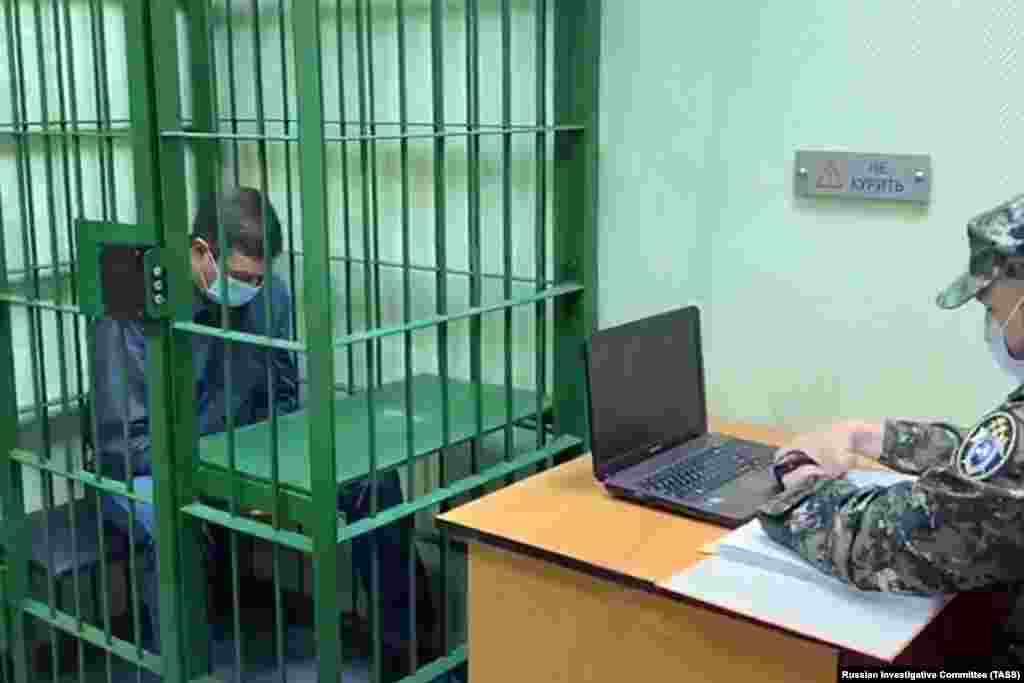
18/18An investigator interrogates Vyacheslav Starostin, who was in charge of the power plant where the incident occurred. On June 4, a regional court ordered that Starostin be placed in pretrial detention until July 31. He was charged with negligence and violating environmental regulations.
Russian President Vladimir Putin has declared a state of emergency after thousands of tons of fuel spilled from a thermal power plant near the Siberian industrial city of Norilsk on May 29.
Show moreShow less
Previous slide
Next slide
On June 9, the company said that the fuel-storage tank was repaired in 2017 and 2018 after which it went through a safety audit.
Those detained "are cooperating with law enforcement authorities and now they would be much more useful at the scene of the cleanup operation," the press service said in a statement to RIA Novosti news agency, citing Vice President Nikolai Utkin.
Regional officials say oil booms and other cleanup operations have failed to prevent all the spilled fuel and chemicals from flowing from the Daldykan and Ambarnaya rivers into Lake Pyasino.
Separately, the Emergency Situations Ministry said on June 10 that 14 countries, including the United States, have provided satellite data on the spill to aid in the response.
The ecological disaster came as temperatures in Siberia were up to 10 degrees Celsius above average in May and were also higher than normal earlier in the year, leading to thawing permafrost.
Sixty five percent of Russia is covered by permafrost. Norilsk, an isolated Arctic city, is constructed on permafrost and its infrastructure is threatened by climate change.
With reporting by AFP, AP, Interfax, Reuters, and TASS
RFE/RL journalists report the news in 24 languages in 18 countries where a free press is banned by the government or not fully established. We provide what many people cannot get locally: uncensored news, responsible discussion, and open debate.